Books Like “Positive child guidance

If you enjoyed Positive child guidance by Darla Ferris Miller, you likely appreciate Child development, Child psychology, Child rearing. These similar reads match the tone, themes, and audience of the original.

Not sure what to read next? Ask BestsellerFinder AI →

Child developmentChild psychologyChild rearingParentingEducationGeneral

Closest matches

Titles with overlapping themes, tone, and audience with your pick.

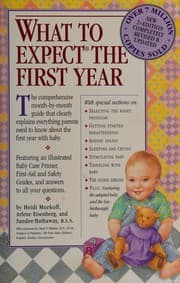
Cover of What to expect the first year

What to expect the first year

Eisenberg

1989

Now fully revised and updated, this comprehensive and practical month-by-month guide clearly explains everything parents need to know - or might be worrying about - in the first year with a new baby. Featuring special sections on older siblings, travelling with a baby, adopted babies, and specific problems, as well as a first aid guide and charts on monthly growth and development, feeding and sleeping habits, this is the only book on infant care to address both the physical and the emotional needs of the whole family. Covering the most up-to-date knowledge, both medical and developmental, WHAT TO EXPECT THE 1st YEAR is, above all, down-to-earth and reassuring - and an invaluable aid for all parents of new babies.

Why it's similar: Similar focus on Child rearing

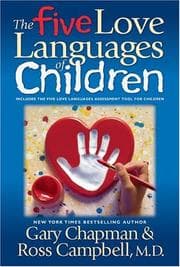
Cover of The five love languages of children

The five love languages of children

Gary Chapman, 王雲良

1997

Does your child speak a different language? Sometimes they wager for your attention, and other times they ignore you completely. Sometimes they are filled with gratitude and affection, and other times they seem totally indifferent. Attitude. Behavior. Development. Everything depends on the love relationship between you and your child. When children feel loved, they do their best. But how can you make sure your child feels loved? Since 1992, Dr. Gary Chapman's best-selling book The Five Love Languages has helped more than 300,000 couples develop stronger, more fulfilling relationships by teaching them to speak each others love language. Each child, too, expresses and receives love through one of five different communication styles. And your love language may be totally different from that of your child. While you are doing all you can to show your child love, he may be hearing it as something completely opposite.Discover your child's primary language and learn what you can do to effectively convey unconditional feelings of respect, affection, and commitment that will resonate in your child's emotions and behavior.

Why it's similar: Similar focus on Child psychology

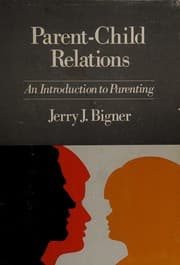
Cover of Parent-child relations

Parent-child relations

Jerry J. Bigner

1979

Now in the Ninth Edition, Jerry Bigner's "Parent-Child Relations," the classic resource for child development professionals and parents themselves, has undergone a thorough revision anchored by the vision of the late Dr. Bigner and executed by new co-author, Clara Gerhardt.Maintaining its fundamental structure and unique approach, the text uses family systems and systemic family development theory as a framework to explore how parent-child relations change in tandem with developmental changes occurring with children, adults, and the wider family system. Thoughtful updates and revisions were done to increase the effectiveness and currency of the text. The text continues to provide strong emphasis on various theoretical and practical models pertaining to parenting. For decades now, this classic text has prepared countless teachers and practitioners by its proven and practical approach, utilizing family systems and systemic family development theory to explore how parent-child relations change in tandem with developmental changes occurring with children, adults, and the wider family system. The most comprehensive and current resource available to students as they prepare for working with parents and families, and for their roles as parents themselves, this best-selling resource carries on the essential message of its originator, Dr. Jerry Bigner, and will continue to nurture future family scholars and practitioners for years to come.

Why it's similar: Similar focus on Parenting

Readers also enjoyed

Popular and highly rated books from our library you might like next.

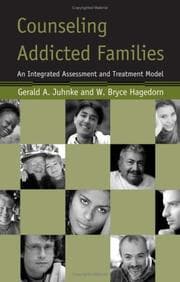
Cover of Counseling addicted families

Counseling addicted families

Tara Ellsworth, Nursity Press

2006

Although one person's addiction almost inevitably affects his or her family members, a surprising number of treatment models appear to operate under the assumption that an individual's addiction occurs in a vacuum. By not paying sufficient attention to preexisting family dynamics-whether dysfunctional, supportive, or somewhere in between-counselors run the risk of not fully understanding the roots of an individual's addictions or the obstacles to his recovery; as a result, counselors may undermine their own treatment efforts both by neglecting any underlying family problems and by failing to capitalize upon a family's potential assistance in an intervention with the addicted individual. In Counseling Addicted Families, Gerald A. Juhnke and William Bryce Hagedorn address this problem head-on. Recognizing that even those treatment providers who understand the importance of the familial context of addiction are often stymied by the variety of family treatment theories and their often imperfect fit for cases of addiction, Juhnke and Hagedorn provide a truly integrated model for assessment and treatment. Based upon the authors' combined 23 years of experience in clinical and treatment supervision, the Integrated Family Addictions Model consists of six progressive treatment tiers which organize the relevant family treatment theories into a graduated and coherent sequence, beginning with the briefest and least costly forms of therapy. If one of the lower tiers allows clients to reach their treatment goals, the patient and therapist need not waste time and resources following the full continuum. If, however, their needs are still unmet, they can progress in a logical fashion to more advanced and intensive forms of therapy. The book is divided into three broad topic areas designed to provide counselors and graduate students with essential information both about addictions and about the practical applications of various treatment theories. Part One discusses the prevalence of

Why it's similar: Similar focus on General

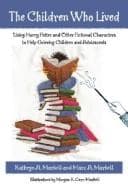
Cover of The children who lived

The children who lived

Josephine van Dolzen PEASE

2008

Harry Potter’s encounters with grief, as well as the grief experiences of other fictional characters, can be used by educators, counselors, and parents to help children and adolescents deal with their own loss issues. The Children Who Lived is a unique approach toward grief and loss in children. Focusing on fictional child and adolescent characters experiencing grief, this book uses classic tales and the Harry Potter books to help grieving children and adolescents. Included in the text and the downloadable resources are a number of activities, discussion questions, and games that could be used with grieving children and adolescents, based on the fictional characters in these books.

Why it's similar: Also popular in Parenting Books

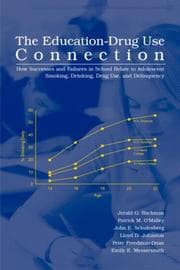
Cover of The education-drug use connection

The education-drug use connection

Jerald G. Bachman

2007

Does success in school protect teenagers from drug use? Does drug use impair scholastic success? This book tackles a key issue in adolescent development and health - the education-drug use connection. The authors examine the links and likely causal connections between educational experiences, delinquent behavior, and adolescent use of tobacco, alcohol, marijuana, and cocaine. The book uses data from the University of Michigan's Monitoring the Future project. It focuses on a large and nationally representative sample of 8th grade students in the United States who were initially surveyed in 1991-1993 and then followed over the vitally important developmental period between ages 14 and 22. The volume uses a variety of statistical analysis techniques, and the findings can be understood by individuals with limited, as well as with extensive, backgrounds in research design. The findings convincingly demonstrate that if young people can be successful in school, it can improve a broad range of outcomes in their lives, not the least of which is their ability to resist pressures to use drugs. The book provides: a summary of the findings and conclusions; a review of relevant literature; a detailed discussion of the survey and analysis methods; the academic attainment of those in the longitudinal panel; the delinquent behaviors of panel members as they relate to measures of educational success; and the patterns of initiation, continuation, and cessation for each substance: cigarettes, marijuana, cocaine, and alcohol. This book is intended for anyone who deals with education and/or substance use, including educational, developmental, and social psychologists; sociologists; epidemiologists; educators; and policy makers. The analysis of panel survey data, using a variety of techniques, will also appeal to survey methodologists and students.

Why it's similar: Similar focus on Education

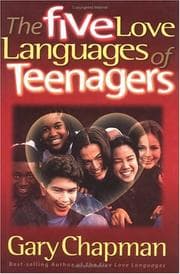
Cover of The five love languages of teenagers

The five love languages of teenagers

Gary Chapman

2000

Socially, mentally, and spiritually teenagers face a variety of pressures and stresses each day. Despite these peer pressures; it is still parents who can influence teens the most. Are you equipped to love your teenager effectively? Get equipped to be a better parent as The Five Love Languages of Teenagers explores the world in which teenagers live; explains the developmental changes; and give tools to help you identify and appropriately communicate in your teens love language. Get practical tips on loving your teen effectively and explore key issues in your teen’s life including anger and independence. Finally learn how to set boundaries that are enforced with discipline and consequences, and discover useful ways for the difficult task of loving when your teen fails. Get ready to discover how the principles of the five love languages can really work in the lives of your teens and family. Over 400,000 copies sold!

Why it's similar: Similar focus on Parenting

Frequently Asked Questions

What should I read after Positive child guidance?
Browse the similar books below — they're matched by subject overlap, author style, and reader preferences.
What books are most similar to Positive child guidance?
Our recommendations prioritize shared themes like Child development, Child psychology, Child rearing and books enjoyed by similar readers.
Which similar book is best for beginners?
Check page counts and summaries on each recommendation. Shorter titles with broader appeal are usually the best starting point.

Promote Your Book on BestsellerFinder

Reach thousands of readers with featured placements, homepage spots, and newsletter features.

Get bestseller picks in your inbox

Weekly curated book recommendations. Unsubscribe anytime.

Explore More

Affiliate Disclosure: As an Amazon Associate, we may earn from qualifying purchases. Book links on this page may be affiliate links. This does not affect our recommendations or the price you pay.