
Pick
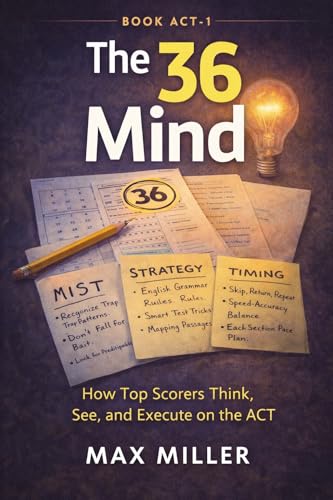
The 36 Mind: ACT
Alfred Smee
Systems and a calmer read for people who do better with strategy than with motivational posters.
Published 2007
Check availability on Amazon
Are you the author or publisher of this book?
Claim this book — FreeUpdate metadata for “The education-drug use connection” after verification.
BestsellerFinder Score unavailable — not enough catalog data yet.
Does success in school protect teenagers from drug use? Does drug use impair scholastic success? This book tackles a key issue in adolescent development and health - the education-drug use connection. The authors examine the links and likely causal connections between educational experiences, delinquent behavior, and adolescent use of tobacco, alcohol, marijuana, and cocaine. The book uses data from the University of Michigan's Monitoring the Future project. It focuses on a large and nationally representative sample of 8th grade students in the United States who were initially surveyed in 1991-1993 and then followed over the vitally important developmental period between ages 14 and 22. The volume uses a variety of statistical analysis techniques, and the findings can be understood by individuals with limited, as well as with extensive, backgrounds in research design. The findings convincingly demonstrate that if young people can be successful in school, it can improve a broad range of outcomes in their lives, not the least of which is their ability to resist pressures to use drugs. The book provides: a summary of the findings and conclusions; a review of relevant literature; a detailed discussion of the survey and analysis methods; the academic attainment of those in the longitudinal panel; the delinquent behaviors of panel members as they relate to measures of educational success; and the patterns of initiation, continuation, and cessation for each substance: cigarettes, marijuana, cocaine, and alcohol. This book is intended for anyone who deals with education and/or substance use, including educational, developmental, and social psychologists; sociologists; epidemiologists; educators; and policy makers. The analysis of panel survey data, using a variety of techniques, will also appeal to survey methodologists and students.
Alfred Smee
Systems and a calmer read for people who do better with strategy than with motivational posters.
Robin S. Sharman
Richard Carlson, author of the worldwide bestseller Don't Sweat the Small Stuff says that Family Wisdom is "a wonderful book that will help you become a better parent as well as a happier person." This is Robin's most profound book yet, rich with truly life-changing ideas on balancing work and family, transforming your family culture and creating a life that fills your heart with joy, fulfillment and peace. This book will show you exactly how to unlock your child's highest abilities, deepen your relationships and leave a lasting legacy.
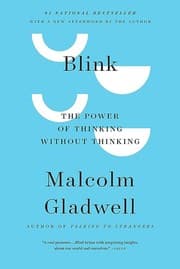
Malcolm Gladwell
Drawing on cutting-edge neuroscience and psychology and displaying all of the brilliance that made The Tipping Point a classic, Blink changes the way you'll understand every decision you make. Never again will you think about thinking the same way. Malcolm Gladwell redefined how we understand the world around us. Now, in Blink, he revolutionizes the way we understand the world within. Blink is a book about how we think without thinking, about choices that seem to be made in an instant - in the blink of an eye - that actually aren't as simple as they seem. Why are some people brilliant decision makers, while others are consistently inept? Why do some people follow their instincts and win, while others end up stumbling into error? How do our brains really work - in the office, in the classroom, in the kitchen, and in the bedroom? And why are the best decisions often those that are impossible to explain to others? In Blink we meet the psychologist who has learned to predict whether a marriage will last, based on a few minutes of observing a couple; the tennis coach who knows when a player will double-fault before the racket even makes contact with the ball; the antiquities experts who recognize a fake at a glance. Here, too, are great failures of "blink": the election of Warren Harding; "New Coke"; and the shooting of Amadou Diallo by police. Blink reveals that great decision makers aren't those who process the most information or spend the most time deliberating, but those who have perfected the art of "thin-slicing" - filtering the very few factors that matter from an overwhelming number of variables. Drawing on cutting-edge neuroscience and psychology and displaying all of the brilliance that made The Tipping Point a classic, Blink changes the way you understand every decision you make. Never again will you think about thinking the same way.
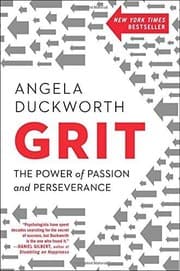
Format: Paperback
In this must-read book for anyone striving to succeed, pioneering psychologist Angela Duckworth shows parents, educators, athletes, students, and business people—both seasoned and new—that the secret to outstanding achievement is not talent but a focused persistence called “grit.” Why do some people succeed and others fail? Sharing new insights from her landmark research on grit, MacArthur “genius” Angela Duckworth explains why talent is hardly a guarantor of success. Rather, other factors can be even more crucial such as identifying our passions and following through on our commitments. Drawing on her own powerful story as the daughter of a scientist who frequently bemoaned her lack of smarts, Duckworth describes her winding path through teaching, business consulting, and neuroscience, which led to the hypothesis that what really drives success is not “genius” but a special blend of passion and long-term perseverance. As a professor at the University of Pennsylvania, Duckworth created her own “character lab” and set out to test her theory. Here, she takes readers into the field to visit teachers working in some of the toughest schools, cadets struggling through their first days at West Point, and young finalists in the National Spelling Bee. She also mines fascinating insights from history and shows what can be gleaned from modern experiments in peak performance. Finally, she shares what she’s learned from interviewing dozens of high achievers—from JP Morgan CEO Jamie Dimon to the cartoon editor of The New Yorker to Seattle Seahawks Coach Pete Carroll. Winningly personal, insightful, and even life-changing, Grit is a book about what goes through your head when you fall down, and how that—not talent or luck—makes all the difference.
Patti Lou Watkins, George A. Clum
This handbook offers a comprehensive overview of self-help therapies, exploring their theoretical underpinnings and practical applications for addressing mental health challenges. It delves into various therapeutic modalities, highlighting their effectiveness for patient education and promoting health behaviors. The collection also examines the role of communication media and bibliotherapy in facilitating self-care and treatment.
Spanish Edition by Dubner, Levitt, ANDREA MONTERO CUSSET (Translator) & 0 more
Comprobando que el estudio de la economía puede explicar cómo se relacionan fenómenos distintos, este bestseller internacional establece una nueva manera de ver al mundo. los autores explican el lado escondido de todo, desde crímenes violentos y nombres d
Jacob Abbott
Jacob Abbott's *Gentle Measures* advocates for a parenting approach grounded in understanding and consistent, yet kind, discipline. He emphasizes establishing a firm parental authority through reasoned guidance and positive reinforcement rather than harsh punishment. The book offers practical strategies for fostering obedience and moral development by appealing to a child's inherent desire for approval and a sense of order, all within a Christian framework.
John Stevens Cabot Abbott
This is a reproduction of the original artefact. Generally these books are created from careful scans of the original. This allows us to preserve the book accurately and present it in the way the author intended. Since the original versions are generally quite old, there may occasionally be certain imperfections within these reproductions. We're happy to make these classics available again for future generations to enjoy!
D.P. Michaels
Since its initial publication in 1979, this highly acclaimed reference has informed parents and teachers across the nation and around the world of the importance of reading aloud to their children. This updated edition features lists of more than 12,000 titles, from picture books to novels, that are great for reading aloud.
Affiliate Disclosure: As an Amazon Associate, we may earn from qualifying purchases. Book links on this page may be affiliate links. This does not affect our recommendations or the price you pay.