
Books Like “Blink

If you enjoyed Blink by Malcolm Gladwell, you likely appreciate Intuition, Education, Recovery. These similar reads match the tone, themes, and audience of the original.

Not sure what to read next? Ask BestsellerFinder AI →

IntuitionEducationRecoveryBusinessIntuïtiePrise de décision (Psychologie)Open Library Staff PicksBesluitvorming

Closest matches

Titles with overlapping themes, tone, and audience with your pick.

Cover of Handbook of Coaching Psychology

Handbook of Coaching Psychology

Stephen Palmer, Alison Whybrow

2014

Solution Focused Coaching in Practiceis a practical ‘how-to’ guide that provides an invaluable overview of Solution Focused Coaching skills and techniques. Reflecting upon published research on the solution focused approach, Bill O’Connell, Stephen Palmer and Helen Williams bring their own experiences of Solution Focused Coaching together with others in the field to cover topics such as: the coach-coachee relationship the role of technology in coaching inclusive coaching group and team coaching practical issues and skills. Incorporating coachee case studies, worksheets, practice tips and discussion points, the skills, strategies and techniques in this book are straightforward to apply and can be used in most coaching settings. This practical book is essential reading for experienced personal or executive coaches, managers considering introducing a new and better coaching culture for their staff, and for those just starting out on their coaching journey.

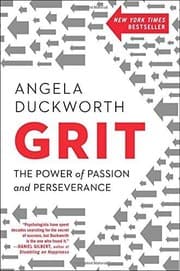
Cover of Grit

Grit

Angela Duckworth

2016

In this must-read book for anyone striving to succeed, pioneering psychologist Angela Duckworth shows parents, educators, athletes, students, and business people—both seasoned and new—that the secret to outstanding achievement is not talent but a focused persistence called “grit.” Why do some people succeed and others fail? Sharing new insights from her landmark research on grit, MacArthur “genius” Angela Duckworth explains why talent is hardly a guarantor of success. Rather, other factors can be even more crucial such as identifying our passions and following through on our commitments. Drawing on her own powerful story as the daughter of a scientist who frequently bemoaned her lack of smarts, Duckworth describes her winding path through teaching, business consulting, and neuroscience, which led to the hypothesis that what really drives success is not “genius” but a special blend of passion and long-term perseverance. As a professor at the University of Pennsylvania, Duckworth created her own “character lab” and set out to test her theory. Here, she takes readers into the field to visit teachers working in some of the toughest schools, cadets struggling through their first days at West Point, and young finalists in the National Spelling Bee. She also mines fascinating insights from history and shows what can be gleaned from modern experiments in peak performance. Finally, she shares what she’s learned from interviewing dozens of high achievers—from JP Morgan CEO Jamie Dimon to the cartoon editor of The New Yorker to Seattle Seahawks Coach Pete Carroll. Winningly personal, insightful, and even life-changing, Grit is a book about what goes through your head when you fall down, and how that—not talent or luck—makes all the difference.

Cover of The education-drug use connection

The education-drug use connection

Jerald G Bachman, Jerald G. Bachman, Patrick M. O'Malley, John E. Schulenberg, Lloyd D. Johnson, Lloyd D. Johnston, Peter Freedman-Doan, Emily E. Messersmith

2007

Does success in school protect teenagers from drug use? Does drug use impair scholastic success? This book tackles a key issue in adolescent development and health - the education-drug use connection. The authors examine the links and likely causal connections between educational experiences, delinquent behavior, and adolescent use of tobacco, alcohol, marijuana, and cocaine. The book uses data from the University of Michigan's Monitoring the Future project. It focuses on a large and nationally representative sample of 8th grade students in the United States who were initially surveyed in 1991-1993 and then followed over the vitally important developmental period between ages 14 and 22. The volume uses a variety of statistical analysis techniques, and the findings can be understood by individuals with limited, as well as with extensive, backgrounds in research design. The findings convincingly demonstrate that if young people can be successful in school, it can improve a broad range of outcomes in their lives, not the least of which is their ability to resist pressures to use drugs. The book provides: a summary of the findings and conclusions; a review of relevant literature; a detailed discussion of the survey and analysis methods; the academic attainment of those in the longitudinal panel; the delinquent behaviors of panel members as they relate to measures of educational success; and the patterns of initiation, continuation, and cessation for each substance: cigarettes, marijuana, cocaine, and alcohol. This book is intended for anyone who deals with education and/or substance use, including educational, developmental, and social psychologists; sociologists; epidemiologists; educators; and policy makers. The analysis of panel survey data, using a variety of techniques, will also appeal to survey methodologists and students.

Cover of The 48 Laws of Power

The 48 Laws of Power

Robert Greene

1998

Le pouvoir… on le désire, on le craint, on s’en protège… « Le sentiment de n’avoir aucun pouvoir sur les gens et les événements est difficilement supportable : l’impuissance rend malheureux. Personne ne réclame moins de pouvoir, tout le monde en veut davantage. » Amoral, intelligent, impitoyable et captivant, cet ouvrage colossal condense 3 000 ans d’histoire du pouvoir en 48 lois. Véritable manuel de la manipulation, il analyse la quintessence de cette sagesse millénaire, tirée de la vie des plus illustres stratèges (Sun Zi, Clausewitz), hommes d’État (Louis XIV, Bismarck, Talleyrand), courtisans (Castiglione, Gracián), séducteurs (Ninon de Lenclos, Casanova) et escrocs de l’histoire. Certaines lois reposent sur la prudence (loi no 1 : Ne surpassez jamais le maître), d’autres demandent de la dissimulation (loi no 7 : Laissez le travail aux autres, mais recueillez-en les lauriers), d’autres encore une absence totale de compassion (loi no 15 : Écrasez complètement l’ennemi). Toutes ces lois trouveront des applications dans votre vie de tous les jours… Car, soyez en certain : le monde est une immense cour où se trament toutes sortes d’intrigues. Au lieu de nier l’évidence, tâchez d’exceller dans la course au pouvoir. Des extraits, des vidéos, des interviews de Robert Greene sur son site www.robertgreene.fr

Cover of The Gift of Fear

The Gift of Fear

Gavin de Becker

1997

A carjacker lurking in a shopping mall parking lot. An abusive husband pounding on the door. A disgruntled employee brandishing a gun. These days, no one is safe from the specter of violence. But according to Gavin de Becker, everyone can feel safer, act safer, be safer -- if they learn how to listen to their own sixth sense about danger. De Becker has made a career of protecting people and predicting violent behavior. His firm handles security for many of Hollywood's top celebrities -- Madonna, Michael J. Fox, Geena Davis, Brooke Shields, and John Travolta, among others, according to press reports -- and his computerized risk-assessment system helps analyze threats to members of Congress and the Supreme Court. Now, in this unprecedented guide, de Becker shares his expertise with everyone. Covering all the dangerous situations people typically face -- street crime, domestic abuse, violence in the workplace -- de Becker provides real-life examples and offers specific advice on restraining orders, self-defense, and more. But the key to self-protection, he demonstrates, is learning how to trust -- and act on -- our own intuitions. For everyone who's ever felt threatened, this book is essential reading.

Cover of Creating love

Creating love

Bradshaw, John

1992

“Why are so many of us at times completely baffled by a relationship? How can we think we know someone so well and admit in the end that we hardly knew that person at all? Why do many people who work diligently and strenuously to gain wholeness and balance still feel so frustrated about having a fulfilling relationship? Why have so many people given up on love?”—from the Prologue John Bradshaw’s bestselling books and compelling PBS series have touched and changed millions of lives. Now, in Creating Love, he offers us a new way to understand our most crucial relationships—with our romantic partners and spouses, with our parents and children, with friends and co-workers, with ourselves, and with God. Bradshaw’s compassionate approach shows that many of us have been literally “entranced” by past experiences of counterfeit love, so we unknowingly re-create patterns that can never fulfill us. Here he provides both the insights and the precise tools we need to keep those destructive patterns from repeating in the present. And then he shows how we can open ourselves to the soul-building work of real love—and create healthy, loving relationships where we can be fully ourselves in every part of our lives.

Cover of How to retire happy

How to retire happy

Stan Hinden

2000

Nearly 2 million Americans reach retirement age each year. Before anyone can begin to enjoy all the leisure time ahead, there are difficult decisions to be made about a host of crucial issues, such as Social Security, HMOs, insurance, and estate planning. Written by award-winning Washington Post financial reporter and syndicated columnist, Stan Hinden, How to Retire Happy arms anyone approaching retirement with easy-to-comprehend answers to all their complicated questions. How to Retire Happy: • Provides practical advice and guidance on the 12 most complicated decisions to make before retiring • Covers all the bases, from where to live to how to invest, from health insurance to taking money out of IRAs • Goes beyond financial planning to offer practical advice on the key emotional and psychological issues surrounding retirement

Readers also enjoyed

Popular and highly rated books from our library you might like next.

Cover of The Development of the Theatre

The Development of the Theatre

Allardyce Nicoll

1927

Allardyce Nicoll's comprehensive survey traces the evolution of theatrical performance across Western civilization, from its ancient Greek origins through to the early 20th century. The book meticulously details the changing architectural designs of theaters, the innovations in stagecraft and scenery, and the development of dramatic forms and acting styles. Nicoll provides a rich historical context, demonstrating how societal shifts and cultural influences shaped theatrical presentation and the very nature of dramatic art.

Cover of Project Maven: A Marine Colonel, His Team, and the Dawn of AI Warfare

Project Maven: A Marine Colonel, His Team, and the Dawn of AI Warfare

Sebastian Mallaby

This book chronicles the improbable journey of Marine Colonel Gregory Boyington's team as they spearheaded Project Maven, a groundbreaking initiative to integrate artificial intelligence into drone warfare. Mallaby details the complex challenges of overcoming bureaucratic inertia and technical hurdles to equip military drones with AI for target identification. The narrative highlights the ethical and strategic implications of this nascent era of AI-driven conflict, showcasing the human ingenuity behind a significant technological leap.

Cover of I Am Not a Robot: My Year Using AI to Do (Almost) Everything

I Am Not a Robot: My Year Using AI to Do (Almost) Everything

Donella H. Meadows

This insightful memoir chronicles a year-long experiment where the author, Donella H. Meadows, attempted to delegate a significant portion of her daily tasks and responsibilities to artificial intelligence. Meadows meticulously documents her experiences, exploring the practical applications, surprising limitations, and evolving relationship between human agency and AI-driven assistance across various facets of her life. The narrative offers a compelling examination of the potential and pitfalls of integrating AI into everyday routines, prompting reflection on work, creativity, and the very definition of human productivity.

Cover of Building a StoryBrand 2.0: Clarify Your Message So Customers Will Listen

Building a StoryBrand 2.0: Clarify Your Message So Customers Will Listen

Marina Nitze

This revised edition of Building a StoryBrand presents a framework that helps businesses clarify their message by positioning the customer as the hero of their story. It outlines a seven-part framework to guide businesses in crafting clear and compelling communication that resonates with their target audience. The book provides practical strategies to eliminate jargon and confusion, enabling businesses to articulate their value proposition effectively and drive customer engagement.

Cover of You with the Sad Eyes: A Memoir

You with the Sad Eyes: A Memoir

Robert Greene

In "You with the Sad Eyes," Robert Greene offers a poignant and unflinching exploration of his personal journey through grief and loss, particularly following the death of his father. He delves into the complex emotional landscape of mourning, examining how sorrow can shape identity and inspire profound personal transformation. The memoir thoughtfully navigates the process of finding meaning and a renewed sense of self amidst profound sadness.

Cover of Suicidal Empathy: Dying to Be Kind

Suicidal Empathy: Dying to Be Kind

Gad Saad (Author, Narrator), Broadside Books (Publisher)

Gad Saad critically examines the pervasive and often detrimental influence of excessive empathy in contemporary Western society, arguing that a misguided focus on emotional validation can lead to a decline in individual resilience and societal progress. He contends that this "suicidal empathy" prioritizes comfort over truth and hinders the necessary confrontation of difficult realities. The book explores how this emotional overreach contributes to cultural stagnation and the erosion of objective standards.

Cover of The Primal Hunter 14: A LitRPG Adventure

The Primal Hunter 14: A LitRPG Adventure

Elle Kennedy

In the latest installment of this LitRPG series, Alex continues his relentless pursuit of ultimate power within the brutal confines of the Primal Hunt. Facing increasingly formidable foes and a shifting landscape of alliances, he must master new abilities and push his limits to survive. As the stakes escalate, Alex grapples with the moral implications of his quest and the sacrifices required to achieve his goals in this dangerous, evolving virtual world.

Cover of This Is Not About Running: A Memoir

This Is Not About Running: A Memoir

Isaac Fitzgerald

In "This Is Not About Running," Isaac Fitzgerald chronicles his complex relationship with his father, a former firefighter, and the physical and emotional scars that shaped his life. Through the lens of running, Fitzgerald explores themes of masculinity, trauma, and the search for self-acceptance, revealing how the discipline of the sport became a way to process his past and forge a new identity. This memoir is a poignant exploration of inherited legacies and the difficult, often circuitous, path toward healing.

Cover of Everything You Want Is on the Other Side of Hard

Everything You Want Is on the Other Side of Hard

Ken Rideout

Ken Rideout's book offers a pragmatic framework for achieving ambitious goals by reframing challenges as opportunities for growth. He emphasizes the importance of embracing discomfort and persevering through difficulties, arguing that true fulfillment and success are often found just beyond the point where one is tempted to quit. The work provides actionable strategies for developing resilience and maintaining motivation when faced with inevitable setbacks.

Cover of For the Love of the Grind: A Memoir

For the Love of the Grind: A Memoir

Julia Connors

This memoir chronicles Julia Connors's journey from the gritty world of professional wrestling to her current role as a respected motivational speaker. Connors shares candid reflections on the physical and emotional toll of her wrestling career, the challenges of reinventing herself, and the lessons learned in building resilience and purpose. The narrative explores themes of self-discovery, the pursuit of passion, and the enduring strength found in embracing life's demanding processes.

Frequently Asked Questions

What should I read after Blink?
Browse the similar books below — they're matched by subject overlap, author style, and reader preferences.
What books are most similar to Blink?
Our recommendations prioritize shared themes like Intuition, Education, Recovery and books enjoyed by similar readers.
Which similar book is best for beginners?
Check page counts and summaries on each recommendation. Shorter titles with broader appeal are usually the best starting point.

Promote Your Book on BestsellerFinder

Reach thousands of readers with featured placements, homepage spots, and newsletter features.

Get bestseller picks in your inbox

Weekly curated book recommendations. Unsubscribe anytime.

Explore More

Affiliate Disclosure: As an Amazon Associate, we may earn from qualifying purchases. Book links on this page may be affiliate links. This does not affect our recommendations or the price you pay.