Books Like “The read-aloud handbook

If you enjoyed The read-aloud handbook by Jim Trelease, William S. Pollack, Todd Shuster, you likely appreciate Education, Language Arts, Nonfiction. These similar reads match the tone, themes, and audience of the original.

Not sure what to read next? Ask BestsellerFinder AI →

EducationLanguage ArtsNonfictionOral readingReadingReferenceKindLautes Lesen

Closest matches

Titles with overlapping themes, tone, and audience with your pick.

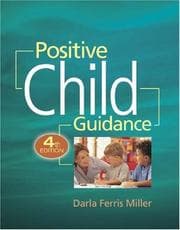
Cover of Positive child guidance

Positive child guidance

Darla Ferris Miller

1990

POSITIVE CHILD GUIDANCE, Eighth Edition, is ideal for guidance, behavior management and discipline, and classroom management courses in an early childhood education curriculum. This practical book outlines workable steps for creating a cooperative, respectful community of children and adults with special emphasis on sensitivity to cultural needs, cultural differences, and developmentally appropriate practice. Students will learn a range of practical, effective, and flexible guidance strategies based on principles of straightforward communication and assertiveness. This new edition includes critical advances in research and addresses the cultural trends that are changing the way babies and children are cared for today. Important Notice: Media content referenced within the product description or the product text may not be available in the ebook version.
Cover of The Process of Parenting

The Process of Parenting

Jane B. Brooks

1981

The Process of Parenting describes the many ways parents and caregivers can translate their love for children into effective parenting behavior. The book has strong emphasis on the development process in terms of children’s and parents’ growth as complex individuals, and in the changing nature of their relationships over time. Because parents and children are distinct individuals, the book includes a problem-solving approach that can help parents arrive at solutions that fit them, their children, and their life circumstances. The ninth edition includes new first person narrative boxes and more emphasis on social context, new evidence-based parenting programs, and international parenting.

Cover of Seeing young children

Seeing young children

Warren R. Bentzen

1985

Seeing Young Children is an extensive guide to observing and recording behavior in children from birth through age eight. It begins by addressing the basic meaning of observation and why it is so important. This includes a discussion of the theoretical and practical aspects of observing and recording behavior. Detailed information on development, behavior and functioning in children in this age group enables parents and professionals to make meaningful observation, recordings, and evaluations. A large portion of the book concentrates on in-depth reviews of recording techniques and instruments, as well as the advantages and disadvantages of each. Finally, the last five chapters offer a wealth of observation exercises readers can immediately put to use. Specific by age group, each of these chapters contains observation objectives, instructions as to procedure, and background information on many functional areas, all aimed at collecting and using quality data to the benefit of children.

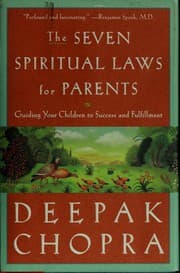
Cover of The Seven Spiritual Laws For Parents

The Seven Spiritual Laws For Parents

Deepak Chopra

1997

The Seven Spiritual Laws of Success was a phenomenally successful book--more than 1,600,000 copies were sold--and as copies were passed between friends and loved ones, it touched millions more lives. Its author, Deepak Chopra, received thousands of letters from readers, many of whom expressed the desire to convey those same principles to their children, along with questions about how to do so. This book, The Seven Spiritual Laws for Parents, is Dr. Chopra's answer to those letters and to parents around the world who wish to raise children with values that satisfy spiritual needs as well as create the experience of abundance. After a general discussion of parenting and the gift of spirit, this book explores specific ways to practice the Seven Spiritual Laws as a family, how to convey these laws to children depending on their ages, and how to embody them in age-specific activities each day, beginning on Sundays with the Law of Pure Potentiality. The Seven Spiritual Laws for Parents moves us beyond private triumphs and failures to experience the spiritual nature of communion with family, to share with those closest to us the infinite riches of innocence and love.

Cover of 1-2-3 magic

1-2-3 magic

Thomas W. Phelan

1995

America's #1 child discipline book for over 20 years 1-2-3 Magic has helped millions of parents, teachers, and caregivers all over the world establish an effective, appropriate discipline system that helps children listen better and motivate themselves to behave well. Dr. Thomas Phelan is an internationally renowned expert in his field and has broken down the elements of effective parenting into an easy-to-understand program that can work for any family or in a classroom or caregiving scenario. Recommended by parenting experts for over twenty years, 1-2-3 Magic is a cornerstone book in the parenting category that combines timeless advice with fresh, up-to-date anecdotes and content, and is a must-have book for any caregiver hoping to raise happy, healthy, responsible kids.

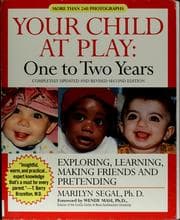
Cover of Your child at play

Your child at play

Marilyn M. Segal

1985

Packed with learning activities, games, poems, and recipes, as well as anecdotes and advice, the eight sections focus on: Individual Differences and Common Threads (distinguishing between real and pretend; concern with fairness; self-awareness) The Questions Children Ask (the physical world; the natural world; the social world) Friends (best friends; controversies and conflicts; sibling play) Active Play (contact and cuddling; physical feats; sports) Creative Play (music; art; crafts; storytelling and jokes) Pretend Play (actor play and dressing up; imaginary playmates; reemergence of pretending) School Play (reading; writing; arithmetic; collecting facts; science) Family (attachment and separation; family continuity; traditions)

Cover of Self-esteem, a family affair

Self-esteem, a family affair

Jean Illsley Clarke

1978

Serving as a source of parental support, this book provides a range of imaginative and effective suggestions for dealing with each family member in ways that nourish self-esteem for all involved. Strong self-esteem is a critical ingredient for human happiness--and its development begins at home in the nurturing interactions between children and adults. Clarke's unique approach to building self-esteem begins with her belief that this is indeed a "family affair." Rather than offering collection of dictatorial "should," Self-Esteem: A Family Affair instead serves as a source of parental support, providing a broad range of imaginative and effective suggestions for dealing with individual family members in ways that nourish self-esteem for all involved.Throughout her book, Clarke encourages parents to claim their strengths and to trust their judgment as they make decisions about appropriate child care. Recognizing, too, that kids' needs are best met by adults whose own needs have not been neglected, Clarke offers a range of creative and workable options for parents to build the self-esteem of children while also caring for their emotional needs.Jean Illsley Clarke, author of Hazelden's Growing Up Again: Parenting Ourselves, Parenting Our Children, is a writer and an internationally recognized parent educator who specializes in the areas of parenting, self-esteem, family dynamics, and adult children of alcoholics. She currently directs the Self-Esteem Center, which she founded in 1975, and lives in Plymouth, Minnesota.

Cover of Handbook of Parenting

Handbook of Parenting

Marc H. Bornstein

1995

This highly anticipated third edition of the Handbook of Parentingbrings together an array of field-leading experts who have worked in different ways toward understanding the many diverse aspects of parenting. Contributors to the Handbooklook to the most recent research and thinking to shed light on topics every parent, professional, and policymaker wonders about. Parenting is a perennially "hot" topic. After all, everyone who has ever lived has been parented, and the vast majority of people become parents themselves. No wonder bookstores house shelves of "how-to" parenting books and magazine racks in pharmacies and airports overflow with periodicals that feature parenting advice. However, almost none of these is evidence-based. The Handbook of Parentingis. Period. Each chapter has been written to be read and absorbed in a single sitting, and includes historical considerations of the topic, a discussion of central issues and theory, a review of classical and modern research, and forecasts of future directions of theory and research. Together, the five volumes in the Handbookcover Children and Parenting, the Biology and Ecology of Parenting, Being and Becoming a Parent, Social Conditions and Applied Parenting, and the Practice of Parenting. Volume 1, Children and Parenting,considers parenthood as a functional status in the life cycle: Parents protect, nurture, and teach their progeny, even if human development is more dynamic than can be determined by parental caregiving alone. Volume 1 of the Handbook of Parentingbegins with chapters concerned with how children influence parenting. Notable are their more obvious characteristics, like child age or developmental stage; but subtler ones, like child gender, physical state, temperament, mental ability, and other individual-differences factors, are also instrumental. The chapters in Part I, on Parenting across the Lifespan, discuss the unique rewards and special demands of parenting children of different ages and stages -

Readers also enjoyed

Popular and highly rated books from our library you might like next.

Cover of The 48 Laws of Power

The 48 Laws of Power

Robert Greene

1998

Le pouvoir… on le désire, on le craint, on s’en protège… « Le sentiment de n’avoir aucun pouvoir sur les gens et les événements est difficilement supportable : l’impuissance rend malheureux. Personne ne réclame moins de pouvoir, tout le monde en veut davantage. » Amoral, intelligent, impitoyable et captivant, cet ouvrage colossal condense 3 000 ans d’histoire du pouvoir en 48 lois. Véritable manuel de la manipulation, il analyse la quintessence de cette sagesse millénaire, tirée de la vie des plus illustres stratèges (Sun Zi, Clausewitz), hommes d’État (Louis XIV, Bismarck, Talleyrand), courtisans (Castiglione, Gracián), séducteurs (Ninon de Lenclos, Casanova) et escrocs de l’histoire. Certaines lois reposent sur la prudence (loi no 1 : Ne surpassez jamais le maître), d’autres demandent de la dissimulation (loi no 7 : Laissez le travail aux autres, mais recueillez-en les lauriers), d’autres encore une absence totale de compassion (loi no 15 : Écrasez complètement l’ennemi). Toutes ces lois trouveront des applications dans votre vie de tous les jours… Car, soyez en certain : le monde est une immense cour où se trament toutes sortes d’intrigues. Au lieu de nier l’évidence, tâchez d’exceller dans la course au pouvoir. Des extraits, des vidéos, des interviews de Robert Greene sur son site www.robertgreene.fr

Cover of How to retire happy

How to retire happy

Stan Hinden

2000

Nearly 2 million Americans reach retirement age each year. Before anyone can begin to enjoy all the leisure time ahead, there are difficult decisions to be made about a host of crucial issues, such as Social Security, HMOs, insurance, and estate planning. Written by award-winning Washington Post financial reporter and syndicated columnist, Stan Hinden, How to Retire Happy arms anyone approaching retirement with easy-to-comprehend answers to all their complicated questions. How to Retire Happy: • Provides practical advice and guidance on the 12 most complicated decisions to make before retiring • Covers all the bases, from where to live to how to invest, from health insurance to taking money out of IRAs • Goes beyond financial planning to offer practical advice on the key emotional and psychological issues surrounding retirement

Cover of The Power of Your Subconscious Mind

The Power of Your Subconscious Mind

Joseph Murphy

1963

He visto cómo les ocurren milagros a hombres y mujeres de toda condición alrededor del planeta. Los milagros también le ocurrirán a usted cuando comience a utilizar el poder mágico de su mente subconsciente. Este libro se propone enseñarle que su manera habitual de pensar y los esquemas de su imaginación configuran y crean su destino; pues lo que el hombre piensa en su mente inconsciente que es, eso es. ¿Por qué un hombre está triste y otro alegre? ¿Por qué un hombre es jubiloso y próspero, y otro, pobre y mísero? ¿Por qué un hombre está temeroso y lleno de ansiedad y otro exuda fe y confianza? ¿Por qué un hombre tiene una hermosa y elegante mansión mientras que otro arrastra una mezquina existencia en un barrio miserable? ¿Por qué un hombre constituye todo un éxito mientras que otro es un desgraciado fracaso?¿Por qué un orador se distingue y es inmensamente popular, y otro mediocre e impopular? ¿Por qué un hombre es un genio en su trabajo mientras que otro se mata trabajando toda su vida sin hacer ni conseguir nada que valga realmente la pena? ¿Por qué sana un hombre de una de esas llamadas enfermedades incurables y otro no? ¿Por qué tanta gente religiosa, que es bondadosa y amable, sufre los tormentos de los condenados en cuerpo y alma? ¿Por qué tanta gente inmoral e impía tiene éxito, y prospera, y goza de radiante salud? ¿Por qué una mujer tiene un matrimonio feliz y su hermana es desgraciada y está llena de frustraciones?¿Existe una respuesta a estas interrogantes en las operaciones mente consciente y su mente subconsciente? Indudablemente que sí. Los objetivos específicos son: contestar y aclarar las preguntas anteriores y muchas otras de naturaleza semejante. Dr.Joseph Murphy

Cover of Feeling Is the Secret

Feeling Is the Secret

Neville Goddard

2004

The central premise of the book revolves around the idea that our predominant feelings and emotions shape our reality. Goddard argues that the key to manifesting our desires lies not only in visualizing them but also in feeling as though they have already been realized. Goddard emphasizes the importance of assuming the feeling of the wish fulfilled, meaning that individuals should immerse themselves emotionally in the experience of having already achieved their desires. He asserts that this emotional state, when sustained consistently, impresses upon the subconscious mind and sets in motion the forces necessary to bring those desires into physical reality. Furthermore, Goddard discusses the concept of mental imagery and its power to create and shape our experiences. He suggests that individuals should use their imagination to create vivid mental scenes that evoke the desired feelings, thereby attracting corresponding circumstances and events. "Feeling Is The Secret" serves as a practical guide for harnessing the creative power of the mind to transform one's life. It encourages readers to cultivate a sense of inner conviction and emotional congruence with their desires, ultimately leading to the manifestation of their dreams and aspirations.

Cover of The magic of believing

The magic of believing

Claude M. Bristol

1948

Claude M. Bristol's "The Magic of Believing" explores the profound impact of a positive and unwavering belief system on achieving one's goals. The book argues that cultivating a strong conviction in the possibility of success, coupled with persistent action, is the fundamental driver behind personal and professional accomplishments. Bristol provides practical insights and real-world examples to illustrate how harnessing the power of belief can overcome obstacles and manifest desired outcomes.

Frequently Asked Questions

What should I read after The read-aloud handbook?
Browse the similar books below — they're matched by subject overlap, author style, and reader preferences.
What books are most similar to The read-aloud handbook?
Our recommendations prioritize shared themes like Education, Language Arts, Nonfiction and books enjoyed by similar readers.
Which similar book is best for beginners?
Check page counts and summaries on each recommendation. Shorter titles with broader appeal are usually the best starting point.

Promote Your Book on BestsellerFinder

Reach thousands of readers with featured placements, homepage spots, and newsletter features.

Get bestseller picks in your inbox

Weekly curated book recommendations. Unsubscribe anytime.

Explore More

Affiliate Disclosure: As an Amazon Associate, we may earn from qualifying purchases. Book links on this page may be affiliate links. This does not affect our recommendations or the price you pay.