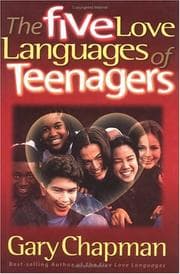
Cover of The five love languages of teenagers

The five love languages of teenagers

by Gary Chapman

Published 2000

View on Amazon

Check availability on Amazon

Are you the author or publisher of this book?

Claim this book — Free

Update metadata for “The five love languages of teenagers” after verification.

BestsellerFinder Score unavailable — not enough catalog data yet.

Socially, mentally, and spiritually teenagers face a variety of pressures and stresses each day. Despite these peer pressures; it is still parents who can influence teens the most. Are you equipped to love your teenager effectively? Get equipped to be a better parent as The Five Love Languages of Teenagers explores the world in which teenagers live; explains the developmental changes; and give tools to help you identify and appropriately communicate in your teens love language. Get practical tips on loving your teen effectively and explore key issues in your teen’s life including anger and independence. Finally learn how to set boundaries that are enforced with discipline and consequences, and discover useful ways for the difficult task of loving when your teen fails. Get ready to discover how the principles of the five love languages can really work in the lives of your teens and family. Over 400,000 copies sold!

ParentingAdolescent psychologyFamily relationshipsInterpersonal communication in adolescenceParent and teenagerTeenagersTeenaersInterpersonal communication in childrenParent and childLoveReligion

Similar Books

Cover of Parenting teens with love & logic

Parenting teens with love & logic

Foster Cline

Parents need help to teach their teens how to make decisions responsibly—and do so without going crazy or damaging the relationship. Parenting Teens with Love and Logic, from the duo who wrote Parenting with Love and Logic, empowers parents with the skills necessary to set limits, teach important skills, and encourage decision-making in their teenagers. Covering a wide range of real-life issues teens face—including divorce, ADD, addiction, and sex—this book gives you the tools to help your teens find their identity and grow in maturity. Indexed for easy reference.
Cover of Toughlove

Toughlove

Phyllis York

How do you love an “impossible” teenager? “An effective way of uniting parents to square off against the youngsters’ own powerful peer group that endorses drugtaking and rebelliousness.”—Time Thousands of parents are finding new hope in dealing with rebellious teenagers through Toughlove, a self-help program which has grown to over eight hundred groups throughout the United States and Canada in less than six years. Now, for the first time in book form, the founders tell how Toughlove works. “You need Toughlove if you feel helpless and unable to cope with your teenagers’ behavior or if you feel victimized by them, disappointed in yourself as a parent, guilty because you think you have done a rotten job and are frightened bythe potential for violence in yourself and your children. . . . Remember, you have the right to a night’s sleep without where your kid is—or being awakened by a phone call from the police or a hospital or a drunk teenager who’s stranded somewhere.”—Ann Landers

Cover of The five love languages of children

The five love languages of children

Gary Chapman, 王雲良

Does your child speak a different language? Sometimes they wager for your attention, and other times they ignore you completely. Sometimes they are filled with gratitude and affection, and other times they seem totally indifferent. Attitude. Behavior. Development. Everything depends on the love relationship between you and your child. When children feel loved, they do their best. But how can you make sure your child feels loved? Since 1992, Dr. Gary Chapman's best-selling book The Five Love Languages has helped more than 300,000 couples develop stronger, more fulfilling relationships by teaching them to speak each others love language. Each child, too, expresses and receives love through one of five different communication styles. And your love language may be totally different from that of your child. While you are doing all you can to show your child love, he may be hearing it as something completely opposite.Discover your child's primary language and learn what you can do to effectively convey unconditional feelings of respect, affection, and commitment that will resonate in your child's emotions and behavior.

Cover of Men Are from Mars, Women Are from Venus, Children Are from Heaven

Men Are from Mars, Women Are from Venus, Children Are from Heaven

John Gray

John Gray's work explores the fundamental differences in communication and emotional needs between men and women, applying these insights to family dynamics. The book delves into how these distinct perspectives impact marital relationships and parenting, offering strategies to navigate misunderstandings and foster greater harmony. It examines how understanding sex differences is crucial for effective interpersonal communication within the family unit, ultimately aiming to cultivate a more loving and supportive environment for all members.

Cover of Growing up fast

Growing up fast

Bonnie J. Ross Leadbeater, Niobe Way

The first edition of Growing Up Fast attempted to counter the stereotype of poor, minority adolescent mothers and describe the diversity of their educational, work, parenting, and relationship experiences. The volume followed a strengths-based approach to understanding why some mothers appeared resilient to the stresses of early parenting, compared to their peers, and what obstacles undermine resiliency for some of these young women. We hear their stories in their own words. We also see how many disadvantaged mothers go on to succeed in school, work, and parenting while avoiding many of the risk associated with teen parenting . The research is based on a six-year study of 120 young disadvantaged mothers and their children from New York City. It uniquely combines the analysis of longitudinal questionnaire data with qualitative analysis of extensive interviews conducted with these women focusing on the first six years after their child was born. A past winner of the Society for Research on Adolescence best book award, Growing Up Fast is a fascinating study of human resilience that will continue to be recognized for its contribution to individuals involved in program development and policymaking with teenage parenting. A new introductory chapter to the book suggests that we can look at the previous findings through a new lens that emphasizes not only the diversity of outcomes for young mothers and the sources of their strengths, but also asks what we can learn from these women about supporting their educational and work goals, as they transition to adulthood. New attention to emerging adulthood shows that this is a critical stage of life when the foundations for health and healthy life styles are laid down. Developmental tasks of this phase include building the capacity for financial and residential independence through post-secondary education and job training, and establishing stable sources of support from parents, romantic partners, and peers for all youth. Leadbea

Cover of The parent survival guide

The parent survival guide

Theresa Kellam

When parents turn to the parenting/self-help section of their local bookstore, they are looking for both practical guidance and a childrearing philosophy that resonates with them - an approach they can relate to and be comfortable implementing in their own household. In The Parent Survival Guide: From Chaos to Harmony in Ten Weeks or Less, Theresa Kellam presents a way to strengthen the relationship with the child that simultaneously promotes the parent's own emotional healing and wellness. Grounded in a research-supported therapeutic technique that uses structured play time as the catalyst for interpersonal connection and growth, Kellam's model is subtle in its simplicity. Through a series of guided exercises, Kellam gives parents the skills they need to begin to set aside special playtimes with their children, during which the most important part of the process is simply "being there" in a way that promotes healing, growth, and communication. The beauty of this approach is that in only 30 minutes, once a week, the results can be seen in only a few weeks. Features of the book include: "Parent Survival Tip" at the start of each chapter Original cartoon illustrations bring text to life Short but insightful workseet questions bring focus to the program The Parent Survival Guide is structured over a series of 10 chapters, which can be read in conjunction with the 10-sessions of the CPRT workshops for those parents enrolled in a formal filial training program. But the material in the book is designed to be read and implemented by anyone. The author is not only a licensed psychologist and filial therapist, but she has also gone through the program with her own son and continues to rely on its principles within her family.

Explore More

Affiliate Disclosure: As an Amazon Associate, we may earn from qualifying purchases. Book links on this page may be affiliate links. This does not affect our recommendations or the price you pay.