Books Like “The five love languages of teenagers

If you enjoyed The five love languages of teenagers by Gary D. Chapman, you likely appreciate Parenting, Adolescent psychology, Family relationships. These similar reads match the tone, themes, and audience of the original.

Not sure what to read next? Ask BestsellerFinder AI →

ParentingAdolescent psychologyFamily relationshipsInterpersonal communication in adolescenceParent and teenagerTeenagersTeenaersInterpersonal communication in children

Closest matches

Titles with overlapping themes, tone, and audience with your pick.

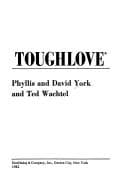
Cover of Toughlove

Toughlove

Phyllis York

1980

How do you love an “impossible” teenager? “An effective way of uniting parents to square off against the youngsters’ own powerful peer group that endorses drugtaking and rebelliousness.”—Time Thousands of parents are finding new hope in dealing with rebellious teenagers through Toughlove, a self-help program which has grown to over eight hundred groups throughout the United States and Canada in less than six years. Now, for the first time in book form, the founders tell how Toughlove works. “You need Toughlove if you feel helpless and unable to cope with your teenagers’ behavior or if you feel victimized by them, disappointed in yourself as a parent, guilty because you think you have done a rotten job and are frightened bythe potential for violence in yourself and your children. . . . Remember, you have the right to a night’s sleep without where your kid is—or being awakened by a phone call from the police or a hospital or a drunk teenager who’s stranded somewhere.”—Ann Landers

Why it's similar: Similar focus on Family relationships

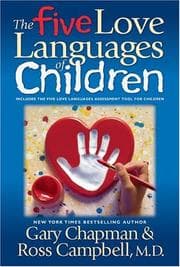
Cover of The five love languages of children

The five love languages of children

Gary Chapman, 王雲良

1997

Does your child speak a different language? Sometimes they wager for your attention, and other times they ignore you completely. Sometimes they are filled with gratitude and affection, and other times they seem totally indifferent. Attitude. Behavior. Development. Everything depends on the love relationship between you and your child. When children feel loved, they do their best. But how can you make sure your child feels loved? Since 1992, Dr. Gary Chapman's best-selling book The Five Love Languages has helped more than 300,000 couples develop stronger, more fulfilling relationships by teaching them to speak each others love language. Each child, too, expresses and receives love through one of five different communication styles. And your love language may be totally different from that of your child. While you are doing all you can to show your child love, he may be hearing it as something completely opposite.Discover your child's primary language and learn what you can do to effectively convey unconditional feelings of respect, affection, and commitment that will resonate in your child's emotions and behavior.

Why it's similar: More from Gary Chapman

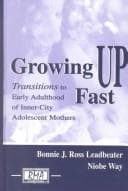
Cover of Growing up fast

Growing up fast

Bonnie J. Ross Leadbeater, Niobe Way

2001

The first edition of Growing Up Fast attempted to counter the stereotype of poor, minority adolescent mothers and describe the diversity of their educational, work, parenting, and relationship experiences. The volume followed a strengths-based approach to understanding why some mothers appeared resilient to the stresses of early parenting, compared to their peers, and what obstacles undermine resiliency for some of these young women. We hear their stories in their own words. We also see how many disadvantaged mothers go on to succeed in school, work, and parenting while avoiding many of the risk associated with teen parenting . The research is based on a six-year study of 120 young disadvantaged mothers and their children from New York City. It uniquely combines the analysis of longitudinal questionnaire data with qualitative analysis of extensive interviews conducted with these women focusing on the first six years after their child was born. A past winner of the Society for Research on Adolescence best book award, Growing Up Fast is a fascinating study of human resilience that will continue to be recognized for its contribution to individuals involved in program development and policymaking with teenage parenting. A new introductory chapter to the book suggests that we can look at the previous findings through a new lens that emphasizes not only the diversity of outcomes for young mothers and the sources of their strengths, but also asks what we can learn from these women about supporting their educational and work goals, as they transition to adulthood. New attention to emerging adulthood shows that this is a critical stage of life when the foundations for health and healthy life styles are laid down. Developmental tasks of this phase include building the capacity for financial and residential independence through post-secondary education and job training, and establishing stable sources of support from parents, romantic partners, and peers for all youth. Leadbea

Why it's similar: Similar focus on Adolescent psychology

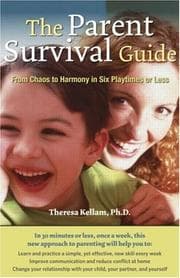
Cover of The parent survival guide

The parent survival guide

Theresa Kellam

2008

When parents turn to the parenting/self-help section of their local bookstore, they are looking for both practical guidance and a childrearing philosophy that resonates with them - an approach they can relate to and be comfortable implementing in their own household. In The Parent Survival Guide: From Chaos to Harmony in Ten Weeks or Less, Theresa Kellam presents a way to strengthen the relationship with the child that simultaneously promotes the parent's own emotional healing and wellness. Grounded in a research-supported therapeutic technique that uses structured play time as the catalyst for interpersonal connection and growth, Kellam's model is subtle in its simplicity. Through a series of guided exercises, Kellam gives parents the skills they need to begin to set aside special playtimes with their children, during which the most important part of the process is simply "being there" in a way that promotes healing, growth, and communication. The beauty of this approach is that in only 30 minutes, once a week, the results can be seen in only a few weeks. Features of the book include: "Parent Survival Tip" at the start of each chapter Original cartoon illustrations bring text to life Short but insightful workseet questions bring focus to the program The Parent Survival Guide is structured over a series of 10 chapters, which can be read in conjunction with the 10-sessions of the CPRT workshops for those parents enrolled in a formal filial training program. But the material in the book is designed to be read and implemented by anyone. The author is not only a licensed psychologist and filial therapist, but she has also gone through the program with her own son and continues to rely on its principles within her family.

Why it's similar: Similar focus on Parenting

Readers also enjoyed

Popular and highly rated books from our library you might like next.

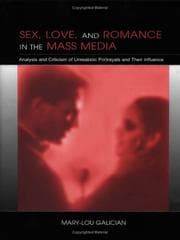
Cover of Sex, Love, and Romance in the Mass Media

Sex, Love, and Romance in the Mass Media

Mary-Lou Galician

1600

This accessible yet research-based text offers both foundational theories and practical applications of analysis and criticism of mass media portrayals of sex, love, and romance in a wide variety of mass media, from entertainment to advertising to news. The multidisciplinary methodological perspective comes out of a media literacy approach and embraces a variety of traditions along the quantitative-qualitative continuum. Focused on portrayals of male-female coupleship, the book is centered around the 12 major myths and stereotypes of Galician's Dr. FUN!'s Mass Media Love Quiz©, each of which has a corresponding Dr. Galician Prescription® that encapsulates healthy strategies--rarely found in the mass media--to counteract that myth or stereotype. Readers learn how to identify, illustrate, deconstruct, evaluate, and reframe the mass media's mythic and stereotypic portrayals of sex, love, and romance. They also learn how to use their own formal critical evaluations to clarify their own values and--as media consumers or mass communication creators--to share their insights with others. Thus, the learning objectives encompass all three major educational domains: cognitive, affective, and behavioral. Part I of this book covers the five foundations: myths and stereotypes of love and coupleship models of realistic and constructive love and coupleship mass media storytelling approaches, techniques, and devices research and theories of mass media effects; and strategies and skills of media literacy Part II is devoted to exploring the myths and stereotypes identified in the Quiz. Following several brief case studies and a summary of related research and commentary, each chapter focuses on analyses and criticisms of portrayals of sex, love, and romance in the content of news and advertising, as well as entertainment using Galician's Seven-Step Dis-illusioning Directions. Each chapter concludes with a "Dis-illusion Digest." While critical of unrealistic portrayals and the damage t

Why it's similar: Also popular in Books About Friendship

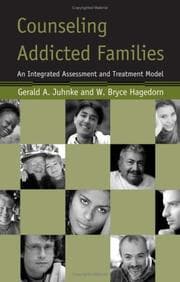
Cover of Counseling addicted families

Counseling addicted families

Tara Ellsworth, Nursity Press

2006

Although one person's addiction almost inevitably affects his or her family members, a surprising number of treatment models appear to operate under the assumption that an individual's addiction occurs in a vacuum. By not paying sufficient attention to preexisting family dynamics-whether dysfunctional, supportive, or somewhere in between-counselors run the risk of not fully understanding the roots of an individual's addictions or the obstacles to his recovery; as a result, counselors may undermine their own treatment efforts both by neglecting any underlying family problems and by failing to capitalize upon a family's potential assistance in an intervention with the addicted individual. In Counseling Addicted Families, Gerald A. Juhnke and William Bryce Hagedorn address this problem head-on. Recognizing that even those treatment providers who understand the importance of the familial context of addiction are often stymied by the variety of family treatment theories and their often imperfect fit for cases of addiction, Juhnke and Hagedorn provide a truly integrated model for assessment and treatment. Based upon the authors' combined 23 years of experience in clinical and treatment supervision, the Integrated Family Addictions Model consists of six progressive treatment tiers which organize the relevant family treatment theories into a graduated and coherent sequence, beginning with the briefest and least costly forms of therapy. If one of the lower tiers allows clients to reach their treatment goals, the patient and therapist need not waste time and resources following the full continuum. If, however, their needs are still unmet, they can progress in a logical fashion to more advanced and intensive forms of therapy. The book is divided into three broad topic areas designed to provide counselors and graduate students with essential information both about addictions and about the practical applications of various treatment theories. Part One discusses the prevalence of

Why it's similar: Also popular in Parenting Books

Frequently Asked Questions

What should I read after The five love languages of teenagers?
Browse the similar books below — they're matched by subject overlap, author style, and reader preferences.
What books are most similar to The five love languages of teenagers?
Our recommendations prioritize shared themes like Parenting, Adolescent psychology, Family relationships and books enjoyed by similar readers.
Which similar book is best for beginners?
Check page counts and summaries on each recommendation. Shorter titles with broader appeal are usually the best starting point.

Promote Your Book on BestsellerFinder

Reach thousands of readers with featured placements, homepage spots, and newsletter features.

Get bestseller picks in your inbox

Weekly curated book recommendations. Unsubscribe anytime.

Explore More

Affiliate Disclosure: As an Amazon Associate, we may earn from qualifying purchases. Book links on this page may be affiliate links. This does not affect our recommendations or the price you pay.