
Books Like “Parenting teens with love & logic

If you enjoyed Parenting teens with love & logic by Foster Cline, you might also like these similar reads.

Cover of Building resilience in children and teens

Building resilience in children and teens

Kenneth R. Ginsburg, Martha M. Jablow

2005

Confronting the overwhelming amount of stress kids face today, this invaluable guide offers coping strategies for facing the combined elements of academic performance, high achievement standards, media messages, peer pressure, and family tension. The handbook acknowledges that adolescents commonly survive stress by either indulging in unhealthy behaviors or giving up completely, and its suggested solutions are aimed at strengthening resilience. The proposed plan enables kids from the age of 18 months to 18 years to build the seven crucial "C's"--Competence, confidence, connection, character, co.

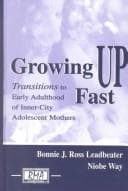
Cover of Growing up fast

Growing up fast

Bonnie J. Ross Leadbeater, Niobe Way

2001

The first edition of Growing Up Fast attempted to counter the stereotype of poor, minority adolescent mothers and describe the diversity of their educational, work, parenting, and relationship experiences. The volume followed a strengths-based approach to understanding why some mothers appeared resilient to the stresses of early parenting, compared to their peers, and what obstacles undermine resiliency for some of these young women. We hear their stories in their own words. We also see how many disadvantaged mothers go on to succeed in school, work, and parenting while avoiding many of the risk associated with teen parenting . The research is based on a six-year study of 120 young disadvantaged mothers and their children from New York City. It uniquely combines the analysis of longitudinal questionnaire data with qualitative analysis of extensive interviews conducted with these women focusing on the first six years after their child was born. A past winner of the Society for Research on Adolescence best book award, Growing Up Fast is a fascinating study of human resilience that will continue to be recognized for its contribution to individuals involved in program development and policymaking with teenage parenting. A new introductory chapter to the book suggests that we can look at the previous findings through a new lens that emphasizes not only the diversity of outcomes for young mothers and the sources of their strengths, but also asks what we can learn from these women about supporting their educational and work goals, as they transition to adulthood. New attention to emerging adulthood shows that this is a critical stage of life when the foundations for health and healthy life styles are laid down. Developmental tasks of this phase include building the capacity for financial and residential independence through post-secondary education and job training, and establishing stable sources of support from parents, romantic partners, and peers for all youth. Leadbea

Cover of Toughlove

Toughlove

Phyllis York

1980

How do you love an “impossible” teenager? “An effective way of uniting parents to square off against the youngsters’ own powerful peer group that endorses drugtaking and rebelliousness.”—Time Thousands of parents are finding new hope in dealing with rebellious teenagers through Toughlove, a self-help program which has grown to over eight hundred groups throughout the United States and Canada in less than six years. Now, for the first time in book form, the founders tell how Toughlove works. “You need Toughlove if you feel helpless and unable to cope with your teenagers’ behavior or if you feel victimized by them, disappointed in yourself as a parent, guilty because you think you have done a rotten job and are frightened bythe potential for violence in yourself and your children. . . . Remember, you have the right to a night’s sleep without where your kid is—or being awakened by a phone call from the police or a hospital or a drunk teenager who’s stranded somewhere.”—Ann Landers

Cover of The five love languages of teenagers

The five love languages of teenagers

Gary D. Chapman

2000

Socially, mentally, and spiritually teenagers face a variety of pressures and stresses each day. Despite these peer pressures; it is still parents who can influence teens the most. Are you equipped to love your teenager effectively? Get equipped to be a better parent as The Five Love Languages of Teenagers explores the world in which teenagers live; explains the developmental changes; and give tools to help you identify and appropriately communicate in your teens love language. Get practical tips on loving your teen effectively and explore key issues in your teen’s life including anger and independence. Finally learn how to set boundaries that are enforced with discipline and consequences, and discover useful ways for the difficult task of loving when your teen fails. Get ready to discover how the principles of the five love languages can really work in the lives of your teens and family. Over 400,000 copies sold!

Affiliate Disclosure: As an Amazon Associate, we may earn from qualifying purchases. Book links on this page may be affiliate links. This does not affect our recommendations or the price you pay.