
Before It's Too Late: Protecting Your Marriage
by Jake Johnson
For couples who are not in fairytale mode, but are still willing to learn how to fight fair, repair early, and choose each other again.
Books about building and protecting your marriage

by Jake Johnson
For couples who are not in fairytale mode, but are still willing to learn how to fight fair, repair early, and choose each other again.

by Jake Johnson
About drift, distance, and not carrying a grudge for half a career.

by Jake Johnson
Small, practical steps, less weirdness, more truth. A calm guide for rebuilding a thread.

by Jake Johnson
About invisible courage when staying changed you without a cinematic ribbon-cutting moment.


by Jake Johnson
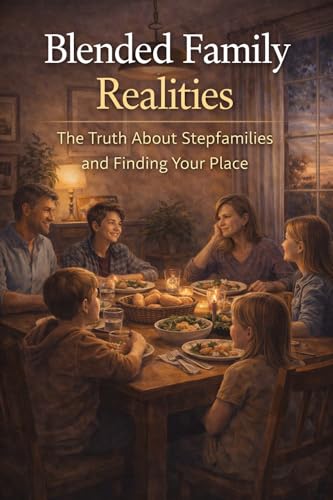
Truth telling and a little footing for people who are not sure where they stand in blended families.

by Jake Johnson
Name what happened, feel it, and move on without a guilt backpack for outgrowing what no longer fit.

by Jake Johnson
About understanding, peace, and what to do with the sibling relationship you have now.

by Taylor Mars
Short, practical, for partners and adult sons who feel clueless and want to be useful.


by Jane Austen · 1813
Austen’s most celebrated novel tells the story of Elizabeth Bennet, a bright, lively young woman with four sisters, and a mother determined to marry them to wealthy men. At a party near the Bennets’ home in the English countryside, Elizabeth meets the wealthy, proud Fitzwilliam Darcy. Elizabeth initially finds Darcy haughty and intolerable, but circumstances continue to unite the pair. Mr. Darcy finds himself captivated by Elizabeth’s wit and candor, while her reservations about his character slowly vanish. The story is as much a social critique as it is a love story, and the prose crackles with Austen’s wry wit.


by Kiera Cass · 2012
Elles sont trente-cinq jeunes filles : la "Sélection" s'annonce comme l'opportunité de leur vie. L'unique chance pour elles de troquer un destin misérable contre un monde de paillettes. L'unique occasion d'habiter dans un palais et de conquérir le coeur du prince Maxon, l'héritier du trône. Mais pour America Singer, cette sélection relève plutôt du cauchemar. Cela signifie renoncer à son amour interdit avec Aspen, un soldat de la caste inférieure. Quitter sa famille. Entrer dans une compétition sans merci. Vivre jour et nuit sous l'oeil des caméras... Puis America rencontre le Prince. Et tous les plans qu'elle avait échafaudés s'en trouvent bouleversés...

by Edward Albee · 1962
Billy Rose Theatre, Theater 1963, Richard Barr, Clinton Wilder, presents Uta Hagen, Arthur Hill, George Grizzard in Edward Albee's "Who's Afraid of Virginia Woolf?" with Melinda Dillon, directed by Alan Schneider, production designed by William Ritman


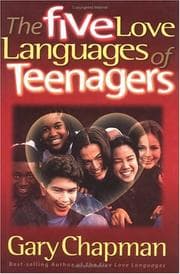
by Gary D. Chapman · 1992
In The 5 Love Languages, you will discover the secret that has transformed millions of relationships worldwide. Whether your relationship is flourishing or failing, Dr. Gary Chapman s proven approach to showing and receiving love will help you experience deeper and richer levels of intimacy with your partner starting today.

by William Shakespeare · 1631
The Wonder of Shakespeare One who reads a few of Shakespeare's great plays and then the meager story of his life is generally filled with a vague wonder. Here is an unknown country boy, poor and poorly educated according to the standards of his age, who arrives at the great city of London and goes to work at odd jobs in a theater. In a year or two he is associated with scholars and dramatists, the masters of their age, writing plays of kings and clowns, of gentlemen and heroes and noble women, all of whose lives he seems to know by intimate association. In a few years more he leads all that brilliant group of poets and dramatists who have given undying glory to the Age of Elizabeth. Play after play runs from his pen, mighty dramas of human life and character following one another so rapidly that good work seems impossible; yet they stand the test of time, and their poetry is still unrivaled in any language. For all this great work the author apparently cares little, since he makes no attempt to collect or preserve his writings. A thousand scholars have ever since been busy collecting, identifying, classifying the works which this magnificent workman tossed aside so carelessly when he abandoned the drama and retired to his native village. He has a marvelously imaginative and creative mind; but he invents few, if any, new plots or stories. He simply takes an old play or an old poem, makes it over quickly, and lo! this old familiar material glows with the deepest thoughts and the tenderest feelings that ennoble our humanity; and each new generation of men finds it more wonderful than the last. How did he do it? That is still an unanswered question and the source of our wonder.


by Lucy Maud Montgomery · 1917
Anne's House of Dreams: Large PrintBy Lucy Maud MontgomeryThe book begins with Anne and Gilbert's wedding, which takes place in the Green Gables orchard. After the wedding, they move to their first home together, which Anne calls their "house of dreams". Gilbert finds them a small house on the seashore at Four Winds Point, an area near the village of Glen St. Mary, where he is to take over his uncle's medical practice.

by Charlotte Perkins Gilman, Aric Cushing, Logan Thomas, SparkNotes, Bryan Hunt, A. J. Alexander, Steven Stern, Aileen Oracion, Twisted Classics, Anne Geer, Sara Barkat, Period Time Publishing, Félix Gerónimo, Agustín López Tobajas, Nicolae Sfetcu, Erminia Passannanti · 1892
En 1885, un año después de haberse casado con Charles Walter Stetson, Charlotte Perkins Gilman dio a luz a su hija, Katharine, y al poco tiempo entró en una profunda depresión. El doctor Silas Weir Mitchell, un reputado neurólogo a quien había acudido en busca de ayuda, le diagnosticó agotamiento de los nervios y le prescribió una cura de descanso, un controvertido tratamiento en el que era pionero. «Vive una vida tan hogareña como te sea posible, realiza no más de dos horas de actividad intelectual al día y no toques nunca más una pluma, un pincel o un lapicero»: estas fueron las instrucciones que le dio el médico a la autora. Durante unos meses siguió estos consejos, pero su depresión se agravó, y, según sus propias palabras, se acercó tanto a la frontera de la profunda ruina mental que llegó a vislumbrar el otro lado. Solo haciendo caso omiso de los consejos del médico y volviendo al trabajo logró recuperarse de su depresión. Esta experiencia la marcó hasta tal punto que en 1890 escribió "El papel pintado amarillo", un estremecedor relato que constituye una demoledora crítica al tratamiento prescrito por el doctor Mitchell.

by Virginia Woolf · 1927
In To the Lighthouse, Virginia Woolf draws on her childhood experiences to create an autobiographical novel with universal themes; a masterpiece in the tradition of Proust and Joyce.


by Henry James · 1881
HENRY JAMES (1843-1916), was born in New-York. His father was a writer in theology and his elder brother, William, was a philosopher. From 1865 he was a regular contributor of reviews and short stories to American periodicals. His first piece of fiction, "Watch and Ward", appeared in 1871, followed by "Transatlantic Sketches" and "A Passionate Pilgrim" in 1875. His first important novel was "Roderick Hudson (1876). For more than 20 years he lived in London, and in 1898 moved to Lamb House, Rye, where his later novels were written. At first he was concerned with older civilization of Europe, and to this period belong his novels "Daisy Miller" (1879) and "Portrait of a Lady"(1881). In "The Tragic Muse" (1890), "The Spoils of Poynton"(1897), and "The Awkward Age" (1899), he analyses English character. With "The Wings of the Dove" (1902), "The Ambassadors" (1903), and "The Golden Bowl" (1904), he returned to the theme of the contrast of American and European character. In 1915, Henry James became a British subject, and in 1916 was awarded the OM.

by Thomas Hardy · 1895
Hardy's masterpiece traces a poor stonemason's ill-fated romance with his free-spirited cousin. No Victorian institution is spared - marriage, religion, education - and the outrage following publication led the embittered author to renounce fiction. Modern critics hail this novel as a pioneering work of feminism and socialist thought.


by E. M. Forster · 1907
Edward Morgan Forster (1 January 1879 - 7 June 1970) was an English novelist, short story writer, essayist and librettist. He is known best for his ironic and well-plotted novels examining class difference and hypocrisy in early 20th-century British society. Forster's humanistic impulse toward understanding and sympathy may be aptly summed up in the epigraph to his 1910 novel Howards End: "Only connect ... ". His 1908 novel, A Room with a View, is his most optimistic work, while A Passage to India (1924) brought him his greatest success. He was nominated for the Nobel Prize in Literature in 13 different years.


by Montaigne, Michel de · 1600
En 1580, Michel de Montaigne dio a la imprenta la primera edición de sus dos libros de Los ensayos. El éxito fue tan arrollador que, dos años más tarde, apareció una nueva edición, aumentada con un tercer libro y con notables adiciones y correcciones en los dos primeros. Se completaba así la redacción de uno de los libros que mayor prestigio e influencia han tenido en el pensamiento occidental. Sin embargo, el gentilhombre perigordino siguió trabajando en el texto de sus ensayos hasta su muerte, acaecida en 1592. Tres años más tarde, Marie de Gournay, «fille d?alliance» de Montaigne, presentaba una edición de Los ensayos siguiendo las instrucciones que le diera su autor, edición que durante siglos ha sido considerada canónica, hasta que Strowski preparó la suya entre 1906 y 1933. Hoy, el de Marie de Gournay es visto de nuevo, con justicia, como el texto de referencia, y sirve de base a todas las ediciones recientes fiables. Éste es también el que el lector hispano encontrará en la presente edición, enriquecida con referencias a los múltiples estadios que experimentó el texto y con un completo aparato de notas. Una edición útil al especialista y próxima al lector común.

by William Shakespeare · 1602
Las alegres comadres de Windsor. William Shakespeare. Inglaterra 1564 - 1616


by Henrik Ibsen · 1889
A Doll's House by Henrik Ibsen portrays Nora, the wife, as a "doll," beautiful, unsophisticated, childlike, well-meaning, but ignorant of the adult world and affairs. All of her friends see her as a doll. Her husband Torvald treats her as one, calling her childish names. He tries to control all of her behavior, not because he is mean, but because he loves her and he realizes that she is unable to do so. IN "A Doll's House, Torvald" tells Nora what to eat so that her teeth will not be spoiled from sugar and how much she should spend because she does not understand much about money. And it is the latter, the money, that gets Nora into trouble. Torvald was sick some years back and needed to travel and stay in a warmer climate for some months, but the couple had no money. She, out of childish but ignorant love, borrowed money from an unscrupulous man who insisted that she have her father countersign the loan. Her father was dying, so she forged his signature on the loan document. She was certain that this was not wrong because her intentions were pure, she wanted to save her husband's life. She did not tell her husband about the loan because she childishly wanted to surprise him someday in the future and show him that she acted wisely and that she, who he thought of as childlike, saved his life. She laughed about her cleverness often when she was alone. Now the unscrupulous lender is demanding something from Nora, or he will reveal the forgery to her husband and his employer, and this will affect her marriage and her husband will lose his job. The tragedy in Henrik Ibsen's "The Doll's House" probably would not have occured if the people would have treated women properly as human beings rather than dolls.

by William Shakespeare · 1670
A mystical Island, the deity of Ariel, and a stranded crew; shipwrecked among an enchanted island mist. This version has been decoded from the commonly known, yet unauthorized play by Shakespeare. This text is therefore presented as a significant literary discovery, as punctuation has been significantly resolved.

by Massachusetts. Dept. of Public Health.
... when this abstract was written the current reports include detailed data on births, deaths, marriages and divorces; natality (birth) data includes number of live births, fetal and neonatal deaths, birth rates and births by age of mother, births by race, martial status, birthweight, source and adequacy of prenatal care, cesarean and repeat cesarean births by age of mother, number of births by town and by hospital (detailed data is given by state and for each town); mortality data includes number of deaths by sex, race, age, place of occurence and by detailed cause; includes data on infant mortality and fetal and neonatal deaths, cancer, motor vehicle accidents, heart disease and AIDS deaths; detailed data is also provided by city and town; marriage and divorce data is given by age and previous marital status for each county; gives population estimates by age group and for each town; other interesting facts include 20 most popular names for babies, number of twins, triplets, and other multiple births, days on which most and fewest births occured, most popular months for marriages, average length of marriages, etc. (reported in 1988 annual report) ...

by Germaine de Staël, Isabel Hill, Albertine-Adrienne Necker de Saussure, Charles Augustin Sainte-Beuve, L. E. L., Arthur Manderley, Isabel Hill, Creative Commons, Necker de Saussure · 1786


by Richard von Krafft-Ebing, Krafft/, Charles Gilbert Chaddock, Francis Joseph Rebman · 1886

by William Dean Howells · 1872
The classic books are worth reading.If you are reader, you should not miss them.You will say "Thanks" to all the classic books.


by Wilkie Collins, Norman Page, Harry A. Webber · 1870
Man and Wife was Wilkie Collins' ninth published novel. It is the second of his novels (after No Name) in which social questions provide the main impetus of the plot. Collins increasingly used his novels to explore social abuses, which according to critics] tends to detract from their qualities as fiction. The social issue which drives the plot is the state of Scots marriage law; at the time the novel was written, any couple who were legally entitled to marry and who asserted that they were married before witnesses, or in writing, were regarded in Scotland as being married in law. The novel has a complex plot, common in Collins' work.[3] In a Prologue, a selfish and ambitious man casts off his wife in order to marry a wealthier and better-connected woman, by taking advantage of a loophole in the marriage laws of Ireland.The initial action takes place in the widowed Lady Lundie's house in Scotland. Geoffrey Delamayn has promised marriage to his lover Anne Silvester (governess to Lady Lundie's stepdaughter Blanche), who has incurred the enmity of her employer. The spendthrift Geoffrey is about to be disinherited and wishes to escape from his promise and marry a wealthy wife. Nevertheless, he is obliged to arrange a rendezvous with Anne, in the character of his wife, at an inn, and documents this in an exchange of notes with her. Subsequently, urgent matters force him to send his friend Arnold Brinkworth, Blanche's fiancé, to Anne in his place. To gain access to her, Arnold must ask for "his wife". Although nothing improper passes between them, they appear to the landlady and to Bishopriggs, a waiter, to be man and wife.Thus, both Geoffrey and Arnold might be deemed to be married to Anne, depending on the weight put on the spoken and written evidence. Most of the novel concerns Anne's, Geoffrey's and Arnold's attempts to clarify their marital status:

by United States. Congress. Senate. Committee on Territories · 1863

by Friedrich de la Motte-Fouqué, Friedrich Heinrich Kar La Motte-Fouqué · 1845
The "beautiful" classic fairytale of the ill-fated love between a mermaid and a knight (George MacDonald). This universally loved fairytale, written by German novelist and playwright Friedrich La Motte-Fouqué, has been adapted into operas, songs, ballets, and films, since its original publication in the early 1800s. Undine is the exquisite tale of the all-too-human emotions that drive, and ultimately threaten, magical love. When a knight, Sir Huldbrand of Ringstetten, comes upon a humble fisherman's cottage, he is immediately charmed by the old couple's mischievous adopted daughter Undine, whose true parentage is unknown. Trapped in the cottage by a flood, the knight and the fair maiden are blissfully happy together, despite Undine's capriciousness, and are eventually married. But unknown to Huldbrand, Undine is a water spirit, and their union has given her a sought-after prize: a soul. And now possessed with that most human of gifts, she will have to endure the many joys and sufferings that come along with it—for better or worse . . .

by George Sand, George Sand · 1846
The Devil'S Pool by George Sand, first published in 1894, is a rare manuscript, the original residing in one of the great libraries of the world. This book is a reproduction of that original, which has been scanned and cleaned by state-of-the-art publishing tools for better readability and enhanced appreciation. Restoration Editors' mission is to bring long out of print manuscripts back to life. Some smudges, annotations or unclear text may still exist, due to permanent damage to the original work. We believe the literary significance of the text justifies offering this reproduction, allowing a new generation to appreciate it.


by Sir Walter Scott · 1849
The Black Dwarf, is set in the Liddesdale hills, an area which Scott knew intimately from the time he had spent hunting ballads for his Minstrelsy of the Scottish Border. The plot itself draws on a number of Border Ballads. The adventures of Hobbie Elliot, the pillage of Heughfott, appeal to the Black Dwarf for help, gathering of forces, and the 'siege' of Westburnflat parallel events in the ballads 'Jamie Telfer of the Fair Dodhead' and 'The Fray of Support'.

by Anthony Trollope · 1867
Phineas Redux is a novel by Anthony Trollope. It is the fourth of the "Palliser" series of novels and the sequel to the second book of the series, Phineas Finn. After the death of his Irish wife, Phineas Finn returns to London and to the House of Commons. But though drawn back apparently irresistibly, he never approaches politics with the zest of earlier days. What Trollope describes, in some of his most powerful writing, is a sad, at times almost sombre, progress towards maturity and self-wisdom. Anthony Trollope (1815-1882) was one of the most successful, prolific and respected English novelists of the Victorian era. His first major success came with The Warden (1855) - the first of six novels set in the fictional county of Barsetshire. The comic masterpiece Barchester Towers (1857) has probably become the best-known of these. His satirical novel The Way We Live Now critics acknowledge as his masterpiece.


by Anatole France · 1908
"Penguin Island" from Anatole France. French poet, journalist, and novelist (1844-1924).

by James Fenimore Cooper · 1800
This work has been selected by scholars as being culturally important, and is part of the knowledge base of civilization as we know it. This work was reproduced from the original artifact, and remains as true to the original work as possible. Therefore, you will see the original copyright references, library stamps (as most of these works have been housed in our most important libraries around the world), and other notations in the work.This work is in the public domain in the United States of America, and possibly other nations. Within the United States, you may freely copy and distribute this work, as no entity (individual or corporate) has a copyright on the body of the work.As a reproduction of a historical artifact, this work may contain missing or blurred pages, poor pictures, errant marks, etc. Scholars believe, and we concur, that this work is important enough to be preserved, reproduced, and made generally available to the public. We appreciate your support of the preservation process, and thank you for being an important part of keeping this knowledge alive and relevant.

by Jane Austen · 1818
This collection from Everyman's Library provides the complete works of one of the most popular authors in English literature. Each of Jane Austen's masterpieces is enchantingly funny, touchingly and wittily told, and filled with a dazzling gallery of characters. These beautiful, clothbound classics are essentials for any home library. Titles included: Emma, Mansfield Park, Northanger Abby, Persuasion, Pride and Prejudice, Sandition and Other Stories, Sense and Sensibility

by Dorothy L. Sayers · 1935
Dorothy Leigh Sayers was a renowned English crime writer and poet. She was also a student of classical and modern languages.She is best known for her mysteries, a series of novels and short stories set between the First and Second World Wars that feature English aristocrat and amateur sleuth Lord Peter Wimsey, which remain popular to this day. However, Sayers herself considered her translation of Dante's Divine Comedy to be her best work. She is also known for her plays, literary criticism, and essays.

by Kahlil Gibran, jaime arbe, Anthony Rizcallah Ferris, Martin L. Wolf · 1908


by Upton Sinclair · 1911
Love's Pilgrimage A Novel is one of the greatest works by Upton Sinclair. This work has been selected by scholars as being culturally important, and is part of the knowledge base of civilization.


by Thorne Smith · 1931
Turnabout by Thorne Smith Notice: This Book is published by Historical Books Limited (www.publicdomain.org.uk) as a Public Domain Book, if you have any inquiries, requests or need any help you can just send an email to publications@publicdomain.org.uk This book is found as a public domain and free book based on various online catalogs, if you think there are any problems regard copyright issues please contact us immediately via DMCA@publicdomain.org.uk

by James Fenimore Cooper · 1800
From the author of The Last of the Mohicans comes this classic nautical adventure tale that follows a sea voyage gone horribly awry. When a group of well-born British aristocrats set sail for the United States, they couldn't possibly imagine the mishaps that lie ahead of them when they find themselves coming ashore in Africa.


by Stephen King · 2006
Twee jaar na de dood van een schrijver ruimt zijn weduwe zijn bezittingen op, waardoor het verleden weer boven komt.


by Jack London · 1900
The Valley of the Moon (1913) is a novel by American writer Jack London (as well as the mythic and romantic name for the wine-growing Sonoma Valley of California). The valley where it is set is located north of the San Francisco Bay Area in Sonoma County, California where Jack London was a resident; he built his ranch in Glen Ellen.The novel The Valley of the Moon is a story of a working-class couple, Billy and Saxon Roberts, struggling laborers in Oakland at the Turn-of-the-Century, who left city life behind and searched Central and Northern California for suitable farmland to own. The book is notable for its scenes in which the proletarian hero enjoys fellowship with the artists' colony in Carmel, and he settles in the Valley of the Moon.


by Edward Carpenter · 1896
Experience the timeless journey of self-discovery and love with "Love's Coming-Of-Age" by Edward Carpenter. Embark on a profound exploration of the human heart and soul with Edward Carpenter's classic work, "Love's Coming-Of-Age." In this timeless masterpiece, Carpenter invites readers to accompany him on a journey of self-discovery, love, and liberation. Through evocative prose and poignant storytelling, Carpenter delves into the complexities of human relationships, the pursuit of authenticity, and the transformative power of love. As the narrative unfolds, readers are drawn into a world where societal norms and conventions are challenged, and the true essence of love is revealed. Themes of freedom, equality, and the pursuit of happiness resonate throughout the pages of "Love's Coming-Of-Age," offering readers a thought-provoking exploration of the human condition. Carpenter's profound insights and keen observations invite readers to question the status quo and embrace the fullness of their own identities. With its timeless wisdom and universal themes, "Love's Coming-Of-Age" continues to captivate readers of all ages and backgrounds. Carpenter's lyrical prose and compassionate storytelling speak to the heart, leaving a lasting impression on those who dare to venture into its pages. Whether you're embarking on your own journey of self-discovery or simply seeking a deeper understanding of the human experience, "Love's Coming-Of-Age" offers a guiding light in a world filled with uncertainty. Join Edward Carpenter on a transformative odyssey of love, growth, and enlightenment, and discover why this timeless classic remains as relevant today as it was when it was first published. Embrace the transformative power of love. Let "Love's Coming-Of-Age" by Edward Carpenter illuminate your path to self-discovery and liberation. Order your copy today and experience the enduring beauty of this timeless masterpiece.


by Gillian Flynn · 2011
THE ADDICTIVE No.1 BESTSELLER THAT EVERYONE IS TALKING ABOUT Who are you? What have we done to each other? These are the questions Nick Dunne finds himself asking on the morning of his fifth wedding anniversary, when his wife Amy suddenly disappears. The police suspect Nick. Amy's friends reveal that she was afraid of him, that she kept secrets from him. He swears it isn't true. A police examination of his computer shows strange searches. He says they weren't made by him. And then there are the persistent calls on his mobile phone. So what really did happen to Nick's beautiful wife?

by Arnold Bennett · 1914
Enoch Arnold Bennett (27 May 1867 - 27 March 1931) was an English writer. He is best known as a novelist, but he also worked in other fields such as the theatre, journalism, propaganda and films. Bennett was born in a modest house in Hanley in the Potteries district of Staffordshire. Hanley was one of the Six Towns that were joined together at the beginning of the 20th century as Stoke-on-Trent and are depicted as "the Five Towns" in some of Bennett's novels. Enoch Bennett, his father, qualified as a solicitor in 1876, and the family moved to a larger house between Hanley and Burslem.

by Danielle Steel · 1981
Rafaela, hija de un prestigioso banquero y esposa adorada de un rico hombre de negocios, era una mujer enamorada. Sin embargo, su felicidad se ve truncada cuando su marido sufre un feroz ataque de apoplejía.

by Hester Chapone, Chapone, Thomas Enquiry into the Duties of the Female Sex Gisborne · 1773
This collection of works by John Gregory, Lady Sarah Pennington, and Mrs. Chapone offers a fascinating glimpse into the self-improvement literature of the late 18th century. With a focus on education, family life, and personal growth, these texts provide valuable historical context for modern readers. This work has been selected by scholars as being culturally important, and is part of the knowledge base of civilization as we know it. This work is in the "public domain in the United States of America, and possibly other nations. Within the United States, you may freely copy and distribute this work, as no entity (individual or corporate) has a copyright on the body of the work. Scholars believe, and we concur, that this work is important enough to be preserved, reproduced, and made generally available to the public. We appreciate your support of the preservation process, and thank you for being an important part of keeping this knowledge alive and relevant.


by Julian Hawthorne · 1884
Explore the life and work of one of America's most beloved writers, Nathaniel Hawthorne. From his humble beginnings to his rise to national acclaim, readers will gain a new appreciation for the man behind such iconic works as The Scarlet Letter and The House of the Seven Gables. This work has been selected by scholars as being culturally important, and is part of the knowledge base of civilization as we know it. This work is in the "public domain in the United States of America, and possibly other nations. Within the United States, you may freely copy and distribute this work, as no entity (individual or corporate) has a copyright on the body of the work. Scholars believe, and we concur, that this work is important enough to be preserved, reproduced, and made generally available to the public. We appreciate your support of the preservation process, and thank you for being an important part of keeping this knowledge alive and relevant.

by Arthur Wing Pinero · 1894
Aubrey Tanqueray's Chambers in the Albany-a richly and tastefully decorated room, elegantly and luxuriously furnished: on the right a large pair of doors opening into another room, on the left at the further end of the room a small door leading to a bedchamber. A circular table is laid for a dinner for four persons which has now reached the stage of dessert and coffee. Everything in the apartment suggests wealth and refinement. The fire is burning brightly. Aubrey Tanqueray, Misquith, and Jayne are seated at the dinner-table. Aubrey is forty-two, handsome, winning in manner, his speech and bearing retaining some of the qualities of young-manhood. Misquith is about forty-seven, genial and portly. Jayne is a year or two Misquith's senior; soft-speaking and precise-in appearance a type of the prosperous town physician. Morse, Aubrey's servant, places a little cabinet of cigars and the spirit-lamp on the table beside Aubrey, and goes out.
Affiliate Disclosure: As an Amazon Associate, we may earn from qualifying purchases. Book links on this page may be affiliate links. This does not affect our recommendations or the price you pay.