
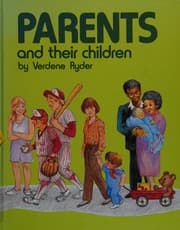
Cover of Parents and their children

Parents and their children

by Verdene Ryder, Celia A. Decker, Verdene Ryder CFCS, Celia Anita Decker Ed.D., Celia Anita Decker

Published 1985

View on Amazon

Check availability on Amazon

Are you the author or publisher of this book?

Claim this book — Free

Update metadata for “Parents and their children” after verification.

BestsellerFinder Score unavailable — not enough catalog data yet.

Packed with a wealth of activities that help students apply what they learn about children and parenting, the Student Activity Guide encourages practical application of parenting strategies and the use of higher-order thinking skills. Some activities are thought-provoking and encourage students to form their own ideas about information presented in the text.

ParentingParent and childParenthoodChild psychologyChild developmentStudy and teaching (Secondary)Life skillsVocational education

Similar Books

Cover of Positive child guidance

Positive child guidance

Darla Ferris Miller

POSITIVE CHILD GUIDANCE, Eighth Edition, is ideal for guidance, behavior management and discipline, and classroom management courses in an early childhood education curriculum. This practical book outlines workable steps for creating a cooperative, respectful community of children and adults with special emphasis on sensitivity to cultural needs, cultural differences, and developmentally appropriate practice. Students will learn a range of practical, effective, and flexible guidance strategies based on principles of straightforward communication and assertiveness. This new edition includes critical advances in research and addresses the cultural trends that are changing the way babies and children are cared for today. Important Notice: Media content referenced within the product description or the product text may not be available in the ebook version.
Cover of Parent-child relations

Parent-child relations

Jerry J. Bigner

Now in the Ninth Edition, Jerry Bigner's "Parent-Child Relations," the classic resource for child development professionals and parents themselves, has undergone a thorough revision anchored by the vision of the late Dr. Bigner and executed by new co-author, Clara Gerhardt.Maintaining its fundamental structure and unique approach, the text uses family systems and systemic family development theory as a framework to explore how parent-child relations change in tandem with developmental changes occurring with children, adults, and the wider family system. Thoughtful updates and revisions were done to increase the effectiveness and currency of the text. The text continues to provide strong emphasis on various theoretical and practical models pertaining to parenting. For decades now, this classic text has prepared countless teachers and practitioners by its proven and practical approach, utilizing family systems and systemic family development theory to explore how parent-child relations change in tandem with developmental changes occurring with children, adults, and the wider family system. The most comprehensive and current resource available to students as they prepare for working with parents and families, and for their roles as parents themselves, this best-selling resource carries on the essential message of its originator, Dr. Jerry Bigner, and will continue to nurture future family scholars and practitioners for years to come.

Cover of The five love languages of children

The five love languages of children

Gary Chapman, 王雲良

Does your child speak a different language? Sometimes they wager for your attention, and other times they ignore you completely. Sometimes they are filled with gratitude and affection, and other times they seem totally indifferent. Attitude. Behavior. Development. Everything depends on the love relationship between you and your child. When children feel loved, they do their best. But how can you make sure your child feels loved? Since 1992, Dr. Gary Chapman's best-selling book The Five Love Languages has helped more than 300,000 couples develop stronger, more fulfilling relationships by teaching them to speak each others love language. Each child, too, expresses and receives love through one of five different communication styles. And your love language may be totally different from that of your child. While you are doing all you can to show your child love, he may be hearing it as something completely opposite.Discover your child's primary language and learn what you can do to effectively convey unconditional feelings of respect, affection, and commitment that will resonate in your child's emotions and behavior.

Explore More

Affiliate Disclosure: As an Amazon Associate, we may earn from qualifying purchases. Book links on this page may be affiliate links. This does not affect our recommendations or the price you pay.