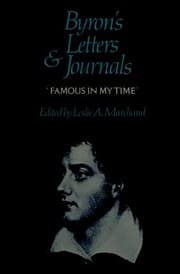
Byron's letters and journals
Lord Byron
1830
If you enjoyed Physiologie du mariage by Honoré de Balzac, you likely appreciate Marriage, Humor, Mariage. These similar reads match the tone, themes, and audience of the original.

Lord Byron
1830

George Sand, George Sand
1846
The Devil'S Pool by George Sand, first published in 1894, is a rare manuscript, the original residing in one of the great libraries of the world. This book is a reproduction of that original, which has been scanned and cleaned by state-of-the-art publishing tools for better readability and enhanced appreciation. Restoration Editors' mission is to bring long out of print manuscripts back to life. Some smudges, annotations or unclear text may still exist, due to permanent damage to the original work. We believe the literary significance of the text justifies offering this reproduction, allowing a new generation to appreciate it.

Honoré de Balzac
2004

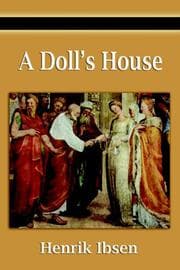
Henrik Ibsen
1889
A Doll's House by Henrik Ibsen portrays Nora, the wife, as a "doll," beautiful, unsophisticated, childlike, well-meaning, but ignorant of the adult world and affairs. All of her friends see her as a doll. Her husband Torvald treats her as one, calling her childish names. He tries to control all of her behavior, not because he is mean, but because he loves her and he realizes that she is unable to do so. IN "A Doll's House, Torvald" tells Nora what to eat so that her teeth will not be spoiled from sugar and how much she should spend because she does not understand much about money. And it is the latter, the money, that gets Nora into trouble. Torvald was sick some years back and needed to travel and stay in a warmer climate for some months, but the couple had no money. She, out of childish but ignorant love, borrowed money from an unscrupulous man who insisted that she have her father countersign the loan. Her father was dying, so she forged his signature on the loan document. She was certain that this was not wrong because her intentions were pure, she wanted to save her husband's life. She did not tell her husband about the loan because she childishly wanted to surprise him someday in the future and show him that she acted wisely and that she, who he thought of as childlike, saved his life. She laughed about her cleverness often when she was alone. Now the unscrupulous lender is demanding something from Nora, or he will reveal the forgery to her husband and his employer, and this will affect her marriage and her husband will lose his job. The tragedy in Henrik Ibsen's "The Doll's House" probably would not have occured if the people would have treated women properly as human beings rather than dolls.

William Dean Howells
1872
The classic books are worth reading.If you are reader, you should not miss them.You will say "Thanks" to all the classic books.

Friedrich de la Motte-Fouqué, Friedrich Heinrich Kar La Motte-Fouqué
1845
The "beautiful" classic fairytale of the ill-fated love between a mermaid and a knight (George MacDonald). This universally loved fairytale, written by German novelist and playwright Friedrich La Motte-Fouqué, has been adapted into operas, songs, ballets, and films, since its original publication in the early 1800s. Undine is the exquisite tale of the all-too-human emotions that drive, and ultimately threaten, magical love. When a knight, Sir Huldbrand of Ringstetten, comes upon a humble fisherman's cottage, he is immediately charmed by the old couple's mischievous adopted daughter Undine, whose true parentage is unknown. Trapped in the cottage by a flood, the knight and the fair maiden are blissfully happy together, despite Undine's capriciousness, and are eventually married. But unknown to Huldbrand, Undine is a water spirit, and their union has given her a sought-after prize: a soul. And now possessed with that most human of gifts, she will have to endure the many joys and sufferings that come along with it—for better or worse . . .

John Stuart Mill
1869

Paul Bowles
1948

Lope de Vega
1613

Kiera Cass
2012

Virginia Feito
2021

Frances Hodgson Burnett, C. D. Williams
1901

Sir Walter Scott
1849
The Black Dwarf, is set in the Liddesdale hills, an area which Scott knew intimately from the time he had spent hunting ballads for his Minstrelsy of the Scottish Border. The plot itself draws on a number of Border Ballads. The adventures of Hobbie Elliot, the pillage of Heughfott, appeal to the Black Dwarf for help, gathering of forces, and the 'siege' of Westburnflat parallel events in the ballads 'Jamie Telfer of the Fair Dodhead' and 'The Fray of Support'.

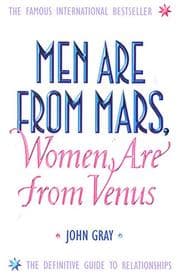
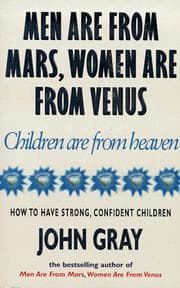
John Gray
1999

Lynn Franks Johnston
1990
The popular family comic strip, syndicated in more than one thousand newspapers, returns with a collection of touching and humorous cartoons. Original.

Jack O. Balswick, Judith K. Balswick
1989
The Family is a resource for college and seminary faculty, pastors, and Christian counselors. Now in its third edition, this study has been revised and updated throughout to include the results of current research and contemporary trends.--From publisher's description.

Joshua Piven
2002
The authors of The Worst-Case Scenario Survival Handbook take to the links! Dave and Josh join golf fanatic James Grace, drawing on their own tragic exploits and the experience of experts to help golfers survive dozens of dire situations. Learn how to finish a round with a broken arm, deal with a cigar brush fire, cure golf addiction, or remove a tick. Discover the best way to play out of a water hazard, make it through a lightning storm, or survive being hit in the privates. Hands-on, illustrated, step-by-step instructions guide you through these and other perils lurking on the fairway. With an appendix of rules for bizarre mis-haps, strategies for surmounting dress-code and equipment crises, and other essential survival tips, this handy guide won't help you save par-but it could save your bacon! Don't tee off without it.

Louisa May Alcott, Harriet Roosevelt Richards
1876

Roald Dahl
1961
When James Henry Trotter accidentally drops some magic crystals by the old peach tree, strange things start to happen. The peach at the top of the tree begins to grow, and before long it's as big as a house. Then James discovers a secret entranceway into the fruit, and when he crawls inside, he meets a bunch of marvelous oversized friends -- Old-Green-Grasshopper, Centipede, Ladybug, Miss Spider, and more. After years of feeling like an outsider in the house of his despicable Aunt Sponge and Aunt Spiker, James has finally found a place where he belongs. With a snip of the stem, the peach starts rolling away, and the exciting adventure begins!

Kiera Cass
2012
Elles sont trente-cinq jeunes filles : la "Sélection" s'annonce comme l'opportunité de leur vie. L'unique chance pour elles de troquer un destin misérable contre un monde de paillettes. L'unique occasion d'habiter dans un palais et de conquérir le coeur du prince Maxon, l'héritier du trône. Mais pour America Singer, cette sélection relève plutôt du cauchemar. Cela signifie renoncer à son amour interdit avec Aspen, un soldat de la caste inférieure. Quitter sa famille. Entrer dans une compétition sans merci. Vivre jour et nuit sous l'oeil des caméras... Puis America rencontre le Prince. Et tous les plans qu'elle avait échafaudés s'en trouvent bouleversés...

Edward Albee
1962
Billy Rose Theatre, Theater 1963, Richard Barr, Clinton Wilder, presents Uta Hagen, Arthur Hill, George Grizzard in Edward Albee's "Who's Afraid of Virginia Woolf?" with Melinda Dillon, directed by Alan Schneider, production designed by William Ritman

T. Coraghessan Boyle
1995

Gary D. Chapman
1992
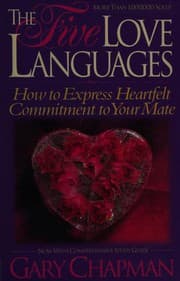
In The 5 Love Languages, you will discover the secret that has transformed millions of relationships worldwide. Whether your relationship is flourishing or failing, Dr. Gary Chapman s proven approach to showing and receiving love will help you experience deeper and richer levels of intimacy with your partner starting today.

William Shakespeare
1631
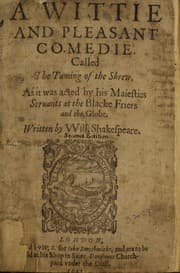
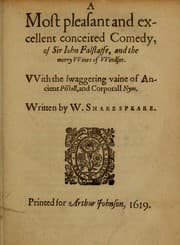
The Wonder of Shakespeare One who reads a few of Shakespeare's great plays and then the meager story of his life is generally filled with a vague wonder. Here is an unknown country boy, poor and poorly educated according to the standards of his age, who arrives at the great city of London and goes to work at odd jobs in a theater. In a year or two he is associated with scholars and dramatists, the masters of their age, writing plays of kings and clowns, of gentlemen and heroes and noble women, all of whose lives he seems to know by intimate association. In a few years more he leads all that brilliant group of poets and dramatists who have given undying glory to the Age of Elizabeth. Play after play runs from his pen, mighty dramas of human life and character following one another so rapidly that good work seems impossible; yet they stand the test of time, and their poetry is still unrivaled in any language. For all this great work the author apparently cares little, since he makes no attempt to collect or preserve his writings. A thousand scholars have ever since been busy collecting, identifying, classifying the works which this magnificent workman tossed aside so carelessly when he abandoned the drama and retired to his native village. He has a marvelously imaginative and creative mind; but he invents few, if any, new plots or stories. He simply takes an old play or an old poem, makes it over quickly, and lo! this old familiar material glows with the deepest thoughts and the tenderest feelings that ennoble our humanity; and each new generation of men finds it more wonderful than the last. How did he do it? That is still an unanswered question and the source of our wonder.

Edith Wharton
1910
Reach thousands of readers with featured placements, homepage spots, and newsletter features.
Weekly curated book recommendations. Unsubscribe anytime.
Affiliate Disclosure: As an Amazon Associate, we may earn from qualifying purchases. Book links on this page may be affiliate links. This does not affect our recommendations or the price you pay.