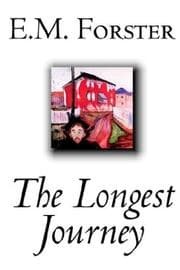
Cover of The Longest Journey

The Longest Journey

by E. M. Forster

Published 1907

Edward Morgan Forster (1 January 1879 - 7 June 1970) was an English novelist, short story writer, essayist and librettist. He is known best for his ironic and well-plotted novels examining class difference and hypocrisy in early 20th-century British society. Forster's humanistic impulse toward understanding and sympathy may be aptly summed up in the epigraph to his 1910 novel Howards End: "Only connect ... ". His 1908 novel, A Room with a View, is his most optimistic work, while A Passage to India (1924) brought him his greatest success. He was nominated for the Nobel Prize in Literature in 13 different years.

Open Library Staff PicksMarried peopleFictionMarriageTeachersClassic LiteratureTeachers -- England -- FictionTeachers, fictionEngland, fictionFiction, generalEnglish fictionBritish and irish fiction (fictional works by one author)

Similar Books

Cover of Rose in Bloom

Rose in Bloom

Louisa May Alcott, Harriet Roosevelt Richards

Rose in Bloom is a sequel to Eight Cousins. The story begins when Rose comes back from a long trip to Europe. Everyone is well altered and as a joke, when she arrives home, she lines up her seven cousins to take a long look at them, just as they did to her when they first met. Rose Campbell, the heroine of the story, is sweet, kind, pretty, and ambitious. She is an heiress just come of age, and struggles with the many suitors she attracts by learning to judge love versus those who regard her only as "a good match."

Cover of Great Expectations

Great Expectations

Charles Dickens

Great Expectations was first published as a weekly serial in All the Year Round, December 1860 - August 1861. Its first appearance in volume form was as three-volume novel, without illustrations, in July 1861. A one-volume edition, the next year, preceded its inclusion in the collected editions of Dickens's lifetime. The three-volume 1861 edition is the basis of the present text: variant readings, including those in manuscript and extant proofs, are recorded in the textual apparatus, providing an unusually rich source of information on Dickens's methods of composition. The Introduction traces this process of composition and draws attention to the two unperformed dramatic adaptations: the reading version and the 1861 play version, made as a safeguard of copyright. Appendices include the original ending, the author's notes, and two textual examinations, one of the five so-called `editions' of 1861, the other a comparison of the one-volume 1862 edition with the 1864 Library edition.

Cover of Emily climbs

Emily climbs

Lucy Maud Montgomery

Emily Starr was born with the desire to write. As an orphan living on New Moon Farm, writing helped her face the difficult, lonely times. But now all her friends are going away to high school in nearby Shrewsbury, and her old-fashioned, tyrannical aunt Elizabeth will only let her go if she promises to stop writing! All the same, this is the first step in Emily's climb to success. Once in town, Emily's activities set the Shrewsbury gossips buzzing. But Emily and her friends are confident - Ilse's a born actress, Teddy's set to be a great artist, and roguish Perry has the makings of a brilliant lawyer. When Emily has her poems published and writes for the town newspaper, success seems to be on its way - and with it the first whispers of romance. Then Emily is offered a fabulous opportunity, and she must decide if she wants to change her life forever.

Cover of The climacteric in perspective

The climacteric in perspective

International Congress on the Menopause (4th 1984 Lake Buena Vista, Fla.), M. Notelovitz, P.A. van Keep

The Fourth International Congress on the Menopause was held in Lake Buena Vista, Florida, USA in October - November 1984. It was different from the previous meetings held under the auspices of the International Menopause Society in three respects: the duration of the Congress was extended to five days, plenary sessions were held on each day, and the scope of the subject matter was expanded to provide a total or holistic overview of the subject - hence the theme for the Congress 'Climacteric Medicine and Science: A Societal need. ' In recent years there has been an increased interest in the menopause and middle year aging by scientists and clinicians in fields as diverse as anthropology, urodynamics, nutrition and exercise physiology, while 'newer' issues in clinical medicine, such as osteoporosis prevention and management, attracted specialists in nuclear immaging techniques and internal medicine. Over 120 invited speakers plus numerous contributors to the free communication, special lectures and the poster sessions provided a virtual cornucopia of information on the menopause, that has indeed brought a newer perspective to a subject previously the domain of a single specialty, the gynecologist, and dominated by a single therapy, estrogen replacement.

Cover of Blink

Blink

Malcolm Gladwell

Drawing on cutting-edge neuroscience and psychology and displaying all of the brilliance that made The Tipping Point a classic, Blink changes the way you'll understand every decision you make. Never again will you think about thinking the same way. Malcolm Gladwell redefined how we understand the world around us. Now, in Blink, he revolutionizes the way we understand the world within. Blink is a book about how we think without thinking, about choices that seem to be made in an instant - in the blink of an eye - that actually aren't as simple as they seem. Why are some people brilliant decision makers, while others are consistently inept? Why do some people follow their instincts and win, while others end up stumbling into error? How do our brains really work - in the office, in the classroom, in the kitchen, and in the bedroom? And why are the best decisions often those that are impossible to explain to others? In Blink we meet the psychologist who has learned to predict whether a marriage will last, based on a few minutes of observing a couple; the tennis coach who knows when a player will double-fault before the racket even makes contact with the ball; the antiquities experts who recognize a fake at a glance. Here, too, are great failures of "blink": the election of Warren Harding; "New Coke"; and the shooting of Amadou Diallo by police. Blink reveals that great decision makers aren't those who process the most information or spend the most time deliberating, but those who have perfected the art of "thin-slicing" - filtering the very few factors that matter from an overwhelming number of variables. Drawing on cutting-edge neuroscience and psychology and displaying all of the brilliance that made The Tipping Point a classic, Blink changes the way you understand every decision you make. Never again will you think about thinking the same way.

Explore More

Affiliate Disclosure: As an Amazon Associate, we may earn from qualifying purchases. Book links on this page may be affiliate links. This does not affect our recommendations or the price you pay.