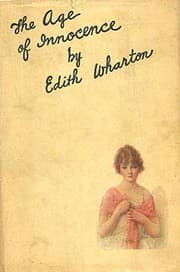
The Age of Innocence
Edith Wharton
1920
If you enjoyed Getting married by George Bernard Shaw, you likely appreciate Drama, Married people, Marriage. These similar reads match the tone, themes, and audience of the original.

Edith Wharton
1920

Edith Wharton
1910

George Bernard Shaw
1905

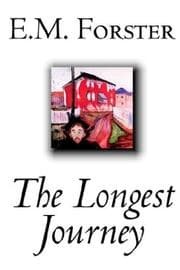
E. M. Forster
1907
Edward Morgan Forster (1 January 1879 - 7 June 1970) was an English novelist, short story writer, essayist and librettist. He is known best for his ironic and well-plotted novels examining class difference and hypocrisy in early 20th-century British society. Forster's humanistic impulse toward understanding and sympathy may be aptly summed up in the epigraph to his 1910 novel Howards End: "Only connect ... ". His 1908 novel, A Room with a View, is his most optimistic work, while A Passage to India (1924) brought him his greatest success. He was nominated for the Nobel Prize in Literature in 13 different years.

Lucy Maud Montgomery
1917
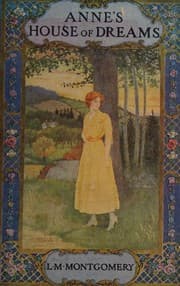
Anne's House of Dreams: Large PrintBy Lucy Maud MontgomeryThe book begins with Anne and Gilbert's wedding, which takes place in the Green Gables orchard. After the wedding, they move to their first home together, which Anne calls their "house of dreams". Gilbert finds them a small house on the seashore at Four Winds Point, an area near the village of Glen St. Mary, where he is to take over his uncle's medical practice.

George Bernard Shaw
1957
George Bernard Shaw was born in Dublin in 1856. Before becoming a playwright he wrote music and literary criticism. Shaw used his writing to attack social problems such as education, marriage, religion, government, health care, and class privilege. Shaw was particularly conscious of the exploitation of the working class Misalliance is a 1909 house-comedy. There is a clash between social classes when an Edwardian aristocrat wants to marry the daughter of an underwear tycoon. The entire play takes place in an afternoon in a Victorian drawing room.

Upton Sinclair
1911
Love's Pilgrimage A Novel is one of the greatest works by Upton Sinclair. This work has been selected by scholars as being culturally important, and is part of the knowledge base of civilization.

Guglielmo Ferrero
1911

Jack London
1900
The Valley of the Moon (1913) is a novel by American writer Jack London (as well as the mythic and romantic name for the wine-growing Sonoma Valley of California). The valley where it is set is located north of the San Francisco Bay Area in Sonoma County, California where Jack London was a resident; he built his ranch in Glen Ellen.The novel The Valley of the Moon is a story of a working-class couple, Billy and Saxon Roberts, struggling laborers in Oakland at the Turn-of-the-Century, who left city life behind and searched Central and Northern California for suitable farmland to own. The book is notable for its scenes in which the proletarian hero enjoys fellowship with the artists' colony in Carmel, and he settles in the Valley of the Moon.

Edith Wharton
1922

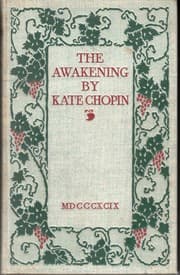
Kate Chopin
1899

Eleanor Hodgman Porter
1914

Arnold Bennett
1914
Enoch Arnold Bennett (27 May 1867 - 27 March 1931) was an English writer. He is best known as a novelist, but he also worked in other fields such as the theatre, journalism, propaganda and films. Bennett was born in a modest house in Hanley in the Potteries district of Staffordshire. Hanley was one of the Six Towns that were joined together at the beginning of the 20th century as Stoke-on-Trent and are depicted as "the Five Towns" in some of Bennett's novels. Enoch Bennett, his father, qualified as a solicitor in 1876, and the family moved to a larger house between Hanley and Burslem.

Edward Albee
1962
Billy Rose Theatre, Theater 1963, Richard Barr, Clinton Wilder, presents Uta Hagen, Arthur Hill, George Grizzard in Edward Albee's "Who's Afraid of Virginia Woolf?" with Melinda Dillon, directed by Alan Schneider, production designed by William Ritman

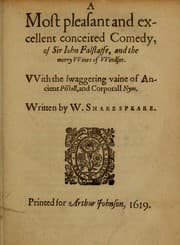
William Shakespeare
1631
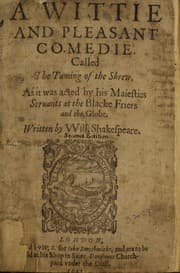
The Wonder of Shakespeare One who reads a few of Shakespeare's great plays and then the meager story of his life is generally filled with a vague wonder. Here is an unknown country boy, poor and poorly educated according to the standards of his age, who arrives at the great city of London and goes to work at odd jobs in a theater. In a year or two he is associated with scholars and dramatists, the masters of their age, writing plays of kings and clowns, of gentlemen and heroes and noble women, all of whose lives he seems to know by intimate association. In a few years more he leads all that brilliant group of poets and dramatists who have given undying glory to the Age of Elizabeth. Play after play runs from his pen, mighty dramas of human life and character following one another so rapidly that good work seems impossible; yet they stand the test of time, and their poetry is still unrivaled in any language. For all this great work the author apparently cares little, since he makes no attempt to collect or preserve his writings. A thousand scholars have ever since been busy collecting, identifying, classifying the works which this magnificent workman tossed aside so carelessly when he abandoned the drama and retired to his native village. He has a marvelously imaginative and creative mind; but he invents few, if any, new plots or stories. He simply takes an old play or an old poem, makes it over quickly, and lo! this old familiar material glows with the deepest thoughts and the tenderest feelings that ennoble our humanity; and each new generation of men finds it more wonderful than the last. How did he do it? That is still an unanswered question and the source of our wonder.
![Cover of The Darling and Other Stories [10 stories]](https://covers.openlibrary.org/b/id/8236436-M.jpg)
Антон Павлович Чехов
1916

Allardyce Nicoll
1927

Sidney Sheldon, Sidney Sheldon, sidney Sheldon, Sidney sheldon
1905
Kate Blackwell is the symbol of success—a beautiful woman who has parlayed her inheritance into an international conglomerate. Now, celebrating her 90th birthday, Kate surveys the family she has manipulated, dominated, and loved: the fair and the grotesque, the mad and the mild, the good and the evil—her winnings in life.

Virginia Woolf
1927
In To the Lighthouse, Virginia Woolf draws on her childhood experiences to create an autobiographical novel with universal themes; a masterpiece in the tradition of Proust and Joyce.

Arthur Wing Pinero
1894
Aubrey Tanqueray's Chambers in the Albany-a richly and tastefully decorated room, elegantly and luxuriously furnished: on the right a large pair of doors opening into another room, on the left at the further end of the room a small door leading to a bedchamber. A circular table is laid for a dinner for four persons which has now reached the stage of dessert and coffee. Everything in the apartment suggests wealth and refinement. The fire is burning brightly. Aubrey Tanqueray, Misquith, and Jayne are seated at the dinner-table. Aubrey is forty-two, handsome, winning in manner, his speech and bearing retaining some of the qualities of young-manhood. Misquith is about forty-seven, genial and portly. Jayne is a year or two Misquith's senior; soft-speaking and precise-in appearance a type of the prosperous town physician. Morse, Aubrey's servant, places a little cabinet of cigars and the spirit-lamp on the table beside Aubrey, and goes out.

Oscar Wilde
1893

Gilbert Keith Chesterton, Bailey Talbot, Catholic Way Publishing Staff
1920

Sylvanus Stall
1901

Frances Hodgson Burnett, C. D. Williams
1901

Oscar Wilde
1890
Reach thousands of readers with featured placements, homepage spots, and newsletter features.
Weekly curated book recommendations. Unsubscribe anytime.
Affiliate Disclosure: As an Amazon Associate, we may earn from qualifying purchases. Book links on this page may be affiliate links. This does not affect our recommendations or the price you pay.