Books Like “Fat is a feminist issue

If you enjoyed Fat is a feminist issue by Susie Orbach, S ORBACH, Susie Orbach , Susie Orbach, you likely appreciate Food habits, Mental health, Obesity. These similar reads match the tone, themes, and audience of the original.

Not sure what to read next? Ask BestsellerFinder AI →

Food habitsMental healthObesityObesity in womenOverweight womenPopular worksPsychological aspectsPsychological aspects of Obesity

Closest matches

Titles with overlapping themes, tone, and audience with your pick.

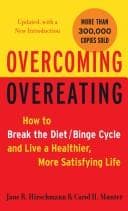
Cover of Overcoming overeating

Overcoming overeating

Jane R. Hirschmann, Carol H. Munter

1988

The reissue of a classic in healthy living, with more than 300,000 copies sold!Diet/binge. good food/bad food. punishment/reward. These are the compulsive eater's nightmares, a long-time pattern of recrimination and guilt that ultimately leads to more overeating and more weight gain. In an updated edition, here is the ground-breaking, step-by-step plan that doesn't control eating habits but cures them instead, once and for all. Overcoming Overeating will show you how to:* Give up dieting forever* Eat from true stomach hunger instead of "mouth hunger"* Stop overeating and lose weight naturally* Move beyond a preoccupation with eating and weight in order to live a more satisfying life


Cover of The Change

The Change

Germaine Greer

1991

In this study of the real and fundamental change which women experience during the menopause and which, like other fundamental changes, needs mental preparation and acceptance if it is not to be found unbearable, Dr Greer examines medical theories and treatment over the ages, and finds them often contradictory, excessive and, at times, dangerous. She responds to the traditional attitude of men and society which has been responsible for the creation of an image of the older woman as fake damsel or old crone. Dr Greer has weighed up the facts, the theories and the outright fabrications.

Cover of Estrogen

Estrogen

Lila Nachtigall, Lila, MD Nachtigall, Joan Rattner Heilman, Lila E. Nachtigall

1986

En la actualidad, la terapia de sustitución hormonal suscita un notable desconcierto y confusión en multitud de mujeres e incluso entre los médicos. Si se sigue correctamente, el tratamiento con estrógenos constituye uno de los medios más eficaces para afrontar los cambios físicos que sobrevienen en la mujer a lo largo de la menopausia, desde los sofocos y el insomnio hasta el entumecimiento de manos y pies. Esta guía, que incluye las investigaciones científicas más recientes, así como las terapias alternativas de que se dispone, ofrece información sobre la eficacia del tratamiento hormonal --junto con sus efectos secundarios y posibles problemas-- para aliviar los síntomas de la menopausia, prevenir la osteoporosis, mejorar la memoria, mantener una vida sexual activa y reducir la probabilidad de desarrollar la enfermedad de Alzheimer o un infarto de miocardio.

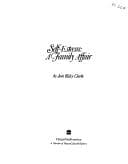
Cover of Self-esteem, a family affair

Self-esteem, a family affair

Jean Illsley Clarke

1978

Serving as a source of parental support, this book provides a range of imaginative and effective suggestions for dealing with each family member in ways that nourish self-esteem for all involved. Strong self-esteem is a critical ingredient for human happiness--and its development begins at home in the nurturing interactions between children and adults. Clarke's unique approach to building self-esteem begins with her belief that this is indeed a "family affair." Rather than offering collection of dictatorial "should," Self-Esteem: A Family Affair instead serves as a source of parental support, providing a broad range of imaginative and effective suggestions for dealing with individual family members in ways that nourish self-esteem for all involved.Throughout her book, Clarke encourages parents to claim their strengths and to trust their judgment as they make decisions about appropriate child care. Recognizing, too, that kids' needs are best met by adults whose own needs have not been neglected, Clarke offers a range of creative and workable options for parents to build the self-esteem of children while also caring for their emotional needs.Jean Illsley Clarke, author of Hazelden's Growing Up Again: Parenting Ourselves, Parenting Our Children, is a writer and an internationally recognized parent educator who specializes in the areas of parenting, self-esteem, family dynamics, and adult children of alcoholics. She currently directs the Self-Esteem Center, which she founded in 1975, and lives in Plymouth, Minnesota.

Cover of Das Drama des begabten Kindes und die Suche nach dem wahren Selbst

Das Drama des begabten Kindes und die Suche nach dem wahren Selbst

Alice Miller

1979

The “drama” of the gifted—i.e., sensitive, alert—child consists of his recognition at a very early age of his parents' needs and of his adaptation to those needs. In the process, he learns to repress rather than to acknowledge his own intense feelings because they are unacceptable to his parents. Although it will not always be possible to avoid these “ugly” feelings (anger, indignation, despair, jealousy, fear) in the future, they will split off, and the most vital part of the “true self” (a key phrase in Alice Miller's works) will not be integrated into the personality. This leads to emotional insecurity and loss of self, which are revealed in depression or concealed behind a facade of grandiosity.Alice Miller defines the ideal state of genuine vitality, of free access to the true self and to authentic individual feelings that have their roots in childhood, as “healthy narcissism.” Narcissistic disturbances, on the other hand, represent for her solitary confinement of the true self within the prison of the false self. This is regarded less as an illness than as a tragedy.The examples Alice Miller presents make us aware of the child's unarticulated suffering and of the tragedy of parents who are unavailable to their children—the same parents who, when they were children, were available to fill their parents' needs. In her psychoanalytical work, Dr. Miller found that her patients' ability to experience authentic feelings, especially feelings of sadness, had been for the most part destroyed; it was her task to help her patients try to regain that long-lost capacity for genuine feelings that is the source of natural vitality. Many people who have read her books have discovered within themselves for the first time in their lives the little child they once were. This may explain the unusually strong and deep reactions Alice Miller's books have evoked in so many readers from different countries. The Drama of the Gifted Child and the Search for the True Self is the origina

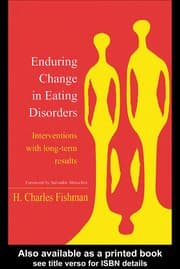
Cover of Enduring change in eating disorders

Enduring change in eating disorders

H. Charles Fishman

2004

Enduring Change in Eating Disorders provides a unique perspective on the successful treatment of eating disorders, which are among the most debilitating and recalcitrant psychiatric diseases. Unique in the field, this book details effective Structural Family Therapy with qualitative follow-ups of up to 20 years. A practical approach providing concrete tools to the clinician to creating change that holds over time with bulimia, anorexia, and compulsive overeating. The text draws on cases from the author's practice of over twenty-five years and follows his approach in the theoretical tradition of Intensive Structural Family Therapy (IST). Chapters discuss the nature and significance of eating disorders, a review of current treatment approaches, and the importance of the family in the therapeutic process. Cases of eating disorders in youths and adults are provided as well as instances of bulimia, anorexia, and compulsive overeating. Three appendices provide the reader with information regarding the scientific basis of the IST model, the effectiveness of the approach in treating conditions other than eating disorders and preventing eating disorders.

Cover of The Gift of Fear

The Gift of Fear

Gavin de Becker

1997

A carjacker lurking in a shopping mall parking lot. An abusive husband pounding on the door. A disgruntled employee brandishing a gun. These days, no one is safe from the specter of violence. But according to Gavin de Becker, everyone can feel safer, act safer, be safer -- if they learn how to listen to their own sixth sense about danger. De Becker has made a career of protecting people and predicting violent behavior. His firm handles security for many of Hollywood's top celebrities -- Madonna, Michael J. Fox, Geena Davis, Brooke Shields, and John Travolta, among others, according to press reports -- and his computerized risk-assessment system helps analyze threats to members of Congress and the Supreme Court. Now, in this unprecedented guide, de Becker shares his expertise with everyone. Covering all the dangerous situations people typically face -- street crime, domestic abuse, violence in the workplace -- de Becker provides real-life examples and offers specific advice on restraining orders, self-defense, and more. But the key to self-protection, he demonstrates, is learning how to trust -- and act on -- our own intuitions. For everyone who's ever felt threatened, this book is essential reading.

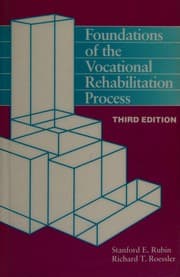
Cover of Foundations of the vocational rehabilitation process

Foundations of the vocational rehabilitation process

Stanford E. Rubin, Rubin Roessler, Richard T. Roessler

1978

The seventh edition of Foundations of the Vocational Rehabilitation Process provides historical, philosophical, legislative, and sociological foundations for the habilitation/rehabilitation of persons with disabilities. A thorough and current introduction to the American vocational rehabilitation process, this edition addresses mandates presented in the current major pieces of disability legislation influencing the practice of rehabilitation, including:Greater involvement of individuals with significant disabilitiesAlternative approaches to vocational placementProvision of independent living servicesExpansion of rehabilitation/habilitation services for individuals with developmental disabilitiesAccess to health careProtection of the civil rights of people with disabilities.This book presents theoretical and practical assistance in translating those mandates into positive action. It is this dual process of individual and environmental proactivity that can maximize the rehabilitation of disabled individuals. Not just for the dedicated rehabilitation counselor, this book is also for students attending an introductory course at the master's- or senior-level and in-service directors who design informative training programs.New in the seventh edition:Updated chapter on how "The Americans with Disabilities Act" (ADA), as amended in 2008, prohibits discrimination on the basis of disability in employment, public services, accommodations, and telecommunications.Updated section on the right to medical treatment in light of the 2012 "Affordable Care Act" (ACA).New information and updated references were added on the five disability types--physical disabilities, emotional disorders, intellectual disabilities, learning disabilities, and visual impairments and blindness.Now includes more than 1300 references, 300 of which are new.

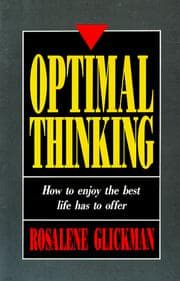
Cover of Optimal Thinking

Optimal Thinking

Rosalene Glickman

1990

OPTIMAL THINKING is the next step past positive thinking. That's because positive thinkers often think in mediocre terms & settle for second best. OPTIMAL THINKING empowers our best or most positive selves to take charge. We learn how to ASK THE BEST QUESTIONS, OBTAIN THE BEST SOLUTIONS & MAKE THE MOST OF ANY SITUATION. Instead of suppressing negativity & using wishful thinking, Optimal Thinkers approach life with optimal realism. Applying paint over rust doesn't remove the rust. Optimal Thinkers treat the rust & then apply the best paint! OPTIMAL THINKING IS THE MISSING LINK TO PEAK PERFORMANCE. We function at our peak when we think in optimal terms. Authored by "Australia's most successful woman," this revolutionary book provides us with the mental tools to consistently be our best in business & personal relationships. We discover what "the best" really means to us & define what is most important in our lives. We learn to maximize our talents, opportunities & time. OPTIMAL THINKING truly empowers us to experience the full might of our minds. We master emotions, minimize unwanted behaviors & bring out the best in others. OPTIMAL THINKING SIMPLY GIVES US THE BEST CHANCE OF ACHIEVING EVERYTHING WE WANT!

Cover of Depression and aggression in family interaction

Depression and aggression in family interaction

Gerald R. Patterson

1990

Patterson's work explores the intricate relationship between depression and aggressive behaviors within family dynamics. Through detailed observation and analysis, the book outlines how parental depression can contribute to the development and maintenance of aggressive patterns in children. It further investigates how these reciprocal interactions can perpetuate a cycle of distress for all family members. This research offers insights into the mechanisms by which mental health challenges manifest and are managed, or mismanaged, within the family unit.

Readers also enjoyed

Popular and highly rated books from our library you might like next.

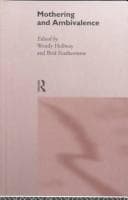
Cover of Mothering and Ambivalence

Mothering and Ambivalence

Brid Featherstone

1997

Brid Featherstone's "Mothering and Ambivalence" delves into the complex emotional landscape of motherhood, exploring the inherent contradictions and conflicting feelings that many mothers experience. Drawing on psychoanalytic theory, Featherstone illuminates how societal pressures and individual experiences shape these ambivalent emotions, offering a nuanced understanding of the mother-child bond. The book provides a framework for recognizing and navigating the often-unacknowledged ambivalence that is a fundamental aspect of mothering.

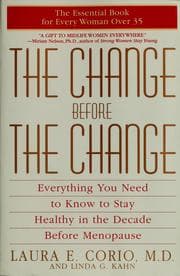
Cover of The change before the change

The change before the change

Laura E. Corio, Laura E. Corio MD, Linda G. Kahn

2000

Dr. Laura Corio's thriving New York City practice attracts women from around the world because of her unique blend of no-nonsense medical advice, extensive knowledge of alternative approaches, & close collaboration with patients. She believes that women today are just approaching their prime in their late 30s & 40s, & that they can't afford to lose time & energy to the common--but often misdiagnosed--symptoms that precede menopause by as much as a decade. Through vivid case studies & extensive treatment options, she provides in this handbook exactly what women today want & need to know: * How to cope with menstrual irregularities, hot flashes, sexual changes, weight gain, mood swings, & changes in appearance * Up-to-date choices for hormone replacement, both synthetic & natural, as well as many other options for women who want to avoid hormones * How perimenopause affects fertility * A reassuring guide to dealing with cancer fears, & what tests you absolutely must have * Lifestyle changes you need to make now to protect your breasts, uterus, bones, & heart in the years to come Filled with fascinating insights & information never before available to non-professionals, THE CHANGE BEFORE THE CHANGE is the one resource women need to navigate these years with confidence & vibrant good health.

Cover of The Psychology of Parental Control

The Psychology of Parental Control

Wendy S. Grolnick

2002

What is parental control? Is it positive or negative for children? What makes parents controlling with their children, even when they value supporting children's autonomy? Are there alternatives to control and how might we apply them in important domains of children's lives, such as school and sports? This book addresses these and other questions about the meaning and predictors of parental control, as well as its consequences for children's adjustment and well-being. While the topic of parental control is not new, there has been controversy about the concept, with some researchers and clinicians weighing in on the side of control and others against it. This book argues that part of the controversy stems from different uses of the term, with some investigators focusing more on parents being in control and others on controlling children. Using a definition of control as "pressure for children to think, feel, or behave in specific ways," the author explores research on parental control, arguing that there is more consensus than previously thought. Using this research base, the author provides evidence that parental control can be subtle and can lurk within many "positive" parenting approaches; parental control undermines the very behaviors we wish to inculcate in our children; providing autonomy support--the opposite of control--is a challenge, even when parents are committed to doing so. With controversy in the literature about parental control and attention in the media on the ways in which parents step over the control line (e.g., screaming on the soccer sidelines, pressuring children in academics), this book is especially timely. It provides an empathic view of how easily parents can become trapped in controlling styles by emphasizing performance and hooking their own self-esteem on children's performance. Examples of how this can happen in academic, sporting, and peer situations with their emphasis on competition and hierarchy are provided, as well as strategies

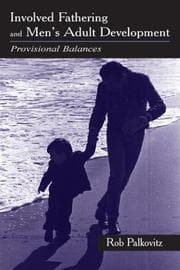
Cover of Involved Fathering and Men's Adult Development

Involved Fathering and Men's Adult Development

Rob Palkovitz

2002

Involved Fathering and Men's Adult Development is an interdisciplinary book that synthesizes theoretical, empirical, and anecdotal writings from different fields and provides an analysis of extensive interviews with 40 fathers. Along with the exploration of the distinct contribution that fathers make to their children's development, the author pursues the parallel theme of the effect this involvement has on the fathers' own development in adulthood. This book will provide its readers with a realistic and useful beginning point to bring a synthesis of developmental theories, family studies perspectives, and men's insights about fathering that will enhance our academic understanding of fathering and adult development. This book can also spark reflective and practical application for fathers and families, whether readers are academicians, practitioners, policymakers, or fathers in the trenches.

Cover of Dad's guide to pregnancy for dummies

Dad's guide to pregnancy for dummies

Matthew M. F. Miller

2010

This is the hardcover format ofDad's Guide to Pregnancy For Dummies, 2nd Edition. Every father-to-be's handbook for knowing what to expect when expecting! In today's world, men are more involved in their wives' pregnancies than ever before. This 2nd Edition of Dad's Guide to Pregnancy For Dummies gives new fathers a hands-on guide that covers all of the logistical, physical, and emotional aspects of pregnancy. It is a wealth of information on topics, such as setting up the nursery, childbirth 101, and how to take care of your newborn. The book includes ideas for knowing the right time to break the news and the pregnancy timeline. Once the baby arrives, this handbook gives you the low-down on what you can expect during the first six months, such as how to change diapers and feed the little one. You'll also explore much more in-depth topics such as the new technology behind ultrasounds, and the information that is gleaned from them, the lowdown on vaccination updates, information to take the fear out of cesarean sections, tips on prenatal depression, new developments on infertility treatments, and so much more! Helps to take the fear out of fatherhood with down-to-earth advice and information Reveals how smoking leads to development problems and the possible dangers of e-cigarettes Shows new dads a playbook for how they can help throughout the pregnancy and during the delivery Offers practical tips for chronicling baby's life from ultrasound to year one If you're going to be a new dad, this is a survival guide of what to expect as your bundle of joy is on the way is the complete, easy-to-read resource for preparing with your partner."
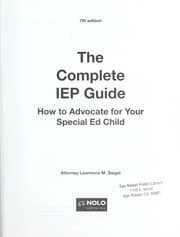
Cover of The complete IEP guide

The complete IEP guide

Lawrence M. Siegel

2007

Recipient of the 2017 BRONZE Winner for Education Award from Foreword Indies. Get the educational services and support your child deserves. Federal law guarantees every child a free appropriate education, and the goal of the Individualized Education Program (IEP) is to assure that every child with special needs receives what the law promises. But you know that your family must make sure the school follows through. This powerful book covers: • eligibility rules and assessments • working with outside experts • developing your child’s ideal educational program • preparing for and attending IEP meetings, and • resolving disputes with school districts. The 11th edition explains the law and provides key forms, sample letters, and resources you need at every stage of the IEP process. With it, you can ensure your child gets a good education—the education your child deserves.

Frequently Asked Questions

What should I read after Fat is a feminist issue?
Browse the similar books below — they're matched by subject overlap, author style, and reader preferences.
What books are most similar to Fat is a feminist issue?
Our recommendations prioritize shared themes like Food habits, Mental health, Obesity and books enjoyed by similar readers.
Which similar book is best for beginners?
Check page counts and summaries on each recommendation. Shorter titles with broader appeal are usually the best starting point.

Promote Your Book on BestsellerFinder

Reach thousands of readers with featured placements, homepage spots, and newsletter features.

Get bestseller picks in your inbox

Weekly curated book recommendations. Unsubscribe anytime.

Explore More

Affiliate Disclosure: As an Amazon Associate, we may earn from qualifying purchases. Book links on this page may be affiliate links. This does not affect our recommendations or the price you pay.