
Books Like “Anxiety & Depression Workbook For Dummies

If you enjoyed Anxiety & Depression Workbook For Dummies by Charles H. Elliott, Ph.D., Laura L. Smith Ph.D., Elaine Iljon Foreman, you likely appreciate Nonfiction, Self-Improvement, Depression, mental. These similar reads match the tone, themes, and audience of the original.

Not sure what to read next? Ask BestsellerFinder AI →

NonfictionSelf-ImprovementDepression, mentalAnxiety

Closest matches

Titles with overlapping themes, tone, and audience with your pick.

Cover of I wasn't ready to say goodbye

I wasn't ready to say goodbye

Brook Noel, Pamela Blair

2000

Updated and Revised, this best-selling book authored by two women who have lost someone firsthand is a timeless and sensitive resource to help those who have lost someone tragically deal with the grieving process. This expanded edition will include an expanded section on "What is next?" and dealing with survivors guilt and grief after events such as 9/11 and Katrina. This revised edition will also add more on compounded grief or mulitple losses. Authors Noel and Blair address the question of are we ever really ready to say goodbye? First Edition has sold over 80,000 copies.

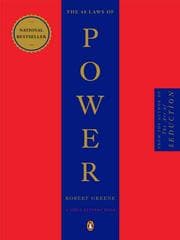
Cover of The 48 Laws of Power

The 48 Laws of Power

Robert Greene

1998

Le pouvoir… on le désire, on le craint, on s’en protège… « Le sentiment de n’avoir aucun pouvoir sur les gens et les événements est difficilement supportable : l’impuissance rend malheureux. Personne ne réclame moins de pouvoir, tout le monde en veut davantage. » Amoral, intelligent, impitoyable et captivant, cet ouvrage colossal condense 3 000 ans d’histoire du pouvoir en 48 lois. Véritable manuel de la manipulation, il analyse la quintessence de cette sagesse millénaire, tirée de la vie des plus illustres stratèges (Sun Zi, Clausewitz), hommes d’État (Louis XIV, Bismarck, Talleyrand), courtisans (Castiglione, Gracián), séducteurs (Ninon de Lenclos, Casanova) et escrocs de l’histoire. Certaines lois reposent sur la prudence (loi no 1 : Ne surpassez jamais le maître), d’autres demandent de la dissimulation (loi no 7 : Laissez le travail aux autres, mais recueillez-en les lauriers), d’autres encore une absence totale de compassion (loi no 15 : Écrasez complètement l’ennemi). Toutes ces lois trouveront des applications dans votre vie de tous les jours… Car, soyez en certain : le monde est une immense cour où se trament toutes sortes d’intrigues. Au lieu de nier l’évidence, tâchez d’exceller dans la course au pouvoir. Des extraits, des vidéos, des interviews de Robert Greene sur son site www.robertgreene.fr

Cover of African American grief

African American grief

Paul C. Rosenblatt

2005

African American Grief is a unique contribution to the field, both as a professional resource for counselors, therapists, social workers, clergy, and nurses, and as a reference volume for thanatologists, academics, and researchers. The classic edition includes a new preface from the authors reflecting on their work and on the changes in society and the field since the book’s initial publication. This work considers the potential effects of slavery, racism, and white ignorance and oppression on the African American experience and conception of death and grief in America. Based on interviews with 26 African Americans who have faced the death of a significant person in their lives, the authors document, describe, and analyze key phenomena of the unique African American experience of grief. The book combines moving narratives from the interviewees with sound research, analysis, and theoretical discussion of important issues in thanatology, as well as topics such as the influence of the African American church, gospel music, family grief, medical racism as a cause of death, and discrimination during life and after death.

Cover of The theory and treatment of depression

The theory and treatment of depression

Jozef Corveleyn, Sidney J. Blatt

2005

This comprehensive volume delves into the multifaceted nature of depression, exploring its theoretical underpinnings and diverse treatment approaches. It examines the psychopathology of depressive disorders, offering insights into the underlying mechanisms and contributing factors. The book then provides an in-depth analysis of various therapeutic interventions, equipping clinicians with a nuanced understanding of effective strategies for managing depression.

Cover of Exposure Treatments for Anxiety Disorders

Exposure Treatments for Anxiety Disorders

Johan Rosqvist

2005

Exposure Treatments for Anxiety Disorders is a unique volume, as it draws together the latest research on the rapidly-expanding field of anxiety disorders and illuminates how to correctly apply the proven methodology of behavioral therapy techniques to the variety of situations that face today's mental health professional. That said, cognitive therapy has in the last 10 years gotten increased attention as an alternative to behavior therapy in the treatment of anxiety disorders. But while it is gaining acceptance among practitioners, cognitive therapy has yet to illustrate substantial benefits above those that behavior therapy can already provide. In light of the aforementioned, coupled with the pressure many practitioners feel from managed care paradigms and shrinking healthcare coverage, this book will be a welcome resource allowing for increased clarity of action, accountability, and ultimately, positive client outcome. Each chapter is designed to address pivotal aspects in the assessment, formulation and diagnosis, and treatment of anxiety disorders, to a sufficient depth that the generalist practitioner will be comfortable using this book as a guide when working with the anxiety disordered client.

Cover of The price of privilege

The price of privilege

Madeline Levine

2005

In this ground-breaking book on the children of affluence, a well-known clinical psychologist exposes the epidemic of emotional problems that are disabling America’s privileged youth, thanks, in large part, to normalized, intrusive parenting that stunts the crucial development of the self. In recent years, numerous studies have shown that bright, charming, seemingly confident and socially skilled teenagers from affluent, loving families are experiencing epidemic rates of depression, substance abuse, and anxiety disorders&—rates higher than in any other socioeconomic group of American adolescents. Materialism, pressure to achieve, perfectionism, and disconnection are combining to create a perfect storm that is devastating children of privilege and their parents alike. In this eye-opening, provocative, and essential book, clinical psychologist Madeline Levine explodes one child-rearing myth after another. With empathy and candor, she identifies toxic cultural influences and well-intentioned, but misguided, parenting practices that are detrimental to a child's healthy self-development. Her thoughtful, practical advice provides solutions that will enable parents to help their emotionally troubled "star" child cultivate an authentic sense of self.

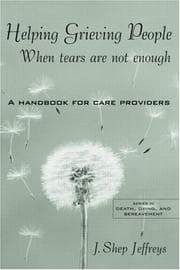
Cover of Helping Grieving People--When Tears Are Not Enough

Helping Grieving People--When Tears Are Not Enough

J. Shep Jeffreys

2004

Helping Grieving People – When Tears Are Not Enough is a handbook for care providers who provide service, support and counseling to those grieving death, illness, and other losses. This book is also an excellent text for academic courses as well as for staff development training. The author addresses grief as it affects a variety of relationships and discusses different intervention and support strategies, always cognizant of individual and cultural differences in the expression and treatment of grief. Jeffreys has established a practical approach to preparing grief care providers through three basic tracks. The first track: Heart – calls for self-discovery, freeing oneself of accumulated loss in order to focus all attention on the griever. Second track: Head – emphasizes understanding the complex and dynamic phenomena of human grief. Third track: Hands – stresses the caregiver's actual intervention, and speaks to lay and professional levels of skill, as well as the various approaches for healing available. Accompanying these three motifs, the Handbook discusses the social and cultural contexts of grief as applied to various populations of grievers as well as the underlying psychological basis of human grief. Throughout the book, Jeffreys presents the role of the caregiver as an Exquisite Witness to the journey of grief and pain of bereaved family and friends, and also to the path taken by dying persons and their families. The second edition of Helping Grieving People remains true to the approach that has been so well received in the original volume. It includes updated research findings and addresses new information and developments in the field of loss, grief and bereavement.
Cover of In My Blood

In My Blood

John Sedgwick

2007

While working on his second novel, John Sedgwick spiraled into a depression so profound that it very nearly resulted in suicide. An author acclaimed for his intimate literary excursions into the rarified, moneyed enclave of Brahmin Boston, he decided to search for the roots of his malaise in the history of his own storied family—one of America's oldest and most notable. Following a bloodline that travels from Theodore Sedgwick, compatriot of George Washington and John Adams, to Edie Sedgwick, Andy Warhol's tragic muse, John Sedgwick's very personal journey of self-discovery became something far greater: a spellbinding study of the evolution of an extraordinary American family.

Readers also enjoyed

Popular and highly rated books from our library you might like next.

Cover of Your child at play

Your child at play

Marilyn M. Segal

1985

Packed with learning activities, games, poems, and recipes, as well as anecdotes and advice, the eight sections focus on: Individual Differences and Common Threads (distinguishing between real and pretend; concern with fairness; self-awareness) The Questions Children Ask (the physical world; the natural world; the social world) Friends (best friends; controversies and conflicts; sibling play) Active Play (contact and cuddling; physical feats; sports) Creative Play (music; art; crafts; storytelling and jokes) Pretend Play (actor play and dressing up; imaginary playmates; reemergence of pretending) School Play (reading; writing; arithmetic; collecting facts; science) Family (attachment and separation; family continuity; traditions)

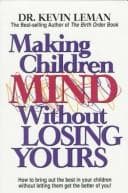
Cover of Making Children Mind Without Losing Yours

Making Children Mind Without Losing Yours

Dr. Kevin Leman

1984

We've seen the enemy, and they're small . . . and unionized. If anyone understands why children behave the way they do, it's internationally known psychologist and New York Times bestselling author Dr. Kevin Leman. Using the 7 principles of reality discipline, this father of five and grandfather of four reveals a practical, action-oriented game plan to - get kids to listen to parents - encourage healthy attitudes and two-way communication - turn off temper tantrums, minimize sibling rivalries, and foil finicky eaters - put parents back in the driver's seat - prompt long-lasting, positive behavior and instill values - rear respectful, well-behaved children who become responsible difference makers in the world Thought-provoking questions at the end of each chapter and Dr. Leman's real-life examples give readers sure-fire techniques for developing a loving, no-nonsense approach for rearing children. With over a million satisfied customers, parents can't go wrong with this classic, perennial bestseller.

Cover of Ikigai: The Japanese Secret to a Long and Happy Life

Ikigai: The Japanese Secret to a Long and Happy Life

Héctor García (Author), Francesc Miralles (Author) Format: Hardcover

2017

INTERNATIONAL BESTSELLER • 2 MILLION+ COPIES SOLD WORLDWIDE “Workers looking for more fulfilling positions should start by identifying their ikigai.” ―Business Insider “One of the unintended—yet positive—consequences of the [pandemic] is that it is forcing people to reevaluate their jobs, careers, and lives. Use this time wisely, find your personal ikigai, and live your best life.” ―Forbes Find your ikigai (pronounced ee-key-guy) to live longer and bring more meaning and joy to all your days. “Only staying active will make you want to live a hundred years.” —Japanese proverb According to the Japanese, everyone has an ikigai—a reason for living. And according to the residents of the Japanese village with the world’s longest-living people, finding it is the key to a happier and longer life. Having a strong sense of ikigai—where what you love, what you’re good at, what you can get paid for, and what the world needs all overlap—means that each day is infused with meaning. It’s the reason we get up in the morning. It’s also the reason many Japanese never really retire (in fact there’s no word in Japanese that means retire in the sense it does in English): They remain active and work at what they enjoy, because they’ve found a real purpose in life—the happiness of always being busy. In researching this book, the authors interviewed the residents of the Japanese village with the highest percentage of 100-year-olds—one of the world’s Blue Zones. Ikigai reveals the secrets to their longevity and happiness: how they eat, how they move, how they work, how they foster collaboration and community, and—their best-kept secret—how they find the ikigai that brings satisfaction to their lives. And it provides practical tools to help you discover your own ikigai. Because who doesn’t want to find happiness in every day? What’s your ikigai?


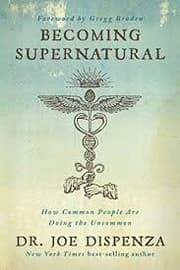
Cover of Becoming Supernatural: How Common People Are Doing The Uncommon

Becoming Supernatural: How Common People Are Doing The Uncommon

Dr. Joe Dispenza (Author), Adam Boyce (Narrator), Author's Republic (Publisher) & 0 more Format: Audible Audiobook

2017

A WALL STREET JOURNAL BESTSELLER by DR. JOE DISPENZA , the author of the New York Times bestseller You Are the Placebo, as well as Breaking the Habit of Being Yourself and Evolve Your Brain. Becoming Supernatural draws on epigenetics, quantum physics & neuroscience research conducted at his advanced workshops since 2012 to explore how common people are doing the uncommon to transform their consciousness, mindset, and beliefs to heal and live SUPERNATURAL lives. Becoming Supernatural marries some of the most profound scientific information with ancient spiritual wisdom to show how people like you and me can experience a more mystical life. Readers will learn that we are, quite literally supernatural by nature if given the proper knowledge and instruction, and when we learn how to apply that information through various healing meditations, we should experience a greater expression of our creative abilities. We have the capacity to tune in to frequencies beyond our material world and receive more orderly coherent streams of consciousness and energy; that we can intentionally change our brain chemistry to initiate profoundly mystical transcendental experiences; and how, if we do this enough times, we can develop the skill of creating a more efficient, balanced, healthy body, a more unlimited mind, and greater access to the quantum field and the realms of spiritual truth. Topics include: • Demystifying the body’s 7 energy centers and how you can balance them to heal • How to free yourself from the past by reconditioning your body to a new mind • How you can create reality in the generous present moment by changing your energy • The difference between third-dimension creation and fifth-dimension creation • The secret science of the pineal gland and its role in accessing mystical realms of reality • The distinction between Space-Time vs. Time-Space realities • And much more Chapters Include: Opening the Door to the Supernatural The Present Moment Tuning In to New Potential

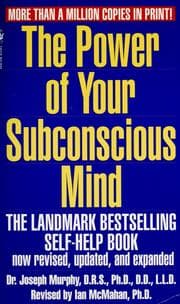
Cover of The Power of Your Subconscious Mind

The Power of Your Subconscious Mind

Joseph Murphy

1963

He visto cómo les ocurren milagros a hombres y mujeres de toda condición alrededor del planeta. Los milagros también le ocurrirán a usted cuando comience a utilizar el poder mágico de su mente subconsciente. Este libro se propone enseñarle que su manera habitual de pensar y los esquemas de su imaginación configuran y crean su destino; pues lo que el hombre piensa en su mente inconsciente que es, eso es. ¿Por qué un hombre está triste y otro alegre? ¿Por qué un hombre es jubiloso y próspero, y otro, pobre y mísero? ¿Por qué un hombre está temeroso y lleno de ansiedad y otro exuda fe y confianza? ¿Por qué un hombre tiene una hermosa y elegante mansión mientras que otro arrastra una mezquina existencia en un barrio miserable? ¿Por qué un hombre constituye todo un éxito mientras que otro es un desgraciado fracaso?¿Por qué un orador se distingue y es inmensamente popular, y otro mediocre e impopular? ¿Por qué un hombre es un genio en su trabajo mientras que otro se mata trabajando toda su vida sin hacer ni conseguir nada que valga realmente la pena? ¿Por qué sana un hombre de una de esas llamadas enfermedades incurables y otro no? ¿Por qué tanta gente religiosa, que es bondadosa y amable, sufre los tormentos de los condenados en cuerpo y alma? ¿Por qué tanta gente inmoral e impía tiene éxito, y prospera, y goza de radiante salud? ¿Por qué una mujer tiene un matrimonio feliz y su hermana es desgraciada y está llena de frustraciones?¿Existe una respuesta a estas interrogantes en las operaciones mente consciente y su mente subconsciente? Indudablemente que sí. Los objetivos específicos son: contestar y aclarar las preguntas anteriores y muchas otras de naturaleza semejante. Dr.Joseph Murphy

Cover of The magic of believing

The magic of believing

Claude M. Bristol

1948

Claude M. Bristol's "The Magic of Believing" explores the profound impact of a positive and unwavering belief system on achieving one's goals. The book argues that cultivating a strong conviction in the possibility of success, coupled with persistent action, is the fundamental driver behind personal and professional accomplishments. Bristol provides practical insights and real-world examples to illustrate how harnessing the power of belief can overcome obstacles and manifest desired outcomes.

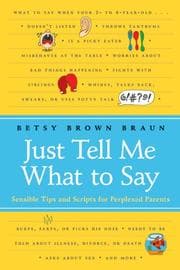
Cover of Just Tell Me What to Say

Just Tell Me What to Say

Betsy Brown Braun

1975

Parents are often perplexed by their children's typical behaviors and inevitable questions. This down-to-earth guide provides "Tips and Scripts" for handling everything from sibling rivalry and the food wars to questions about death, divorce, sex, and "whyyyy?" Betsy Brown Braun blends humor with her expertise as a child development specialist, popular parent educator, and mother of triplets. Whatever your dilemma or child's question—from "How did the baby get in your tummy?" to "What does 'dead' mean?" to "It's not fair!"—Betsy offers the tools and confidence you need to explain the world to your growing child.

Frequently Asked Questions

What should I read after Anxiety & Depression Workbook For Dummies?
Browse the similar books below — they're matched by subject overlap, author style, and reader preferences.
What books are most similar to Anxiety & Depression Workbook For Dummies?
Our recommendations prioritize shared themes like Nonfiction, Self-Improvement, Depression, mental and books enjoyed by similar readers.
Which similar book is best for beginners?
Check page counts and summaries on each recommendation. Shorter titles with broader appeal are usually the best starting point.

Promote Your Book on BestsellerFinder

Reach thousands of readers with featured placements, homepage spots, and newsletter features.

Get bestseller picks in your inbox

Weekly curated book recommendations. Unsubscribe anytime.

Explore More

Affiliate Disclosure: As an Amazon Associate, we may earn from qualifying purchases. Book links on this page may be affiliate links. This does not affect our recommendations or the price you pay.