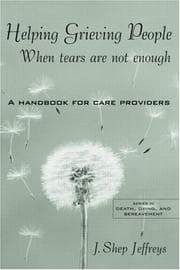
Helping Grieving People--When Tears Are Not Enough
J. Shep Jeffreys
2004
If you enjoyed I wasn't ready to say goodbye by Brook Noel, Pamela Blair, you likely appreciate Death, Psychological aspects of Death, Self-Improvement. These similar reads match the tone, themes, and audience of the original.
J. Shep Jeffreys
2004

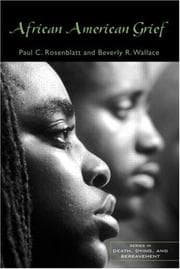
Paul C. Rosenblatt
2005

J. Earl Rogers
2007

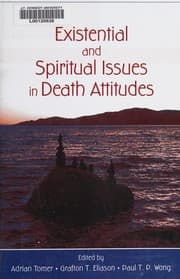
Adrian Tomer, Grafton Eliason, Paul T. P. Wong
2007
Existential and Spiritual Issues in Death Attitudes provides: an in-depth examination of death attitudes, existentialism, and spirituality and their relationships; a review of the major theoretical models; clinical applications of these models to issues such as infertility, bereavement, anxiety, and suicide; and an introduction to meaning managemen

Jennifer L. Buckle
2010

Jeffrey Kauffman
2010

Maria Shriver
2000

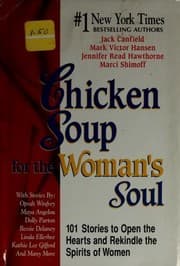
Jack Canfield, Dave Barry, Jack Canfield, Marci Shimoff, Mark Victory Hansen, Jennifer Read Hawthorne, Mark Victor Hansen
1996

Keith Ablow
2007

Sheryl Sandberg, Adam Grant
2017
#1 NEW YORK TIMES BEST SELLER • From authors of Lean In and Originals: a powerful, inspiring, and practical book about building resilience and moving forward after life’s inevitable setbacks After the sudden death of her husband, Sheryl Sandberg felt certain that she and her children would never feel pure joy again. “I was in ‘the void,’” she writes, “a vast emptiness that fills your heart and lungs and restricts your ability to think or even breathe.” Her friend Adam Grant, a psychologist at Wharton, told her there are concrete steps people can take to recover and rebound from life-shattering experiences. We are not born with a fixed amount of resilience. It is a muscle that everyone can build. Option B combines Sheryl’s personal insights with Adam’s eye-opening research on finding strength in the face of adversity. Beginning with the gut-wrenching moment when she finds her husband, Dave Goldberg, collapsed on a gym floor, Sheryl opens up her heart—and her journal—to describe the acute grief and isolation she felt in the wake of his death. But Option B goes beyond Sheryl’s loss to explore how a broad range of people have overcome hardships including illness, job loss, sexual assault, natural disasters, and the violence of war. Their stories reveal the capacity of the human spirit to persevere . . . and to rediscover joy. Resilience comes from deep within us and from support outside us. Even after the most devastating events, it is possible to grow by finding deeper meaning and gaining greater appreciation in our lives. Option B illuminates how to help others in crisis, develop compassion for ourselves, raise strong children, and create resilient families, communities, and workplaces. Many of these lessons can be applied to everyday struggles, allowing us to brave whatever lies ahead. Two weeks after losing her husband, Sheryl was preparing for a father-child activity. “I want Dave,” she cried. Her friend replied, “Option A is not available,” and then promised to he

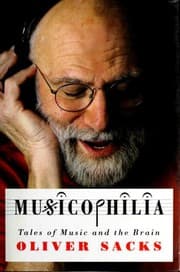
Oliver Sacks
2007
本书作者通过讲述与他接触的病人所发生的故事,介绍了与音乐和听觉有关的有趣的科学知识,以及音乐疗法对患有不同病症的患者的康复所取得的显著效用.

Wendy Maltz, Larry Maltz
2008

Joe Navarro, Marvin Karlins
2008
Chinese edition of What Every BODY is Saying: An Ex-FBI Agent's Guide to Speed-Reading People. A powerful book on nonverbal body language that is field tested by law enforcement and The FBI. Distributed by Tsai Fong Books, Inc.

Bradshaw, John
1992
“Why are so many of us at times completely baffled by a relationship? How can we think we know someone so well and admit in the end that we hardly knew that person at all? Why do many people who work diligently and strenuously to gain wholeness and balance still feel so frustrated about having a fulfilling relationship? Why have so many people given up on love?”—from the Prologue John Bradshaw’s bestselling books and compelling PBS series have touched and changed millions of lives. Now, in Creating Love, he offers us a new way to understand our most crucial relationships—with our romantic partners and spouses, with our parents and children, with friends and co-workers, with ourselves, and with God. Bradshaw’s compassionate approach shows that many of us have been literally “entranced” by past experiences of counterfeit love, so we unknowingly re-create patterns that can never fulfill us. Here he provides both the insights and the precise tools we need to keep those destructive patterns from repeating in the present. And then he shows how we can open ourselves to the soul-building work of real love—and create healthy, loving relationships where we can be fully ourselves in every part of our lives.
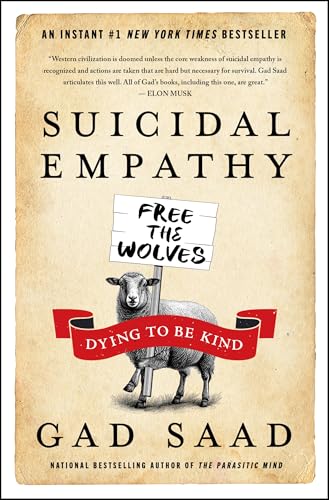
Rosalene Glickman
1990

Stan Hinden
2000

Ana Maria Rossi, Pamela L. Perrewe, Steven L. Sauter
2001

Paul Gootenberg, P. Gootenberg, Paul Gootenberg
1999
This volume examines the rise and fall of cocaine. In the 19th century it was openly legal and legitimately used by scientists, medics and pharmaceutical manufacturers alike, unlike today's world of narcotics prohibition.

Henry Cloud, John Sims Townsend, Henry O. Arnold
1998

Trudi Petersen, Andrew McBride
2002
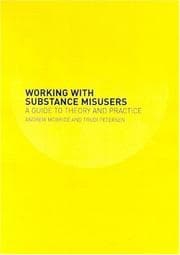
Working with Substance Misusers is a practical handbook for students and those who work with people who misuse drugs or alcohol. Written by experienced teachers and clinicians, the book introduces: * the substances themselves * theories relevant to substance use and misuse * the skills necessary to work with this client group * the broad range of approaches to treatment * particular problems of specific groups. The reader is encouraged to read and reflect on the material in relation to their own practice. To help this process, each topic has an identified set of learning objectives. Activities designed to reinforce learning include discussion points, case studies, role plays and group exercises. Working with Substance Misusers makes clear the connection of theory to practice and encourages a skills-based, but reflective, approach to work in this complex field. Cutting across professional boundaries, it provides both new and more experienced practitioners with a key text.
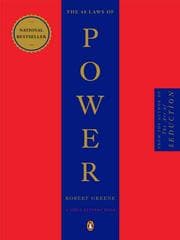
Robert Greene
1998
Le pouvoir… on le désire, on le craint, on s’en protège… « Le sentiment de n’avoir aucun pouvoir sur les gens et les événements est difficilement supportable : l’impuissance rend malheureux. Personne ne réclame moins de pouvoir, tout le monde en veut davantage. » Amoral, intelligent, impitoyable et captivant, cet ouvrage colossal condense 3 000 ans d’histoire du pouvoir en 48 lois. Véritable manuel de la manipulation, il analyse la quintessence de cette sagesse millénaire, tirée de la vie des plus illustres stratèges (Sun Zi, Clausewitz), hommes d’État (Louis XIV, Bismarck, Talleyrand), courtisans (Castiglione, Gracián), séducteurs (Ninon de Lenclos, Casanova) et escrocs de l’histoire. Certaines lois reposent sur la prudence (loi no 1 : Ne surpassez jamais le maître), d’autres demandent de la dissimulation (loi no 7 : Laissez le travail aux autres, mais recueillez-en les lauriers), d’autres encore une absence totale de compassion (loi no 15 : Écrasez complètement l’ennemi). Toutes ces lois trouveront des applications dans votre vie de tous les jours… Car, soyez en certain : le monde est une immense cour où se trament toutes sortes d’intrigues. Au lieu de nier l’évidence, tâchez d’exceller dans la course au pouvoir. Des extraits, des vidéos, des interviews de Robert Greene sur son site www.robertgreene.fr
Gavin de Becker
1997

Brian Tracy
2003
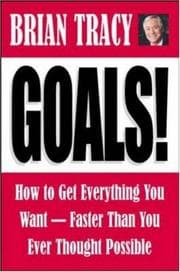
Why do some people achieve all their goals while others simply dream of having a better life? Bestselling author Brian Tracy shows that the path from frustration to fulfillment has already been discovered. Hundreds of thousands--even millions--of men and women have started with nothing and achieved great success. Here Tracy presents the essential principles you need to know to make your dreams come true. Tracy presents a simple, powerful, and effective system for setting and achieving goals--a method that has been used by more than one million people to achieve extraordinary things. In this revised and expanded second edition he has added three new chapters addressing areas in which goals can be most rewarding but also the toughest to set and keep: finances, family, and health. Using the twenty-one strategies Tracy outlines, you'll be able to accomplish any goals you set for yourself--no matter how big. You'll discover how to determine your own strengths, what you truly value in life, and what you really want to accomplish in the years ahead. Tracy shows how to build your self-esteem and self-confidence, approach every problem or obstacle effectively, overcome difficulties, respond to challenges, and continue forward toward your goals, no matter what happens. Most importantly, you'll learn a system for achievement that you will use for the rest of your life.

Neville Goddard
2004

Malcolm Gladwell
2004
Drawing on cutting-edge neuroscience and psychology and displaying all of the brilliance that made The Tipping Point a classic, Blink changes the way you'll understand every decision you make. Never again will you think about thinking the same way. Malcolm Gladwell redefined how we understand the world around us. Now, in Blink, he revolutionizes the way we understand the world within. Blink is a book about how we think without thinking, about choices that seem to be made in an instant - in the blink of an eye - that actually aren't as simple as they seem. Why are some people brilliant decision makers, while others are consistently inept? Why do some people follow their instincts and win, while others end up stumbling into error? How do our brains really work - in the office, in the classroom, in the kitchen, and in the bedroom? And why are the best decisions often those that are impossible to explain to others? In Blink we meet the psychologist who has learned to predict whether a marriage will last, based on a few minutes of observing a couple; the tennis coach who knows when a player will double-fault before the racket even makes contact with the ball; the antiquities experts who recognize a fake at a glance. Here, too, are great failures of "blink": the election of Warren Harding; "New Coke"; and the shooting of Amadou Diallo by police. Blink reveals that great decision makers aren't those who process the most information or spend the most time deliberating, but those who have perfected the art of "thin-slicing" - filtering the very few factors that matter from an overwhelming number of variables. Drawing on cutting-edge neuroscience and psychology and displaying all of the brilliance that made The Tipping Point a classic, Blink changes the way you understand every decision you make. Never again will you think about thinking the same way.
Reach thousands of readers with featured placements, homepage spots, and newsletter features.
Weekly curated book recommendations. Unsubscribe anytime.
Affiliate Disclosure: As an Amazon Associate, we may earn from qualifying purchases. Book links on this page may be affiliate links. This does not affect our recommendations or the price you pay.