Books Like “The second Mrs. Tanqueray

If you enjoyed The second Mrs. Tanqueray by Arthur Wing Pinero, you likely appreciate Drama, Marriage, Remarried people. These similar reads match the tone, themes, and audience of the original.

Not sure what to read next? Ask BestsellerFinder AI →

DramaMarriageRemarried peopleBritish and irish drama (dramatic works by one author)Drama (dramatic works by one author)Upper classProstitutesPublic opinion

Closest matches

Titles with overlapping themes, tone, and audience with your pick.

Cover of A Doll's House

A Doll's House

Henrik Ibsen

1889

A Doll's House by Henrik Ibsen portrays Nora, the wife, as a "doll," beautiful, unsophisticated, childlike, well-meaning, but ignorant of the adult world and affairs. All of her friends see her as a doll. Her husband Torvald treats her as one, calling her childish names. He tries to control all of her behavior, not because he is mean, but because he loves her and he realizes that she is unable to do so. IN "A Doll's House, Torvald" tells Nora what to eat so that her teeth will not be spoiled from sugar and how much she should spend because she does not understand much about money. And it is the latter, the money, that gets Nora into trouble. Torvald was sick some years back and needed to travel and stay in a warmer climate for some months, but the couple had no money. She, out of childish but ignorant love, borrowed money from an unscrupulous man who insisted that she have her father countersign the loan. Her father was dying, so she forged his signature on the loan document. She was certain that this was not wrong because her intentions were pure, she wanted to save her husband's life. She did not tell her husband about the loan because she childishly wanted to surprise him someday in the future and show him that she acted wisely and that she, who he thought of as childlike, saved his life. She laughed about her cleverness often when she was alone. Now the unscrupulous lender is demanding something from Nora, or he will reveal the forgery to her husband and his employer, and this will affect her marriage and her husband will lose his job. The tragedy in Henrik Ibsen's "The Doll's House" probably would not have occured if the people would have treated women properly as human beings rather than dolls.


Cover of The Importance of Being Earnest

The Importance of Being Earnest

Oscar Wilde

1893

Subtitled “A Trivial Comedy for Serious People,” Wilde’s play is a brilliantly satirical comedy of manners, sending up the absurdity of Victorian social mores and cleverly critiquing the conventions of love and marriage. The tale of two gentlemen who adopt fictitious identities in order to woo the objects of their affections is Wilde’s most beloved work, considered to be one of the wittiest plays ever written in English. The glowing critical reception in London on opening night at the St. James Theater in 1895 marked the high point of Wilde’s career as a writer.

Cover of Misalliance

Misalliance

George Bernard Shaw

1957

George Bernard Shaw was born in Dublin in 1856. Before becoming a playwright he wrote music and literary criticism. Shaw used his writing to attack social problems such as education, marriage, religion, government, health care, and class privilege. Shaw was particularly conscious of the exploitation of the working class Misalliance is a 1909 house-comedy. There is a clash between social classes when an Edwardian aristocrat wants to marry the daughter of an underwear tycoon. The entire play takes place in an afternoon in a Victorian drawing room.

Cover of The Taming of the Shrew

The Taming of the Shrew

William Shakespeare

1631

The Wonder of Shakespeare One who reads a few of Shakespeare's great plays and then the meager story of his life is generally filled with a vague wonder. Here is an unknown country boy, poor and poorly educated according to the standards of his age, who arrives at the great city of London and goes to work at odd jobs in a theater. In a year or two he is associated with scholars and dramatists, the masters of their age, writing plays of kings and clowns, of gentlemen and heroes and noble women, all of whose lives he seems to know by intimate association. In a few years more he leads all that brilliant group of poets and dramatists who have given undying glory to the Age of Elizabeth. Play after play runs from his pen, mighty dramas of human life and character following one another so rapidly that good work seems impossible; yet they stand the test of time, and their poetry is still unrivaled in any language. For all this great work the author apparently cares little, since he makes no attempt to collect or preserve his writings. A thousand scholars have ever since been busy collecting, identifying, classifying the works which this magnificent workman tossed aside so carelessly when he abandoned the drama and retired to his native village. He has a marvelously imaginative and creative mind; but he invents few, if any, new plots or stories. He simply takes an old play or an old poem, makes it over quickly, and lo! this old familiar material glows with the deepest thoughts and the tenderest feelings that ennoble our humanity; and each new generation of men finds it more wonderful than the last. How did he do it? That is still an unanswered question and the source of our wonder.

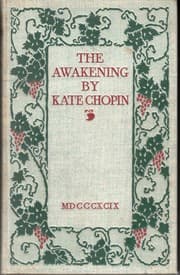
Cover of The Awakening

The Awakening

Kate Chopin

1899

'The voice of the sea is seductive; never ceasing, whispering, clamoring, murmuring, inviting the soul to wander for a spell in abysses of solitude' When 'The Awakening' was first published in 1899, charges of sordidness and immorality seemed to consign it into obscurity and irreparably damage its author's reputation. But a century after her death, it is widely regarded as Kate Chopin's great achievement. Through careful, subtle changes of style, Chopin shows the transformation of Edna Pontellier, a young wife and mother, who - with tragic consequences - refuses to be caged by married and domestic life, and claims for herself moral and erotic freedom. The Penguin English Library - collectable general readers' editions of the best fiction in English, from the eighteenth century to the end of the Second World War.

Cover of The Age of Innocence

The Age of Innocence

Edith Wharton

1920

Edith Wharton’s acclaimed novel of love, duty, and half-known truths in Gilded Age New York society, with a foreword by bestselling author Elif Batuman Dutiful Newland Archer, an eligible young man from New York high society, is about to announce his engagement to May Welland, a suitable match from a good family, when May’s cousin, the beautiful and exotic Countess Ellen Olenska, is introduced into their circle. The Countess brings with her an aura of European sophistication and a hint of perceived scandal, having left her husband and claimed her independence. Her worldliness, disregard for society’s rules, and air of unapproachability attract the sensitive Newland, despite his enthusiasm about a marriage to May and the societal advantages it would bring. Almost against their will, Newland and Ellen develop a passionate bond, and a classic love triangle takes shape as the three young people find themselves drawn into a poignant and bitter conflict between love and duty. Written in 1920, Edith Wharton’s Pulitzer Prize-winning novel about a time and place long gone by—1870s New York City—beautifully captures the complexities of passion, independence, and fulfillment, and how painfully hard it can be for individuals to truly see one another and their place in the world. For more than seventy years, Penguin has been the leading publisher of classic literature in the English-speaking world. With more than 1,700 titles, Penguin Classics represents a global bookshelf of the best works throughout history and across genres and disciplines. Readers trust the series to provide authoritative texts enhanced by introductions and notes by distinguished scholars and contemporary authors, as well as up-to-date translations by award-winning translators.

Cover of The Valley of the Moon

The Valley of the Moon

Jack London

1900

The Valley of the Moon (1913) is a novel by American writer Jack London (as well as the mythic and romantic name for the wine-growing Sonoma Valley of California). The valley where it is set is located north of the San Francisco Bay Area in Sonoma County, California where Jack London was a resident; he built his ranch in Glen Ellen.The novel The Valley of the Moon is a story of a working-class couple, Billy and Saxon Roberts, struggling laborers in Oakland at the Turn-of-the-Century, who left city life behind and searched Central and Northern California for suitable farmland to own. The book is notable for its scenes in which the proletarian hero enjoys fellowship with the artists' colony in Carmel, and he settles in the Valley of the Moon.

Cover of Rose in Bloom

Rose in Bloom

Louisa May Alcott, Harriet Roosevelt Richards

1876

Rose in Bloom is a sequel to Eight Cousins. The story begins when Rose comes back from a long trip to Europe. Everyone is well altered and as a joke, when she arrives home, she lines up her seven cousins to take a long look at them, just as they did to her when they first met. Rose Campbell, the heroine of the story, is sweet, kind, pretty, and ambitious. She is an heiress just come of age, and struggles with the many suitors she attracts by learning to judge love versus those who regard her only as "a good match."

Readers also enjoyed

Popular and highly rated books from our library you might like next.

Cover of A second chicken soup for the woman's soul

A second chicken soup for the woman's soul

Jack Canfield, Dave Barry, Jack Canfield, Marci Shimoff, Mark Victory Hansen, Jennifer Read Hawthorne, Mark Victor Hansen

1996

This latest collection of stories celebrates the shared experiences of being a woman in a 101 new ways. You will be moved by these true accounts of how women like you have embraced life's defining moments by finding love, dealing with loss, overcoming obstacles and achieving their dreams and goals. Like spending time with a trusted friend, A Second Chicken Soup for the Woman's Soul will put difficult times into perspective, renew your faith in yourself and make you aware of the miracles in your own life.

Cover of The Gift of Fear

The Gift of Fear

Gavin de Becker

1997

A carjacker lurking in a shopping mall parking lot. An abusive husband pounding on the door. A disgruntled employee brandishing a gun. These days, no one is safe from the specter of violence. But according to Gavin de Becker, everyone can feel safer, act safer, be safer -- if they learn how to listen to their own sixth sense about danger. De Becker has made a career of protecting people and predicting violent behavior. His firm handles security for many of Hollywood's top celebrities -- Madonna, Michael J. Fox, Geena Davis, Brooke Shields, and John Travolta, among others, according to press reports -- and his computerized risk-assessment system helps analyze threats to members of Congress and the Supreme Court. Now, in this unprecedented guide, de Becker shares his expertise with everyone. Covering all the dangerous situations people typically face -- street crime, domestic abuse, violence in the workplace -- de Becker provides real-life examples and offers specific advice on restraining orders, self-defense, and more. But the key to self-protection, he demonstrates, is learning how to trust -- and act on -- our own intuitions. For everyone who's ever felt threatened, this book is essential reading.

Cover of Come as you are

Come as you are

Emily Nagoski, Blanca González Villegas

2015

***A "NEW YORK TIMES" BESTELLER*** An essential exploration of why and how women's sexuality works--based on groundbreaking research and brain science--that will radically transform your sex life into one filled with confidence and joy. Researchers have spent the last decade trying to develop a "pink pill" for women to function like Viagra does for men. So where is it? Well, for reasons this book makes crystal clear, that pill will never exist--but as a result of the research that's gone into it, scientists in the last few years have learned more about how women's sexuality works than we ever thought possible, and "Come as You Are" explains it all. The first lesson in this essential, transformative book by Dr. Emily Nagoski is that every woman has her own unique sexuality, like a fingerprint, and that women vary more than men in our anatomy, our sexual response mechanisms, and the way our bodies respond to the sexual world. So we never need to judge ourselves based on others' experiences. Because women vary, and that's normal. Second lesson: sex happens in a context. And all the complications of everyday life influence the context surrounding a woman's arousal, desire, and orgasm. Cutting-edge research across multiple disciplines tells us that the most important factor for women in creating and sustaining a fulfilling sex life, is not what you do in bed or how you do it, but "how you feel about it." Which means that stress, mood, trust, and body image are not peripheral factors in a woman's sexual wellbeing; they are central to it. Once you understand these factors, and how to influence them, you can create for yourself better sex and more profound pleasure than you ever thought possible. And Emily Nagoski can prove it.

Cover of Overcoming objectification

Overcoming objectification

Ann J. Cahill

2011

The second edition of Overcoming Objectification: A Carnal Ethics provides a critical analysis of the widely used (particularly in feminist philosophy) concept of objectification, and offers a new concept (derivatization) in its stead. Cahill suggests an abandonment of objectification due to the concept’s dependence on a Kantian ideal of personhood, an ideal that fails to recognize sufficiently the role the body plays in personhood and results in an implicit vilification of the body and sexuality. Phenomena associated with objectification are ethically problematic not because they render women objects, and therefore not-persons, but rather because they construct feminine subjectivity and sexuality as wholly derivative of masculine subjectivity and sexuality. Women are not objectified as much as they are derivatized: turned into a mere reflection or projection of the other. Cahill argues for a sexual ethics grounded in difference, carnality, and intersubjectivity. The preface to the second edition traces new scholarly contributions to conversations regarding sexual ethics, feminist engagements with Kant, intersectionality, and trans philosophy. With original and far-reaching insights regarding the structure of gender inequality, this work will be of interest to students and scholars in the humanities and social sciences alike and will be of particular use to those interested in sexual ethics, sexual assault, and dominant media representations of gendered bodies.

Cover of Great Expectations

Great Expectations

Charles Dickens

1861

Great Expectations was first published as a weekly serial in All the Year Round, December 1860 - August 1861. Its first appearance in volume form was as three-volume novel, without illustrations, in July 1861. A one-volume edition, the next year, preceded its inclusion in the collected editions of Dickens's lifetime. The three-volume 1861 edition is the basis of the present text: variant readings, including those in manuscript and extant proofs, are recorded in the textual apparatus, providing an unusually rich source of information on Dickens's methods of composition. The Introduction traces this process of composition and draws attention to the two unperformed dramatic adaptations: the reading version and the 1861 play version, made as a safeguard of copyright. Appendices include the original ending, the author's notes, and two textual examinations, one of the five so-called `editions' of 1861, the other a comparison of the one-volume 1862 edition with the 1864 Library edition.

Cover of Dombey and Son

Dombey and Son

Charles Dickens

1800

Charles Dickens's *Dombey and Son* chronicles the rigidly controlled life and subsequent downfall of Paul Dombey, a proud shipping magnate obsessed with his firm and his male heir, who ultimately neglects his family. The novel explores the destructive consequences of this ambition on his wife, daughter Florence, and son Paul, highlighting themes of pride, greed, and the enduring power of familial love against societal pressures and personal failings. Through a rich cast of characters, Dickens paints a vivid portrait of Victorian London and the complex interplay between business acumen and human connection.

Cover of Our bodies, ourselves

Our bodies, ourselves

Boston Women's Health Book Collective, Angela Phillips, Jill Rakusen, Alice Mayhew, Simon and Schster

1971

This comprehensive resource offers women an in-depth exploration of their physical and emotional well-being, covering a wide range of health topics from anatomy and reproductive health to mental health and societal influences. It empowers readers with detailed information, presented accessibly, to make informed decisions about their bodies and advocate for their healthcare needs. The book fosters a holistic understanding of women's health, encouraging self-care and a critical perspective on medical and social norms.

Cover of The Change

The Change

Germaine Greer

1991

In this study of the real and fundamental change which women experience during the menopause and which, like other fundamental changes, needs mental preparation and acceptance if it is not to be found unbearable, Dr Greer examines medical theories and treatment over the ages, and finds them often contradictory, excessive and, at times, dangerous. She responds to the traditional attitude of men and society which has been responsible for the creation of an image of the older woman as fake damsel or old crone. Dr Greer has weighed up the facts, the theories and the outright fabrications.

Cover of Estrogen

Estrogen

Lila Nachtigall, Lila, MD Nachtigall, Joan Rattner Heilman, Lila E. Nachtigall

1986

En la actualidad, la terapia de sustitución hormonal suscita un notable desconcierto y confusión en multitud de mujeres e incluso entre los médicos. Si se sigue correctamente, el tratamiento con estrógenos constituye uno de los medios más eficaces para afrontar los cambios físicos que sobrevienen en la mujer a lo largo de la menopausia, desde los sofocos y el insomnio hasta el entumecimiento de manos y pies. Esta guía, que incluye las investigaciones científicas más recientes, así como las terapias alternativas de que se dispone, ofrece información sobre la eficacia del tratamiento hormonal --junto con sus efectos secundarios y posibles problemas-- para aliviar los síntomas de la menopausia, prevenir la osteoporosis, mejorar la memoria, mantener una vida sexual activa y reducir la probabilidad de desarrollar la enfermedad de Alzheimer o un infarto de miocardio.

Cover of The new ourselves, growing older

The new ourselves, growing older

Paula B. Doress-Worters, Diana Laskin Siegal

1987

Following in the ground-breaking tradition of Our Bodies, Ourselves, Paula B. Doress-Worters and Diana Laskin Siegal address the needs of the growing number of women over the age of forty. This new and revised edition of the bestselling Ourselves, Growing Older includes new chapters on menopause and reform of the medical care system as well as extensive updates on housing issues, HIV/AIDS, cosmetic surgery, and breast cancer. The New Ourselves, Growing Older takes a positive, empowering approach to the physical and emotional health and social welt-being of midlife and older women by providing frank and complete information on personal health. Emphasizing the positive potential of the second half of life, this book focuses on a vast array of topics, including: * Aging and Well-Being * Reassessing Our Body Image * Contraception and Childbearing at Midlife * Sexuality in the Middle and Later Years * Menopause: Experiencing Our Change of Life * Reform of the Medical Care System * Hypertension, Diabetes, Hysterectomy * Osteoporosis, Arthritis, Cancer * Hosing Alternatives, Work and Retirement, Money Matters Drawing on the experiences of scores of women from every walk of life, The New Ourselves, Growing Older not only draws on the work of experts but also listens to the voices of women themselves. The result is a document of unique power -- a guide to health and living that is authoritative, reassuring and sympathetic.

Frequently Asked Questions

What should I read after The second Mrs. Tanqueray?
Browse the similar books below — they're matched by subject overlap, author style, and reader preferences.
What books are most similar to The second Mrs. Tanqueray?
Our recommendations prioritize shared themes like Drama, Marriage, Remarried people and books enjoyed by similar readers.
Which similar book is best for beginners?
Check page counts and summaries on each recommendation. Shorter titles with broader appeal are usually the best starting point.

Promote Your Book on BestsellerFinder

Reach thousands of readers with featured placements, homepage spots, and newsletter features.

Get bestseller picks in your inbox

Weekly curated book recommendations. Unsubscribe anytime.

Explore More

Affiliate Disclosure: As an Amazon Associate, we may earn from qualifying purchases. Book links on this page may be affiliate links. This does not affect our recommendations or the price you pay.