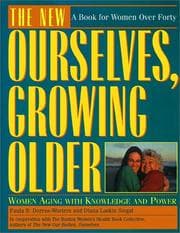
Cover of The new ourselves, growing older

The new ourselves, growing older

by Paula B. Doress-Worters, Diana Laskin Siegal

Published 1987

View on Amazon

Check availability on Amazon

Are you the author or publisher of this book?

Claim this book — Free

Update metadata for “The new ourselves, growing older” after verification.

BestsellerFinder Score unavailable — not enough catalog data yet.

Following in the ground-breaking tradition of Our Bodies, Ourselves, Paula B. Doress-Worters and Diana Laskin Siegal address the needs of the growing number of women over the age of forty. This new and revised edition of the bestselling Ourselves, Growing Older includes new chapters on menopause and reform of the medical care system as well as extensive updates on housing issues, HIV/AIDS, cosmetic surgery, and breast cancer. The New Ourselves, Growing Older takes a positive, empowering approach to the physical and emotional health and social welt-being of midlife and older women by providing frank and complete information on personal health. Emphasizing the positive potential of the second half of life, this book focuses on a vast array of topics, including: * Aging and Well-Being * Reassessing Our Body Image * Contraception and Childbearing at Midlife * Sexuality in the Middle and Later Years * Menopause: Experiencing Our Change of Life * Reform of the Medical Care System * Hypertension, Diabetes, Hysterectomy * Osteoporosis, Arthritis, Cancer * Hosing Alternatives, Work and Retirement, Money Matters Drawing on the experiences of scores of women from every walk of life, The New Ourselves, Growing Older not only draws on the work of experts but also listens to the voices of women themselves. The result is a document of unique power -- a guide to health and living that is authoritative, reassuring and sympathetic.

Older womenHealth and hygienePsychologyWomen's HealthAgedHygieneWomenOlder women -- United States -- PsychologyOlder women -- Health and hygiene -- United StatesMiddle-aged womenGeriatricsPopular Works

Similar Books

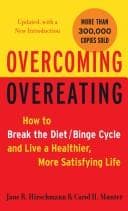
Cover of Overcoming overeating

Overcoming overeating

Jane R. Hirschmann, Carol H. Munter

The reissue of a classic in healthy living, with more than 300,000 copies sold!Diet/binge. good food/bad food. punishment/reward. These are the compulsive eater's nightmares, a long-time pattern of recrimination and guilt that ultimately leads to more overeating and more weight gain. In an updated edition, here is the ground-breaking, step-by-step plan that doesn't control eating habits but cures them instead, once and for all. Overcoming Overeating will show you how to:* Give up dieting forever* Eat from true stomach hunger instead of "mouth hunger"* Stop overeating and lose weight naturally* Move beyond a preoccupation with eating and weight in order to live a more satisfying life

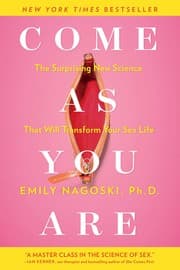
Cover of Come as you are

Come as you are

Emily Nagoski Ph.D.

***A "NEW YORK TIMES" BESTELLER*** An essential exploration of why and how women's sexuality works--based on groundbreaking research and brain science--that will radically transform your sex life into one filled with confidence and joy. Researchers have spent the last decade trying to develop a "pink pill" for women to function like Viagra does for men. So where is it? Well, for reasons this book makes crystal clear, that pill will never exist--but as a result of the research that's gone into it, scientists in the last few years have learned more about how women's sexuality works than we ever thought possible, and "Come as You Are" explains it all. The first lesson in this essential, transformative book by Dr. Emily Nagoski is that every woman has her own unique sexuality, like a fingerprint, and that women vary more than men in our anatomy, our sexual response mechanisms, and the way our bodies respond to the sexual world. So we never need to judge ourselves based on others' experiences. Because women vary, and that's normal. Second lesson: sex happens in a context. And all the complications of everyday life influence the context surrounding a woman's arousal, desire, and orgasm. Cutting-edge research across multiple disciplines tells us that the most important factor for women in creating and sustaining a fulfilling sex life, is not what you do in bed or how you do it, but "how you feel about it." Which means that stress, mood, trust, and body image are not peripheral factors in a woman's sexual wellbeing; they are central to it. Once you understand these factors, and how to influence them, you can create for yourself better sex and more profound pleasure than you ever thought possible. And Emily Nagoski can prove it.

Cover of Counseling addicted families

Counseling addicted families

Tara Ellsworth, Nursity Press

Although one person's addiction almost inevitably affects his or her family members, a surprising number of treatment models appear to operate under the assumption that an individual's addiction occurs in a vacuum. By not paying sufficient attention to preexisting family dynamics-whether dysfunctional, supportive, or somewhere in between-counselors run the risk of not fully understanding the roots of an individual's addictions or the obstacles to his recovery; as a result, counselors may undermine their own treatment efforts both by neglecting any underlying family problems and by failing to capitalize upon a family's potential assistance in an intervention with the addicted individual. In Counseling Addicted Families, Gerald A. Juhnke and William Bryce Hagedorn address this problem head-on. Recognizing that even those treatment providers who understand the importance of the familial context of addiction are often stymied by the variety of family treatment theories and their often imperfect fit for cases of addiction, Juhnke and Hagedorn provide a truly integrated model for assessment and treatment. Based upon the authors' combined 23 years of experience in clinical and treatment supervision, the Integrated Family Addictions Model consists of six progressive treatment tiers which organize the relevant family treatment theories into a graduated and coherent sequence, beginning with the briefest and least costly forms of therapy. If one of the lower tiers allows clients to reach their treatment goals, the patient and therapist need not waste time and resources following the full continuum. If, however, their needs are still unmet, they can progress in a logical fashion to more advanced and intensive forms of therapy. The book is divided into three broad topic areas designed to provide counselors and graduate students with essential information both about addictions and about the practical applications of various treatment theories. Part One discusses the prevalence of

Cover of Human motivation

Human motivation

Bernard Weiner

`Weiner's third textbook on motivation has more emphasis on emotion than its predecessors. There is also a new organization around basic metaphors... there is particularly good and up-to-date coverage of attributional approaches' - Cognition and Emotion Successful with over 24,000 students in two earlier motivation books, Weiner's text - newly available in paperback - depicts motivation as an unfolding story with plot and characters. He offers insights into the history and study of motivation and captures the excitement of the field as it evolves. Theories are explored in the context of the dominant metaphor, or paradigm, of various eras. First to be discussed is the machine metaphor, which to

Explore More

Affiliate Disclosure: As an Amazon Associate, we may earn from qualifying purchases. Book links on this page may be affiliate links. This does not affect our recommendations or the price you pay.