Books Like “The new ourselves, growing older

If you enjoyed The new ourselves, growing older by Paula B. Doress-Worters, Diana Laskin Siegal, you likely appreciate Older women, Health and hygiene, Psychology. These similar reads match the tone, themes, and audience of the original.

Older womenHealth and hygienePsychologyWomen's HealthAgedHygieneWomenOlder women -- United States -- Psychology
Cover of The Change

The Change

Germaine Greer

1991

In this study of the real and fundamental change which women experience during the menopause and which, like other fundamental changes, needs mental preparation and acceptance if it is not to be found unbearable, Dr Greer examines medical theories and treatment over the ages, and finds them often contradictory, excessive and, at times, dangerous. She responds to the traditional attitude of men and society which has been responsible for the creation of an image of the older woman as fake damsel or old crone. Dr Greer has weighed up the facts, the theories and the outright fabrications.

Cover of Estrogen

Estrogen

Lila Nachtigall, Lila, MD Nachtigall, Joan Rattner Heilman, Lila E. Nachtigall

1986

En la actualidad, la terapia de sustitución hormonal suscita un notable desconcierto y confusión en multitud de mujeres e incluso entre los médicos. Si se sigue correctamente, el tratamiento con estrógenos constituye uno de los medios más eficaces para afrontar los cambios físicos que sobrevienen en la mujer a lo largo de la menopausia, desde los sofocos y el insomnio hasta el entumecimiento de manos y pies. Esta guía, que incluye las investigaciones científicas más recientes, así como las terapias alternativas de que se dispone, ofrece información sobre la eficacia del tratamiento hormonal --junto con sus efectos secundarios y posibles problemas-- para aliviar los síntomas de la menopausia, prevenir la osteoporosis, mejorar la memoria, mantener una vida sexual activa y reducir la probabilidad de desarrollar la enfermedad de Alzheimer o un infarto de miocardio.

Cover of Creating love

Creating love

Bradshaw, John

1992

“Why are so many of us at times completely baffled by a relationship? How can we think we know someone so well and admit in the end that we hardly knew that person at all? Why do many people who work diligently and strenuously to gain wholeness and balance still feel so frustrated about having a fulfilling relationship? Why have so many people given up on love?”—from the Prologue John Bradshaw’s bestselling books and compelling PBS series have touched and changed millions of lives. Now, in Creating Love, he offers us a new way to understand our most crucial relationships—with our romantic partners and spouses, with our parents and children, with friends and co-workers, with ourselves, and with God. Bradshaw’s compassionate approach shows that many of us have been literally “entranced” by past experiences of counterfeit love, so we unknowingly re-create patterns that can never fulfill us. Here he provides both the insights and the precise tools we need to keep those destructive patterns from repeating in the present. And then he shows how we can open ourselves to the soul-building work of real love—and create healthy, loving relationships where we can be fully ourselves in every part of our lives.

Cover of Human motivation

Human motivation

Bernard Weiner

1980

`Weiner's third textbook on motivation has more emphasis on emotion than its predecessors. There is also a new organization around basic metaphors... there is particularly good and up-to-date coverage of attributional approaches' - Cognition and Emotion Successful with over 24,000 students in two earlier motivation books, Weiner's text - newly available in paperback - depicts motivation as an unfolding story with plot and characters. He offers insights into the history and study of motivation and captures the excitement of the field as it evolves. Theories are explored in the context of the dominant metaphor, or paradigm, of various eras. First to be discussed is the machine metaphor, which to

Cover of Handbook of Parenting

Handbook of Parenting

Marc H. Bornstein

1995

This highly anticipated third edition of the Handbook of Parentingbrings together an array of field-leading experts who have worked in different ways toward understanding the many diverse aspects of parenting. Contributors to the Handbooklook to the most recent research and thinking to shed light on topics every parent, professional, and policymaker wonders about. Parenting is a perennially "hot" topic. After all, everyone who has ever lived has been parented, and the vast majority of people become parents themselves. No wonder bookstores house shelves of "how-to" parenting books and magazine racks in pharmacies and airports overflow with periodicals that feature parenting advice. However, almost none of these is evidence-based. The Handbook of Parentingis. Period. Each chapter has been written to be read and absorbed in a single sitting, and includes historical considerations of the topic, a discussion of central issues and theory, a review of classical and modern research, and forecasts of future directions of theory and research. Together, the five volumes in the Handbookcover Children and Parenting, the Biology and Ecology of Parenting, Being and Becoming a Parent, Social Conditions and Applied Parenting, and the Practice of Parenting. Volume 1, Children and Parenting,considers parenthood as a functional status in the life cycle: Parents protect, nurture, and teach their progeny, even if human development is more dynamic than can be determined by parental caregiving alone. Volume 1 of the Handbook of Parentingbegins with chapters concerned with how children influence parenting. Notable are their more obvious characteristics, like child age or developmental stage; but subtler ones, like child gender, physical state, temperament, mental ability, and other individual-differences factors, are also instrumental. The chapters in Part I, on Parenting across the Lifespan, discuss the unique rewards and special demands of parenting children of different ages and stages -

Cover of The Right Words at the Right Time, Vol. 2

The Right Words at the Right Time, Vol. 2

Marlo Thomas, Jon B. Fish, Bruce Kluger, Carl Robbins, David Tabatsky

2006

From big cities to farm communities, from office cubicles to hospital wards, from Normandy Beach to Boston's Fenway Park, the contributors to this remarkable volume -- selected from among thousands in a nationwide search -- tell riveting stories about the words that changed their lives forever. You'll meet a "Plain Jane" from Seattle, whose world was rocked by a passing remark made by her favorite musician, backstage at a concert. You'll hear from the bereaved fiancé of a 9/11 victim, who found hope in a note pinned to a teddy bear. You'll laugh with a beleaguered soccer mom, who reveals the single phrase she never wants to hear again. And your heart will break for a prison inmate, who recalls the one piece of advice he still wishes he took. In each case, words had made all the difference. Marlo Thomas has once again tapped into the human spirit, assembling a breathtaking collection of beautiful and inspiring essays about the enduring power of words, and how their impact can last a lifetime. As a follow-up to her 2002 New York Times #1 bestseller, The Right Words at the Right Time, Thomas presents 101 new first-person stories that are at once universal and strikingly personal. Like the tale of a Gulf War veteran, whose life was transformed by just two words spoken by a young stranger at a Burger King. Or the aimless garage mechanic, who found salvation in a Help Wanted ad. Or the unsuspecting mother of three, who made a heart-warming discovery about her grandmother's "racy past." As this astonishing anthology proves, the "right words" can come from anywhere -- the pages of a dusty old songbook, the pulpit of a neighborhood church, the wreckage of Ground Zero, a hand-stitched sampler hanging on a wall, and a child's simple expression of love. The Right Words at the Right Time, Volume 2: Your Turn! is a collection to be read and read again -- a volume that will be cherished both by fans of the original book and anyone who has ever been touched by the startling and lif

Cover of The change before the change

The change before the change

Laura E. Corio, Laura E. Corio MD, Linda G. Kahn

2000

Dr. Laura Corio's thriving New York City practice attracts women from around the world because of her unique blend of no-nonsense medical advice, extensive knowledge of alternative approaches, & close collaboration with patients. She believes that women today are just approaching their prime in their late 30s & 40s, & that they can't afford to lose time & energy to the common--but often misdiagnosed--symptoms that precede menopause by as much as a decade. Through vivid case studies & extensive treatment options, she provides in this handbook exactly what women today want & need to know: * How to cope with menstrual irregularities, hot flashes, sexual changes, weight gain, mood swings, & changes in appearance * Up-to-date choices for hormone replacement, both synthetic & natural, as well as many other options for women who want to avoid hormones * How perimenopause affects fertility * A reassuring guide to dealing with cancer fears, & what tests you absolutely must have * Lifestyle changes you need to make now to protect your breasts, uterus, bones, & heart in the years to come Filled with fascinating insights & information never before available to non-professionals, THE CHANGE BEFORE THE CHANGE is the one resource women need to navigate these years with confidence & vibrant good health.

Cover of Working with substance misusers

Working with substance misusers

Trudi Petersen, Andrew McBride

2002

Working with Substance Misusers is a practical handbook for students and those who work with people who misuse drugs or alcohol. Written by experienced teachers and clinicians, the book introduces: * the substances themselves * theories relevant to substance use and misuse * the skills necessary to work with this client group * the broad range of approaches to treatment * particular problems of specific groups. The reader is encouraged to read and reflect on the material in relation to their own practice. To help this process, each topic has an identified set of learning objectives. Activities designed to reinforce learning include discussion points, case studies, role plays and group exercises. Working with Substance Misusers makes clear the connection of theory to practice and encourages a skills-based, but reflective, approach to work in this complex field. Cutting across professional boundaries, it provides both new and more experienced practitioners with a key text.

Cover of Emotionally intelligent parenting

Emotionally intelligent parenting

Maurice J. Elias, Steven E. Tobias, Brian S. Friedlander, Maurice J. Phd Elias, Steven E. Psyd Tobias, Brian S. Phd Friedlander, Maueice J. Elias, Brian S., Ph.D. Friedlander, Various

1998

Daniel Goleman's bestseller Emotional Intelligence opened a new way of thinking about the skills necessary for meeting life's challenges. Expanding on the insights brought to light by the same research project, this book presents parents with many practical, realistic ways to help children develop the qualities of emotional intelligence: self-awareness, control of impulsive behaviour, co-operative work habits, care for themselves, and sympathy for others.

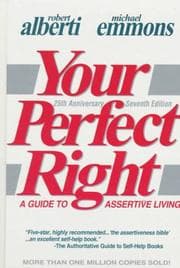
Cover of Your perfect right

Your perfect right

Robert E. Alberti, Michael L. Emmons

1974

Guidance and support for people who lack confidence, have trouble maintaining relationships, or need to learn to defend themselves is provided in this time-tested guide to building self-esteem, protecting oneself from bullying or abuse, and making constructive use of anger. Realistic exercises are designed to be practiced in daily life, applied to struggles both small and large, and notably strengthen self-confidence and assertiveness. Una ayuda enorme para gente que se siente insegura, tiene dificultad en mantener relaciones positivas o necesita aprender como defenderse, este libro demuestra como adquirir seguridad en sí mismo, proteger sus derechos, enfrentar y controlar el enojo y relacionarse con personas "difíciles." Los procedimientos descritos son realistas, prácticos y han probado su eficacia.

Frequently Asked Questions

What should I read after The new ourselves, growing older?
Browse the similar books below — they're matched by subject overlap, author style, and reader preferences.
What books are most similar to The new ourselves, growing older?
Our recommendations prioritize shared themes like Older women, Health and hygiene, Psychology and books enjoyed by similar readers.
Which similar book is best for beginners?
Check page counts and summaries on each recommendation. Shorter titles with broader appeal are usually the best starting point.

Promote Your Book on BestsellerFinder

Reach thousands of readers with featured placements, homepage spots, and newsletter features.

Get bestseller picks in your inbox

Weekly curated book recommendations. Unsubscribe anytime.

Explore More

Affiliate Disclosure: As an Amazon Associate, we may earn from qualifying purchases. Book links on this page may be affiliate links. This does not affect our recommendations or the price you pay.