Books Like “The heart of the matter

If you enjoyed The heart of the matter by Graham Greene, you likely appreciate Fiction, West africa in fiction, Colonial administrators in fiction. These similar reads match the tone, themes, and audience of the original.

FictionWest africa in fictionColonial administrators in fictionCatholicsColonial administratorsMarried peopleBritish in fictionMarried people in fiction
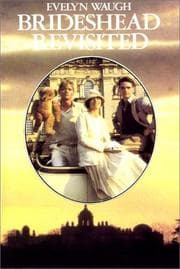
Cover of Brideshead Revisited

Brideshead Revisited

Evelyn Waugh

1945

Evelyn Waugh's beloved masterpiece, with an introduction by Paula Byrne The most nostalgic and reflective of Evelyn Waugh's novels, Brideshead Revisited looks back to the golden age before the Second World War. It tells the story of Charles Ryder's infatuation with the Marchmains and the rapidly disappearing world of privilege they inhabit. Enchanted first by Sebastian Flyte at Oxford, then by his doomed Catholic family, in particular his remote sister, Julia, Charles comes finally to recognise his spiritual and social distance from them. 'Lush and evocative ... Expresses at once the profundity of change and the indomitable endurance of the human spirit' The Times

Cover of The Portrait of a Lady

The Portrait of a Lady

Henry James

1881

HENRY JAMES (1843-1916), was born in New-York. His father was a writer in theology and his elder brother, William, was a philosopher. From 1865 he was a regular contributor of reviews and short stories to American periodicals. His first piece of fiction, "Watch and Ward", appeared in 1871, followed by "Transatlantic Sketches" and "A Passionate Pilgrim" in 1875. His first important novel was "Roderick Hudson (1876). For more than 20 years he lived in London, and in 1898 moved to Lamb House, Rye, where his later novels were written. At first he was concerned with older civilization of Europe, and to this period belong his novels "Daisy Miller" (1879) and "Portrait of a Lady"(1881). In "The Tragic Muse" (1890), "The Spoils of Poynton"(1897), and "The Awkward Age" (1899), he analyses English character. With "The Wings of the Dove" (1902), "The Ambassadors" (1903), and "The Golden Bowl" (1904), he returned to the theme of the contrast of American and European character. In 1915, Henry James became a British subject, and in 1916 was awarded the OM.

Cover of Man and Wife

Man and Wife

Wilkie Collins, Norman Page, Harry A. Webber

1870

Man and Wife was Wilkie Collins' ninth published novel. It is the second of his novels (after No Name) in which social questions provide the main impetus of the plot. Collins increasingly used his novels to explore social abuses, which according to critics] tends to detract from their qualities as fiction. The social issue which drives the plot is the state of Scots marriage law; at the time the novel was written, any couple who were legally entitled to marry and who asserted that they were married before witnesses, or in writing, were regarded in Scotland as being married in law. The novel has a complex plot, common in Collins' work.[3] In a Prologue, a selfish and ambitious man casts off his wife in order to marry a wealthier and better-connected woman, by taking advantage of a loophole in the marriage laws of Ireland.The initial action takes place in the widowed Lady Lundie's house in Scotland. Geoffrey Delamayn has promised marriage to his lover Anne Silvester (governess to Lady Lundie's stepdaughter Blanche), who has incurred the enmity of her employer. The spendthrift Geoffrey is about to be disinherited and wishes to escape from his promise and marry a wealthy wife. Nevertheless, he is obliged to arrange a rendezvous with Anne, in the character of his wife, at an inn, and documents this in an exchange of notes with her. Subsequently, urgent matters force him to send his friend Arnold Brinkworth, Blanche's fiancé, to Anne in his place. To gain access to her, Arnold must ask for "his wife". Although nothing improper passes between them, they appear to the landlady and to Bishopriggs, a waiter, to be man and wife.Thus, both Geoffrey and Arnold might be deemed to be married to Anne, depending on the weight put on the spoken and written evidence. Most of the novel concerns Anne's, Geoffrey's and Arnold's attempts to clarify their marital status:

Cover of The Valley of the Moon

The Valley of the Moon

Jack London

1900

The Valley of the Moon (1913) is a novel by American writer Jack London (as well as the mythic and romantic name for the wine-growing Sonoma Valley of California). The valley where it is set is located north of the San Francisco Bay Area in Sonoma County, California where Jack London was a resident; he built his ranch in Glen Ellen.The novel The Valley of the Moon is a story of a working-class couple, Billy and Saxon Roberts, struggling laborers in Oakland at the Turn-of-the-Century, who left city life behind and searched Central and Northern California for suitable farmland to own. The book is notable for its scenes in which the proletarian hero enjoys fellowship with the artists' colony in Carmel, and he settles in the Valley of the Moon.

Cover of Gaudy night

Gaudy night

Dorothy L. Sayers

1935

Dorothy Leigh Sayers was a renowned English crime writer and poet. She was also a student of classical and modern languages.She is best known for her mysteries, a series of novels and short stories set between the First and Second World Wars that feature English aristocrat and amateur sleuth Lord Peter Wimsey, which remain popular to this day. However, Sayers herself considered her translation of Dante's Divine Comedy to be her best work. She is also known for her plays, literary criticism, and essays.

Cover of The Longest Journey

The Longest Journey

E. M. Forster

1907

Edward Morgan Forster (1 January 1879 - 7 June 1970) was an English novelist, short story writer, essayist and librettist. He is known best for his ironic and well-plotted novels examining class difference and hypocrisy in early 20th-century British society. Forster's humanistic impulse toward understanding and sympathy may be aptly summed up in the epigraph to his 1910 novel Howards End: "Only connect ... ". His 1908 novel, A Room with a View, is his most optimistic work, while A Passage to India (1924) brought him his greatest success. He was nominated for the Nobel Prize in Literature in 13 different years.

Cover of James and the Giant Peach

James and the Giant Peach

Roald Dahl

1961

When James Henry Trotter accidentally drops some magic crystals by the old peach tree, strange things start to happen. The peach at the top of the tree begins to grow, and before long it's as big as a house. Then James discovers a secret entranceway into the fruit, and when he crawls inside, he meets a bunch of marvelous oversized friends -- Old-Green-Grasshopper, Centipede, Ladybug, Miss Spider, and more. After years of feeling like an outsider in the house of his despicable Aunt Sponge and Aunt Spiker, James has finally found a place where he belongs. With a snip of the stem, the peach starts rolling away, and the exciting adventure begins!

Frequently Asked Questions

What should I read after The heart of the matter?
Browse the similar books below — they're matched by subject overlap, author style, and reader preferences.
What books are most similar to The heart of the matter?
Our recommendations prioritize shared themes like Fiction, West africa in fiction, Colonial administrators in fiction and books enjoyed by similar readers.
Which similar book is best for beginners?
Check page counts and summaries on each recommendation. Shorter titles with broader appeal are usually the best starting point.

Promote Your Book on BestsellerFinder

Reach thousands of readers with featured placements, homepage spots, and newsletter features.

Get bestseller picks in your inbox

Weekly curated book recommendations. Unsubscribe anytime.

Explore More

Affiliate Disclosure: As an Amazon Associate, we may earn from qualifying purchases. Book links on this page may be affiliate links. This does not affect our recommendations or the price you pay.