Books Like “Systemic sex therapy

If you enjoyed Systemic sex therapy by Katherine M. Hertlein, Gerald R. Weeks, Nancy Gambescia, you likely appreciate Psychological Sexual Dysfunctions, Sex therapy, Methods. These similar reads match the tone, themes, and audience of the original.

Not sure what to read next? Ask BestsellerFinder AI →

Psychological Sexual DysfunctionsSex therapyMethodsSystem theoryTherapyCouples TherapyMarital TherapyPhysiological Sexual Dysfunction

Closest matches

Titles with overlapping themes, tone, and audience with your pick.

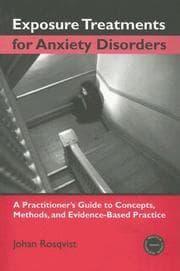
Cover of Exposure Treatments for Anxiety Disorders

Exposure Treatments for Anxiety Disorders

Johan Rosqvist

2005

Exposure Treatments for Anxiety Disorders is a unique volume, as it draws together the latest research on the rapidly-expanding field of anxiety disorders and illuminates how to correctly apply the proven methodology of behavioral therapy techniques to the variety of situations that face today's mental health professional. That said, cognitive therapy has in the last 10 years gotten increased attention as an alternative to behavior therapy in the treatment of anxiety disorders. But while it is gaining acceptance among practitioners, cognitive therapy has yet to illustrate substantial benefits above those that behavior therapy can already provide. In light of the aforementioned, coupled with the pressure many practitioners feel from managed care paradigms and shrinking healthcare coverage, this book will be a welcome resource allowing for increased clarity of action, accountability, and ultimately, positive client outcome. Each chapter is designed to address pivotal aspects in the assessment, formulation and diagnosis, and treatment of anxiety disorders, to a sufficient depth that the generalist practitioner will be comfortable using this book as a guide when working with the anxiety disordered client.

Why it's similar: Similar focus on PSYCHOLOGY

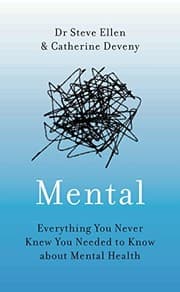
Cover of Mental

Mental

Stephen M. Kosslyn, William L. Thompson, Giorgio Ganis

2018

How do we define mental illness? What does a diagnosis mean? What should you ask your doctor before you begin treatment? Are there alternatives to medication? What does the research show actually works? Practitioner and professor of psychiatry Dr Steve Ellen and popular comedian Catherine Deveny combine forces to demystify the world of mental health. Sharing their personal experiences of mental illness and an insider perspective on psychiatry, they unpack the current knowledge about conditions and treatments coveing everything from depression and anxiety to schizophrenia, personality disorders and substance abuse. Whether you have a mental illness or support someone who does, Mental offers clear practical help, empowering you with an arsenal of tips and techniques to help build your resilience.

Why it's similar: Similar focus on Mental Health

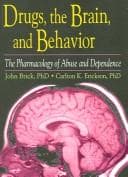
Cover of Drugs, the brain and behavior

Drugs, the brain and behavior

John Brick

1999

Explore the brain and discover the clinical and pharmacological issues surrounding drug abuse and dependence. The authors, research scientists with years of experience in alcohol and drug studies, provide definitions, historic discoveries about the nervous system, and original, eye-catching illustrations to discuss the brain/behavior relationship, basic neuroanatomy, neurophysiology, and the mechanistic actions of mood-altering drugs. You will learn about: • how psychoactive drugs affect cognition, behavior, and emotion • the brain/behavior relationship • the specific effects of major addictive and psychoactive drug groups • new definitions and thinking about abuse and dependence • the medical and forensic consequences of drugs use Drugs, the Brain, and Behavior uses a balance of instruction, illustrations, and tables and formulas that will give you a broad, lasting introduction to this intriguing subject. Whether you're a nurse, chemical dependency counselor, psychologist, or clinician, this book will be a quick reference guide long after the first reading.

Why it's similar: Similar focus on PSYCHOLOGY

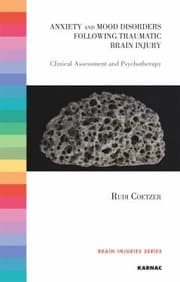
Cover of Anxiety and Mood Disorders Following Traumatic Brain Injury

Anxiety and Mood Disorders Following Traumatic Brain Injury

Rudi Coetzer

2010

While there are many excellent texts addressing cognitive impairment and behavioural difficulties and on rehabilitation associated with traumatic brain injury, few textbooks specifically address the most common emotional problems that can have such an adverse effect on rehabilitation and outcome. Uniquely this book deals exclusively with the identification and psychotherapeutic management of mood and anxiety disorders after traumatic brain injury. Furthermore, a systematic approach to identifying and diagnosing anxiety and mood disorders is followed throughout the text. As well as providing an introduction to anxiety and mood disorders after traumatic brain injury, it provides a psychological perspective on their evolution and management. It is aimed at a range of professionals in training (or those responsible for providing training in psychopathology, neuropsychology and psychotherapy), as well as those who may have an interest in working with the type of patients with anxiety or depression, commonly seen in post-acute brain injury rehabilitation settings. Case studies, summaries and suggested references for further reading are used throughout to facilitate understanding and teaching where relevant.

Why it's similar: Similar focus on PSYCHOLOGY

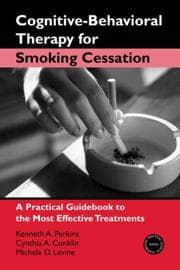
Cover of Cognitive-behavioral therapy for smoking cessation

Cognitive-behavioral therapy for smoking cessation

Kenneth A. Perkins, Kenneth A. Perkins, Cynthia A. Conklin, Michele D. Levine

2007

Cognitive-Behavioral Therapy (CBT) for Smoking Cessation is an essential resource for healthcare providers assisting patients in quitting tobacco smoking, presenting a structured approach that utilizes key components of CBT. This second edition provides empirically supported strategies for smoking cessation, adhering to well-established best practices and representing a "gold standard" in treatment. It presents step-by-step techniques to enhance patients’ motivation and confidence, prepare them to quit, navigate postquit challenges, and achieve long-term abstinence. This updated edition takes a patient-centered approach, addressing significant challenges faced during cessation and offering providers a systematic framework for delivering care. Notably, this volume introduces an adjunct CBT module specifically designed for patients very concerned about gaining weight after quitting—a unique and validated approach that aids cessation efforts and is not available in other resources. The book also includes new case vignettes, provider scripts, sidebars addressing common patient concerns, and key takeaways. Additionally, an extensive e-resource provides links to supplementary materials and further readings, equipping providers from diverse disciplines and backgrounds with the tools needed to effectively support patients. A must-have resource on the bookshelf of any health professional treating clients with tobacco dependence.

Why it's similar: Similar focus on Methods

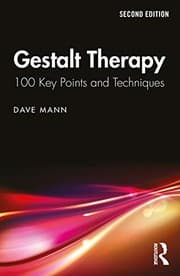
Cover of Gestalt Therapy

Gestalt Therapy

Dave Mann

2010

Gestalt therapy offers a present-focused, relational approach, central to which is the fundamental belief that the client knows the best way of adjusting to their situation. By working to heighten awareness through dialogue and creative experimentation, gestalt therapists create the conditions for a client's personal journey to health. Gestalt Therapy: 100 Key Points and Techniques provides a concise guide to this flexible and far-reaching approach. Topics discussed include: the theoretical assumptions underpinning gestalt therapy gestalt assessment and process diagnosis field theory, phenomenology and dialogue ethics and values evaluation and research. As such this book will be essential reading for gestalt trainees, as well as all counsellors and psychotherapists wanting to learn more about the gestalt approach.

Why it's similar: Similar focus on Methods

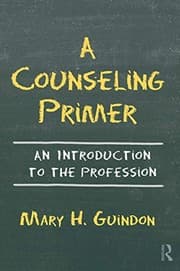
Cover of A counseling primer

A counseling primer

Mary H. Guindon

2010

A Counseling Primer, second edition, introduces students to the profession of counseling, reviews its training curriculum, discusses current professional standards, and presents basic counseling skills. The text is designed to answer students’ most commonly asked questions around the who, what, where, when, why, and how of counseling. Updated and aligned with the eight 2016 CACREP core areas, the second edition includes new chapters by experts from seven entry-level specialty areas, including school counseling, career counseling, and mental health counseling. The book also contains useful features to enhance the learning experience, including case examples, class handouts and activities, a sample syllabus, discussion questions, and more. A variety of online resources including instructor’s manual, PowerPoint slides, tests, class activities, and student supplements are also available for download. In a comprehensive and accessible format, A Counseling Primer, second edition, provides students with a succinct, up-to-date picture of the counseling profession and the tools they need to make their contribution to the field.

Why it's similar: Similar focus on Psychology

Readers also enjoyed

Popular and highly rated books from our library you might like next.

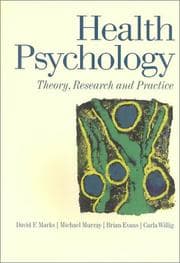
Cover of Health psychology

Health psychology

David F. Marks, Michael Murray, Brian Evans, Carla Willig

1999

Health Psychology students will need to understand how to evaluate and critically-appraise the latest theory and research before it can be applied. This fully-revised and updated fourth edition takes a critical approach and places Health Psychology in a real-world context, enabling students to understand how public policy, theory and research can influence communities and individuals alike. The new edition includes: A new chapter on diet and obesity Updated material on stress and coping, doctor-patient communication, death, dying, bereavement and quality of life Introductions to the social, political and economic conditions that influence our health Breadth of coverage from social inequality through to chronic illness and screening An enhanced SAGE edge™ companion website (edge.sagepub.com/marks4e) with a suite of features to enhance students' learning experience.

Why it's similar: Similar focus on Psychology

Cover of Users and Abusers of Psychiatry

Users and Abusers of Psychiatry

Lucy Johnstone

1989

Users and Abusers of Psychiatry is a radically different, critical account of the day-to-day practice of psychiatry. Using real-life examples and her own experience as a clinical psychologist, Lucy Johnstone argues that the traditional way of treating mental illness can often exacerbate people's original difficulties leaving them powerless, disabled and distressed. In this completely revised and updated second edition, she draws on a range of evidence to present a very different understanding of psychiatric breakdown than that found in standard medical textbooks. Users and Abusers of Psychiatry is a challenging but ultimately inspiring read for all who are involved in mental health - whether as professionals, students, service users, relatives or interested lay people.

Why it's similar: Similar focus on Mental Health

Cover of Counseling addicted families

Counseling addicted families

Tara Ellsworth, Nursity Press

2006

Although one person's addiction almost inevitably affects his or her family members, a surprising number of treatment models appear to operate under the assumption that an individual's addiction occurs in a vacuum. By not paying sufficient attention to preexisting family dynamics-whether dysfunctional, supportive, or somewhere in between-counselors run the risk of not fully understanding the roots of an individual's addictions or the obstacles to his recovery; as a result, counselors may undermine their own treatment efforts both by neglecting any underlying family problems and by failing to capitalize upon a family's potential assistance in an intervention with the addicted individual. In Counseling Addicted Families, Gerald A. Juhnke and William Bryce Hagedorn address this problem head-on. Recognizing that even those treatment providers who understand the importance of the familial context of addiction are often stymied by the variety of family treatment theories and their often imperfect fit for cases of addiction, Juhnke and Hagedorn provide a truly integrated model for assessment and treatment. Based upon the authors' combined 23 years of experience in clinical and treatment supervision, the Integrated Family Addictions Model consists of six progressive treatment tiers which organize the relevant family treatment theories into a graduated and coherent sequence, beginning with the briefest and least costly forms of therapy. If one of the lower tiers allows clients to reach their treatment goals, the patient and therapist need not waste time and resources following the full continuum. If, however, their needs are still unmet, they can progress in a logical fashion to more advanced and intensive forms of therapy. The book is divided into three broad topic areas designed to provide counselors and graduate students with essential information both about addictions and about the practical applications of various treatment theories. Part One discusses the prevalence of

Why it's similar: Similar focus on Family psychotherapy

Frequently Asked Questions

What should I read after Systemic sex therapy?
Browse the similar books below — they're matched by subject overlap, author style, and reader preferences.
What books are most similar to Systemic sex therapy?
Our recommendations prioritize shared themes like Psychological Sexual Dysfunctions, Sex therapy, Methods and books enjoyed by similar readers.
Which similar book is best for beginners?
Check page counts and summaries on each recommendation. Shorter titles with broader appeal are usually the best starting point.

Promote Your Book on BestsellerFinder

Reach thousands of readers with featured placements, homepage spots, and newsletter features.

Get bestseller picks in your inbox

Weekly curated book recommendations. Unsubscribe anytime.

Explore More

Affiliate Disclosure: As an Amazon Associate, we may earn from qualifying purchases. Book links on this page may be affiliate links. This does not affect our recommendations or the price you pay.