
Pick

Everyone Else Looks Ahead of Me
C. D. Rose
Relief starts when you stop comparing your whole life to a stranger's one inch of a feed.
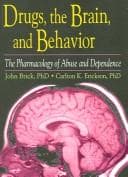
by John Brick
Published 1999
Check availability on Amazon
Are you the author or publisher of this book?
Claim this book — FreeUpdate metadata for “Drugs, the brain and behavior” after verification.
BestsellerFinder Score unavailable — not enough catalog data yet.
Explore the brain and discover the clinical and pharmacological issues surrounding drug abuse and dependence. The authors, research scientists with years of experience in alcohol and drug studies, provide definitions, historic discoveries about the nervous system, and original, eye-catching illustrations to discuss the brain/behavior relationship, basic neuroanatomy, neurophysiology, and the mechanistic actions of mood-altering drugs. You will learn about: • how psychoactive drugs affect cognition, behavior, and emotion • the brain/behavior relationship • the specific effects of major addictive and psychoactive drug groups • new definitions and thinking about abuse and dependence • the medical and forensic consequences of drugs use Drugs, the Brain, and Behavior uses a balance of instruction, illustrations, and tables and formulas that will give you a broad, lasting introduction to this intriguing subject. Whether you're a nurse, chemical dependency counselor, psychologist, or clinician, this book will be a quick reference guide long after the first reading.
C. D. Rose
Relief starts when you stop comparing your whole life to a stranger's one inch of a feed.

American Psychological Association
Annie Payson Call's "The Freedom of Life" offers a practical philosophy for achieving inner peace and mental well-being by emphasizing the power of conscious thought and disciplined will. The book guides readers toward self-mastery, asserting that true freedom lies not in external circumstances but in cultivating a serene and resilient inner life through consistent self-effort and a positive outlook. Call's enduring insights provide a framework for navigating life's challenges with greater equanimity and purpose, fostering personal growth and sustained happiness.

Paul Tillich
In "The Courage to Be," Paul Tillich explores the existential struggle of human beings faced with anxiety and despair in a contemporary world. Written in a compelling prose that intertwines philosophy and theology, Tillich employs a rich tapestry of literary allusions and personal insights to articulate his exploration of courage as a means of affirming one's existence. The book is rooted in the context of post-World War II existential thought, addressing the profound disillusionment of an era while arguing that true courage arises from the confrontation with one's own limitations and the acceptance of the inherent uncertainties of life. Paul Tillich, a noted philosopher and theologian, significantly influenced 20th-century thought with his synthesis of existentialism and Christian philosophy. His own experiences as a refugee and his deep engagement with the crises of modern life led him to emphasize the importance of courage in the face of ultimate concerns. Tillich's rich academic background, including his involvement with various religious and philosophical communities, enriches the text with depth and relevance. I highly recommend "The Courage to Be" to readers seeking an insightful examination of courage in the context of anxiety and faith. Its profound insights and philosophical rigor not only resonate with personal struggles but also encourage a thoughtful engagement with life's existential questions. In this enriched edition, we have carefully created added value for your reading experience: - A succinct Introduction situates the work's timeless appeal and themes. - The Synopsis outlines the central plot, highlighting key developments without spoiling critical twists. - A detailed Historical Context immerses you in the era's events and influences that shaped the writing. - A thorough Analysis dissects symbols, motifs, and character arcs to unearth underlying meanings. - Reflection questions prompt you to engage personally with the work's messages, connecting
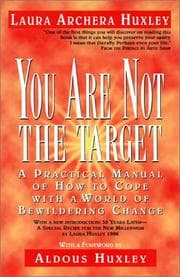
Laura Archera Huxley
In this charming book, Laura Archera Huxley offers practical wisdom on how a human being in a chaotic world can cope with stress, anxiety, competition, & the uncertainty of the times. When we change,Ó she writes, others change too, & circumstances change in a manner that is almost miraculous,Ó & she points out that making others feel better generally makes us feel better.Ó Laura Huxley shows you how to change, how to influence the elements around you, how to cope successfully with the problems of the inner & outer world. To achieve this, she offers more than 33 Recipes for Living & Loving. A pioneering book of psychological good sense. Deceptively simple.Ó
J. Mark G. Williams
'A clear, rigorous account of cognitive behavioural methods for treating depression.' - British Journal of Psychiatry The use of behavioural and cognitive techniques for treating depression has yielded exciting results. Cognitive Behaviour Therapy (CBT) is as effective in the short term as anti-depressant drugs and has longer-lasting effects than medication. This book brings together assessment and treatment techniques of proven efficacy, describing them in usable detail and setting them in the context of current psychological theories of depression. It is an invaluable guide to practitioners wishing to make use of CBT.
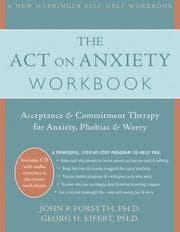
John P. Forsyth PhD, Georg H. Eifert PhD
The award-winning The Mindfulness and Acceptance Workbook for Anxiety has introduced countless readers to the concept of mindfulness, and has successfully helped many people manage worry, fear, and panic so they can live a better life. This fully revised and updated third edition of the best-selling and innovative workbook offers readers compelling new acceptance and commitment therapy (ACT) exercises to help them finally conquer their anxiety.
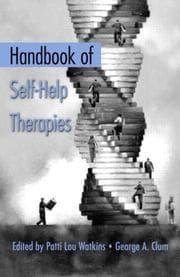
Patti Lou Watkins, George A. Clum
This handbook offers a comprehensive overview of self-help therapies, exploring their theoretical underpinnings and practical applications for addressing mental health challenges. It delves into various therapeutic modalities, highlighting their effectiveness for patient education and promoting health behaviors. The collection also examines the role of communication media and bibliotherapy in facilitating self-care and treatment.
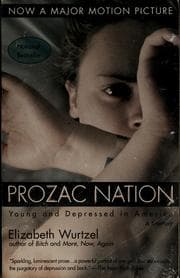
Elizabeth Wurtzel
Elizabeth Wurtzel's New York Times best-selling memoir, with a new afterword "Sparkling, luminescent prose . . . A powerful portrait of one girl's journey through the purgatory of depression and back." --New York Times "A book that became a cultural touchstone." --New Yorker Elizabeth Wurtzel writes with her finger on the faint pulse of an overdiagnosed generation whose ruling icons are Kurt Cobain, Xanax, and pierced tongues. Her famous memoir of her bouts with depression and skirmishes with drugs, Prozac Nation is a witty and sharp account of the psychopharmacology of an era for readers of Girl, Interrupted and Sylvia Plath's The Bell Jar.
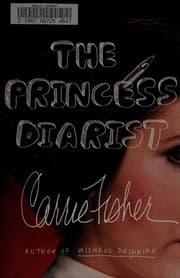
Carrie Fisher
Originally published: New York: Blue Rider Press, 2016.
Affiliate Disclosure: As an Amazon Associate, we may earn from qualifying purchases. Book links on this page may be affiliate links. This does not affect our recommendations or the price you pay.