Books Like “Parent-child relations throughout life

If you enjoyed Parent-child relations throughout life by Karl A. Pillemer, Kathleen McCartney, you likely appreciate Parent and child, Developmental psychology, Congresses. These similar reads match the tone, themes, and audience of the original.

Parent and childDevelopmental psychologyCongressesFamilyFamiliesPsychologyHuman DevelopmentParent-Child Relations
Cover of Handbook of Parenting

Handbook of Parenting

Marc H. Bornstein

1995

This highly anticipated third edition of the Handbook of Parentingbrings together an array of field-leading experts who have worked in different ways toward understanding the many diverse aspects of parenting. Contributors to the Handbooklook to the most recent research and thinking to shed light on topics every parent, professional, and policymaker wonders about. Parenting is a perennially "hot" topic. After all, everyone who has ever lived has been parented, and the vast majority of people become parents themselves. No wonder bookstores house shelves of "how-to" parenting books and magazine racks in pharmacies and airports overflow with periodicals that feature parenting advice. However, almost none of these is evidence-based. The Handbook of Parentingis. Period. Each chapter has been written to be read and absorbed in a single sitting, and includes historical considerations of the topic, a discussion of central issues and theory, a review of classical and modern research, and forecasts of future directions of theory and research. Together, the five volumes in the Handbookcover Children and Parenting, the Biology and Ecology of Parenting, Being and Becoming a Parent, Social Conditions and Applied Parenting, and the Practice of Parenting. Volume 1, Children and Parenting,considers parenthood as a functional status in the life cycle: Parents protect, nurture, and teach their progeny, even if human development is more dynamic than can be determined by parental caregiving alone. Volume 1 of the Handbook of Parentingbegins with chapters concerned with how children influence parenting. Notable are their more obvious characteristics, like child age or developmental stage; but subtler ones, like child gender, physical state, temperament, mental ability, and other individual-differences factors, are also instrumental. The chapters in Part I, on Parenting across the Lifespan, discuss the unique rewards and special demands of parenting children of different ages and stages -

Cover of Resilience across contexts

Resilience across contexts

Margaret C. Wang, Ronald D. Taylor

2000

A number of societal risks pose serious challenges to families' well-being, many of which cut across divisions of class and race. These challenges include: changes in the labor market and economy; the increasing participation of mothers in the labor force; the changing nature of family structure and the composition of households; and the increase in the number of immigrant families. Key institutions in the lives of families, including places of employment and schools, can play a significant role in fostering families' capacity to adapt to the potential challenges they face. Resilience Across Contexts: Family, Work, Culture, and Communitypresents papers--written by leading scholars in varied disciplines including economics, developmental and educational psychology, education, and sociology--discussing factors that influence resilience development. The authors' research focuses on emerging issues that have significant implications for policy and practice in such areas as employment and new technologies; maternal employment and family development; family structure and family life; immigration, migration, acculturation, and education of children and youth; and social and human services delivery. The book's overall goal is to take stock of what is known from research and practice on some of the challenges facing children and families for policy development and improvement of practices.

Cover of Emotionally intelligent parenting

Emotionally intelligent parenting

Maurice J. Elias, Steven E. Tobias, Brian S. Friedlander, Maurice J. Phd Elias, Steven E. Psyd Tobias, Brian S. Phd Friedlander, Maueice J. Elias, Brian S., Ph.D. Friedlander, Various

1998

Daniel Goleman's bestseller Emotional Intelligence opened a new way of thinking about the skills necessary for meeting life's challenges. Expanding on the insights brought to light by the same research project, this book presents parents with many practical, realistic ways to help children develop the qualities of emotional intelligence: self-awareness, control of impulsive behaviour, co-operative work habits, care for themselves, and sympathy for others.

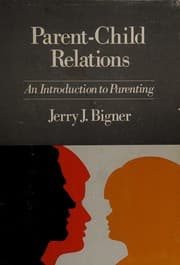
Cover of Parent-child relations

Parent-child relations

Jerry J. Bigner, Clara J. Gerhardt

1979

Now in the Ninth Edition, Jerry Bigner's "Parent-Child Relations," the classic resource for child development professionals and parents themselves, has undergone a thorough revision anchored by the vision of the late Dr. Bigner and executed by new co-author, Clara Gerhardt.Maintaining its fundamental structure and unique approach, the text uses family systems and systemic family development theory as a framework to explore how parent-child relations change in tandem with developmental changes occurring with children, adults, and the wider family system. Thoughtful updates and revisions were done to increase the effectiveness and currency of the text. The text continues to provide strong emphasis on various theoretical and practical models pertaining to parenting. For decades now, this classic text has prepared countless teachers and practitioners by its proven and practical approach, utilizing family systems and systemic family development theory to explore how parent-child relations change in tandem with developmental changes occurring with children, adults, and the wider family system. The most comprehensive and current resource available to students as they prepare for working with parents and families, and for their roles as parents themselves, this best-selling resource carries on the essential message of its originator, Dr. Jerry Bigner, and will continue to nurture future family scholars and practitioners for years to come.

Cover of Seeing young children

Seeing young children

Warren R. Bentzen

1985

Seeing Young Children is an extensive guide to observing and recording behavior in children from birth through age eight. It begins by addressing the basic meaning of observation and why it is so important. This includes a discussion of the theoretical and practical aspects of observing and recording behavior. Detailed information on development, behavior and functioning in children in this age group enables parents and professionals to make meaningful observation, recordings, and evaluations. A large portion of the book concentrates on in-depth reviews of recording techniques and instruments, as well as the advantages and disadvantages of each. Finally, the last five chapters offer a wealth of observation exercises readers can immediately put to use. Specific by age group, each of these chapters contains observation objectives, instructions as to procedure, and background information on many functional areas, all aimed at collecting and using quality data to the benefit of children.

Cover of Raising great kids

Raising great kids

Henry Cloud, John Sims Townsend, Elisa Morgan

1999

What does it take to raise great kids? If you've read any books on parenting, conflicting opinions have probably left you feeling confused. Get tough! Show acceptance. Lay down the rules. Lighten up, already! - There's got to be a balance -- and there is. Joining their expertise with the wisdom of MOPS International (Mothers of Preschoolers), Drs. Henry Cloud and John Townsend help you provide both the care and acceptance that make grace real to your child, and the firmness and discipline that give direction. Avoiding the twin extremes of permissiveness and over-control, Drs. Cloud and Townsend show how you can help your child cultivate six necessary character traits: attachment, responsibility, reality, competence, morality, and worship/spiritual life. - At last, here is an effective middle ground for raising up children who will handle life with maturity and wisdom. Raising Great Kids will help you equip your son or daughter to accept life's responsibilities, grow from its challenges, and freely and fully explore all that it has to offer.

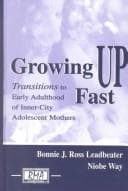
Cover of Growing up fast

Growing up fast

Bonnie J. Ross Leadbeater, Niobe Way

2001

The first edition of Growing Up Fast attempted to counter the stereotype of poor, minority adolescent mothers and describe the diversity of their educational, work, parenting, and relationship experiences. The volume followed a strengths-based approach to understanding why some mothers appeared resilient to the stresses of early parenting, compared to their peers, and what obstacles undermine resiliency for some of these young women. We hear their stories in their own words. We also see how many disadvantaged mothers go on to succeed in school, work, and parenting while avoiding many of the risk associated with teen parenting . The research is based on a six-year study of 120 young disadvantaged mothers and their children from New York City. It uniquely combines the analysis of longitudinal questionnaire data with qualitative analysis of extensive interviews conducted with these women focusing on the first six years after their child was born. A past winner of the Society for Research on Adolescence best book award, Growing Up Fast is a fascinating study of human resilience that will continue to be recognized for its contribution to individuals involved in program development and policymaking with teenage parenting. A new introductory chapter to the book suggests that we can look at the previous findings through a new lens that emphasizes not only the diversity of outcomes for young mothers and the sources of their strengths, but also asks what we can learn from these women about supporting their educational and work goals, as they transition to adulthood. New attention to emerging adulthood shows that this is a critical stage of life when the foundations for health and healthy life styles are laid down. Developmental tasks of this phase include building the capacity for financial and residential independence through post-secondary education and job training, and establishing stable sources of support from parents, romantic partners, and peers for all youth. Leadbea

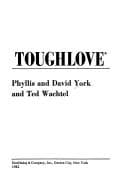
Cover of Toughlove

Toughlove

Phyllis York

1980

How do you love an “impossible” teenager? “An effective way of uniting parents to square off against the youngsters’ own powerful peer group that endorses drugtaking and rebelliousness.”—Time Thousands of parents are finding new hope in dealing with rebellious teenagers through Toughlove, a self-help program which has grown to over eight hundred groups throughout the United States and Canada in less than six years. Now, for the first time in book form, the founders tell how Toughlove works. “You need Toughlove if you feel helpless and unable to cope with your teenagers’ behavior or if you feel victimized by them, disappointed in yourself as a parent, guilty because you think you have done a rotten job and are frightened bythe potential for violence in yourself and your children. . . . Remember, you have the right to a night’s sleep without where your kid is—or being awakened by a phone call from the police or a hospital or a drunk teenager who’s stranded somewhere.”—Ann Landers

Cover of Working with substance misusers

Working with substance misusers

Trudi Petersen, Andrew McBride

2002

Working with Substance Misusers is a practical handbook for students and those who work with people who misuse drugs or alcohol. Written by experienced teachers and clinicians, the book introduces: * the substances themselves * theories relevant to substance use and misuse * the skills necessary to work with this client group * the broad range of approaches to treatment * particular problems of specific groups. The reader is encouraged to read and reflect on the material in relation to their own practice. To help this process, each topic has an identified set of learning objectives. Activities designed to reinforce learning include discussion points, case studies, role plays and group exercises. Working with Substance Misusers makes clear the connection of theory to practice and encourages a skills-based, but reflective, approach to work in this complex field. Cutting across professional boundaries, it provides both new and more experienced practitioners with a key text.

Frequently Asked Questions

What should I read after Parent-child relations throughout life?
Browse the similar books below — they're matched by subject overlap, author style, and reader preferences.
What books are most similar to Parent-child relations throughout life?
Our recommendations prioritize shared themes like Parent and child, Developmental psychology, Congresses and books enjoyed by similar readers.
Which similar book is best for beginners?
Check page counts and summaries on each recommendation. Shorter titles with broader appeal are usually the best starting point.

Promote Your Book on BestsellerFinder

Reach thousands of readers with featured placements, homepage spots, and newsletter features.

Get bestseller picks in your inbox

Weekly curated book recommendations. Unsubscribe anytime.

Explore More

Affiliate Disclosure: As an Amazon Associate, we may earn from qualifying purchases. Book links on this page may be affiliate links. This does not affect our recommendations or the price you pay.