Books Like “For better or for worse

If you enjoyed For better or for worse by Lynn Franks Johnston, you likely appreciate Pictorial Canadian wit and humor, Comic books, strips, Family. These similar reads match the tone, themes, and audience of the original.

Not sure what to read next? Ask BestsellerFinder AI →

Pictorial Canadian wit and humorComic books, stripsFamilyFamiliesCaricatures and cartoonsParentingFor better or for worse (Comic strip)Humor, form, comic strips & cartoons

Closest matches

Titles with overlapping themes, tone, and audience with your pick.

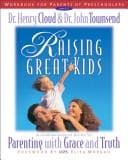
Cover of Raising great kids

Raising great kids

Elisa Morgan

1999

What does it take to raise great kids? If you've read any books on parenting, conflicting opinions have probably left you feeling confused. Get tough! Show acceptance. Lay down the rules. Lighten up, already! - There's got to be a balance -- and there is. Joining their expertise with the wisdom of MOPS International (Mothers of Preschoolers), Drs. Henry Cloud and John Townsend help you provide both the care and acceptance that make grace real to your child, and the firmness and discipline that give direction. Avoiding the twin extremes of permissiveness and over-control, Drs. Cloud and Townsend show how you can help your child cultivate six necessary character traits: attachment, responsibility, reality, competence, morality, and worship/spiritual life. - At last, here is an effective middle ground for raising up children who will handle life with maturity and wisdom. Raising Great Kids will help you equip your son or daughter to accept life's responsibilities, grow from its challenges, and freely and fully explore all that it has to offer.

Why it's similar: Similar focus on Parenting

Cover of Resilience across contexts

Resilience across contexts

Ronald D. Taylor, Margaret C Wang

2000

A number of societal risks pose serious challenges to families' well-being, many of which cut across divisions of class and race. These challenges include: changes in the labor market and economy; the increasing participation of mothers in the labor force; the changing nature of family structure and the composition of households; and the increase in the number of immigrant families. Key institutions in the lives of families, including places of employment and schools, can play a significant role in fostering families' capacity to adapt to the potential challenges they face. Resilience Across Contexts: Family, Work, Culture, and Communitypresents papers--written by leading scholars in varied disciplines including economics, developmental and educational psychology, education, and sociology--discussing factors that influence resilience development. The authors' research focuses on emerging issues that have significant implications for policy and practice in such areas as employment and new technologies; maternal employment and family development; family structure and family life; immigration, migration, acculturation, and education of children and youth; and social and human services delivery. The book's overall goal is to take stock of what is known from research and practice on some of the challenges facing children and families for policy development and improvement of practices.

Why it's similar: Similar focus on Family

Cover of Parent-child relations

Parent-child relations

Jerry J. Bigner

1979

Now in the Ninth Edition, Jerry Bigner's "Parent-Child Relations," the classic resource for child development professionals and parents themselves, has undergone a thorough revision anchored by the vision of the late Dr. Bigner and executed by new co-author, Clara Gerhardt.Maintaining its fundamental structure and unique approach, the text uses family systems and systemic family development theory as a framework to explore how parent-child relations change in tandem with developmental changes occurring with children, adults, and the wider family system. Thoughtful updates and revisions were done to increase the effectiveness and currency of the text. The text continues to provide strong emphasis on various theoretical and practical models pertaining to parenting. For decades now, this classic text has prepared countless teachers and practitioners by its proven and practical approach, utilizing family systems and systemic family development theory to explore how parent-child relations change in tandem with developmental changes occurring with children, adults, and the wider family system. The most comprehensive and current resource available to students as they prepare for working with parents and families, and for their roles as parents themselves, this best-selling resource carries on the essential message of its originator, Dr. Jerry Bigner, and will continue to nurture future family scholars and practitioners for years to come.

Why it's similar: Similar focus on Families

Readers also enjoyed

Popular and highly rated books from our library you might like next.

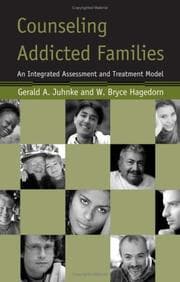
Cover of Counseling addicted families

Counseling addicted families

Tara Ellsworth, Nursity Press

2006

Although one person's addiction almost inevitably affects his or her family members, a surprising number of treatment models appear to operate under the assumption that an individual's addiction occurs in a vacuum. By not paying sufficient attention to preexisting family dynamics-whether dysfunctional, supportive, or somewhere in between-counselors run the risk of not fully understanding the roots of an individual's addictions or the obstacles to his recovery; as a result, counselors may undermine their own treatment efforts both by neglecting any underlying family problems and by failing to capitalize upon a family's potential assistance in an intervention with the addicted individual. In Counseling Addicted Families, Gerald A. Juhnke and William Bryce Hagedorn address this problem head-on. Recognizing that even those treatment providers who understand the importance of the familial context of addiction are often stymied by the variety of family treatment theories and their often imperfect fit for cases of addiction, Juhnke and Hagedorn provide a truly integrated model for assessment and treatment. Based upon the authors' combined 23 years of experience in clinical and treatment supervision, the Integrated Family Addictions Model consists of six progressive treatment tiers which organize the relevant family treatment theories into a graduated and coherent sequence, beginning with the briefest and least costly forms of therapy. If one of the lower tiers allows clients to reach their treatment goals, the patient and therapist need not waste time and resources following the full continuum. If, however, their needs are still unmet, they can progress in a logical fashion to more advanced and intensive forms of therapy. The book is divided into three broad topic areas designed to provide counselors and graduate students with essential information both about addictions and about the practical applications of various treatment theories. Part One discusses the prevalence of

Why it's similar: Also popular in Parenting Books

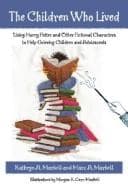
Cover of The children who lived

The children who lived

Josephine van Dolzen PEASE

2008

Harry Potter’s encounters with grief, as well as the grief experiences of other fictional characters, can be used by educators, counselors, and parents to help children and adolescents deal with their own loss issues. The Children Who Lived is a unique approach toward grief and loss in children. Focusing on fictional child and adolescent characters experiencing grief, this book uses classic tales and the Harry Potter books to help grieving children and adolescents. Included in the text and the downloadable resources are a number of activities, discussion questions, and games that could be used with grieving children and adolescents, based on the fictional characters in these books.

Why it's similar: Also popular in Parenting Books

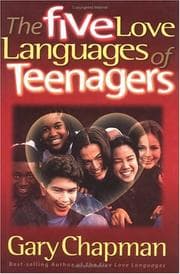
Cover of The five love languages of teenagers

The five love languages of teenagers

Gary Chapman

2000

Socially, mentally, and spiritually teenagers face a variety of pressures and stresses each day. Despite these peer pressures; it is still parents who can influence teens the most. Are you equipped to love your teenager effectively? Get equipped to be a better parent as The Five Love Languages of Teenagers explores the world in which teenagers live; explains the developmental changes; and give tools to help you identify and appropriately communicate in your teens love language. Get practical tips on loving your teen effectively and explore key issues in your teen’s life including anger and independence. Finally learn how to set boundaries that are enforced with discipline and consequences, and discover useful ways for the difficult task of loving when your teen fails. Get ready to discover how the principles of the five love languages can really work in the lives of your teens and family. Over 400,000 copies sold!

Why it's similar: Similar focus on Parenting

Cover of Toughlove

Toughlove

Phyllis York

1980

How do you love an “impossible” teenager? “An effective way of uniting parents to square off against the youngsters’ own powerful peer group that endorses drugtaking and rebelliousness.”—Time Thousands of parents are finding new hope in dealing with rebellious teenagers through Toughlove, a self-help program which has grown to over eight hundred groups throughout the United States and Canada in less than six years. Now, for the first time in book form, the founders tell how Toughlove works. “You need Toughlove if you feel helpless and unable to cope with your teenagers’ behavior or if you feel victimized by them, disappointed in yourself as a parent, guilty because you think you have done a rotten job and are frightened bythe potential for violence in yourself and your children. . . . Remember, you have the right to a night’s sleep without where your kid is—or being awakened by a phone call from the police or a hospital or a drunk teenager who’s stranded somewhere.”—Ann Landers

Why it's similar: Similar focus on Parenting

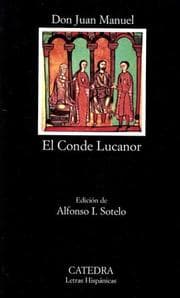
Cover of El conde Lucanor

El conde Lucanor

Spanish Edition by Infante don Juan Manuel, Juan Vicedo

1839

Don Juan Manuel (1282-1348), noble directamente emparentado con las familias que durante varios siglos ocuparon el trono de Castilla, es un caso anómalo en la literatura medieval española en la que abundan las obras anónimas. Sin embargo, entre su vida pública, de la que se conserva numerosa documentación, y la imagen que de sí mismo ofrecen sus páginas hay sorprendentes contrastes. Sus ocho obras conservadas, en las que predomina la intención de adoctrinar a los jóvenes vástagos de la nobleza, lo convierten en el prosista más importante del siglo XIV. En El conde Lucanor, su obra más conocida, alcanzan culminación y síntesis las tradiciones cuentísticas del mundo oriental y de los predicadores cristianos. La popularidad obtenida por los exempla incluidos en la primera parte no debe, sin embargo, oscurecer la habilidad con que Don Juan Manuel organiza el conjunto y combina distintos recursos retóricos. La pareja formada por el conde Lucanor y su ayo Patronio traspasa con sorprendente modernidad los borrosos límites que separan la realidad de la fición y entra por derecho propio a formar parte de los personajes famosos de la literatura universal.

Why it's similar: Similar focus on Parenting

Frequently Asked Questions

What should I read after For better or for worse?
Browse the similar books below — they're matched by subject overlap, author style, and reader preferences.
What books are most similar to For better or for worse?
Our recommendations prioritize shared themes like Pictorial Canadian wit and humor, Comic books, strips, Family and books enjoyed by similar readers.
Which similar book is best for beginners?
Check page counts and summaries on each recommendation. Shorter titles with broader appeal are usually the best starting point.

Promote Your Book on BestsellerFinder

Reach thousands of readers with featured placements, homepage spots, and newsletter features.

Get bestseller picks in your inbox

Weekly curated book recommendations. Unsubscribe anytime.

Explore More

Affiliate Disclosure: As an Amazon Associate, we may earn from qualifying purchases. Book links on this page may be affiliate links. This does not affect our recommendations or the price you pay.