Books Like “Believing It All

If you enjoyed Believing It All by Marc Parent, you likely appreciate Family & Relationships, Nonfiction, Parent and child. These similar reads match the tone, themes, and audience of the original.

Not sure what to read next? Ask BestsellerFinder AI →

Family & RelationshipsNonfictionParent and childMiscellaneaParenting

Closest matches

Titles with overlapping themes, tone, and audience with your pick.

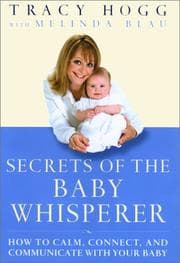
Cover of Secrets of the Baby Whisperer

Secrets of the Baby Whisperer

Tracy Hogg, Melinda Blau

2001

A unique program for understanding and communicating effectively with your baby from infant expert Tracy Hogg. The combination of interactive self-questioning and expert, friendly advice will change how you approach parenting, leading to transformative results. 'Miracles are her business' -- Jodie Foster 'The honest truth is that Tracy Hogg has provided me with more insight into the things that matter than anyone else' -- Observer Review 'She achieves what, to hard-pressed parents, seem like miracles' -- Mail on Sunday '...in a different league than all other 'how to manage as a parent' books' -- Daily Mail 'A book that changed our lives' -- ***** Reader review 'This book is amazing' -- ***** Reader review 'Great book, full of easy tips and tricks for new parents. I would highly recommend it!!!!' -- ***** Reader review 'The BEST baby advice book, EVER!!' -- ***** Reader review 'A God Send!' -- ***** Reader review **************************************************************** Tracy Hogg knows babies. She can calm even the most distressed or difficult infant, because she understands their language. Hence, her clients call her 'The Baby Whisperer'. In this remarkable parenting book, Tracy demystifies the magic she has performed with some five thousand babies. She teaches parents how to work out what kind of baby they have, what kind of mother or father they are, and what kind of parenting plan will work best for them. Believing that babies need to become part of the family - rather than dominate it - she has developed a practical programme that works with infants as young as a day old. Full of questionnaires, clearly explained theories and easy-to-follow, practical, expert advice - this book is guaranteed to set you on the path to calm and confident parenting.

Why it's similar: Similar focus on Family & Relationships

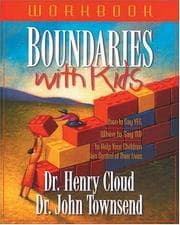
Cover of Boundaries with kids

Boundaries with kids

Henry Cloud, John Sims Townsend, Henry O. Arnold

1998

Discover how setting biblical boundaries can improve your parenting and your relationship with your children. Join Drs. Henry Cloud and John Townsend, authors of the New York Times bestseller Boundaries, as they share the research and guidance you need to raise your kids to take responsibility for their actions and emotions and enable them to lead balanced, productive, and fulfilling adult lives. The tools and guidance provided in Boundaries with Kids will change the way you view healthy boundaries, no matter where you are in your parenting journey. You'll learn how to: Define appropriate boundaries and consequences for your kids. Set limits and still be a loving parent. Bring balance to an out-of-control family life. Understand the six steps to implementing boundaries in your home. Using biblically backed principles, including respect, stewardship, and self-control, Drs. Cloud and Townsend share the lessons they've learned firsthand after decades of working with families across the country. With wisdom and empathy, they take you through the ins and outs of instilling the kind of character in your children that will help them lead Godly lives.

Why it's similar: Similar focus on Parenting

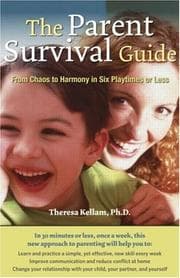
Cover of The parent survival guide

The parent survival guide

Theresa Kellam

2008

When parents turn to the parenting/self-help section of their local bookstore, they are looking for both practical guidance and a childrearing philosophy that resonates with them - an approach they can relate to and be comfortable implementing in their own household. In The Parent Survival Guide: From Chaos to Harmony in Ten Weeks or Less, Theresa Kellam presents a way to strengthen the relationship with the child that simultaneously promotes the parent's own emotional healing and wellness. Grounded in a research-supported therapeutic technique that uses structured play time as the catalyst for interpersonal connection and growth, Kellam's model is subtle in its simplicity. Through a series of guided exercises, Kellam gives parents the skills they need to begin to set aside special playtimes with their children, during which the most important part of the process is simply "being there" in a way that promotes healing, growth, and communication. The beauty of this approach is that in only 30 minutes, once a week, the results can be seen in only a few weeks. Features of the book include: "Parent Survival Tip" at the start of each chapter Original cartoon illustrations bring text to life Short but insightful workseet questions bring focus to the program The Parent Survival Guide is structured over a series of 10 chapters, which can be read in conjunction with the 10-sessions of the CPRT workshops for those parents enrolled in a formal filial training program. But the material in the book is designed to be read and implemented by anyone. The author is not only a licensed psychologist and filial therapist, but she has also gone through the program with her own son and continues to rely on its principles within her family.

Why it's similar: Similar focus on Parenting

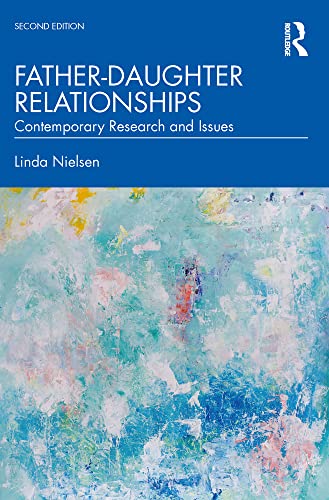
Cover of Father-Daughter Relationships

Father-Daughter Relationships

Linda Nielsen

2012

In this fully revised new edition, Father-Daughter Relationships: Contemporary Research and Issues summarises and analyses the most relevant research regarding father-daughter relationships, aiming to break down the persistent misconceptions regarding fatherhood and father-daughter relationships and encourage the reader to take a more objective and analytical approach. The research is brought to life with compelling personal stories from fathers and daughters, including well-known celebrities and politicians. Boxed quizzes and questionnaires show students how the research can be applied to their own lives while others highlight the relationships between real-life fathers and daughters. Nielsen discusses the father-daughter relationship within a diverse range of family structures, including divorced and separated parents, gay parents, adopted children and children of sperm donors. Covering a wide range of topics, including the father’s impact on his daughter’s cognitive, academic, social and physical wellbeing, ethnic minorities, and incarcerated or abusive fathers, Father-Daughter Relationships: Contemporary Research and Issues gives panoramic view of the most recent research and statistics. This book is essential reading for upper level undergraduate and for graduate students, as well as for practitioners working with families, such as social workers, mental health professionals and family counsellors. It is especially relevant for courses in psychology, sociology, women’s studies, and counselling. Linda Nielsen is a Professor of Adolescent and Educational Psychology at Wake Forest University. A member of the faculty for 35 years, she is a nationally recognized expert on father-daughter relationships.

Why it's similar: Similar focus on Parent and child

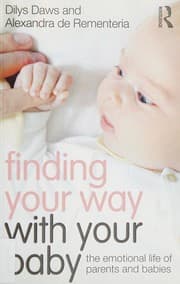
Cover of Finding Your Way with Your Baby

Finding Your Way with Your Baby

Stan Skrabut

2015

Finding Your Way with Your Baby explores the emotional experience of the baby in the first year, and that of the mother, father and other significant adults. It does so in a way that is deeply informed by psychoanalytic understandings, infant observation, developmental science and decades of clinical experience. Combining the wisdom of many years' work with the freshness of up-to-date knowledge, Dilys Daws and Alexandra de Rementeria engage with the most difficult emotional experiences that are often glossed over in parenting books – such as pregnancy, through birth into bonding, ambivalence about the baby, depression, and the emotional turmoil so often brought to the surface by being a new parent. Acknowledgement and understanding about this darker side of family life offers a sense of relief that can allow parents to harness the power of knowing, owning and sharing feelings to transform situations and break negative cycles and old ways of relating. With real-life examples, references to current thinking and a calm and simple writing style they also provide new insights into the more commonly covered issues such as weaning, sleeping and crying. Finding Your Way with Your Baby is primarily aimed at parents but it will be a helpful resource for all those working with parents and babies including health visitors, midwives, social workers, GPs, paediatricians and childcare workers. It will appeal to parents and professionals who are interested in ideas from psychoanalytic clinical practice and the latest research in developmental psychology and neuroscience.

Why it's similar: Similar focus on Parenting

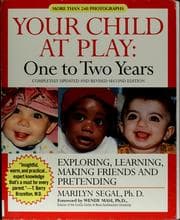
Cover of Your child at play

Your child at play

Marilyn Segal, Betty Bardige

1985

Packed with learning activities, games, poems, and recipes, as well as anecdotes and advice, the eight sections focus on: Individual Differences and Common Threads (distinguishing between real and pretend; concern with fairness; self-awareness) The Questions Children Ask (the physical world; the natural world; the social world) Friends (best friends; controversies and conflicts; sibling play) Active Play (contact and cuddling; physical feats; sports) Creative Play (music; art; crafts; storytelling and jokes) Pretend Play (actor play and dressing up; imaginary playmates; reemergence of pretending) School Play (reading; writing; arithmetic; collecting facts; science) Family (attachment and separation; family continuity; traditions)

Why it's similar: Similar focus on Nonfiction

Cover of Toughlove

Toughlove

Phyllis York

1980

How do you love an “impossible” teenager? “An effective way of uniting parents to square off against the youngsters’ own powerful peer group that endorses drugtaking and rebelliousness.”—Time Thousands of parents are finding new hope in dealing with rebellious teenagers through Toughlove, a self-help program which has grown to over eight hundred groups throughout the United States and Canada in less than six years. Now, for the first time in book form, the founders tell how Toughlove works. “You need Toughlove if you feel helpless and unable to cope with your teenagers’ behavior or if you feel victimized by them, disappointed in yourself as a parent, guilty because you think you have done a rotten job and are frightened bythe potential for violence in yourself and your children. . . . Remember, you have the right to a night’s sleep without where your kid is—or being awakened by a phone call from the police or a hospital or a drunk teenager who’s stranded somewhere.”—Ann Landers

Why it's similar: Similar focus on Parent and child

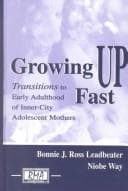
Cover of Growing up fast

Growing up fast

Bonnie J. Ross Leadbeater, Niobe Way

2001

The first edition of Growing Up Fast attempted to counter the stereotype of poor, minority adolescent mothers and describe the diversity of their educational, work, parenting, and relationship experiences. The volume followed a strengths-based approach to understanding why some mothers appeared resilient to the stresses of early parenting, compared to their peers, and what obstacles undermine resiliency for some of these young women. We hear their stories in their own words. We also see how many disadvantaged mothers go on to succeed in school, work, and parenting while avoiding many of the risk associated with teen parenting . The research is based on a six-year study of 120 young disadvantaged mothers and their children from New York City. It uniquely combines the analysis of longitudinal questionnaire data with qualitative analysis of extensive interviews conducted with these women focusing on the first six years after their child was born. A past winner of the Society for Research on Adolescence best book award, Growing Up Fast is a fascinating study of human resilience that will continue to be recognized for its contribution to individuals involved in program development and policymaking with teenage parenting. A new introductory chapter to the book suggests that we can look at the previous findings through a new lens that emphasizes not only the diversity of outcomes for young mothers and the sources of their strengths, but also asks what we can learn from these women about supporting their educational and work goals, as they transition to adulthood. New attention to emerging adulthood shows that this is a critical stage of life when the foundations for health and healthy life styles are laid down. Developmental tasks of this phase include building the capacity for financial and residential independence through post-secondary education and job training, and establishing stable sources of support from parents, romantic partners, and peers for all youth. Leadbea

Why it's similar: Similar focus on FAMILY & RELATIONSHIPS

Readers also enjoyed

Popular and highly rated books from our library you might like next.

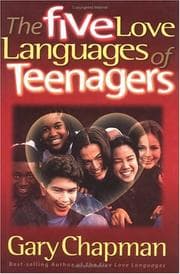
Cover of The five love languages of teenagers

The five love languages of teenagers

Gary Chapman

2000

Socially, mentally, and spiritually teenagers face a variety of pressures and stresses each day. Despite these peer pressures; it is still parents who can influence teens the most. Are you equipped to love your teenager effectively? Get equipped to be a better parent as The Five Love Languages of Teenagers explores the world in which teenagers live; explains the developmental changes; and give tools to help you identify and appropriately communicate in your teens love language. Get practical tips on loving your teen effectively and explore key issues in your teen’s life including anger and independence. Finally learn how to set boundaries that are enforced with discipline and consequences, and discover useful ways for the difficult task of loving when your teen fails. Get ready to discover how the principles of the five love languages can really work in the lives of your teens and family. Over 400,000 copies sold!

Why it's similar: Similar focus on Parenting

Frequently Asked Questions

What should I read after Believing It All?
Browse the similar books below — they're matched by subject overlap, author style, and reader preferences.
What books are most similar to Believing It All?
Our recommendations prioritize shared themes like Family & Relationships, Nonfiction, Parent and child and books enjoyed by similar readers.
Which similar book is best for beginners?
Check page counts and summaries on each recommendation. Shorter titles with broader appeal are usually the best starting point.

Promote Your Book on BestsellerFinder

Reach thousands of readers with featured placements, homepage spots, and newsletter features.

Get bestseller picks in your inbox

Weekly curated book recommendations. Unsubscribe anytime.

Explore More

Affiliate Disclosure: As an Amazon Associate, we may earn from qualifying purchases. Book links on this page may be affiliate links. This does not affect our recommendations or the price you pay.