
Books Like “The Bell Jar

If you enjoyed The Bell Jar by Sylvia Plath, you likely appreciate women college students, summer, Classics. These similar reads match the tone, themes, and audience of the original.

Not sure what to read next? Ask BestsellerFinder AI →

women college studentssummerClassicsLiteraturePsychologyFeminismNovelPoetry

Closest matches

Titles with overlapping themes, tone, and audience with your pick.

Cover of The Freedom of Life

The Freedom of Life

Annie Payson Call

1905

Annie Payson Call's "The Freedom of Life" offers a practical philosophy for achieving inner peace and mental well-being by emphasizing the power of conscious thought and disciplined will. The book guides readers toward self-mastery, asserting that true freedom lies not in external circumstances but in cultivating a serene and resilient inner life through consistent self-effort and a positive outlook. Call's enduring insights provide a framework for navigating life's challenges with greater equanimity and purpose, fostering personal growth and sustained happiness.

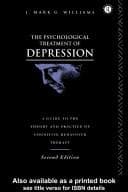
Cover of The psychological treatment of depression

The psychological treatment of depression

J. Mark G. Williams

1984

'A clear, rigorous account of cognitive behavioural methods for treating depression.' - British Journal of Psychiatry The use of behavioural and cognitive techniques for treating depression has yielded exciting results. Cognitive Behaviour Therapy (CBT) is as effective in the short term as anti-depressant drugs and has longer-lasting effects than medication. This book brings together assessment and treatment techniques of proven efficacy, describing them in usable detail and setting them in the context of current psychological theories of depression. It is an invaluable guide to practitioners wishing to make use of CBT.

Cover of Eating disorders

Eating disorders

Laura J. Goodman

2001

The widely updated second edition of Eating Disorders: Journey to Recovery Workbook helps those struggling with eating disorders in their recovery, guiding the reader through a greater consideration of body image, compulsive exercising, and personal and societal relationships based on Prochaska’s Stages of Change Theory. The workbook explores complicated issues having a direct effect on the eating disorder, including trauma, depression, gender identity, abuse, and the media. Updated to include the acknowledgement of binge-eating disorder, selective eating, and avoidant restrictive food intake disorder (ARFID), this second edition encourages self-paced learning and practice adjunct to one-on-one and group therapy from two seasoned clinicians in the treatment of eating disorders.

Cover of Handbook of Coaching Psychology

Handbook of Coaching Psychology

Stephen Palmer, Alison Whybrow

2014

Solution Focused Coaching in Practiceis a practical ‘how-to’ guide that provides an invaluable overview of Solution Focused Coaching skills and techniques. Reflecting upon published research on the solution focused approach, Bill O’Connell, Stephen Palmer and Helen Williams bring their own experiences of Solution Focused Coaching together with others in the field to cover topics such as: the coach-coachee relationship the role of technology in coaching inclusive coaching group and team coaching practical issues and skills. Incorporating coachee case studies, worksheets, practice tips and discussion points, the skills, strategies and techniques in this book are straightforward to apply and can be used in most coaching settings. This practical book is essential reading for experienced personal or executive coaches, managers considering introducing a new and better coaching culture for their staff, and for those just starting out on their coaching journey.

Cover of Cognitive-behavioral therapy for smoking cessation

Cognitive-behavioral therapy for smoking cessation

Kenneth A. Perkins, Kenneth A. Perkins, Cynthia A. Conklin, Michele D. Levine

2007

Cognitive-Behavioral Therapy (CBT) for Smoking Cessation is an essential resource for healthcare providers assisting patients in quitting tobacco smoking, presenting a structured approach that utilizes key components of CBT. This second edition provides empirically supported strategies for smoking cessation, adhering to well-established best practices and representing a "gold standard" in treatment. It presents step-by-step techniques to enhance patients’ motivation and confidence, prepare them to quit, navigate postquit challenges, and achieve long-term abstinence. This updated edition takes a patient-centered approach, addressing significant challenges faced during cessation and offering providers a systematic framework for delivering care. Notably, this volume introduces an adjunct CBT module specifically designed for patients very concerned about gaining weight after quitting—a unique and validated approach that aids cessation efforts and is not available in other resources. The book also includes new case vignettes, provider scripts, sidebars addressing common patient concerns, and key takeaways. Additionally, an extensive e-resource provides links to supplementary materials and further readings, equipping providers from diverse disciplines and backgrounds with the tools needed to effectively support patients. A must-have resource on the bookshelf of any health professional treating clients with tobacco dependence.

Cover of Working with substance misusers

Working with substance misusers

Trudi Petersen, Andrew McBride

2002

Working with Substance Misusers is a practical handbook for students and those who work with people who misuse drugs or alcohol. Written by experienced teachers and clinicians, the book introduces: * the substances themselves * theories relevant to substance use and misuse * the skills necessary to work with this client group * the broad range of approaches to treatment * particular problems of specific groups. The reader is encouraged to read and reflect on the material in relation to their own practice. To help this process, each topic has an identified set of learning objectives. Activities designed to reinforce learning include discussion points, case studies, role plays and group exercises. Working with Substance Misusers makes clear the connection of theory to practice and encourages a skills-based, but reflective, approach to work in this complex field. Cutting across professional boundaries, it provides both new and more experienced practitioners with a key text.

Cover of The theory and treatment of depression

The theory and treatment of depression

Jozef Corveleyn, Sidney J. Blatt

2005

This comprehensive volume delves into the multifaceted nature of depression, exploring its theoretical underpinnings and diverse treatment approaches. It examines the psychopathology of depressive disorders, offering insights into the underlying mechanisms and contributing factors. The book then provides an in-depth analysis of various therapeutic interventions, equipping clinicians with a nuanced understanding of effective strategies for managing depression.

Cover of Early Parenting and Prevention of Disorder

Early Parenting and Prevention of Disorder

Marianne Leuzinger-Bohleber, Robert N. Emde

2014

This volume explores how early parental interactions profoundly shape a child's psychological development and trajectory towards mental well-being. It synthesizes psychoanalytic and developmental perspectives to illuminate critical periods and parental influences that can prevent later disorders. The book offers insights into fostering secure attachments and resilient emotional regulation from infancy onward.

Cover of Stress, coping, and depression

Stress, coping, and depression

Sheri L. Johnson

1999

Stress, Coping, and Depression is the latest volume based on the Annual Stress and Coping Conference held at the University of Miami. In this timely collection, leading researchers offer a variety of new perspectives on depression. They review the social, biological, and psychological processes that put adults and their children at risk and discuss innovative treatments grounded in empirical studies. Research findings are integrated across domains to construct more effective models of etiology and intervention. The contributors' thought-provoking ideas will provide inspiration for the ongoing efforts addressing the problems associated with this devastating disorder. Content highlights include: * novel information processing approaches to depression; * an overview of the neural pathways guiding moods; * empirical approaches for the treatment of bipolar disorders; * integrated models of biological and environmental influences on the transmission of depression to children; and * new perspectives on the relationship between personality and stress.

Cover of Depression and aggression in family interaction

Depression and aggression in family interaction

Gerald R. Patterson

1990

Patterson's work explores the intricate relationship between depression and aggressive behaviors within family dynamics. Through detailed observation and analysis, the book outlines how parental depression can contribute to the development and maintenance of aggressive patterns in children. It further investigates how these reciprocal interactions can perpetuate a cycle of distress for all family members. This research offers insights into the mechanisms by which mental health challenges manifest and are managed, or mismanaged, within the family unit.

Readers also enjoyed

Popular and highly rated books from our library you might like next.

Cover of Our bodies, ourselves

Our bodies, ourselves

Boston Women's Health Book Collective, Angela Phillips, Jill Rakusen, Alice Mayhew, Simon and Schster

1971

This comprehensive resource offers women an in-depth exploration of their physical and emotional well-being, covering a wide range of health topics from anatomy and reproductive health to mental health and societal influences. It empowers readers with detailed information, presented accessibly, to make informed decisions about their bodies and advocate for their healthcare needs. The book fosters a holistic understanding of women's health, encouraging self-care and a critical perspective on medical and social norms.

Cover of Your perfect right

Your perfect right

Robert E. Alberti, Michael L. Emmons

1974

Guidance and support for people who lack confidence, have trouble maintaining relationships, or need to learn to defend themselves is provided in this time-tested guide to building self-esteem, protecting oneself from bullying or abuse, and making constructive use of anger. Realistic exercises are designed to be practiced in daily life, applied to struggles both small and large, and notably strengthen self-confidence and assertiveness. Una ayuda enorme para gente que se siente insegura, tiene dificultad en mantener relaciones positivas o necesita aprender como defenderse, este libro demuestra como adquirir seguridad en sí mismo, proteger sus derechos, enfrentar y controlar el enojo y relacionarse con personas "difíciles." Los procedimientos descritos son realistas, prácticos y han probado su eficacia.

Cover of Blink

Blink

Malcolm Gladwell

2004

Drawing on cutting-edge neuroscience and psychology and displaying all of the brilliance that made The Tipping Point a classic, Blink changes the way you'll understand every decision you make. Never again will you think about thinking the same way. Malcolm Gladwell redefined how we understand the world around us. Now, in Blink, he revolutionizes the way we understand the world within. Blink is a book about how we think without thinking, about choices that seem to be made in an instant - in the blink of an eye - that actually aren't as simple as they seem. Why are some people brilliant decision makers, while others are consistently inept? Why do some people follow their instincts and win, while others end up stumbling into error? How do our brains really work - in the office, in the classroom, in the kitchen, and in the bedroom? And why are the best decisions often those that are impossible to explain to others? In Blink we meet the psychologist who has learned to predict whether a marriage will last, based on a few minutes of observing a couple; the tennis coach who knows when a player will double-fault before the racket even makes contact with the ball; the antiquities experts who recognize a fake at a glance. Here, too, are great failures of "blink": the election of Warren Harding; "New Coke"; and the shooting of Amadou Diallo by police. Blink reveals that great decision makers aren't those who process the most information or spend the most time deliberating, but those who have perfected the art of "thin-slicing" - filtering the very few factors that matter from an overwhelming number of variables. Drawing on cutting-edge neuroscience and psychology and displaying all of the brilliance that made The Tipping Point a classic, Blink changes the way you understand every decision you make. Never again will you think about thinking the same way.

Cover of Think Like a Monk

Think Like a Monk

Jay Shetty

2020

The Sunday Times Number One Bestseller Jay Shetty, social media superstar and host of the #1 podcast 'On Purpose', distils the timeless wisdom he learned as a practising monk into practical steps anyone can take every day to live a less anxious, more meaningful life. Over the past three years, Jay Shetty has become a favourite in the hearts and minds of millions of people worldwide. One of his clips was the most watched video on Facebook last year, with over 360 million views. His social media following totals over 32 million, he has produced over 400 viral videos, which have amassed more than 5 billion views, and his podcast, 'On Purpose', is consistently ranked the world's #1 health-related podcast. In this inspiring, empowering book, Shetty draws on his time as a monk in the Vedic tradition to show us how we can clear the roadblocks to our potential and power. Drawing on ancient wisdom and his own rich experiences in the ashram, Think Like a Monk reveals how to overcome negative thoughts and habits, and access the calm and purpose that lie within all of us. The lessons monks learn are profound but often abstract. Shetty transforms them into advice and exercises we can all apply to reduce stress, improve focus, improve relationships, identify our hidden abilities, increase self-discipline and give the gifts we find in ourselves to the world. Shetty proves that everyone can - and should - think like a monk. Perfect for fans of Wim Hof, Robin S. Sharma and James Nestor!

Cover of Feeling Is the Secret

Feeling Is the Secret

Neville Goddard

2004

The central premise of the book revolves around the idea that our predominant feelings and emotions shape our reality. Goddard argues that the key to manifesting our desires lies not only in visualizing them but also in feeling as though they have already been realized. Goddard emphasizes the importance of assuming the feeling of the wish fulfilled, meaning that individuals should immerse themselves emotionally in the experience of having already achieved their desires. He asserts that this emotional state, when sustained consistently, impresses upon the subconscious mind and sets in motion the forces necessary to bring those desires into physical reality. Furthermore, Goddard discusses the concept of mental imagery and its power to create and shape our experiences. He suggests that individuals should use their imagination to create vivid mental scenes that evoke the desired feelings, thereby attracting corresponding circumstances and events. "Feeling Is The Secret" serves as a practical guide for harnessing the creative power of the mind to transform one's life. It encourages readers to cultivate a sense of inner conviction and emotional congruence with their desires, ultimately leading to the manifestation of their dreams and aspirations.

Cover of Everything is F*cked

Everything is F*cked

Mark Manson, Carlos Ramos Malavé

2019

New York Times Bestseller “Just because everything appears to be a mess doesn’t mean you have to be one. Mark Manson’s book is a call to arms for a better life and better world and could not be more needed right now.” — Ryan Holiday, bestselling author of The Obstacle is the Way and Ego is the Enemy From the author of the international mega-bestseller The Subtle Art of Not Giving A F*ck comes a counterintuitive guide to the problems of hope. We live in an interesting time. Materially, everything is the best it’s ever been—we are freer, healthier and wealthier than any people in human history. Yet, somehow everything seems to be irreparably and horribly f*cked—the planet is warming, governments are failing, economies are collapsing, and everyone is perpetually offended on Twitter. At this moment in history, when we have access to technology, education and communication our ancestors couldn’t even dream of, so many of us come back to an overriding feeling of hopelessness. What’s going on? If anyone can put a name to our current malaise and help fix it, it’s Mark Manson. In 2016, Manson published The Subtle Art of Not Giving A F*ck, a book that brilliantly gave shape to the ever-present, low-level hum of anxiety that permeates modern living. He showed us that technology had made it too easy to care about the wrong things, that our culture had convinced us that the world owed us something when it didn’t—and worst of all, that our modern and maddening urge to always find happiness only served to make us unhappier. Instead, the “subtle art” of that title turned out to be a bold challenge: to choose your struggle; to narrow and focus and find the pain you want to sustain. The result was a book that became an international phenomenon, selling millions of copies worldwide while becoming the #1 bestseller in 13 different countries. In Everthing Is F*cked, Manson turns his gaze from the inevitable flaws within each individual self to the endless calamities taking place in the

Cover of Grit

Grit

Angela Duckworth

2016

In this must-read book for anyone striving to succeed, pioneering psychologist Angela Duckworth shows parents, educators, athletes, students, and business people—both seasoned and new—that the secret to outstanding achievement is not talent but a focused persistence called “grit.” Why do some people succeed and others fail? Sharing new insights from her landmark research on grit, MacArthur “genius” Angela Duckworth explains why talent is hardly a guarantor of success. Rather, other factors can be even more crucial such as identifying our passions and following through on our commitments. Drawing on her own powerful story as the daughter of a scientist who frequently bemoaned her lack of smarts, Duckworth describes her winding path through teaching, business consulting, and neuroscience, which led to the hypothesis that what really drives success is not “genius” but a special blend of passion and long-term perseverance. As a professor at the University of Pennsylvania, Duckworth created her own “character lab” and set out to test her theory. Here, she takes readers into the field to visit teachers working in some of the toughest schools, cadets struggling through their first days at West Point, and young finalists in the National Spelling Bee. She also mines fascinating insights from history and shows what can be gleaned from modern experiments in peak performance. Finally, she shares what she’s learned from interviewing dozens of high achievers—from JP Morgan CEO Jamie Dimon to the cartoon editor of The New Yorker to Seattle Seahawks Coach Pete Carroll. Winningly personal, insightful, and even life-changing, Grit is a book about what goes through your head when you fall down, and how that—not talent or luck—makes all the difference.

Cover of Creating love

Creating love

Bradshaw, John

1992

“Why are so many of us at times completely baffled by a relationship? How can we think we know someone so well and admit in the end that we hardly knew that person at all? Why do many people who work diligently and strenuously to gain wholeness and balance still feel so frustrated about having a fulfilling relationship? Why have so many people given up on love?”—from the Prologue John Bradshaw’s bestselling books and compelling PBS series have touched and changed millions of lives. Now, in Creating Love, he offers us a new way to understand our most crucial relationships—with our romantic partners and spouses, with our parents and children, with friends and co-workers, with ourselves, and with God. Bradshaw’s compassionate approach shows that many of us have been literally “entranced” by past experiences of counterfeit love, so we unknowingly re-create patterns that can never fulfill us. Here he provides both the insights and the precise tools we need to keep those destructive patterns from repeating in the present. And then he shows how we can open ourselves to the soul-building work of real love—and create healthy, loving relationships where we can be fully ourselves in every part of our lives.

Cover of The Right Words at the Right Time, Vol. 2

The Right Words at the Right Time, Vol. 2

Marlo Thomas, Jon B. Fish, Bruce Kluger, Carl Robbins, David Tabatsky

2006

From big cities to farm communities, from office cubicles to hospital wards, from Normandy Beach to Boston's Fenway Park, the contributors to this remarkable volume -- selected from among thousands in a nationwide search -- tell riveting stories about the words that changed their lives forever. You'll meet a "Plain Jane" from Seattle, whose world was rocked by a passing remark made by her favorite musician, backstage at a concert. You'll hear from the bereaved fiancé of a 9/11 victim, who found hope in a note pinned to a teddy bear. You'll laugh with a beleaguered soccer mom, who reveals the single phrase she never wants to hear again. And your heart will break for a prison inmate, who recalls the one piece of advice he still wishes he took. In each case, words had made all the difference. Marlo Thomas has once again tapped into the human spirit, assembling a breathtaking collection of beautiful and inspiring essays about the enduring power of words, and how their impact can last a lifetime. As a follow-up to her 2002 New York Times #1 bestseller, The Right Words at the Right Time, Thomas presents 101 new first-person stories that are at once universal and strikingly personal. Like the tale of a Gulf War veteran, whose life was transformed by just two words spoken by a young stranger at a Burger King. Or the aimless garage mechanic, who found salvation in a Help Wanted ad. Or the unsuspecting mother of three, who made a heart-warming discovery about her grandmother's "racy past." As this astonishing anthology proves, the "right words" can come from anywhere -- the pages of a dusty old songbook, the pulpit of a neighborhood church, the wreckage of Ground Zero, a hand-stitched sampler hanging on a wall, and a child's simple expression of love. The Right Words at the Right Time, Volume 2: Your Turn! is a collection to be read and read again -- a volume that will be cherished both by fans of the original book and anyone who has ever been touched by the startling and lif

Cover of Dangerous sexualities

Dangerous sexualities

Frank Mort

1984

Dangerous Sexualities takes a look at how our ideas of health and disease are linked to moral and immoral notions of sex. Beginning in the 1830s, Frank Mort relates his social historical narratives to the sexual choices and possibilities facing us now. This long-awaited second edition has been thoroughly updated to include new discussions of eugenics, race hygiene and social imperialism in the late nineteenth and early twentieth centuries. With a new and extended bibliography, introduction and illustrations, this second edition brings a classic into the 21st Century.

Frequently Asked Questions

What should I read after The Bell Jar?
Browse the similar books below — they're matched by subject overlap, author style, and reader preferences.
What books are most similar to The Bell Jar?
Our recommendations prioritize shared themes like women college students, summer, Classics and books enjoyed by similar readers.
Which similar book is best for beginners?
Check page counts and summaries on each recommendation. Shorter titles with broader appeal are usually the best starting point.

Promote Your Book on BestsellerFinder

Reach thousands of readers with featured placements, homepage spots, and newsletter features.

Get bestseller picks in your inbox

Weekly curated book recommendations. Unsubscribe anytime.

Explore More

Affiliate Disclosure: As an Amazon Associate, we may earn from qualifying purchases. Book links on this page may be affiliate links. This does not affect our recommendations or the price you pay.