Books Like “Narratives of Drunkenness

If you enjoyed Narratives of Drunkenness by An Vleugels, you likely appreciate Alcoholism, Medicine, europe, History. These similar reads match the tone, themes, and audience of the original.

Not sure what to read next? Ask BestsellerFinder AI →

AlcoholismMedicine, europeHistoryBelgium, social conditionsAlcoolismeAspect socialHistoireSELF-HELP

Closest matches

Titles with overlapping themes, tone, and audience with your pick.

Cover of Overcoming problematic alcohol and drug use

Overcoming problematic alcohol and drug use

Jeremy M. Linton

2007

Overcoming Problematic Alcohol and Drug Use is a workbook for use with clients in treatment, informed by the most current research and literature in the substance abuse field. Offering a field-tested alternative to the disease model of addiction, the book introduces a six-session curriculum for treating persons with substance abuse issues and can be used as a self-help resource, or as a practice guide for human service professionals. Drawing on years of research on cognitive-behavioral therapy, the stages of change model, motivational interviewing, and solution-focused therapy, the author has put together a comprehensive and effective guide to change.

Cover of Heroin Addiction and 'The British System'

Heroin Addiction and 'The British System'

John Strang, Michael Gossop

2004

This work examines the evolution of heroin addiction and its treatment within the context of British drug policy. It provides a historical overview of how the "British system" of heroin prescribing and harm reduction developed, analyzing its underlying principles and practical implementation. The book offers insights into the effectiveness of various therapeutic approaches and prevention strategies employed in the UK.

Cover of Swimming with crocodiles

Swimming with crocodiles

Marjana Martinic, Fiona Measham

2008

Will Chaffey was 18 when he boarded a plane in New York bound for Australia. Though he had recently graduated from one of Boston's most prestigious private schools, a disastrous senior year meant that he hadn't been accepted into college. Instead, he took what the college counsellors grimly called "time off". Despite having no idea what he wanted to do with the rest of his life, Will had a plan for the next six months: to get as far away as possible from the dark New England winter and the stifling expectations of college and career. In Australia, Will met an enigmatic herpetologist and wanderer called Geoff. Together they formulated a plan to walk from the headwaters of the Prince Regent River to the falls of the King Cascade on the north-west coast of Western Australia – a hazardous journey never before attempted by white men. Trekking through a harsh and seductive landscape, their expedition turned into a life-and-death struggle when the boat they expected to collect them at King Cascade never arrived. Stranded in the wildest of places and running out of supplies, Will was transformed in ways he could never have anticipated.

Cover of Counseling addicted families

Counseling addicted families

Gerald A. Juhnke

2006

Although one person's addiction almost inevitably affects his or her family members, a surprising number of treatment models appear to operate under the assumption that an individual's addiction occurs in a vacuum. By not paying sufficient attention to preexisting family dynamics-whether dysfunctional, supportive, or somewhere in between-counselors run the risk of not fully understanding the roots of an individual's addictions or the obstacles to his recovery; as a result, counselors may undermine their own treatment efforts both by neglecting any underlying family problems and by failing to capitalize upon a family's potential assistance in an intervention with the addicted individual. In Counseling Addicted Families, Gerald A. Juhnke and William Bryce Hagedorn address this problem head-on. Recognizing that even those treatment providers who understand the importance of the familial context of addiction are often stymied by the variety of family treatment theories and their often imperfect fit for cases of addiction, Juhnke and Hagedorn provide a truly integrated model for assessment and treatment. Based upon the authors' combined 23 years of experience in clinical and treatment supervision, the Integrated Family Addictions Model consists of six progressive treatment tiers which organize the relevant family treatment theories into a graduated and coherent sequence, beginning with the briefest and least costly forms of therapy. If one of the lower tiers allows clients to reach their treatment goals, the patient and therapist need not waste time and resources following the full continuum. If, however, their needs are still unmet, they can progress in a logical fashion to more advanced and intensive forms of therapy. The book is divided into three broad topic areas designed to provide counselors and graduate students with essential information both about addictions and about the practical applications of various treatment theories. Part One discusses the prevalence of

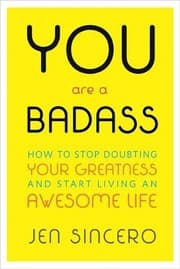
Cover of You Are a Badass

You Are a Badass

Jen Sincero

2013

¡Eres un chingón! es el libro ideal para las personas que quieren mejorar sus vidas pero no están interesadas en los libros de autoayuda tradicionales. En esta original y entretenida guía, la coach Jen Sincero nos ofrece 27 capítulos llenos de historias divertidas e inspiradoras, sabios consejos, ejercicios sencillos y una que otra grosería. Todo para ayudarte a: - Identificar y cambiar tus conductas de sabotaje, que no te permiten obtener lo que realmente quieres. - Crear una vida que ames. Y crearla AHORA. - ¡Generar más dinero! como nunca antes lo has hecho. Cuando termines este libro, entenderás el porqué de tu forma de ser, cómo amarte, y aprenderás a reconocer y aceptar lo que puedes cambiar y lo que no, pero sobre todo... cómo utilizar tu fuerza interna para patear algunos traseros ENGLISH DESCRIPTION The absolute self-development book that helps people transform their lives through humor, irreverence, and the occasional curse word. In this refreshingly entertaining guide to reshaping your mindset and your life, author and success coach Jen Sincero serves up 28 bite-sized tips full of hilarious and inspiring stories, sage advice, and easy-to-implement exercises to help you identify and change self-sabotaging beliefs and behaviors, shift your energy and attract what you desire. In this book, you'll understand how to move past what's holding you back, learn how to make some serious changes, and start living the kind of life that once seemed impossible

Cover of Illicit drugs

Illicit drugs

Adrian Barton

2003

The second edition of the popular Illicit Drugs: Use and Control provides a timely, up-to-date discussion of the key issues raised in the first edition, whilst also providing new chapters which address: Class, gender and race, The geo-politics of illicit drug production and distribution, Britain's drug use within a global context. This accessible book, with its inclusion of new pedagogical features, will be essential reading for students and researchers working in the area of drugs and society.

Cover of Working with substance misusers

Working with substance misusers

Trudi Petersen, Andrew McBride

2002

Working with Substance Misusers is a practical handbook for students and those who work with people who misuse drugs or alcohol. Written by experienced teachers and clinicians, the book introduces: * the substances themselves * theories relevant to substance use and misuse * the skills necessary to work with this client group * the broad range of approaches to treatment * particular problems of specific groups. The reader is encouraged to read and reflect on the material in relation to their own practice. To help this process, each topic has an identified set of learning objectives. Activities designed to reinforce learning include discussion points, case studies, role plays and group exercises. Working with Substance Misusers makes clear the connection of theory to practice and encourages a skills-based, but reflective, approach to work in this complex field. Cutting across professional boundaries, it provides both new and more experienced practitioners with a key text.

Cover of S. U. M. O

S. U. M. O

Paul McGee

2008

‘SUMO is a brilliant book, packed with simple, inspirational and innovative ideas that can be applied to any aspect of your life. Paul’s knowledge, enthusiasm and ability to clearly explain these methods is unsurpassed. I heartily recommend this excellent read.’ Professor Damian Hughes, Author and Co-Host of The High Performance Podcast ‘Paul offers a fresh, practical and down to earth approach to change and getting the best from life. An uplifting read for anyone looking to find their spark.’ Owen O'Kane, Psychotherapist & Sunday Times Best Selling Author Want some straight-talking advice on how to really improve your life? In the 20th Anniversary Edition of SUMO (Shut Up, Move On): The Straight-Talking Guide to Succeeding in Life, bestselling author and personal development heavyweight Paul McGee delivers inspiring insights by revealing how hundreds of thousands of people around the world are fulfilling their potential, seizing opportunities, succeeding at home and at work, and increasing their resilience by adopting the SUMO approach to life. McGee combines hard-won personal insights, ancient wisdom, modern science, hilarious anecdotes, practical tips, and hands-on frameworks to offer a life-changing read. New to this edition is an exploration of how real people have profoundly improved their lives with the book's timeless principles and strategies, providing a testament to the enduring power of the SUMO principles. You'll find: Exciting and inspirational advice for taking control of your own life Ways to change your thinking, mindset, and approach to life's inevitable obstacles Ideas to improve your understanding and awareness of the way that other people see the world Perfect for people wanting a straight-talking approach to success, as well as those who are already fans of the SUMO way of thinking, this new 20th Anniversary Edition is a must-have resource for everyone who's ready to ditch the “whatever will be, will be” fatalism in favor of a practical guide t

Cover of How to Organize Yourself

How to Organize Yourself

John Caunt

2013

Dramatically improve the way you work with great tips on how to determine goals, prioritize tasks, overcome distractions; build positive work habits and adjusting to working at home. This fully updated 7th edition now features even more practical exercises, useful templates and top tips to help you get organized, as well as content on how to deal with the ubiquitous presence of smartphones and adapt to the ever increasing scope for interruption and procrastination in our 24/7 lives. How to Organize Yourself will enable you to take control of your workload, reduce stress and fatigue, and free up time for the things that really matter. The Creating Success series of books... Unlock vital skills, power up your performance and get ahead with the bestselling Creating Success series. Written by experts for new and aspiring managers and leaders, this million-selling collection of accessible and empowering guides will get you up to speed in no time. Packed with clever thinking, smart advice and the kind of winning techniques that really get results, you'll make fast progress, quickly reach your goals and create lasting success in your career.

Readers also enjoyed

Popular and highly rated books from our library you might like next.

Cover of How to Raise a Child with a High EQ

How to Raise a Child with a High EQ

Lawrence E. Shapiro, Lawrence Shapiro

1997

Studies show that emotional intelligence -- the social and emotional skills that make up what we call character -- is more important to your child's success than the cognitive intelligence measured by IQ. And unlike IQ, emotional intelligence can be developed in kids at all stages. Filled with games, checklists and practical parenting techniques, How to Raise a Child with a High EQ will help your child to cope with -- and overcome -- the emotional stress of modern times and the normal problems of growing up.

Cover of The Art of War

The Art of War

孙武 (Sun Tzu), Stephen F. Kaufman, Lionel Giles, Onésimo Colavidas

1900

Sun Tzu's ancient treatise, "The Art of War," offers timeless strategic principles applicable beyond the battlefield to business, politics, and personal conflict. It emphasizes understanding oneself and the enemy, the importance of deception and adaptability, and the value of achieving victory with minimal confrontation. Through its concise aphorisms and insightful observations, the work provides a framework for decisive action and the cultivation of superior strategic thinking.

Cover of Pride and Prejudice

Pride and Prejudice

Jane Austen

1813

Austen’s most celebrated novel tells the story of Elizabeth Bennet, a bright, lively young woman with four sisters, and a mother determined to marry them to wealthy men. At a party near the Bennets’ home in the English countryside, Elizabeth meets the wealthy, proud Fitzwilliam Darcy. Elizabeth initially finds Darcy haughty and intolerable, but circumstances continue to unite the pair. Mr. Darcy finds himself captivated by Elizabeth’s wit and candor, while her reservations about his character slowly vanish. The story is as much a social critique as it is a love story, and the prose crackles with Austen’s wry wit.

Cover of Great Expectations

Great Expectations

Charles Dickens

1861

Great Expectations was first published as a weekly serial in All the Year Round, December 1860 - August 1861. Its first appearance in volume form was as three-volume novel, without illustrations, in July 1861. A one-volume edition, the next year, preceded its inclusion in the collected editions of Dickens's lifetime. The three-volume 1861 edition is the basis of the present text: variant readings, including those in manuscript and extant proofs, are recorded in the textual apparatus, providing an unusually rich source of information on Dickens's methods of composition. The Introduction traces this process of composition and draws attention to the two unperformed dramatic adaptations: the reading version and the 1861 play version, made as a safeguard of copyright. Appendices include the original ending, the author's notes, and two textual examinations, one of the five so-called `editions' of 1861, the other a comparison of the one-volume 1862 edition with the 1864 Library edition.

Cover of The Railway Children

The Railway Children

Edith Nesbit

1900

Rediscover the Puffin Classics collection and bring the best-loved classics to a new generation - including this charming edition of The Railway Children. When Father is taken away unexpectedly, Roberta, Peter, Phyllis and their mother have to leave their comfortable life in London to go and live in a small cottage in the country. The children seek solace in the nearby railway station, and make friends with Perks the Porter and the Station Master himself. Each day, Roberta, Peter and Phyllis run down the field to the railway track and wave at the passing London train, sending their love to Father. Little do they know that the kindly old gentleman passenger who waves back holds the key to their father's disappearance. One of the best-loved classics of all time, with a wonderful introduction by Jacqueline Wilson.

Cover of Project Maven: A Marine Colonel, His Team, and the Dawn of AI Warfare

Project Maven: A Marine Colonel, His Team, and the Dawn of AI Warfare

Sebastian Mallaby

This book chronicles the improbable journey of Marine Colonel Gregory Boyington's team as they spearheaded Project Maven, a groundbreaking initiative to integrate artificial intelligence into drone warfare. Mallaby details the complex challenges of overcoming bureaucratic inertia and technical hurdles to equip military drones with AI for target identification. The narrative highlights the ethical and strategic implications of this nascent era of AI-driven conflict, showcasing the human ingenuity behind a significant technological leap.

Cover of I Am Not a Robot: My Year Using AI to Do (Almost) Everything

I Am Not a Robot: My Year Using AI to Do (Almost) Everything

Donella H. Meadows

This insightful memoir chronicles a year-long experiment where the author, Donella H. Meadows, attempted to delegate a significant portion of her daily tasks and responsibilities to artificial intelligence. Meadows meticulously documents her experiences, exploring the practical applications, surprising limitations, and evolving relationship between human agency and AI-driven assistance across various facets of her life. The narrative offers a compelling examination of the potential and pitfalls of integrating AI into everyday routines, prompting reflection on work, creativity, and the very definition of human productivity.

Cover of Building a StoryBrand 2.0: Clarify Your Message So Customers Will Listen

Building a StoryBrand 2.0: Clarify Your Message So Customers Will Listen

Marina Nitze

This revised edition of Building a StoryBrand presents a framework that helps businesses clarify their message by positioning the customer as the hero of their story. It outlines a seven-part framework to guide businesses in crafting clear and compelling communication that resonates with their target audience. The book provides practical strategies to eliminate jargon and confusion, enabling businesses to articulate their value proposition effectively and drive customer engagement.

Cover of You with the Sad Eyes: A Memoir

You with the Sad Eyes: A Memoir

Robert Greene

In "You with the Sad Eyes," Robert Greene offers a poignant and unflinching exploration of his personal journey through grief and loss, particularly following the death of his father. He delves into the complex emotional landscape of mourning, examining how sorrow can shape identity and inspire profound personal transformation. The memoir thoughtfully navigates the process of finding meaning and a renewed sense of self amidst profound sadness.

Cover of Suicidal Empathy: Dying to Be Kind

Suicidal Empathy: Dying to Be Kind

Gad Saad (Author, Narrator), Broadside Books (Publisher)

Gad Saad critically examines the pervasive and often detrimental influence of excessive empathy in contemporary Western society, arguing that a misguided focus on emotional validation can lead to a decline in individual resilience and societal progress. He contends that this "suicidal empathy" prioritizes comfort over truth and hinders the necessary confrontation of difficult realities. The book explores how this emotional overreach contributes to cultural stagnation and the erosion of objective standards.

Frequently Asked Questions

What should I read after Narratives of Drunkenness?
Browse the similar books below — they're matched by subject overlap, author style, and reader preferences.
What books are most similar to Narratives of Drunkenness?
Our recommendations prioritize shared themes like Alcoholism, Medicine, europe, History and books enjoyed by similar readers.
Which similar book is best for beginners?
Check page counts and summaries on each recommendation. Shorter titles with broader appeal are usually the best starting point.

Promote Your Book on BestsellerFinder

Reach thousands of readers with featured placements, homepage spots, and newsletter features.

Get bestseller picks in your inbox

Weekly curated book recommendations. Unsubscribe anytime.

Explore More

Affiliate Disclosure: As an Amazon Associate, we may earn from qualifying purchases. Book links on this page may be affiliate links. This does not affect our recommendations or the price you pay.