Books Like “Memory

If you enjoyed Memory by Alan J. Parkin, you likely appreciate Age factors, Memory, Memory Improvement. These similar reads match the tone, themes, and audience of the original.

Not sure what to read next? Ask BestsellerFinder AI →

Age factorsMemoryMemory ImprovementPersonal GrowthSELF-HELPAlternGeheugenMémoire

Closest matches

Titles with overlapping themes, tone, and audience with your pick.

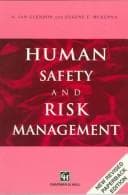
Cover of Human safety and risk management

Human safety and risk management

A. Ian Glendon, A. Ian Glendon, Eugene F. McKenna

1995

Reflecting a decade’s worth of changes, Human Safety and Risk Management, Second Edition contains new chapters addressing safety culture and models of risk as well as an extensive re-working of the material from the earlier edition. Examining a wide range of approaches to risk, the authors define safety culture and review theoretical models that elucidate mechanisms linking safety culture with safety performance. Filled with practical examples and case studies and drawing on a range of disciplines, the book explores individual differences and the many ways in which human beings are alike within a risk and safety context. It delineates a risk management approach that includes a range of techniques such as risk assessment, safety audit, and safety interventions. The authors address concepts central to workplace safety such as attitudes and their link with behavior. They discuss managing behavior in work environments including key functions and benefits of groups, factors influencing team effectiveness, and barriers to effectiveness such as groupthink.

Why it's similar: Similar focus on PSYCHOLOGY

Cover of Tip-of-the-tongue States

Tip-of-the-tongue States

Bennett L. Schwartz

2001

Tip-of-the-Tongue experiences are one of those illusive oddities of human cognition. Like slips of the tongue, déjà vu, and visual illusions, TOTs dazzle us with their subjective strength, yet, at the same time, puzzle us with our frustrating inability to retrieve the desired word. This book discusses what little is known about TOTs and speculates about much of the rest of the riddle. Cognitive psychologists know a lot about processes but generally avoid issues of conscious experience and phenomenology. Because the larger goal of this book is to relate the TOT experience to the study of human phenomenology, it goes beyond the conventional cognitive psychology question, "What causes tip-of-the-tongue experiences?" to ask, "Why do we experience TOTs at all?"

Why it's similar: Similar focus on Memory

Cover of Eating disorders

Eating disorders

American Psychological Association

2001

The widely updated second edition of Eating Disorders: Journey to Recovery Workbook helps those struggling with eating disorders in their recovery, guiding the reader through a greater consideration of body image, compulsive exercising, and personal and societal relationships based on Prochaska’s Stages of Change Theory. The workbook explores complicated issues having a direct effect on the eating disorder, including trauma, depression, gender identity, abuse, and the media. Updated to include the acknowledgement of binge-eating disorder, selective eating, and avoidant restrictive food intake disorder (ARFID), this second edition encourages self-paced learning and practice adjunct to one-on-one and group therapy from two seasoned clinicians in the treatment of eating disorders.

Why it's similar: More from American Psychological Association

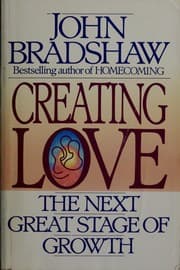
Cover of Creating love

Creating love

John Bradshaw

1992

“Why are so many of us at times completely baffled by a relationship? How can we think we know someone so well and admit in the end that we hardly knew that person at all? Why do many people who work diligently and strenuously to gain wholeness and balance still feel so frustrated about having a fulfilling relationship? Why have so many people given up on love?”—from the Prologue John Bradshaw’s bestselling books and compelling PBS series have touched and changed millions of lives. Now, in Creating Love, he offers us a new way to understand our most crucial relationships—with our romantic partners and spouses, with our parents and children, with friends and co-workers, with ourselves, and with God. Bradshaw’s compassionate approach shows that many of us have been literally “entranced” by past experiences of counterfeit love, so we unknowingly re-create patterns that can never fulfill us. Here he provides both the insights and the precise tools we need to keep those destructive patterns from repeating in the present. And then he shows how we can open ourselves to the soul-building work of real love—and create healthy, loving relationships where we can be fully ourselves in every part of our lives.

Why it's similar: Similar focus on Psychology

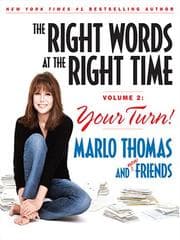
Cover of The Right Words at the Right Time, Vol. 2

The Right Words at the Right Time, Vol. 2

Marlo Thomas, Jon B. Fish, Bruce Kluger, Carl Robbins, David Tabatsky

2006

From big cities to farm communities, from office cubicles to hospital wards, from Normandy Beach to Boston's Fenway Park, the contributors to this remarkable volume -- selected from among thousands in a nationwide search -- tell riveting stories about the words that changed their lives forever. You'll meet a "Plain Jane" from Seattle, whose world was rocked by a passing remark made by her favorite musician, backstage at a concert. You'll hear from the bereaved fiancé of a 9/11 victim, who found hope in a note pinned to a teddy bear. You'll laugh with a beleaguered soccer mom, who reveals the single phrase she never wants to hear again. And your heart will break for a prison inmate, who recalls the one piece of advice he still wishes he took. In each case, words had made all the difference. Marlo Thomas has once again tapped into the human spirit, assembling a breathtaking collection of beautiful and inspiring essays about the enduring power of words, and how their impact can last a lifetime. As a follow-up to her 2002 New York Times #1 bestseller, The Right Words at the Right Time, Thomas presents 101 new first-person stories that are at once universal and strikingly personal. Like the tale of a Gulf War veteran, whose life was transformed by just two words spoken by a young stranger at a Burger King. Or the aimless garage mechanic, who found salvation in a Help Wanted ad. Or the unsuspecting mother of three, who made a heart-warming discovery about her grandmother's "racy past." As this astonishing anthology proves, the "right words" can come from anywhere -- the pages of a dusty old songbook, the pulpit of a neighborhood church, the wreckage of Ground Zero, a hand-stitched sampler hanging on a wall, and a child's simple expression of love. The Right Words at the Right Time, Volume 2: Your Turn! is a collection to be read and read again -- a volume that will be cherished both by fans of the original book and anyone who has ever been touched by the startling and lif

Why it's similar: Similar focus on Self-Help

Readers also enjoyed

Popular and highly rated books from our library you might like next.

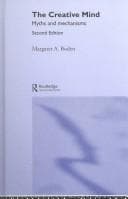
Cover of The creative mind

The creative mind

Spanish Edition by Margaret Boden

1990

How is it possible to think new thoughts? What is creativity and can science explain it? And just how did Coleridge dream up the creatures of The Ancient Mariner? When The Creative Mind: Myths and Mechanisms was first published, Margaret A. Boden's bold and provocative exploration of creativity broke new ground. Boden uses examples such as jazz improvisation, chess, story writing, physics, and the music of Mozart, together with computing models from the field of artificial intelligence to uncover the nature of human creativity in the arts. The second edition of The Creative Mind has been updated to include recent developments in artificial intelligence, with a new preface, introduction and conclusion by the author. It is an essential work for anyone interested in the creativity of the human mind.

Why it's similar: Similar focus on SELF-HELP

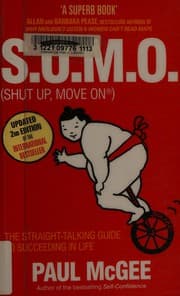
Cover of S. U. M. O

S. U. M. O

Paul McGee

2008

‘SUMO is a brilliant book, packed with simple, inspirational and innovative ideas that can be applied to any aspect of your life. Paul’s knowledge, enthusiasm and ability to clearly explain these methods is unsurpassed. I heartily recommend this excellent read.’ Professor Damian Hughes, Author and Co-Host of The High Performance Podcast ‘Paul offers a fresh, practical and down to earth approach to change and getting the best from life. An uplifting read for anyone looking to find their spark.’ Owen O'Kane, Psychotherapist & Sunday Times Best Selling Author Want some straight-talking advice on how to really improve your life? In the 20th Anniversary Edition of SUMO (Shut Up, Move On): The Straight-Talking Guide to Succeeding in Life, bestselling author and personal development heavyweight Paul McGee delivers inspiring insights by revealing how hundreds of thousands of people around the world are fulfilling their potential, seizing opportunities, succeeding at home and at work, and increasing their resilience by adopting the SUMO approach to life. McGee combines hard-won personal insights, ancient wisdom, modern science, hilarious anecdotes, practical tips, and hands-on frameworks to offer a life-changing read. New to this edition is an exploration of how real people have profoundly improved their lives with the book's timeless principles and strategies, providing a testament to the enduring power of the SUMO principles. You'll find: Exciting and inspirational advice for taking control of your own life Ways to change your thinking, mindset, and approach to life's inevitable obstacles Ideas to improve your understanding and awareness of the way that other people see the world Perfect for people wanting a straight-talking approach to success, as well as those who are already fans of the SUMO way of thinking, this new 20th Anniversary Edition is a must-have resource for everyone who's ready to ditch the “whatever will be, will be” fatalism in favor of a practical guide t

Why it's similar: Similar focus on SELF-HELP

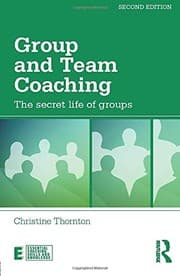
Cover of Group and Team Coaching

Group and Team Coaching

Christine Thornton

2010

Group and Team Coaching is a best-seller offering a new perspective on the ‘secret life of groups’, the subconscious and non-verbal processes through which people learn and communicate in groups and teams. Originally published in 2010 and designed for easy navigation, it is a highly regarded team coaching handbook, and required reading on many courses. This new edition is fully updated, with a completely new chapter on working with groups and teams on virtual platforms, including hybrid and blended working. Christine Thornton uses key concepts from psychology, group analysis and systems theory as well as her own extensive experience to give practical advice. Topics include: the invisible processes of group dynamics; common dilemmas; pitfalls of team coaching and how to avoid them; pros and cons and best practice online; how to design coaching interventions; supervising coaching; ethics. Based on research and including many vignettes and case studies, this new edition is essential reading for coaches working with groups and teams, and leaders working with their own teams or commissioning coaching.

Why it's similar: Similar focus on PSYCHOLOGY

Frequently Asked Questions

What should I read after Memory?
Browse the similar books below — they're matched by subject overlap, author style, and reader preferences.
What books are most similar to Memory?
Our recommendations prioritize shared themes like Age factors, Memory, Memory Improvement and books enjoyed by similar readers.
Which similar book is best for beginners?
Check page counts and summaries on each recommendation. Shorter titles with broader appeal are usually the best starting point.

Promote Your Book on BestsellerFinder

Reach thousands of readers with featured placements, homepage spots, and newsletter features.

Get bestseller picks in your inbox

Weekly curated book recommendations. Unsubscribe anytime.

Explore More

Affiliate Disclosure: As an Amazon Associate, we may earn from qualifying purchases. Book links on this page may be affiliate links. This does not affect our recommendations or the price you pay.