Books Like “Hold Me Tight: Seven Conversations for a Lifetime of Love

If you enjoyed Hold Me Tight: Seven Conversations for a Lifetime of Love by Sue Johnson (Author), Helen Keeley (Narrator), Little, Brown Spark (Publisher) & 0 more Format: Audible Audiobook, you might also like these similar reads. Readers of this book often enjoy Psychology.

Not sure what to read next? Ask BestsellerFinder AI →

Psychology

Closest matches

Titles with overlapping themes, tone, and audience with your pick.

Cover of Cognitive-behavioral therapy for smoking cessation

Cognitive-behavioral therapy for smoking cessation

Kenneth A. Perkins, Kenneth A. Perkins, Cynthia A. Conklin, Michele D. Levine

2007

Cognitive-Behavioral Therapy (CBT) for Smoking Cessation is an essential resource for healthcare providers assisting patients in quitting tobacco smoking, presenting a structured approach that utilizes key components of CBT. This second edition provides empirically supported strategies for smoking cessation, adhering to well-established best practices and representing a "gold standard" in treatment. It presents step-by-step techniques to enhance patients’ motivation and confidence, prepare them to quit, navigate postquit challenges, and achieve long-term abstinence. This updated edition takes a patient-centered approach, addressing significant challenges faced during cessation and offering providers a systematic framework for delivering care. Notably, this volume introduces an adjunct CBT module specifically designed for patients very concerned about gaining weight after quitting—a unique and validated approach that aids cessation efforts and is not available in other resources. The book also includes new case vignettes, provider scripts, sidebars addressing common patient concerns, and key takeaways. Additionally, an extensive e-resource provides links to supplementary materials and further readings, equipping providers from diverse disciplines and backgrounds with the tools needed to effectively support patients. A must-have resource on the bookshelf of any health professional treating clients with tobacco dependence.

Cover of Group and Team Coaching

Group and Team Coaching

Christine Thornton

2010

Group and Team Coaching is a best-seller offering a new perspective on the ‘secret life of groups’, the subconscious and non-verbal processes through which people learn and communicate in groups and teams. Originally published in 2010 and designed for easy navigation, it is a highly regarded team coaching handbook, and required reading on many courses. This new edition is fully updated, with a completely new chapter on working with groups and teams on virtual platforms, including hybrid and blended working. Christine Thornton uses key concepts from psychology, group analysis and systems theory as well as her own extensive experience to give practical advice. Topics include: the invisible processes of group dynamics; common dilemmas; pitfalls of team coaching and how to avoid them; pros and cons and best practice online; how to design coaching interventions; supervising coaching; ethics. Based on research and including many vignettes and case studies, this new edition is essential reading for coaches working with groups and teams, and leaders working with their own teams or commissioning coaching.

Cover of Handbook of Coaching Psychology

Handbook of Coaching Psychology

Stephen Palmer, Alison Whybrow

2014

Solution Focused Coaching in Practiceis a practical ‘how-to’ guide that provides an invaluable overview of Solution Focused Coaching skills and techniques. Reflecting upon published research on the solution focused approach, Bill O’Connell, Stephen Palmer and Helen Williams bring their own experiences of Solution Focused Coaching together with others in the field to cover topics such as: the coach-coachee relationship the role of technology in coaching inclusive coaching group and team coaching practical issues and skills. Incorporating coachee case studies, worksheets, practice tips and discussion points, the skills, strategies and techniques in this book are straightforward to apply and can be used in most coaching settings. This practical book is essential reading for experienced personal or executive coaches, managers considering introducing a new and better coaching culture for their staff, and for those just starting out on their coaching journey.

Cover of Working with substance misusers

Working with substance misusers

Trudi Petersen, Andrew McBride

2002

Working with Substance Misusers is a practical handbook for students and those who work with people who misuse drugs or alcohol. Written by experienced teachers and clinicians, the book introduces: * the substances themselves * theories relevant to substance use and misuse * the skills necessary to work with this client group * the broad range of approaches to treatment * particular problems of specific groups. The reader is encouraged to read and reflect on the material in relation to their own practice. To help this process, each topic has an identified set of learning objectives. Activities designed to reinforce learning include discussion points, case studies, role plays and group exercises. Working with Substance Misusers makes clear the connection of theory to practice and encourages a skills-based, but reflective, approach to work in this complex field. Cutting across professional boundaries, it provides both new and more experienced practitioners with a key text.

Cover of Eating disorders

Eating disorders

Laura J. Goodman

2001

The widely updated second edition of Eating Disorders: Journey to Recovery Workbook helps those struggling with eating disorders in their recovery, guiding the reader through a greater consideration of body image, compulsive exercising, and personal and societal relationships based on Prochaska’s Stages of Change Theory. The workbook explores complicated issues having a direct effect on the eating disorder, including trauma, depression, gender identity, abuse, and the media. Updated to include the acknowledgement of binge-eating disorder, selective eating, and avoidant restrictive food intake disorder (ARFID), this second edition encourages self-paced learning and practice adjunct to one-on-one and group therapy from two seasoned clinicians in the treatment of eating disorders.

Cover of The education-drug use connection

The education-drug use connection

Jerald G Bachman, Jerald G. Bachman, Patrick M. O'Malley, John E. Schulenberg, Lloyd D. Johnson, Lloyd D. Johnston, Peter Freedman-Doan, Emily E. Messersmith

2007

Does success in school protect teenagers from drug use? Does drug use impair scholastic success? This book tackles a key issue in adolescent development and health - the education-drug use connection. The authors examine the links and likely causal connections between educational experiences, delinquent behavior, and adolescent use of tobacco, alcohol, marijuana, and cocaine. The book uses data from the University of Michigan's Monitoring the Future project. It focuses on a large and nationally representative sample of 8th grade students in the United States who were initially surveyed in 1991-1993 and then followed over the vitally important developmental period between ages 14 and 22. The volume uses a variety of statistical analysis techniques, and the findings can be understood by individuals with limited, as well as with extensive, backgrounds in research design. The findings convincingly demonstrate that if young people can be successful in school, it can improve a broad range of outcomes in their lives, not the least of which is their ability to resist pressures to use drugs. The book provides: a summary of the findings and conclusions; a review of relevant literature; a detailed discussion of the survey and analysis methods; the academic attainment of those in the longitudinal panel; the delinquent behaviors of panel members as they relate to measures of educational success; and the patterns of initiation, continuation, and cessation for each substance: cigarettes, marijuana, cocaine, and alcohol. This book is intended for anyone who deals with education and/or substance use, including educational, developmental, and social psychologists; sociologists; epidemiologists; educators; and policy makers. The analysis of panel survey data, using a variety of techniques, will also appeal to survey methodologists and students.

Cover of Counseling addicted families

Counseling addicted families

Gerald A. Juhnke

2006

Although one person's addiction almost inevitably affects his or her family members, a surprising number of treatment models appear to operate under the assumption that an individual's addiction occurs in a vacuum. By not paying sufficient attention to preexisting family dynamics-whether dysfunctional, supportive, or somewhere in between-counselors run the risk of not fully understanding the roots of an individual's addictions or the obstacles to his recovery; as a result, counselors may undermine their own treatment efforts both by neglecting any underlying family problems and by failing to capitalize upon a family's potential assistance in an intervention with the addicted individual. In Counseling Addicted Families, Gerald A. Juhnke and William Bryce Hagedorn address this problem head-on. Recognizing that even those treatment providers who understand the importance of the familial context of addiction are often stymied by the variety of family treatment theories and their often imperfect fit for cases of addiction, Juhnke and Hagedorn provide a truly integrated model for assessment and treatment. Based upon the authors' combined 23 years of experience in clinical and treatment supervision, the Integrated Family Addictions Model consists of six progressive treatment tiers which organize the relevant family treatment theories into a graduated and coherent sequence, beginning with the briefest and least costly forms of therapy. If one of the lower tiers allows clients to reach their treatment goals, the patient and therapist need not waste time and resources following the full continuum. If, however, their needs are still unmet, they can progress in a logical fashion to more advanced and intensive forms of therapy. The book is divided into three broad topic areas designed to provide counselors and graduate students with essential information both about addictions and about the practical applications of various treatment theories. Part One discusses the prevalence of

Cover of The Right Words at the Right Time, Vol. 2

The Right Words at the Right Time, Vol. 2

Marlo Thomas, Jon B. Fish, Bruce Kluger, Carl Robbins, David Tabatsky

2006

From big cities to farm communities, from office cubicles to hospital wards, from Normandy Beach to Boston's Fenway Park, the contributors to this remarkable volume -- selected from among thousands in a nationwide search -- tell riveting stories about the words that changed their lives forever. You'll meet a "Plain Jane" from Seattle, whose world was rocked by a passing remark made by her favorite musician, backstage at a concert. You'll hear from the bereaved fiancé of a 9/11 victim, who found hope in a note pinned to a teddy bear. You'll laugh with a beleaguered soccer mom, who reveals the single phrase she never wants to hear again. And your heart will break for a prison inmate, who recalls the one piece of advice he still wishes he took. In each case, words had made all the difference. Marlo Thomas has once again tapped into the human spirit, assembling a breathtaking collection of beautiful and inspiring essays about the enduring power of words, and how their impact can last a lifetime. As a follow-up to her 2002 New York Times #1 bestseller, The Right Words at the Right Time, Thomas presents 101 new first-person stories that are at once universal and strikingly personal. Like the tale of a Gulf War veteran, whose life was transformed by just two words spoken by a young stranger at a Burger King. Or the aimless garage mechanic, who found salvation in a Help Wanted ad. Or the unsuspecting mother of three, who made a heart-warming discovery about her grandmother's "racy past." As this astonishing anthology proves, the "right words" can come from anywhere -- the pages of a dusty old songbook, the pulpit of a neighborhood church, the wreckage of Ground Zero, a hand-stitched sampler hanging on a wall, and a child's simple expression of love. The Right Words at the Right Time, Volume 2: Your Turn! is a collection to be read and read again -- a volume that will be cherished both by fans of the original book and anyone who has ever been touched by the startling and lif

Readers also enjoyed

Popular and highly rated books from our library you might like next.

Cover of The Change

The Change

Germaine Greer

1991

In this study of the real and fundamental change which women experience during the menopause and which, like other fundamental changes, needs mental preparation and acceptance if it is not to be found unbearable, Dr Greer examines medical theories and treatment over the ages, and finds them often contradictory, excessive and, at times, dangerous. She responds to the traditional attitude of men and society which has been responsible for the creation of an image of the older woman as fake damsel or old crone. Dr Greer has weighed up the facts, the theories and the outright fabrications.

Cover of Seeing young children

Seeing young children

Warren R. Bentzen

1985

Seeing Young Children is an extensive guide to observing and recording behavior in children from birth through age eight. It begins by addressing the basic meaning of observation and why it is so important. This includes a discussion of the theoretical and practical aspects of observing and recording behavior. Detailed information on development, behavior and functioning in children in this age group enables parents and professionals to make meaningful observation, recordings, and evaluations. A large portion of the book concentrates on in-depth reviews of recording techniques and instruments, as well as the advantages and disadvantages of each. Finally, the last five chapters offer a wealth of observation exercises readers can immediately put to use. Specific by age group, each of these chapters contains observation objectives, instructions as to procedure, and background information on many functional areas, all aimed at collecting and using quality data to the benefit of children.

Cover of Our bodies, ourselves

Our bodies, ourselves

Boston Women's Health Book Collective, Angela Phillips, Jill Rakusen, Alice Mayhew, Simon and Schster

1971

This comprehensive resource offers women an in-depth exploration of their physical and emotional well-being, covering a wide range of health topics from anatomy and reproductive health to mental health and societal influences. It empowers readers with detailed information, presented accessibly, to make informed decisions about their bodies and advocate for their healthcare needs. The book fosters a holistic understanding of women's health, encouraging self-care and a critical perspective on medical and social norms.

Cover of Project Maven: A Marine Colonel, His Team, and the Dawn of AI Warfare

Project Maven: A Marine Colonel, His Team, and the Dawn of AI Warfare

Sebastian Mallaby

This book chronicles the improbable journey of Marine Colonel Gregory Boyington's team as they spearheaded Project Maven, a groundbreaking initiative to integrate artificial intelligence into drone warfare. Mallaby details the complex challenges of overcoming bureaucratic inertia and technical hurdles to equip military drones with AI for target identification. The narrative highlights the ethical and strategic implications of this nascent era of AI-driven conflict, showcasing the human ingenuity behind a significant technological leap.

Cover of I Am Not a Robot: My Year Using AI to Do (Almost) Everything

I Am Not a Robot: My Year Using AI to Do (Almost) Everything

Donella H. Meadows

This insightful memoir chronicles a year-long experiment where the author, Donella H. Meadows, attempted to delegate a significant portion of her daily tasks and responsibilities to artificial intelligence. Meadows meticulously documents her experiences, exploring the practical applications, surprising limitations, and evolving relationship between human agency and AI-driven assistance across various facets of her life. The narrative offers a compelling examination of the potential and pitfalls of integrating AI into everyday routines, prompting reflection on work, creativity, and the very definition of human productivity.

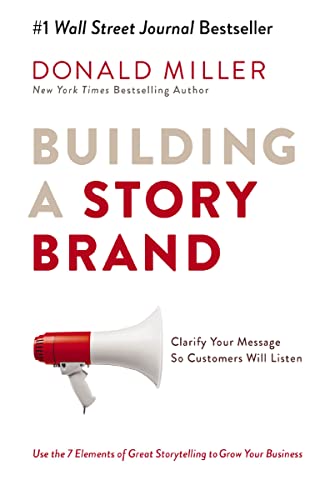
Cover of Building a StoryBrand 2.0: Clarify Your Message So Customers Will Listen

Building a StoryBrand 2.0: Clarify Your Message So Customers Will Listen

Marina Nitze

This revised edition of Building a StoryBrand presents a framework that helps businesses clarify their message by positioning the customer as the hero of their story. It outlines a seven-part framework to guide businesses in crafting clear and compelling communication that resonates with their target audience. The book provides practical strategies to eliminate jargon and confusion, enabling businesses to articulate their value proposition effectively and drive customer engagement.

Cover of You with the Sad Eyes: A Memoir

You with the Sad Eyes: A Memoir

Robert Greene

In "You with the Sad Eyes," Robert Greene offers a poignant and unflinching exploration of his personal journey through grief and loss, particularly following the death of his father. He delves into the complex emotional landscape of mourning, examining how sorrow can shape identity and inspire profound personal transformation. The memoir thoughtfully navigates the process of finding meaning and a renewed sense of self amidst profound sadness.

Cover of Suicidal Empathy: Dying to Be Kind

Suicidal Empathy: Dying to Be Kind

Gad Saad (Author, Narrator), Broadside Books (Publisher)

Gad Saad critically examines the pervasive and often detrimental influence of excessive empathy in contemporary Western society, arguing that a misguided focus on emotional validation can lead to a decline in individual resilience and societal progress. He contends that this "suicidal empathy" prioritizes comfort over truth and hinders the necessary confrontation of difficult realities. The book explores how this emotional overreach contributes to cultural stagnation and the erosion of objective standards.

Cover of The Primal Hunter 14: A LitRPG Adventure

The Primal Hunter 14: A LitRPG Adventure

Elle Kennedy

In the latest installment of this LitRPG series, Alex continues his relentless pursuit of ultimate power within the brutal confines of the Primal Hunt. Facing increasingly formidable foes and a shifting landscape of alliances, he must master new abilities and push his limits to survive. As the stakes escalate, Alex grapples with the moral implications of his quest and the sacrifices required to achieve his goals in this dangerous, evolving virtual world.

Frequently Asked Questions

What should I read after Hold Me Tight: Seven Conversations for a Lifetime of Love?
Try "Cognitive-behavioral therapy for smoking cessation" by Kenneth A. Perkins, Kenneth A. Perkins, Cynthia A. Conklin, Michele D. Levine — it shares themes with Hold Me Tight: Seven Conversations for a Lifetime of Love and is a strong follow-up for similar readers.
What books are most similar to Hold Me Tight: Seven Conversations for a Lifetime of Love?
The closest matches include "Cognitive-behavioral therapy for smoking cessation", "Group and Team Coaching", "Handbook of Coaching Psychology".
Which similar book is better for beginners?
Look for shorter titles with broader appeal in the list above. Each book card includes a summary to help you decide.

Promote Your Book on BestsellerFinder

Reach thousands of readers with featured placements, homepage spots, and newsletter features.

Get bestseller picks in your inbox

Weekly curated book recommendations. Unsubscribe anytime.

Explore More

Affiliate Disclosure: As an Amazon Associate, we may earn from qualifying purchases. Book links on this page may be affiliate links. This does not affect our recommendations or the price you pay.