Books Like “Happy brain

If you enjoyed Happy brain by Dean Burnett, you likely appreciate Brain, Popular works, Neurotransmitters. These similar reads match the tone, themes, and audience of the original.

Not sure what to read next? Ask BestsellerFinder AI →

BrainPopular worksNeurotransmittersHappinessPhysiological aspectsConduct of lifePhysiologyPSYCHOLOGY

Closest matches

Titles with overlapping themes, tone, and audience with your pick.

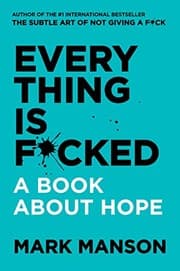
Cover of Everything is F*cked

Everything is F*cked

Mark Manson, Carlos Ramos Malavé

2019

New York Times Bestseller “Just because everything appears to be a mess doesn’t mean you have to be one. Mark Manson’s book is a call to arms for a better life and better world and could not be more needed right now.” — Ryan Holiday, bestselling author of The Obstacle is the Way and Ego is the Enemy From the author of the international mega-bestseller The Subtle Art of Not Giving A F*ck comes a counterintuitive guide to the problems of hope. We live in an interesting time. Materially, everything is the best it’s ever been—we are freer, healthier and wealthier than any people in human history. Yet, somehow everything seems to be irreparably and horribly f*cked—the planet is warming, governments are failing, economies are collapsing, and everyone is perpetually offended on Twitter. At this moment in history, when we have access to technology, education and communication our ancestors couldn’t even dream of, so many of us come back to an overriding feeling of hopelessness. What’s going on? If anyone can put a name to our current malaise and help fix it, it’s Mark Manson. In 2016, Manson published The Subtle Art of Not Giving A F*ck, a book that brilliantly gave shape to the ever-present, low-level hum of anxiety that permeates modern living. He showed us that technology had made it too easy to care about the wrong things, that our culture had convinced us that the world owed us something when it didn’t—and worst of all, that our modern and maddening urge to always find happiness only served to make us unhappier. Instead, the “subtle art” of that title turned out to be a bold challenge: to choose your struggle; to narrow and focus and find the pain you want to sustain. The result was a book that became an international phenomenon, selling millions of copies worldwide while becoming the #1 bestseller in 13 different countries. In Everthing Is F*cked, Manson turns his gaze from the inevitable flaws within each individual self to the endless calamities taking place in the

Why it's similar: Similar focus on Conduct of life

Cover of Think Like a Monk

Think Like a Monk

Spanish Edition by Jay Shetty, Ignacio Gómez Calvo

2020

The Sunday Times Number One Bestseller Jay Shetty, social media superstar and host of the #1 podcast 'On Purpose', distils the timeless wisdom he learned as a practising monk into practical steps anyone can take every day to live a less anxious, more meaningful life. Over the past three years, Jay Shetty has become a favourite in the hearts and minds of millions of people worldwide. One of his clips was the most watched video on Facebook last year, with over 360 million views. His social media following totals over 32 million, he has produced over 400 viral videos, which have amassed more than 5 billion views, and his podcast, 'On Purpose', is consistently ranked the world's #1 health-related podcast. In this inspiring, empowering book, Shetty draws on his time as a monk in the Vedic tradition to show us how we can clear the roadblocks to our potential and power. Drawing on ancient wisdom and his own rich experiences in the ashram, Think Like a Monk reveals how to overcome negative thoughts and habits, and access the calm and purpose that lie within all of us. The lessons monks learn are profound but often abstract. Shetty transforms them into advice and exercises we can all apply to reduce stress, improve focus, improve relationships, identify our hidden abilities, increase self-discipline and give the gifts we find in ourselves to the world. Shetty proves that everyone can - and should - think like a monk. Perfect for fans of Wim Hof, Robin S. Sharma and James Nestor!

Why it's similar: Similar focus on Self-help

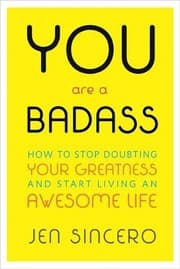
Cover of You Are a Badass

You Are a Badass

Jen Sincero

2013

¡Eres un chingón! es el libro ideal para las personas que quieren mejorar sus vidas pero no están interesadas en los libros de autoayuda tradicionales. En esta original y entretenida guía, la coach Jen Sincero nos ofrece 27 capítulos llenos de historias divertidas e inspiradoras, sabios consejos, ejercicios sencillos y una que otra grosería. Todo para ayudarte a: - Identificar y cambiar tus conductas de sabotaje, que no te permiten obtener lo que realmente quieres. - Crear una vida que ames. Y crearla AHORA. - ¡Generar más dinero! como nunca antes lo has hecho. Cuando termines este libro, entenderás el porqué de tu forma de ser, cómo amarte, y aprenderás a reconocer y aceptar lo que puedes cambiar y lo que no, pero sobre todo... cómo utilizar tu fuerza interna para patear algunos traseros ENGLISH DESCRIPTION The absolute self-development book that helps people transform their lives through humor, irreverence, and the occasional curse word. In this refreshingly entertaining guide to reshaping your mindset and your life, author and success coach Jen Sincero serves up 28 bite-sized tips full of hilarious and inspiring stories, sage advice, and easy-to-implement exercises to help you identify and change self-sabotaging beliefs and behaviors, shift your energy and attract what you desire. In this book, you'll understand how to move past what's holding you back, learn how to make some serious changes, and start living the kind of life that once seemed impossible

Why it's similar: Similar focus on SELF-HELP

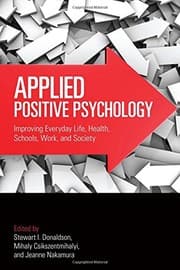
Cover of Applied positive psychology

Applied positive psychology

Stewart I. Donaldson, Mihaly Csikszentmihalyi, Jeanne Nakamura

2011

Positive psychological science has experienced extraordinary growth over the past two decades. Research in this area is revealing new strategies and interventions for improving everyday life, health and well-being, work, education, and societies across the globe. Contributions from luminaries in the field provide excellent reviews of the selected topics, summarizing empirical evidence, describing measurement tools, and offering recommendations for improving many aspects of our lives. Comprehensively updated, this second edition not only incorporates the more recent empirical findings; three new chapters on relationships and love, the importance of purpose, and the stimulation of education practice have been added. Focused on peer-reviewed and theory-driven psychological science, this book uniquely establishes a bridge between the intellectual movement for positive psychology and how it works in the real world. This collection of chapters will inspire the reader to creatively find new opportunities to better the human condition, whether these are in our lives, schools, health care settings, or workplaces. This book will be of interest to all psychologists and social scientists, applied researchers, program designers and evaluators, educators, leaders, students, and anyone interested in applying the science of positive psychology to improve everyday life and/or to promote social betterment and justice locally and globally.

Why it's similar: Similar focus on SELF-HELP

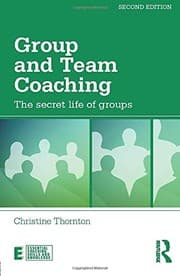
Cover of Group and Team Coaching

Group and Team Coaching

Christine Thornton

2010

Group and Team Coaching is a best-seller offering a new perspective on the ‘secret life of groups’, the subconscious and non-verbal processes through which people learn and communicate in groups and teams. Originally published in 2010 and designed for easy navigation, it is a highly regarded team coaching handbook, and required reading on many courses. This new edition is fully updated, with a completely new chapter on working with groups and teams on virtual platforms, including hybrid and blended working. Christine Thornton uses key concepts from psychology, group analysis and systems theory as well as her own extensive experience to give practical advice. Topics include: the invisible processes of group dynamics; common dilemmas; pitfalls of team coaching and how to avoid them; pros and cons and best practice online; how to design coaching interventions; supervising coaching; ethics. Based on research and including many vignettes and case studies, this new edition is essential reading for coaches working with groups and teams, and leaders working with their own teams or commissioning coaching.

Why it's similar: Similar focus on PSYCHOLOGY

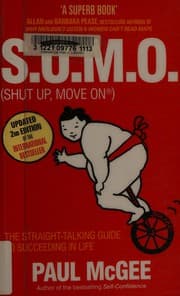
Cover of S. U. M. O

S. U. M. O

Paul McGee

2008

‘SUMO is a brilliant book, packed with simple, inspirational and innovative ideas that can be applied to any aspect of your life. Paul’s knowledge, enthusiasm and ability to clearly explain these methods is unsurpassed. I heartily recommend this excellent read.’ Professor Damian Hughes, Author and Co-Host of The High Performance Podcast ‘Paul offers a fresh, practical and down to earth approach to change and getting the best from life. An uplifting read for anyone looking to find their spark.’ Owen O'Kane, Psychotherapist & Sunday Times Best Selling Author Want some straight-talking advice on how to really improve your life? In the 20th Anniversary Edition of SUMO (Shut Up, Move On): The Straight-Talking Guide to Succeeding in Life, bestselling author and personal development heavyweight Paul McGee delivers inspiring insights by revealing how hundreds of thousands of people around the world are fulfilling their potential, seizing opportunities, succeeding at home and at work, and increasing their resilience by adopting the SUMO approach to life. McGee combines hard-won personal insights, ancient wisdom, modern science, hilarious anecdotes, practical tips, and hands-on frameworks to offer a life-changing read. New to this edition is an exploration of how real people have profoundly improved their lives with the book's timeless principles and strategies, providing a testament to the enduring power of the SUMO principles. You'll find: Exciting and inspirational advice for taking control of your own life Ways to change your thinking, mindset, and approach to life's inevitable obstacles Ideas to improve your understanding and awareness of the way that other people see the world Perfect for people wanting a straight-talking approach to success, as well as those who are already fans of the SUMO way of thinking, this new 20th Anniversary Edition is a must-have resource for everyone who's ready to ditch the “whatever will be, will be” fatalism in favor of a practical guide t

Why it's similar: Similar focus on SELF-HELP

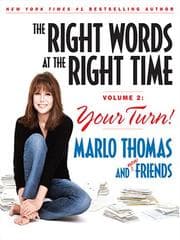
Cover of The Right Words at the Right Time, Vol. 2

The Right Words at the Right Time, Vol. 2

Marlo Thomas, Jon B. Fish, Bruce Kluger, Carl Robbins, David Tabatsky

2006

From big cities to farm communities, from office cubicles to hospital wards, from Normandy Beach to Boston's Fenway Park, the contributors to this remarkable volume -- selected from among thousands in a nationwide search -- tell riveting stories about the words that changed their lives forever. You'll meet a "Plain Jane" from Seattle, whose world was rocked by a passing remark made by her favorite musician, backstage at a concert. You'll hear from the bereaved fiancé of a 9/11 victim, who found hope in a note pinned to a teddy bear. You'll laugh with a beleaguered soccer mom, who reveals the single phrase she never wants to hear again. And your heart will break for a prison inmate, who recalls the one piece of advice he still wishes he took. In each case, words had made all the difference. Marlo Thomas has once again tapped into the human spirit, assembling a breathtaking collection of beautiful and inspiring essays about the enduring power of words, and how their impact can last a lifetime. As a follow-up to her 2002 New York Times #1 bestseller, The Right Words at the Right Time, Thomas presents 101 new first-person stories that are at once universal and strikingly personal. Like the tale of a Gulf War veteran, whose life was transformed by just two words spoken by a young stranger at a Burger King. Or the aimless garage mechanic, who found salvation in a Help Wanted ad. Or the unsuspecting mother of three, who made a heart-warming discovery about her grandmother's "racy past." As this astonishing anthology proves, the "right words" can come from anywhere -- the pages of a dusty old songbook, the pulpit of a neighborhood church, the wreckage of Ground Zero, a hand-stitched sampler hanging on a wall, and a child's simple expression of love. The Right Words at the Right Time, Volume 2: Your Turn! is a collection to be read and read again -- a volume that will be cherished both by fans of the original book and anyone who has ever been touched by the startling and lif

Why it's similar: Similar focus on Conduct of life

Readers also enjoyed

Popular and highly rated books from our library you might like next.

Cover of Life Coaching

Life Coaching

QuartoEight Publishing

2002

The way we think profoundly influences the way we feel, so learning to think differently can enable us to feel and act differently. The first edition of Life Coaching successfully showed how to tackle self-defeating thinking and replace it with a problem-solving outlook, providing clear and helpful advice on: Dealing with troublesome emotions Overcoming procrastination Becoming assertive Tackling poor time management Persisting at problem solving Handling criticism constructively Taking risks and making better decisions. The new edition retains the key features, while offering a brand new chapter on the emerging topic of resilience as well updates throughout. It will continue to be invaluable to all those who are interested in becoming more personally effective in their everyday lives, and also to counsellors in practice and training.

Why it's similar: Similar focus on Conduct of life

Cover of Tip-of-the-tongue States

Tip-of-the-tongue States

Bennett L. Schwartz

2001

Tip-of-the-Tongue experiences are one of those illusive oddities of human cognition. Like slips of the tongue, déjà vu, and visual illusions, TOTs dazzle us with their subjective strength, yet, at the same time, puzzle us with our frustrating inability to retrieve the desired word. This book discusses what little is known about TOTs and speculates about much of the rest of the riddle. Cognitive psychologists know a lot about processes but generally avoid issues of conscious experience and phenomenology. Because the larger goal of this book is to relate the TOT experience to the study of human phenomenology, it goes beyond the conventional cognitive psychology question, "What causes tip-of-the-tongue experiences?" to ask, "Why do we experience TOTs at all?"

Why it's similar: Similar focus on SELF-HELP

Frequently Asked Questions

What should I read after Happy brain?
Browse the similar books below — they're matched by subject overlap, author style, and reader preferences.
What books are most similar to Happy brain?
Our recommendations prioritize shared themes like Brain, Popular works, Neurotransmitters and books enjoyed by similar readers.
Which similar book is best for beginners?
Check page counts and summaries on each recommendation. Shorter titles with broader appeal are usually the best starting point.

Promote Your Book on BestsellerFinder

Reach thousands of readers with featured placements, homepage spots, and newsletter features.

Get bestseller picks in your inbox

Weekly curated book recommendations. Unsubscribe anytime.

Explore More

Affiliate Disclosure: As an Amazon Associate, we may earn from qualifying purchases. Book links on this page may be affiliate links. This does not affect our recommendations or the price you pay.