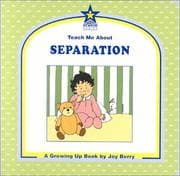
Cover of Separation

Separation

by Joy Berry

Published 1984

A look at how children can learn to cope with separation anxiety.

Separation anxiety (Child psychology)Juvenile literatureParent and childParental deprivationHuman behaviorChild psychologyFamilyParentingEducation

Similar Books

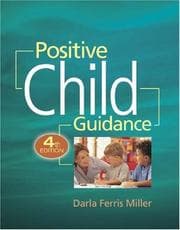
Cover of Positive child guidance

Positive child guidance

Darla Ferris Miller

POSITIVE CHILD GUIDANCE, Eighth Edition, is ideal for guidance, behavior management and discipline, and classroom management courses in an early childhood education curriculum. This practical book outlines workable steps for creating a cooperative, respectful community of children and adults with special emphasis on sensitivity to cultural needs, cultural differences, and developmentally appropriate practice. Students will learn a range of practical, effective, and flexible guidance strategies based on principles of straightforward communication and assertiveness. This new edition includes critical advances in research and addresses the cultural trends that are changing the way babies and children are cared for today. Important Notice: Media content referenced within the product description or the product text may not be available in the ebook version.

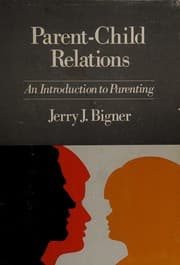
Cover of Parent-child relations

Parent-child relations

Jerry J. Bigner, Clara J. Gerhardt

Now in the Ninth Edition, Jerry Bigner's "Parent-Child Relations," the classic resource for child development professionals and parents themselves, has undergone a thorough revision anchored by the vision of the late Dr. Bigner and executed by new co-author, Clara Gerhardt.Maintaining its fundamental structure and unique approach, the text uses family systems and systemic family development theory as a framework to explore how parent-child relations change in tandem with developmental changes occurring with children, adults, and the wider family system. Thoughtful updates and revisions were done to increase the effectiveness and currency of the text. The text continues to provide strong emphasis on various theoretical and practical models pertaining to parenting. For decades now, this classic text has prepared countless teachers and practitioners by its proven and practical approach, utilizing family systems and systemic family development theory to explore how parent-child relations change in tandem with developmental changes occurring with children, adults, and the wider family system. The most comprehensive and current resource available to students as they prepare for working with parents and families, and for their roles as parents themselves, this best-selling resource carries on the essential message of its originator, Dr. Jerry Bigner, and will continue to nurture future family scholars and practitioners for years to come.

Cover of Handbook of Parenting

Handbook of Parenting

Marc H. Bornstein

This highly anticipated third edition of the Handbook of Parentingbrings together an array of field-leading experts who have worked in different ways toward understanding the many diverse aspects of parenting. Contributors to the Handbooklook to the most recent research and thinking to shed light on topics every parent, professional, and policymaker wonders about. Parenting is a perennially "hot" topic. After all, everyone who has ever lived has been parented, and the vast majority of people become parents themselves. No wonder bookstores house shelves of "how-to" parenting books and magazine racks in pharmacies and airports overflow with periodicals that feature parenting advice. However, almost none of these is evidence-based. The Handbook of Parentingis. Period. Each chapter has been written to be read and absorbed in a single sitting, and includes historical considerations of the topic, a discussion of central issues and theory, a review of classical and modern research, and forecasts of future directions of theory and research. Together, the five volumes in the Handbookcover Children and Parenting, the Biology and Ecology of Parenting, Being and Becoming a Parent, Social Conditions and Applied Parenting, and the Practice of Parenting. Volume 1, Children and Parenting,considers parenthood as a functional status in the life cycle: Parents protect, nurture, and teach their progeny, even if human development is more dynamic than can be determined by parental caregiving alone. Volume 1 of the Handbook of Parentingbegins with chapters concerned with how children influence parenting. Notable are their more obvious characteristics, like child age or developmental stage; but subtler ones, like child gender, physical state, temperament, mental ability, and other individual-differences factors, are also instrumental. The chapters in Part I, on Parenting across the Lifespan, discuss the unique rewards and special demands of parenting children of different ages and stages -

Cover of Seeing young children

Seeing young children

Warren R. Bentzen

Seeing Young Children is an extensive guide to observing and recording behavior in children from birth through age eight. It begins by addressing the basic meaning of observation and why it is so important. This includes a discussion of the theoretical and practical aspects of observing and recording behavior. Detailed information on development, behavior and functioning in children in this age group enables parents and professionals to make meaningful observation, recordings, and evaluations. A large portion of the book concentrates on in-depth reviews of recording techniques and instruments, as well as the advantages and disadvantages of each. Finally, the last five chapters offer a wealth of observation exercises readers can immediately put to use. Specific by age group, each of these chapters contains observation objectives, instructions as to procedure, and background information on many functional areas, all aimed at collecting and using quality data to the benefit of children.

Cover of Blink

Blink

Malcolm Gladwell

Drawing on cutting-edge neuroscience and psychology and displaying all of the brilliance that made The Tipping Point a classic, Blink changes the way you'll understand every decision you make. Never again will you think about thinking the same way. Malcolm Gladwell redefined how we understand the world around us. Now, in Blink, he revolutionizes the way we understand the world within. Blink is a book about how we think without thinking, about choices that seem to be made in an instant - in the blink of an eye - that actually aren't as simple as they seem. Why are some people brilliant decision makers, while others are consistently inept? Why do some people follow their instincts and win, while others end up stumbling into error? How do our brains really work - in the office, in the classroom, in the kitchen, and in the bedroom? And why are the best decisions often those that are impossible to explain to others? In Blink we meet the psychologist who has learned to predict whether a marriage will last, based on a few minutes of observing a couple; the tennis coach who knows when a player will double-fault before the racket even makes contact with the ball; the antiquities experts who recognize a fake at a glance. Here, too, are great failures of "blink": the election of Warren Harding; "New Coke"; and the shooting of Amadou Diallo by police. Blink reveals that great decision makers aren't those who process the most information or spend the most time deliberating, but those who have perfected the art of "thin-slicing" - filtering the very few factors that matter from an overwhelming number of variables. Drawing on cutting-edge neuroscience and psychology and displaying all of the brilliance that made The Tipping Point a classic, Blink changes the way you understand every decision you make. Never again will you think about thinking the same way.

Cover of The education-drug use connection

The education-drug use connection

Jerald G Bachman, Jerald G. Bachman, Patrick M. O'Malley, John E. Schulenberg, Lloyd D. Johnson, Lloyd D. Johnston, Peter Freedman-Doan, Emily E. Messersmith

Does success in school protect teenagers from drug use? Does drug use impair scholastic success? This book tackles a key issue in adolescent development and health - the education-drug use connection. The authors examine the links and likely causal connections between educational experiences, delinquent behavior, and adolescent use of tobacco, alcohol, marijuana, and cocaine. The book uses data from the University of Michigan's Monitoring the Future project. It focuses on a large and nationally representative sample of 8th grade students in the United States who were initially surveyed in 1991-1993 and then followed over the vitally important developmental period between ages 14 and 22. The volume uses a variety of statistical analysis techniques, and the findings can be understood by individuals with limited, as well as with extensive, backgrounds in research design. The findings convincingly demonstrate that if young people can be successful in school, it can improve a broad range of outcomes in their lives, not the least of which is their ability to resist pressures to use drugs. The book provides: a summary of the findings and conclusions; a review of relevant literature; a detailed discussion of the survey and analysis methods; the academic attainment of those in the longitudinal panel; the delinquent behaviors of panel members as they relate to measures of educational success; and the patterns of initiation, continuation, and cessation for each substance: cigarettes, marijuana, cocaine, and alcohol. This book is intended for anyone who deals with education and/or substance use, including educational, developmental, and social psychologists; sociologists; epidemiologists; educators; and policy makers. The analysis of panel survey data, using a variety of techniques, will also appeal to survey methodologists and students.

Cover of Grit

Grit

Angela Duckworth

In this must-read book for anyone striving to succeed, pioneering psychologist Angela Duckworth shows parents, educators, athletes, students, and business people—both seasoned and new—that the secret to outstanding achievement is not talent but a focused persistence called “grit.” Why do some people succeed and others fail? Sharing new insights from her landmark research on grit, MacArthur “genius” Angela Duckworth explains why talent is hardly a guarantor of success. Rather, other factors can be even more crucial such as identifying our passions and following through on our commitments. Drawing on her own powerful story as the daughter of a scientist who frequently bemoaned her lack of smarts, Duckworth describes her winding path through teaching, business consulting, and neuroscience, which led to the hypothesis that what really drives success is not “genius” but a special blend of passion and long-term perseverance. As a professor at the University of Pennsylvania, Duckworth created her own “character lab” and set out to test her theory. Here, she takes readers into the field to visit teachers working in some of the toughest schools, cadets struggling through their first days at West Point, and young finalists in the National Spelling Bee. She also mines fascinating insights from history and shows what can be gleaned from modern experiments in peak performance. Finally, she shares what she’s learned from interviewing dozens of high achievers—from JP Morgan CEO Jamie Dimon to the cartoon editor of The New Yorker to Seattle Seahawks Coach Pete Carroll. Winningly personal, insightful, and even life-changing, Grit is a book about what goes through your head when you fall down, and how that—not talent or luck—makes all the difference.

Explore More

Affiliate Disclosure: As an Amazon Associate, we may earn from qualifying purchases. Book links on this page may be affiliate links. This does not affect our recommendations or the price you pay.