
Books Like “Women & madness

If you enjoyed Women & madness by Phyllis Chesler, you likely appreciate Women, Sex role, Psychology. These similar reads match the tone, themes, and audience of the original.

Not sure what to read next? Ask BestsellerFinder AI →

WomenSex rolePsychologyMental healthSocial aspectsMental illnessSociological aspectsHealth and hygiene

Closest matches

Titles with overlapping themes, tone, and audience with your pick.

Cover of Our bodies, ourselves

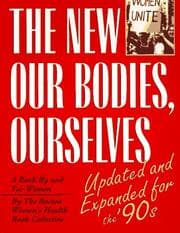
Our bodies, ourselves

Boston Women's Health Book Collective, Angela Phillips, Jill Rakusen, Alice Mayhew, Simon and Schster

1971

This comprehensive resource offers women an in-depth exploration of their physical and emotional well-being, covering a wide range of health topics from anatomy and reproductive health to mental health and societal influences. It empowers readers with detailed information, presented accessibly, to make informed decisions about their bodies and advocate for their healthcare needs. The book fosters a holistic understanding of women's health, encouraging self-care and a critical perspective on medical and social norms.

Cover of Das Drama des begabten Kindes und die Suche nach dem wahren Selbst

Das Drama des begabten Kindes und die Suche nach dem wahren Selbst

Alice Miller

1979

The “drama” of the gifted—i.e., sensitive, alert—child consists of his recognition at a very early age of his parents' needs and of his adaptation to those needs. In the process, he learns to repress rather than to acknowledge his own intense feelings because they are unacceptable to his parents. Although it will not always be possible to avoid these “ugly” feelings (anger, indignation, despair, jealousy, fear) in the future, they will split off, and the most vital part of the “true self” (a key phrase in Alice Miller's works) will not be integrated into the personality. This leads to emotional insecurity and loss of self, which are revealed in depression or concealed behind a facade of grandiosity.Alice Miller defines the ideal state of genuine vitality, of free access to the true self and to authentic individual feelings that have their roots in childhood, as “healthy narcissism.” Narcissistic disturbances, on the other hand, represent for her solitary confinement of the true self within the prison of the false self. This is regarded less as an illness than as a tragedy.The examples Alice Miller presents make us aware of the child's unarticulated suffering and of the tragedy of parents who are unavailable to their children—the same parents who, when they were children, were available to fill their parents' needs. In her psychoanalytical work, Dr. Miller found that her patients' ability to experience authentic feelings, especially feelings of sadness, had been for the most part destroyed; it was her task to help her patients try to regain that long-lost capacity for genuine feelings that is the source of natural vitality. Many people who have read her books have discovered within themselves for the first time in their lives the little child they once were. This may explain the unusually strong and deep reactions Alice Miller's books have evoked in so many readers from different countries. The Drama of the Gifted Child and the Search for the True Self is the origina

Cover of The Change

The Change

Germaine Greer

1991

In this study of the real and fundamental change which women experience during the menopause and which, like other fundamental changes, needs mental preparation and acceptance if it is not to be found unbearable, Dr Greer examines medical theories and treatment over the ages, and finds them often contradictory, excessive and, at times, dangerous. She responds to the traditional attitude of men and society which has been responsible for the creation of an image of the older woman as fake damsel or old crone. Dr Greer has weighed up the facts, the theories and the outright fabrications.

Cover of Estrogen

Estrogen

Lila Nachtigall, Lila, MD Nachtigall, Joan Rattner Heilman, Lila E. Nachtigall

1986

En la actualidad, la terapia de sustitución hormonal suscita un notable desconcierto y confusión en multitud de mujeres e incluso entre los médicos. Si se sigue correctamente, el tratamiento con estrógenos constituye uno de los medios más eficaces para afrontar los cambios físicos que sobrevienen en la mujer a lo largo de la menopausia, desde los sofocos y el insomnio hasta el entumecimiento de manos y pies. Esta guía, que incluye las investigaciones científicas más recientes, así como las terapias alternativas de que se dispone, ofrece información sobre la eficacia del tratamiento hormonal --junto con sus efectos secundarios y posibles problemas-- para aliviar los síntomas de la menopausia, prevenir la osteoporosis, mejorar la memoria, mantener una vida sexual activa y reducir la probabilidad de desarrollar la enfermedad de Alzheimer o un infarto de miocardio.

Cover of The Freedom of Life

The Freedom of Life

Annie Payson Call

1905

Annie Payson Call's "The Freedom of Life" offers a practical philosophy for achieving inner peace and mental well-being by emphasizing the power of conscious thought and disciplined will. The book guides readers toward self-mastery, asserting that true freedom lies not in external circumstances but in cultivating a serene and resilient inner life through consistent self-effort and a positive outlook. Call's enduring insights provide a framework for navigating life's challenges with greater equanimity and purpose, fostering personal growth and sustained happiness.

Cover of The Gift of Fear

The Gift of Fear

Gavin de Becker

1997

A carjacker lurking in a shopping mall parking lot. An abusive husband pounding on the door. A disgruntled employee brandishing a gun. These days, no one is safe from the specter of violence. But according to Gavin de Becker, everyone can feel safer, act safer, be safer -- if they learn how to listen to their own sixth sense about danger. De Becker has made a career of protecting people and predicting violent behavior. His firm handles security for many of Hollywood's top celebrities -- Madonna, Michael J. Fox, Geena Davis, Brooke Shields, and John Travolta, among others, according to press reports -- and his computerized risk-assessment system helps analyze threats to members of Congress and the Supreme Court. Now, in this unprecedented guide, de Becker shares his expertise with everyone. Covering all the dangerous situations people typically face -- street crime, domestic abuse, violence in the workplace -- de Becker provides real-life examples and offers specific advice on restraining orders, self-defense, and more. But the key to self-protection, he demonstrates, is learning how to trust -- and act on -- our own intuitions. For everyone who's ever felt threatened, this book is essential reading.

Cover of Handbook of Coaching Psychology

Handbook of Coaching Psychology

Stephen Palmer, Alison Whybrow

2014

Solution Focused Coaching in Practiceis a practical ‘how-to’ guide that provides an invaluable overview of Solution Focused Coaching skills and techniques. Reflecting upon published research on the solution focused approach, Bill O’Connell, Stephen Palmer and Helen Williams bring their own experiences of Solution Focused Coaching together with others in the field to cover topics such as: the coach-coachee relationship the role of technology in coaching inclusive coaching group and team coaching practical issues and skills. Incorporating coachee case studies, worksheets, practice tips and discussion points, the skills, strategies and techniques in this book are straightforward to apply and can be used in most coaching settings. This practical book is essential reading for experienced personal or executive coaches, managers considering introducing a new and better coaching culture for their staff, and for those just starting out on their coaching journey.

Cover of Early Parenting and Prevention of Disorder

Early Parenting and Prevention of Disorder

Marianne Leuzinger-Bohleber, Robert N. Emde

2014

This volume explores how early parental interactions profoundly shape a child's psychological development and trajectory towards mental well-being. It synthesizes psychoanalytic and developmental perspectives to illuminate critical periods and parental influences that can prevent later disorders. The book offers insights into fostering secure attachments and resilient emotional regulation from infancy onward.

Cover of The new ourselves, growing older

The new ourselves, growing older

Paula B. Doress-Worters, Diana Laskin Siegal

1987

Following in the ground-breaking tradition of Our Bodies, Ourselves, Paula B. Doress-Worters and Diana Laskin Siegal address the needs of the growing number of women over the age of forty. This new and revised edition of the bestselling Ourselves, Growing Older includes new chapters on menopause and reform of the medical care system as well as extensive updates on housing issues, HIV/AIDS, cosmetic surgery, and breast cancer. The New Ourselves, Growing Older takes a positive, empowering approach to the physical and emotional health and social welt-being of midlife and older women by providing frank and complete information on personal health. Emphasizing the positive potential of the second half of life, this book focuses on a vast array of topics, including: * Aging and Well-Being * Reassessing Our Body Image * Contraception and Childbearing at Midlife * Sexuality in the Middle and Later Years * Menopause: Experiencing Our Change of Life * Reform of the Medical Care System * Hypertension, Diabetes, Hysterectomy * Osteoporosis, Arthritis, Cancer * Hosing Alternatives, Work and Retirement, Money Matters Drawing on the experiences of scores of women from every walk of life, The New Ourselves, Growing Older not only draws on the work of experts but also listens to the voices of women themselves. The result is a document of unique power -- a guide to health and living that is authoritative, reassuring and sympathetic.

Cover of Rupture of Serenity

Rupture of Serenity

Aisha Abbasi

2014

What happens when the outside world enters the psychoanalytic space? In The Rupture of Serenity: External Intrusions and Psychoanalytic Technique, the author draws on clinical material to describe some of the dilemmas she has encountered in her work with patients when external factors have entered the treatment frame. She considers analytic dilemmas that range from how to deal with patients' unusual requests regarding the conduct of an analytic treatment to the question of how to handle events in the analyst's personal life that, by necessity, must be addressed in the analysis. As a Muslim of Pakistani origin, the author is also able to discuss, frankly and with compassion, the role that ethnic and religious differences between patient and analyst can play in treatment-differences that, in the aftermath of 9/11 and the search for and killing of Osama bin Laden, became a palpable presence in her consulting room.

Cover of Domestic violence treatment for abusive women

Domestic violence treatment for abusive women

Ellen L. Bowen

2008

Most therapists have experience with wives, girlfriends, and children of violent men, never suspecting that domestic violence offenders can be women too. In Domestic Violence Treatment for Abusive Women, Bowen challenges us to re-think our gender and violence constructs and guides clinicians through the emerging field of treatment of female abusers. Unlike other books designed for male clients that may be adapted to women, this book is specifically written for use with women, with handouts and exercises created from the author’s own clinical experience. It is deliberately designed to give clinicians knowledge to deal with all aspects of female domestic violence, from dealing with their first client to filling out paperwork correctly. The first part of the book is dedicated to defining female violence and helping readers overcome pre-existing gender stereotypes. The second part provides a framework for everything a therapist needs in order to set up and facilitate a domestic violence treatment program for women. As a whole, Domestic Violence Treatment for Abusive Women helps the licensed mental health professional understand women’s domestic violence and offers step-by-step direction for successful therapy.

Cover of Enduring change in eating disorders

Enduring change in eating disorders

H. Charles Fishman

2004

Enduring Change in Eating Disorders provides a unique perspective on the successful treatment of eating disorders, which are among the most debilitating and recalcitrant psychiatric diseases. Unique in the field, this book details effective Structural Family Therapy with qualitative follow-ups of up to 20 years. A practical approach providing concrete tools to the clinician to creating change that holds over time with bulimia, anorexia, and compulsive overeating. The text draws on cases from the author's practice of over twenty-five years and follows his approach in the theoretical tradition of Intensive Structural Family Therapy (IST). Chapters discuss the nature and significance of eating disorders, a review of current treatment approaches, and the importance of the family in the therapeutic process. Cases of eating disorders in youths and adults are provided as well as instances of bulimia, anorexia, and compulsive overeating. Three appendices provide the reader with information regarding the scientific basis of the IST model, the effectiveness of the approach in treating conditions other than eating disorders and preventing eating disorders.

Readers also enjoyed

Popular and highly rated books from our library you might like next.

Cover of Creating love

Creating love

Bradshaw, John

1992

“Why are so many of us at times completely baffled by a relationship? How can we think we know someone so well and admit in the end that we hardly knew that person at all? Why do many people who work diligently and strenuously to gain wholeness and balance still feel so frustrated about having a fulfilling relationship? Why have so many people given up on love?”—from the Prologue John Bradshaw’s bestselling books and compelling PBS series have touched and changed millions of lives. Now, in Creating Love, he offers us a new way to understand our most crucial relationships—with our romantic partners and spouses, with our parents and children, with friends and co-workers, with ourselves, and with God. Bradshaw’s compassionate approach shows that many of us have been literally “entranced” by past experiences of counterfeit love, so we unknowingly re-create patterns that can never fulfill us. Here he provides both the insights and the precise tools we need to keep those destructive patterns from repeating in the present. And then he shows how we can open ourselves to the soul-building work of real love—and create healthy, loving relationships where we can be fully ourselves in every part of our lives.

Cover of Blink

Blink

Malcolm Gladwell

2004

Drawing on cutting-edge neuroscience and psychology and displaying all of the brilliance that made The Tipping Point a classic, Blink changes the way you'll understand every decision you make. Never again will you think about thinking the same way. Malcolm Gladwell redefined how we understand the world around us. Now, in Blink, he revolutionizes the way we understand the world within. Blink is a book about how we think without thinking, about choices that seem to be made in an instant - in the blink of an eye - that actually aren't as simple as they seem. Why are some people brilliant decision makers, while others are consistently inept? Why do some people follow their instincts and win, while others end up stumbling into error? How do our brains really work - in the office, in the classroom, in the kitchen, and in the bedroom? And why are the best decisions often those that are impossible to explain to others? In Blink we meet the psychologist who has learned to predict whether a marriage will last, based on a few minutes of observing a couple; the tennis coach who knows when a player will double-fault before the racket even makes contact with the ball; the antiquities experts who recognize a fake at a glance. Here, too, are great failures of "blink": the election of Warren Harding; "New Coke"; and the shooting of Amadou Diallo by police. Blink reveals that great decision makers aren't those who process the most information or spend the most time deliberating, but those who have perfected the art of "thin-slicing" - filtering the very few factors that matter from an overwhelming number of variables. Drawing on cutting-edge neuroscience and psychology and displaying all of the brilliance that made The Tipping Point a classic, Blink changes the way you understand every decision you make. Never again will you think about thinking the same way.

Cover of Think Like a Monk

Think Like a Monk

Jay Shetty

2020

The Sunday Times Number One Bestseller Jay Shetty, social media superstar and host of the #1 podcast 'On Purpose', distils the timeless wisdom he learned as a practising monk into practical steps anyone can take every day to live a less anxious, more meaningful life. Over the past three years, Jay Shetty has become a favourite in the hearts and minds of millions of people worldwide. One of his clips was the most watched video on Facebook last year, with over 360 million views. His social media following totals over 32 million, he has produced over 400 viral videos, which have amassed more than 5 billion views, and his podcast, 'On Purpose', is consistently ranked the world's #1 health-related podcast. In this inspiring, empowering book, Shetty draws on his time as a monk in the Vedic tradition to show us how we can clear the roadblocks to our potential and power. Drawing on ancient wisdom and his own rich experiences in the ashram, Think Like a Monk reveals how to overcome negative thoughts and habits, and access the calm and purpose that lie within all of us. The lessons monks learn are profound but often abstract. Shetty transforms them into advice and exercises we can all apply to reduce stress, improve focus, improve relationships, identify our hidden abilities, increase self-discipline and give the gifts we find in ourselves to the world. Shetty proves that everyone can - and should - think like a monk. Perfect for fans of Wim Hof, Robin S. Sharma and James Nestor!

Cover of Everything is F*cked

Everything is F*cked

Mark Manson, Carlos Ramos Malavé

2019

New York Times Bestseller “Just because everything appears to be a mess doesn’t mean you have to be one. Mark Manson’s book is a call to arms for a better life and better world and could not be more needed right now.” — Ryan Holiday, bestselling author of The Obstacle is the Way and Ego is the Enemy From the author of the international mega-bestseller The Subtle Art of Not Giving A F*ck comes a counterintuitive guide to the problems of hope. We live in an interesting time. Materially, everything is the best it’s ever been—we are freer, healthier and wealthier than any people in human history. Yet, somehow everything seems to be irreparably and horribly f*cked—the planet is warming, governments are failing, economies are collapsing, and everyone is perpetually offended on Twitter. At this moment in history, when we have access to technology, education and communication our ancestors couldn’t even dream of, so many of us come back to an overriding feeling of hopelessness. What’s going on? If anyone can put a name to our current malaise and help fix it, it’s Mark Manson. In 2016, Manson published The Subtle Art of Not Giving A F*ck, a book that brilliantly gave shape to the ever-present, low-level hum of anxiety that permeates modern living. He showed us that technology had made it too easy to care about the wrong things, that our culture had convinced us that the world owed us something when it didn’t—and worst of all, that our modern and maddening urge to always find happiness only served to make us unhappier. Instead, the “subtle art” of that title turned out to be a bold challenge: to choose your struggle; to narrow and focus and find the pain you want to sustain. The result was a book that became an international phenomenon, selling millions of copies worldwide while becoming the #1 bestseller in 13 different countries. In Everthing Is F*cked, Manson turns his gaze from the inevitable flaws within each individual self to the endless calamities taking place in the

Cover of Grit

Grit

Angela Duckworth

2016

In this must-read book for anyone striving to succeed, pioneering psychologist Angela Duckworth shows parents, educators, athletes, students, and business people—both seasoned and new—that the secret to outstanding achievement is not talent but a focused persistence called “grit.” Why do some people succeed and others fail? Sharing new insights from her landmark research on grit, MacArthur “genius” Angela Duckworth explains why talent is hardly a guarantor of success. Rather, other factors can be even more crucial such as identifying our passions and following through on our commitments. Drawing on her own powerful story as the daughter of a scientist who frequently bemoaned her lack of smarts, Duckworth describes her winding path through teaching, business consulting, and neuroscience, which led to the hypothesis that what really drives success is not “genius” but a special blend of passion and long-term perseverance. As a professor at the University of Pennsylvania, Duckworth created her own “character lab” and set out to test her theory. Here, she takes readers into the field to visit teachers working in some of the toughest schools, cadets struggling through their first days at West Point, and young finalists in the National Spelling Bee. She also mines fascinating insights from history and shows what can be gleaned from modern experiments in peak performance. Finally, she shares what she’s learned from interviewing dozens of high achievers—from JP Morgan CEO Jamie Dimon to the cartoon editor of The New Yorker to Seattle Seahawks Coach Pete Carroll. Winningly personal, insightful, and even life-changing, Grit is a book about what goes through your head when you fall down, and how that—not talent or luck—makes all the difference.

Cover of The Right Words at the Right Time, Vol. 2

The Right Words at the Right Time, Vol. 2

Marlo Thomas, Jon B. Fish, Bruce Kluger, Carl Robbins, David Tabatsky

2006

From big cities to farm communities, from office cubicles to hospital wards, from Normandy Beach to Boston's Fenway Park, the contributors to this remarkable volume -- selected from among thousands in a nationwide search -- tell riveting stories about the words that changed their lives forever. You'll meet a "Plain Jane" from Seattle, whose world was rocked by a passing remark made by her favorite musician, backstage at a concert. You'll hear from the bereaved fiancé of a 9/11 victim, who found hope in a note pinned to a teddy bear. You'll laugh with a beleaguered soccer mom, who reveals the single phrase she never wants to hear again. And your heart will break for a prison inmate, who recalls the one piece of advice he still wishes he took. In each case, words had made all the difference. Marlo Thomas has once again tapped into the human spirit, assembling a breathtaking collection of beautiful and inspiring essays about the enduring power of words, and how their impact can last a lifetime. As a follow-up to her 2002 New York Times #1 bestseller, The Right Words at the Right Time, Thomas presents 101 new first-person stories that are at once universal and strikingly personal. Like the tale of a Gulf War veteran, whose life was transformed by just two words spoken by a young stranger at a Burger King. Or the aimless garage mechanic, who found salvation in a Help Wanted ad. Or the unsuspecting mother of three, who made a heart-warming discovery about her grandmother's "racy past." As this astonishing anthology proves, the "right words" can come from anywhere -- the pages of a dusty old songbook, the pulpit of a neighborhood church, the wreckage of Ground Zero, a hand-stitched sampler hanging on a wall, and a child's simple expression of love. The Right Words at the Right Time, Volume 2: Your Turn! is a collection to be read and read again -- a volume that will be cherished both by fans of the original book and anyone who has ever been touched by the startling and lif

Cover of Swimming with crocodiles

Swimming with crocodiles

Marjana Martinic, Fiona Measham

2008

Will Chaffey was 18 when he boarded a plane in New York bound for Australia. Though he had recently graduated from one of Boston's most prestigious private schools, a disastrous senior year meant that he hadn't been accepted into college. Instead, he took what the college counsellors grimly called "time off". Despite having no idea what he wanted to do with the rest of his life, Will had a plan for the next six months: to get as far away as possible from the dark New England winter and the stifling expectations of college and career. In Australia, Will met an enigmatic herpetologist and wanderer called Geoff. Together they formulated a plan to walk from the headwaters of the Prince Regent River to the falls of the King Cascade on the north-west coast of Western Australia – a hazardous journey never before attempted by white men. Trekking through a harsh and seductive landscape, their expedition turned into a life-and-death struggle when the boat they expected to collect them at King Cascade never arrived. Stranded in the wildest of places and running out of supplies, Will was transformed in ways he could never have anticipated.

Cover of The education-drug use connection

The education-drug use connection

Jerald G Bachman, Jerald G. Bachman, Patrick M. O'Malley, John E. Schulenberg, Lloyd D. Johnson, Lloyd D. Johnston, Peter Freedman-Doan, Emily E. Messersmith

2007

Does success in school protect teenagers from drug use? Does drug use impair scholastic success? This book tackles a key issue in adolescent development and health - the education-drug use connection. The authors examine the links and likely causal connections between educational experiences, delinquent behavior, and adolescent use of tobacco, alcohol, marijuana, and cocaine. The book uses data from the University of Michigan's Monitoring the Future project. It focuses on a large and nationally representative sample of 8th grade students in the United States who were initially surveyed in 1991-1993 and then followed over the vitally important developmental period between ages 14 and 22. The volume uses a variety of statistical analysis techniques, and the findings can be understood by individuals with limited, as well as with extensive, backgrounds in research design. The findings convincingly demonstrate that if young people can be successful in school, it can improve a broad range of outcomes in their lives, not the least of which is their ability to resist pressures to use drugs. The book provides: a summary of the findings and conclusions; a review of relevant literature; a detailed discussion of the survey and analysis methods; the academic attainment of those in the longitudinal panel; the delinquent behaviors of panel members as they relate to measures of educational success; and the patterns of initiation, continuation, and cessation for each substance: cigarettes, marijuana, cocaine, and alcohol. This book is intended for anyone who deals with education and/or substance use, including educational, developmental, and social psychologists; sociologists; epidemiologists; educators; and policy makers. The analysis of panel survey data, using a variety of techniques, will also appeal to survey methodologists and students.

Cover of How to Raise a Child with a High EQ

How to Raise a Child with a High EQ

Lawrence E. Shapiro, Lawrence Shapiro

1997

Studies show that emotional intelligence -- the social and emotional skills that make up what we call character -- is more important to your child's success than the cognitive intelligence measured by IQ. And unlike IQ, emotional intelligence can be developed in kids at all stages. Filled with games, checklists and practical parenting techniques, How to Raise a Child with a High EQ will help your child to cope with -- and overcome -- the emotional stress of modern times and the normal problems of growing up.

Cover of Growing up fast

Growing up fast

Bonnie J. Ross Leadbeater, Niobe Way

2001

The first edition of Growing Up Fast attempted to counter the stereotype of poor, minority adolescent mothers and describe the diversity of their educational, work, parenting, and relationship experiences. The volume followed a strengths-based approach to understanding why some mothers appeared resilient to the stresses of early parenting, compared to their peers, and what obstacles undermine resiliency for some of these young women. We hear their stories in their own words. We also see how many disadvantaged mothers go on to succeed in school, work, and parenting while avoiding many of the risk associated with teen parenting . The research is based on a six-year study of 120 young disadvantaged mothers and their children from New York City. It uniquely combines the analysis of longitudinal questionnaire data with qualitative analysis of extensive interviews conducted with these women focusing on the first six years after their child was born. A past winner of the Society for Research on Adolescence best book award, Growing Up Fast is a fascinating study of human resilience that will continue to be recognized for its contribution to individuals involved in program development and policymaking with teenage parenting. A new introductory chapter to the book suggests that we can look at the previous findings through a new lens that emphasizes not only the diversity of outcomes for young mothers and the sources of their strengths, but also asks what we can learn from these women about supporting their educational and work goals, as they transition to adulthood. New attention to emerging adulthood shows that this is a critical stage of life when the foundations for health and healthy life styles are laid down. Developmental tasks of this phase include building the capacity for financial and residential independence through post-secondary education and job training, and establishing stable sources of support from parents, romantic partners, and peers for all youth. Leadbea

Frequently Asked Questions

What should I read after Women & madness?
Browse the similar books below — they're matched by subject overlap, author style, and reader preferences.
What books are most similar to Women & madness?
Our recommendations prioritize shared themes like Women, Sex role, Psychology and books enjoyed by similar readers.
Which similar book is best for beginners?
Check page counts and summaries on each recommendation. Shorter titles with broader appeal are usually the best starting point.

Promote Your Book on BestsellerFinder

Reach thousands of readers with featured placements, homepage spots, and newsletter features.

Get bestseller picks in your inbox

Weekly curated book recommendations. Unsubscribe anytime.

Explore More

Affiliate Disclosure: As an Amazon Associate, we may earn from qualifying purchases. Book links on this page may be affiliate links. This does not affect our recommendations or the price you pay.