Books Like “What to expect the first year

If you enjoyed What to expect the first year by Heidi Murkoff, Arlene Eisenberg, Sandee E. Hathaway, you likely appreciate Infants, Child rearing, Care. These similar reads match the tone, themes, and audience of the original.

Not sure what to read next? Ask BestsellerFinder AI →

InfantsChild rearingCareInfants, care and hygieneParenting, study and teachingParentingToddlersPopular Works

Closest matches

Titles with overlapping themes, tone, and audience with your pick.

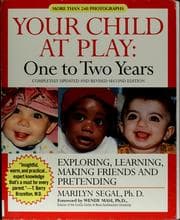
Cover of Your child at play

Your child at play

Marilyn Segal, Betty Bardige

1985

Packed with learning activities, games, poems, and recipes, as well as anecdotes and advice, the eight sections focus on: Individual Differences and Common Threads (distinguishing between real and pretend; concern with fairness; self-awareness) The Questions Children Ask (the physical world; the natural world; the social world) Friends (best friends; controversies and conflicts; sibling play) Active Play (contact and cuddling; physical feats; sports) Creative Play (music; art; crafts; storytelling and jokes) Pretend Play (actor play and dressing up; imaginary playmates; reemergence of pretending) School Play (reading; writing; arithmetic; collecting facts; science) Family (attachment and separation; family continuity; traditions)

Why it's similar: Similar focus on Child rearing

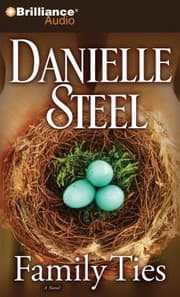
Cover of Family ties

Family ties

Danielle Steel

1995

From Manhattan to Paris and all the way to Tehran, Danielle Steel weaves a powerfully compelling story that reminds us how challenging and unpredictable life can be—and how the bonds of family hold us together. FAMILY TIES Annie Ferguson was a bright young Manhattan architect with a limitless future—until a single phone call changed the course of her life forever. Overnight, she became the mother to her sister’s three orphaned children, keeping a promise she never regretted making, even if it meant putting her own life indefinitely on hold. Now, at forty-two, still happily single with a satisfying career and a family that means everything to her, Annie is suddenly facing an empty nest. With her nephew and nieces now grown and confronting challenges of their own, she must navigate a parent’s difficult passage between helping and letting go. The eldest, twenty-eight-year-old Liz, an overworked editor in a high-powered job at Vogue, has never allowed any man to come close enough to hurt her. Ted, at twenty-four a serious law student, is captivated by a much older woman with children, who is leading him much further than he wants to go. And the impulsive youngest, twenty-one-year old Katie, is an art student about to make a choice that will lead her to a world she is in no way prepared for but determined to embrace. Then, when least expected, a chance encounter changes Annie’s life again in the most surprising direction of all. . . .

Why it's similar: Similar focus on Parenting

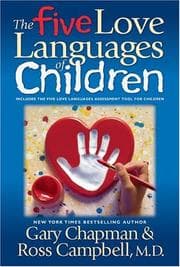
Cover of The five love languages of children

The five love languages of children

Gary Chapman, 王雲良

1997

Does your child speak a different language? Sometimes they wager for your attention, and other times they ignore you completely. Sometimes they are filled with gratitude and affection, and other times they seem totally indifferent. Attitude. Behavior. Development. Everything depends on the love relationship between you and your child. When children feel loved, they do their best. But how can you make sure your child feels loved? Since 1992, Dr. Gary Chapman's best-selling book The Five Love Languages has helped more than 300,000 couples develop stronger, more fulfilling relationships by teaching them to speak each others love language. Each child, too, expresses and receives love through one of five different communication styles. And your love language may be totally different from that of your child. While you are doing all you can to show your child love, he may be hearing it as something completely opposite.Discover your child's primary language and learn what you can do to effectively convey unconditional feelings of respect, affection, and commitment that will resonate in your child's emotions and behavior.

Why it's similar: Similar focus on Niños

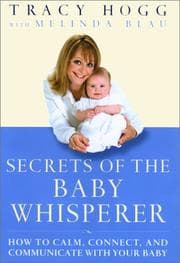
Cover of Secrets of the Baby Whisperer

Secrets of the Baby Whisperer

Tracy Hogg, Melinda Blau

2001

A unique program for understanding and communicating effectively with your baby from infant expert Tracy Hogg. The combination of interactive self-questioning and expert, friendly advice will change how you approach parenting, leading to transformative results. 'Miracles are her business' -- Jodie Foster 'The honest truth is that Tracy Hogg has provided me with more insight into the things that matter than anyone else' -- Observer Review 'She achieves what, to hard-pressed parents, seem like miracles' -- Mail on Sunday '...in a different league than all other 'how to manage as a parent' books' -- Daily Mail 'A book that changed our lives' -- ***** Reader review 'This book is amazing' -- ***** Reader review 'Great book, full of easy tips and tricks for new parents. I would highly recommend it!!!!' -- ***** Reader review 'The BEST baby advice book, EVER!!' -- ***** Reader review 'A God Send!' -- ***** Reader review **************************************************************** Tracy Hogg knows babies. She can calm even the most distressed or difficult infant, because she understands their language. Hence, her clients call her 'The Baby Whisperer'. In this remarkable parenting book, Tracy demystifies the magic she has performed with some five thousand babies. She teaches parents how to work out what kind of baby they have, what kind of mother or father they are, and what kind of parenting plan will work best for them. Believing that babies need to become part of the family - rather than dominate it - she has developed a practical programme that works with infants as young as a day old. Full of questionnaires, clearly explained theories and easy-to-follow, practical, expert advice - this book is guaranteed to set you on the path to calm and confident parenting.

Why it's similar: Similar focus on Niños

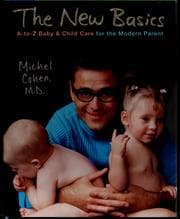
Cover of The new basics

The new basics

Michel Cohen M.D.

2004

Dr. Michel Cohen, named by the New York Post as the hip, "must-have" pediatrician, has an important message for parents: Don't worry so much. In an easy-reference alphabetical format, The New Basics clearly lays out the concerns you may face as aparent and explains how to solve them -- without fuss, without stress, and without harming your child by using unnecessary medicines or interventions. With sensitivity and love, Dr. Michel describes proven techniques for keeping your children healthy and happy without driving yourself crazy. He will show you how to set positive habits for sleeping and eating and how to treat ailments early and effectively. You'll learn when antibiotics are helpful and when they can be harmful. If you're having trouble breast feeding, pumping, or bottle weaning, Dr. Michel has the advice to set you back on track. If after several months your baby is still not sleeping through the night, The New Basics will provide you with tried-and-true methods to help ease this difficult transition for babies and parents. Dr. Michel recognizes that you're probably asking the same questions his own patients' parents frequently ask, so he includes a section called "Real Questions from Real Parents" throughout the book. You'll find important answers about treating asthma, head injuries, fevers, stomach bugs, colic, earaches, and other ailments. More than just a book on how to care for your child's physical well-being, The New Basics also covers such parenting challenges as biting, hitting, ADD, separation anxiety, how to prevent the terrible twos (and threes and fours ...), and preparing your child for a new sibling.

Why it's similar: Similar focus on Parenting

Cover of Parenting for a peaceful world

Parenting for a peaceful world

Robin Grille

2005

Imagine a world where war, tyranny, human rights abuses and ecological destruction are relics of the past. What if the means to create such a reality were in the hands of mothers and fathers, and all those involved in the care and education of children? Parenting for a Peaceful World is a fascinating look at how parenting customs have shaped societies and major world events. It reveals how children adapt to different parenting styles and how these early experiences underpin the adults they become. In this expansive book, Robin Grille draws on revolutionary new research to argue that the safeguarding of children's emotional development is the key to creating a more peaceful and harmonious world. Parenting for a Peaceful World is a book for parents, child health professionals, and adults learning to be whole again. It is a manifesto for policy-makers and a resource for teachers. If the findings outlined in these pages are put into practice, the result may be a revolution of peace, humanity, and a world beyond our imagining.

Why it's similar: Similar focus on Popular works

Readers also enjoyed

Popular and highly rated books from our library you might like next.

Cover of The practice of psychoanalytic parent infant psychotherapy

The practice of psychoanalytic parent infant psychotherapy

Timothy N. Liesching

2005

The Practice of Psychoanalytic Parent-Infant Psychotherapy is a comprehensive handbook, addressing the provision of therapeutic help for babies and their parents when their attachment relationship is troubled and a risk is posed to the baby's development. Drawing on clinical and research data from neuroscience, attachment and psychoanalysis, the book presents a clinical treatment approach that is up-to-date, flexible and sophisticated, whilst also being clear and easy to understand. The first section: The theory of psychoanalytic parent infant psychotherapy – offers the reader a theoretical framework for understanding the emotional-interactional environment within which infant development takes place. The second section, The therapeutic process, invites the reader into the consulting room to participate in a detailed examination of the relational process in the clinical encounter. The third section, Clinical papers, provides case material to illustrate the unfolding of the therapeutic process. This new edition draws on evidence from contemporary research, with new material on: Embodied communication between parent and infant and clinician-patient/s Fathers and fathering Engagement of at-risk populations Written by a team of experienced clinicians, writers, teachers and researchers in the field of infant development and psychopathology, The Practice of Psychoanalytic Parent-Infant Psychotherapy will be an essential resource for all professionals working with children and their families, including child psychiatrists, psychoanalysts, psychotherapists, and clinical and developmental psychologists.

Why it's similar: Similar focus on Infants
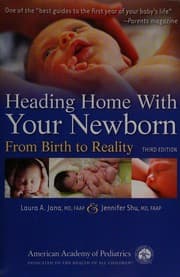
Cover of Heading home with your newborn

Heading home with your newborn

Jennifer Shu MD FAAP, Laura Jana MD FAAP

2005

New parents will feel comforted and confident with the guide that has been trusted by parents and pediatricians for 20 years! Packed with the wisdom of a parenting class, the reassurance of a doctor' s visit, and the warmth of a close friend, the fully revised and updated fifth edition of this bestselling guide offers essential advice from two pediatrician-moms. It covers everything new parents need to know from feeding and diapering to crying and sleep. Updates in this edition include new safe sleep recommendations; enhanced support for post-partum depression; updated developmental milestones; a timely discussion on of screen-use, media use, and technology; and revisions throughout, bringing all advice up to date with the latest AAP guidelines. With a closer look at which of today' s smart technologies are really helpful when it comes to babies and expert insights on the full range of health and safety topics including car safety seats, vaccines, and infant nutrition, this parent-tested, pediatrician-approved advice will help new parents feel comfortable those first few days and weeks at home and serve as a trusted guide for the whole first year.

Why it's similar: Similar focus on Infants
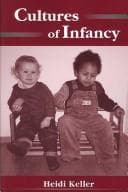
Cover of Cultures of Infancy

Cultures of Infancy

Heidi Keller

2006

The Classic Edition of Heidi Keller's Cultures of Infancy, first published in 2007, includes a new introduction by the author, describing for readers the original context for her work, how she has further developed her research and thinking, and the ongoing relevance of this volume in the context of future challenges for the field. In its original volume, Cultures of Infancy presented the first systematic analysis of culturally informed developmental pathways, synthesizing evolutionary and cultural psychological perspectives for a broader understanding of human development. In this compelling book, Heidi Keller utilizes ethnographic reports, as well as quantitative and qualitative analyses, to illustrate how humans resolve universal developmental tasks in particular sociodemographic contexts. These contexts are represented in cultural models, and three distinct models are addressed throughout the text: the model of independence with autonomy as developmental organizer; the model of interdependence with relatedness as the developmental organizer; and the model of autonomous relatedness representing particular mixtures of autonomy and relatedness. The book offers an empirical examination of the first integrative developmental task-relationship formation during the early months of life. Keller shows that early parenting experiences shape the basic foundation of the self within particular models of parenting that are influenced by culturally informed socialization goals. With distinct patterns of results the studies have revealed, Cultures of Infancy helps redefine developmental psychology as part of a culturally informed science based on evolutionary groundwork. Scholars interested in a broad perspective on human development and culture will benefit from this pioneering volume.

Why it's similar: Similar focus on Infants, care and hygiene

Frequently Asked Questions

What should I read after What to expect the first year?
Browse the similar books below — they're matched by subject overlap, author style, and reader preferences.
What books are most similar to What to expect the first year?
Our recommendations prioritize shared themes like Infants, Child rearing, Care and books enjoyed by similar readers.
Which similar book is best for beginners?
Check page counts and summaries on each recommendation. Shorter titles with broader appeal are usually the best starting point.

Promote Your Book on BestsellerFinder

Reach thousands of readers with featured placements, homepage spots, and newsletter features.

Get bestseller picks in your inbox

Weekly curated book recommendations. Unsubscribe anytime.

Explore More

Affiliate Disclosure: As an Amazon Associate, we may earn from qualifying purchases. Book links on this page may be affiliate links. This does not affect our recommendations or the price you pay.