
Books Like “The Stuff of Dreams

If you enjoyed The Stuff of Dreams by Kirsty Hall, you likely appreciate Fantasy, Anxiety, Psychoanalysis. These similar reads match the tone, themes, and audience of the original.

Not sure what to read next? Ask BestsellerFinder AI →

FantasyAnxietyPsychoanalysisPsychoanalytic InterpretationPSYCHOLOGYGeneralFantastische LiteraturAngst

Closest matches

Titles with overlapping themes, tone, and audience with your pick.

Cover of Working with substance misusers

Working with substance misusers

Trudi Petersen, Andrew McBride

2002

Working with Substance Misusers is a practical handbook for students and those who work with people who misuse drugs or alcohol. Written by experienced teachers and clinicians, the book introduces: * the substances themselves * theories relevant to substance use and misuse * the skills necessary to work with this client group * the broad range of approaches to treatment * particular problems of specific groups. The reader is encouraged to read and reflect on the material in relation to their own practice. To help this process, each topic has an identified set of learning objectives. Activities designed to reinforce learning include discussion points, case studies, role plays and group exercises. Working with Substance Misusers makes clear the connection of theory to practice and encourages a skills-based, but reflective, approach to work in this complex field. Cutting across professional boundaries, it provides both new and more experienced practitioners with a key text.

Cover of Handbook of Coaching Psychology

Handbook of Coaching Psychology

Stephen Palmer, Alison Whybrow

2014

Solution Focused Coaching in Practiceis a practical ‘how-to’ guide that provides an invaluable overview of Solution Focused Coaching skills and techniques. Reflecting upon published research on the solution focused approach, Bill O’Connell, Stephen Palmer and Helen Williams bring their own experiences of Solution Focused Coaching together with others in the field to cover topics such as: the coach-coachee relationship the role of technology in coaching inclusive coaching group and team coaching practical issues and skills. Incorporating coachee case studies, worksheets, practice tips and discussion points, the skills, strategies and techniques in this book are straightforward to apply and can be used in most coaching settings. This practical book is essential reading for experienced personal or executive coaches, managers considering introducing a new and better coaching culture for their staff, and for those just starting out on their coaching journey.

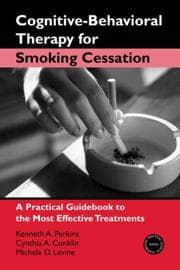
Cover of Cognitive-behavioral therapy for smoking cessation

Cognitive-behavioral therapy for smoking cessation

Kenneth A. Perkins, Kenneth A. Perkins, Cynthia A. Conklin, Michele D. Levine

2007

Cognitive-Behavioral Therapy (CBT) for Smoking Cessation is an essential resource for healthcare providers assisting patients in quitting tobacco smoking, presenting a structured approach that utilizes key components of CBT. This second edition provides empirically supported strategies for smoking cessation, adhering to well-established best practices and representing a "gold standard" in treatment. It presents step-by-step techniques to enhance patients’ motivation and confidence, prepare them to quit, navigate postquit challenges, and achieve long-term abstinence. This updated edition takes a patient-centered approach, addressing significant challenges faced during cessation and offering providers a systematic framework for delivering care. Notably, this volume introduces an adjunct CBT module specifically designed for patients very concerned about gaining weight after quitting—a unique and validated approach that aids cessation efforts and is not available in other resources. The book also includes new case vignettes, provider scripts, sidebars addressing common patient concerns, and key takeaways. Additionally, an extensive e-resource provides links to supplementary materials and further readings, equipping providers from diverse disciplines and backgrounds with the tools needed to effectively support patients. A must-have resource on the bookshelf of any health professional treating clients with tobacco dependence.

Cover of Pressure Proofing

Pressure Proofing

Sam Klarreich

2007

Do you feel uneasy when you try to relax? Are you overwhelmed by the deadlines you have to meet? Do you get rattled when things don’t go your way? Are you inpatient with people who work more slowly than you? Do you often get angry? Do you feel things are hopeless? Do you feel like not getting out of bed, instead pulling the covers over your head? More and more people have these reactions, in spite of the fact that we know more about pressure, anxiety, anger, and depression, and in spite of the fact that computers are supposed to make our lives and jobs easier. For the individual, these unhealthy reactions can lead to deteriorating health and a variety of social problems. For an organization, it often means low employee morale and declining productivity. In Pressure Proofing, Dr. Klarreich tackles the many people problems in the workplace and anywhere else for that matter. He shows how to identify the thoughts that bring on unhealthy reactions, and how to turn those thoughts around by debunking. Drawing on years of experience as a clinical psychologist, Dr. Klarreich then shows us, using quizzes, case histories, and practical programs, how these reactions can be conquered so that we can regain our health, productivity, and personal effectiveness. Pressure Proofing provides an inspiring, empowering, and engaging approach to addressing these issues.

Cover of Counseling addicted families

Counseling addicted families

Gerald A. Juhnke

2006

Although one person's addiction almost inevitably affects his or her family members, a surprising number of treatment models appear to operate under the assumption that an individual's addiction occurs in a vacuum. By not paying sufficient attention to preexisting family dynamics-whether dysfunctional, supportive, or somewhere in between-counselors run the risk of not fully understanding the roots of an individual's addictions or the obstacles to his recovery; as a result, counselors may undermine their own treatment efforts both by neglecting any underlying family problems and by failing to capitalize upon a family's potential assistance in an intervention with the addicted individual. In Counseling Addicted Families, Gerald A. Juhnke and William Bryce Hagedorn address this problem head-on. Recognizing that even those treatment providers who understand the importance of the familial context of addiction are often stymied by the variety of family treatment theories and their often imperfect fit for cases of addiction, Juhnke and Hagedorn provide a truly integrated model for assessment and treatment. Based upon the authors' combined 23 years of experience in clinical and treatment supervision, the Integrated Family Addictions Model consists of six progressive treatment tiers which organize the relevant family treatment theories into a graduated and coherent sequence, beginning with the briefest and least costly forms of therapy. If one of the lower tiers allows clients to reach their treatment goals, the patient and therapist need not waste time and resources following the full continuum. If, however, their needs are still unmet, they can progress in a logical fashion to more advanced and intensive forms of therapy. The book is divided into three broad topic areas designed to provide counselors and graduate students with essential information both about addictions and about the practical applications of various treatment theories. Part One discusses the prevalence of

Cover of Exposure Treatments for Anxiety Disorders

Exposure Treatments for Anxiety Disorders

Johan Rosqvist

2005

Exposure Treatments for Anxiety Disorders is a unique volume, as it draws together the latest research on the rapidly-expanding field of anxiety disorders and illuminates how to correctly apply the proven methodology of behavioral therapy techniques to the variety of situations that face today's mental health professional. That said, cognitive therapy has in the last 10 years gotten increased attention as an alternative to behavior therapy in the treatment of anxiety disorders. But while it is gaining acceptance among practitioners, cognitive therapy has yet to illustrate substantial benefits above those that behavior therapy can already provide. In light of the aforementioned, coupled with the pressure many practitioners feel from managed care paradigms and shrinking healthcare coverage, this book will be a welcome resource allowing for increased clarity of action, accountability, and ultimately, positive client outcome. Each chapter is designed to address pivotal aspects in the assessment, formulation and diagnosis, and treatment of anxiety disorders, to a sufficient depth that the generalist practitioner will be comfortable using this book as a guide when working with the anxiety disordered client.

Cover of 嫌われる勇気

嫌われる勇気

Ichirō Kishimi, Fumitake Koga

2013

This book, framed as a dialogue between a philosopher and a youth, explores Adlerian psychology to challenge conventional notions of happiness and freedom. It argues that individuals possess the power to determine their own lives and find fulfillment not by seeking approval, but by embracing self-acceptance and understanding that all problems stem from interpersonal relationships. Through this lens, the text offers a framework for personal growth and a reevaluation of how we approach our interactions and our pursuit of a meaningful existence.

Cover of Eating disorders

Eating disorders

Laura J. Goodman

2001

The widely updated second edition of Eating Disorders: Journey to Recovery Workbook helps those struggling with eating disorders in their recovery, guiding the reader through a greater consideration of body image, compulsive exercising, and personal and societal relationships based on Prochaska’s Stages of Change Theory. The workbook explores complicated issues having a direct effect on the eating disorder, including trauma, depression, gender identity, abuse, and the media. Updated to include the acknowledgement of binge-eating disorder, selective eating, and avoidant restrictive food intake disorder (ARFID), this second edition encourages self-paced learning and practice adjunct to one-on-one and group therapy from two seasoned clinicians in the treatment of eating disorders.

Cover of Early Parenting and Prevention of Disorder

Early Parenting and Prevention of Disorder

Marianne Leuzinger-Bohleber, Robert N. Emde

2014

This volume explores how early parental interactions profoundly shape a child's psychological development and trajectory towards mental well-being. It synthesizes psychoanalytic and developmental perspectives to illuminate critical periods and parental influences that can prevent later disorders. The book offers insights into fostering secure attachments and resilient emotional regulation from infancy onward.

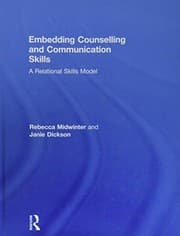
Cover of Embedding Counselling and Communication Skills

Embedding Counselling and Communication Skills

Rebecca Midwinter, Janie Dickson

2015

Embedding Counselling and Communication Skills provides a step-by-step approach for those looking to gain a theoretical and practical understanding of using counselling and communication skills within the helper role and applying these skills in the context of professional practice. This revised edition is brought up to date with new content around the subjects of working online, working across difference and diversity, coaching, grief and loss and managing challenging situations. Written in a clear and accessible teaching style, this book progresses through the ‘initial helper’ communication skills that are used in everyday life, to the more complex and in-depth counselling skills required in a helper relationship. It introduces the reader to a Relational Skills model which demonstrates the phases of relationship development. The authors show what happens within each phase and identify how and when to use skills appropriately. Knowledge of reflective practice, aspects of the relationship and how to manage change ensures the text considers the full range of general and specific skills and abilities required. Learning is brought alive through the use of online video clip sessions of a real helper/client relationship giving the reader opportunities and encouragement to reflect and evaluate their learning. This book will be an essential resource for students taking an introductory counselling skills course, other trainees within the mental health sector, coaches and many other qualified professionals who wish to enhance their knowledge of embedding counselling skills into their work and practice.

Cover of It didn't start with you

It didn't start with you

Mark Wolynn, Ludivine Bouton-Kelly

2016

INTERNATIONAL BESTSELLER TRANSLATED INTO 39 LANGUAGES FULLY REVISED AND UPDATED IN 2025 “This groundbreaking book offers a compelling understanding of inherited trauma and fresh, powerful tools for relieving its suffering. Mark Wolynn is a wise and trustworthy guide on the journey toward healing.” —Tara Brach, PhD, author of Radical Acceptance and True Refuge It Didn’t Start With You and its companion, The Official It Didn't Start with You Workbook, provide a groundbreaking approach to transforming traumatic legacies passed down in families over generations, by an acclaimed expert in the field Depression. Anxiety. Chronic Pain. Phobias. Obsessive thoughts. The evidence is compelling: the roots of these difficulties may not reside in our immediate life experience or in chemical imbalances in our brains—but in the lives of our parents, grandparents, and even great-grandparents. The latest scientific research, now making headlines, supports what many have long intuited—that traumatic experience can be passed down through generations. It Didn’t Start with You builds on the work of leading experts in post-traumatic stress, including Mount Sinai School of Medicine neuroscientist Rachel Yehuda and psychiatrist Bessel van der Kolk, author of The Body Keeps the Score. Even if the person who suffered the original trauma has died, or the story has been forgotten or silenced, memory and feelings can live on. These emotional legacies are often hidden, encoded in everything from gene expression to everyday language, and they play a far greater role in our emotional and physical health than has ever before been understood. As a pioneer in the field of inherited family trauma, Mark Wolynn has worked with individuals and groups on a therapeutic level for over twenty years. It Didn’t Start with You offers a pragmatic and prescriptive guide to his method, the Core Language Approach. Diagnostic self-inventories provide a way to uncover the fears and anxieties conveyed through everyday

Readers also enjoyed

Popular and highly rated books from our library you might like next.

Cover of The creative mind

The creative mind

Margaret A. Boden

1990

How is it possible to think new thoughts? What is creativity and can science explain it? And just how did Coleridge dream up the creatures of The Ancient Mariner? When The Creative Mind: Myths and Mechanisms was first published, Margaret A. Boden's bold and provocative exploration of creativity broke new ground. Boden uses examples such as jazz improvisation, chess, story writing, physics, and the music of Mozart, together with computing models from the field of artificial intelligence to uncover the nature of human creativity in the arts. The second edition of The Creative Mind has been updated to include recent developments in artificial intelligence, with a new preface, introduction and conclusion by the author. It is an essential work for anyone interested in the creativity of the human mind.

Cover of Positive child guidance

Positive child guidance

Darla Ferris Miller

1990

POSITIVE CHILD GUIDANCE, Eighth Edition, is ideal for guidance, behavior management and discipline, and classroom management courses in an early childhood education curriculum. This practical book outlines workable steps for creating a cooperative, respectful community of children and adults with special emphasis on sensitivity to cultural needs, cultural differences, and developmentally appropriate practice. Students will learn a range of practical, effective, and flexible guidance strategies based on principles of straightforward communication and assertiveness. This new edition includes critical advances in research and addresses the cultural trends that are changing the way babies and children are cared for today. Important Notice: Media content referenced within the product description or the product text may not be available in the ebook version.

Cover of Radical records

Radical records

Bob Cant, Susan Hemmings

1988

The period between the publication in 1957 of the liberalising Wolfenden Report and the introduction in 1987 of the homophobic Section 28 was characterised by unprecedented optimism and political activism among lesbians and gay men in Britain. But the law and its shortcomings never determined their whole political and cultural agenda and Radical Records explores the diverse and sometimes conflicting attempts of lesbian and gay people to build a new world for themselves and those they loved. The contributors recount their own personal narratives of how they struggled to re-define their identities, to explore non-traditional expressions of intimacy, to reclaim public spaces, to engage with the HIV epidemic, to build alliances and, generally, to make radical transformations of their lives. The re-issue of this important work, first published in 1988, gives its readers an opportunity to re-visit that turbulent time through the voices of its participants.

Cover of Ikigai: The Japanese Secret to a Long and Happy Life

Ikigai: The Japanese Secret to a Long and Happy Life

Héctor García (Author), Francesc Miralles (Author) Format: Hardcover

2017

INTERNATIONAL BESTSELLER • 2 MILLION+ COPIES SOLD WORLDWIDE “Workers looking for more fulfilling positions should start by identifying their ikigai.” ―Business Insider “One of the unintended—yet positive—consequences of the [pandemic] is that it is forcing people to reevaluate their jobs, careers, and lives. Use this time wisely, find your personal ikigai, and live your best life.” ―Forbes Find your ikigai (pronounced ee-key-guy) to live longer and bring more meaning and joy to all your days. “Only staying active will make you want to live a hundred years.” —Japanese proverb According to the Japanese, everyone has an ikigai—a reason for living. And according to the residents of the Japanese village with the world’s longest-living people, finding it is the key to a happier and longer life. Having a strong sense of ikigai—where what you love, what you’re good at, what you can get paid for, and what the world needs all overlap—means that each day is infused with meaning. It’s the reason we get up in the morning. It’s also the reason many Japanese never really retire (in fact there’s no word in Japanese that means retire in the sense it does in English): They remain active and work at what they enjoy, because they’ve found a real purpose in life—the happiness of always being busy. In researching this book, the authors interviewed the residents of the Japanese village with the highest percentage of 100-year-olds—one of the world’s Blue Zones. Ikigai reveals the secrets to their longevity and happiness: how they eat, how they move, how they work, how they foster collaboration and community, and—their best-kept secret—how they find the ikigai that brings satisfaction to their lives. And it provides practical tools to help you discover your own ikigai. Because who doesn’t want to find happiness in every day? What’s your ikigai?

Cover of Becoming Supernatural: How Common People Are Doing The Uncommon

Becoming Supernatural: How Common People Are Doing The Uncommon

Dr. Joe Dispenza (Author), Adam Boyce (Narrator), Author's Republic (Publisher) & 0 more Format: Audible Audiobook

2017

A WALL STREET JOURNAL BESTSELLER by DR. JOE DISPENZA , the author of the New York Times bestseller You Are the Placebo, as well as Breaking the Habit of Being Yourself and Evolve Your Brain. Becoming Supernatural draws on epigenetics, quantum physics & neuroscience research conducted at his advanced workshops since 2012 to explore how common people are doing the uncommon to transform their consciousness, mindset, and beliefs to heal and live SUPERNATURAL lives. Becoming Supernatural marries some of the most profound scientific information with ancient spiritual wisdom to show how people like you and me can experience a more mystical life. Readers will learn that we are, quite literally supernatural by nature if given the proper knowledge and instruction, and when we learn how to apply that information through various healing meditations, we should experience a greater expression of our creative abilities. We have the capacity to tune in to frequencies beyond our material world and receive more orderly coherent streams of consciousness and energy; that we can intentionally change our brain chemistry to initiate profoundly mystical transcendental experiences; and how, if we do this enough times, we can develop the skill of creating a more efficient, balanced, healthy body, a more unlimited mind, and greater access to the quantum field and the realms of spiritual truth. Topics include: • Demystifying the body’s 7 energy centers and how you can balance them to heal • How to free yourself from the past by reconditioning your body to a new mind • How you can create reality in the generous present moment by changing your energy • The difference between third-dimension creation and fifth-dimension creation • The secret science of the pineal gland and its role in accessing mystical realms of reality • The distinction between Space-Time vs. Time-Space realities • And much more Chapters Include: Opening the Door to the Supernatural The Present Moment Tuning In to New Potential

Cover of Influence, New and Expanded: The Psychology of Persuasion

Influence, New and Expanded: The Psychology of Persuasion

Robert B. Cialdini (Author, Narrator), Harper Business (Publisher) Format: Audible Audiobook

2021

The foundational and wildly popular go-to resource for influence and persuasion--a renowned international bestseller, with over 5 million copies sold--now revised adding: new research, new insights, new examples, and online applications. In the new edition of this highly acclaimed bestseller, Robert Cialdini--New York Times bestselling author of Pre-Suasion and the seminal expert in the fields of influence and persuasion--explains the psychology of why people say yes and how to apply these insights ethically in business and everyday settings. Using memorable stories and relatable examples, Cialdini makes this crucially important subject surprisingly easy. With Cialdini as a guide, you don't have to be a scientist to learn how to use this science. You'll learn Cialdini's Universal Principles of Influence, including new research and new uses so you can become an even more skilled persuader--and just as importantly, you'll learn how to defend yourself against unethical influence attempts. You may think you know these principles, but without understanding their intricacies, you may be ceding their power to someone else. Cialdini's Principles of Persuasion: Reciprocation Commitment and Consistency Social Proof Liking Authority Scarcity Unity, the newest principle for this edition Understanding and applying the principles ethically is cost-free and deceptively easy. Backed by Dr. Cialdini's 35 years of evidence-based, peer-reviewed scientific research--including a three-year field study on what leads people to change--Influence is a comprehensive guide to using these principles to move others in your direction.

Cover of A Grief Observed

A Grief Observed

C. S. Lewis (Author), Madeleine L'Engle (Foreword) Format: Paperback

2021

This work has been selected by scholars as being culturally important and is part of the knowledge base of civilization as we know it. This work is in the public domain in the United States of America, and possibly other nations. Within the United States, you may freely copy and distribute this work, as no entity (individual or corporate) has a copyright on the body of the work. Scholars believe, and we concur, that this work is important enough to be preserved, reproduced, and made generally available to the public. To ensure a quality reading experience, this work has been proofread and republished using a format that seamlessly blends the original graphical elements with text in an easy-to-read typeface. We appreciate your support of the preservation process, and thank you for being an important part of keeping this knowledge alive and relevant.

Cover of Can't Hurt Me: Master Your Mind and Defy the Odds

Can't Hurt Me: Master Your Mind and Defy the Odds

David Goggins (Author, Narrator), Adam Skolnick (Narrator), Lioncrest Publishing (Publisher) & 0 more Format: Audible Audiobook

2021

New York Times Bestseller Over 7 million copies sold For David Goggins, childhood was a nightmare - poverty, prejudice, and physical abuse colored his days and haunted his nights. But through self-discipline, mental toughness, and hard work, Goggins transformed himself from a depressed, overweight young man with no future into a U.S. Armed Forces icon and one of the world's top endurance athletes. The only man in history to complete elite training as a Navy SEAL, Army Ranger, and Air Force Tactical Air Controller, he went on to set records in numerous endurance events, inspiring Outside magazine to name him The Fittest (Real) Man in America. In this curse-word-free edition of Can't Hurt Me, he shares his astonishing life story and reveals that most of us tap into only 40% of our capabilities. Goggins calls this The 40% Rule, and his story illuminates a path that anyone can follow to push past pain, demolish fear, and reach their full potential.

Cover of A life of one's own

A life of one's own

Marion Milner

1934

Marion Milner's "A Life of One's Own" offers a profound exploration of achieving genuine happiness and success through rigorous introspection and self-analysis. Drawing from her personal diaries, Milner meticulously chronicles her journey of understanding her own thoughts and desires, demonstrating how conscious effort in thinking can lead to greater self-awareness and personal fulfillment. The book serves as a testament to the therapeutic power of turning inward, revealing a path toward self-actualization built on a deep understanding of one's inner landscape.

Frequently Asked Questions

What should I read after The Stuff of Dreams?
Browse the similar books below — they're matched by subject overlap, author style, and reader preferences.
What books are most similar to The Stuff of Dreams?
Our recommendations prioritize shared themes like Fantasy, Anxiety, Psychoanalysis and books enjoyed by similar readers.
Which similar book is best for beginners?
Check page counts and summaries on each recommendation. Shorter titles with broader appeal are usually the best starting point.

Promote Your Book on BestsellerFinder

Reach thousands of readers with featured placements, homepage spots, and newsletter features.

Get bestseller picks in your inbox

Weekly curated book recommendations. Unsubscribe anytime.

Explore More

Affiliate Disclosure: As an Amazon Associate, we may earn from qualifying purchases. Book links on this page may be affiliate links. This does not affect our recommendations or the price you pay.