The Art of Grief
J. Earl Rogers
2007
If you enjoyed The shame of death, grief, and trauma by Jeffrey Kauffman, you likely appreciate Shame, Death, Bereavement. These similar reads match the tone, themes, and audience of the original.

J. Earl Rogers
2007

Paul C. Rosenblatt
2005

Jennifer L. Buckle
2010

Adrian Tomer, Grafton Eliason, Paul T. P. Wong
2007
Existential and Spiritual Issues in Death Attitudes provides: an in-depth examination of death attitudes, existentialism, and spirituality and their relationships; a review of the major theoretical models; clinical applications of these models to issues such as infertility, bereavement, anxiety, and suicide; and an introduction to meaning managemen

J. Shep Jeffreys
2004

Kathryn A. Markell
2008

Brook Noel, Pamela Blair
2000

Hope Edelman
2006

Sheryl Sandberg, Adam Grant
2017
#1 NEW YORK TIMES BEST SELLER • From authors of Lean In and Originals: a powerful, inspiring, and practical book about building resilience and moving forward after life’s inevitable setbacks After the sudden death of her husband, Sheryl Sandberg felt certain that she and her children would never feel pure joy again. “I was in ‘the void,’” she writes, “a vast emptiness that fills your heart and lungs and restricts your ability to think or even breathe.” Her friend Adam Grant, a psychologist at Wharton, told her there are concrete steps people can take to recover and rebound from life-shattering experiences. We are not born with a fixed amount of resilience. It is a muscle that everyone can build. Option B combines Sheryl’s personal insights with Adam’s eye-opening research on finding strength in the face of adversity. Beginning with the gut-wrenching moment when she finds her husband, Dave Goldberg, collapsed on a gym floor, Sheryl opens up her heart—and her journal—to describe the acute grief and isolation she felt in the wake of his death. But Option B goes beyond Sheryl’s loss to explore how a broad range of people have overcome hardships including illness, job loss, sexual assault, natural disasters, and the violence of war. Their stories reveal the capacity of the human spirit to persevere . . . and to rediscover joy. Resilience comes from deep within us and from support outside us. Even after the most devastating events, it is possible to grow by finding deeper meaning and gaining greater appreciation in our lives. Option B illuminates how to help others in crisis, develop compassion for ourselves, raise strong children, and create resilient families, communities, and workplaces. Many of these lessons can be applied to everyday struggles, allowing us to brave whatever lies ahead. Two weeks after losing her husband, Sheryl was preparing for a father-child activity. “I want Dave,” she cried. Her friend replied, “Option A is not available,” and then promised to he
Ron A. Thompson
2010

Christine Thornton
2010
Group and Team Coaching is a best-seller offering a new perspective on the ‘secret life of groups’, the subconscious and non-verbal processes through which people learn and communicate in groups and teams. Originally published in 2010 and designed for easy navigation, it is a highly regarded team coaching handbook, and required reading on many courses. This new edition is fully updated, with a completely new chapter on working with groups and teams on virtual platforms, including hybrid and blended working. Christine Thornton uses key concepts from psychology, group analysis and systems theory as well as her own extensive experience to give practical advice. Topics include: the invisible processes of group dynamics; common dilemmas; pitfalls of team coaching and how to avoid them; pros and cons and best practice online; how to design coaching interventions; supervising coaching; ethics. Based on research and including many vignettes and case studies, this new edition is essential reading for coaches working with groups and teams, and leaders working with their own teams or commissioning coaching.

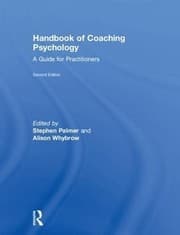
Stephen Palmer, Alison Whybrow
2014

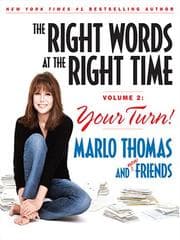
Marlo Thomas, Jon B. Fish, Bruce Kluger, Carl Robbins, David Tabatsky
2006
From big cities to farm communities, from office cubicles to hospital wards, from Normandy Beach to Boston's Fenway Park, the contributors to this remarkable volume -- selected from among thousands in a nationwide search -- tell riveting stories about the words that changed their lives forever. You'll meet a "Plain Jane" from Seattle, whose world was rocked by a passing remark made by her favorite musician, backstage at a concert. You'll hear from the bereaved fiancé of a 9/11 victim, who found hope in a note pinned to a teddy bear. You'll laugh with a beleaguered soccer mom, who reveals the single phrase she never wants to hear again. And your heart will break for a prison inmate, who recalls the one piece of advice he still wishes he took. In each case, words had made all the difference. Marlo Thomas has once again tapped into the human spirit, assembling a breathtaking collection of beautiful and inspiring essays about the enduring power of words, and how their impact can last a lifetime. As a follow-up to her 2002 New York Times #1 bestseller, The Right Words at the Right Time, Thomas presents 101 new first-person stories that are at once universal and strikingly personal. Like the tale of a Gulf War veteran, whose life was transformed by just two words spoken by a young stranger at a Burger King. Or the aimless garage mechanic, who found salvation in a Help Wanted ad. Or the unsuspecting mother of three, who made a heart-warming discovery about her grandmother's "racy past." As this astonishing anthology proves, the "right words" can come from anywhere -- the pages of a dusty old songbook, the pulpit of a neighborhood church, the wreckage of Ground Zero, a hand-stitched sampler hanging on a wall, and a child's simple expression of love. The Right Words at the Right Time, Volume 2: Your Turn! is a collection to be read and read again -- a volume that will be cherished both by fans of the original book and anyone who has ever been touched by the startling and lif

Marc H. Bornstein
1995
This highly anticipated third edition of the Handbook of Parentingbrings together an array of field-leading experts who have worked in different ways toward understanding the many diverse aspects of parenting. Contributors to the Handbooklook to the most recent research and thinking to shed light on topics every parent, professional, and policymaker wonders about. Parenting is a perennially "hot" topic. After all, everyone who has ever lived has been parented, and the vast majority of people become parents themselves. No wonder bookstores house shelves of "how-to" parenting books and magazine racks in pharmacies and airports overflow with periodicals that feature parenting advice. However, almost none of these is evidence-based. The Handbook of Parentingis. Period. Each chapter has been written to be read and absorbed in a single sitting, and includes historical considerations of the topic, a discussion of central issues and theory, a review of classical and modern research, and forecasts of future directions of theory and research. Together, the five volumes in the Handbookcover Children and Parenting, the Biology and Ecology of Parenting, Being and Becoming a Parent, Social Conditions and Applied Parenting, and the Practice of Parenting. Volume 1, Children and Parenting,considers parenthood as a functional status in the life cycle: Parents protect, nurture, and teach their progeny, even if human development is more dynamic than can be determined by parental caregiving alone. Volume 1 of the Handbook of Parentingbegins with chapters concerned with how children influence parenting. Notable are their more obvious characteristics, like child age or developmental stage; but subtler ones, like child gender, physical state, temperament, mental ability, and other individual-differences factors, are also instrumental. The chapters in Part I, on Parenting across the Lifespan, discuss the unique rewards and special demands of parenting children of different ages and stages -

H. Charles Fishman
2004

Paula Reavey
2003

Trudi Petersen, Andrew McBride
2002
Working with Substance Misusers is a practical handbook for students and those who work with people who misuse drugs or alcohol. Written by experienced teachers and clinicians, the book introduces: * the substances themselves * theories relevant to substance use and misuse * the skills necessary to work with this client group * the broad range of approaches to treatment * particular problems of specific groups. The reader is encouraged to read and reflect on the material in relation to their own practice. To help this process, each topic has an identified set of learning objectives. Activities designed to reinforce learning include discussion points, case studies, role plays and group exercises. Working with Substance Misusers makes clear the connection of theory to practice and encourages a skills-based, but reflective, approach to work in this complex field. Cutting across professional boundaries, it provides both new and more experienced practitioners with a key text.

Laura J. Goodman
2001

Shawn Achor
2010

Umberto Barcaro
2010

Sheila Lintott
2011

Tessa Baradon
2009

Ellen L. Bowen
2008

Joe Navarro, Marvin Karlins
2008
Chinese edition of What Every BODY is Saying: An Ex-FBI Agent's Guide to Speed-Reading People. A powerful book on nonverbal body language that is field tested by law enforcement and The FBI. Distributed by Tsai Fong Books, Inc.

Kenneth A. Perkins, Kenneth A. Perkins, Cynthia A. Conklin, Michele D. Levine
2007
Reach thousands of readers with featured placements, homepage spots, and newsletter features.
Weekly curated book recommendations. Unsubscribe anytime.
Affiliate Disclosure: As an Amazon Associate, we may earn from qualifying purchases. Book links on this page may be affiliate links. This does not affect our recommendations or the price you pay.