Books Like “Reinterpreting menopause

If you enjoyed Reinterpreting menopause by Paul A. Komesaroff, Philipa Rothfield, Jeanne Daly, you likely appreciate Health and hygiene, Femmes d'âge moyen, Psychology. These similar reads match the tone, themes, and audience of the original.

Not sure what to read next? Ask BestsellerFinder AI →

Health and hygieneFemmes d'âge moyenPsychologyMiddle-aged womenAnthropologieSanté et hygiènePsychologieMenopause

Closest matches

Titles with overlapping themes, tone, and audience with your pick.

Cover of The change before the change

The change before the change

Laura E. Corio, Laura E. Corio MD, Linda G. Kahn

2000

Dr. Laura Corio's thriving New York City practice attracts women from around the world because of her unique blend of no-nonsense medical advice, extensive knowledge of alternative approaches, & close collaboration with patients. She believes that women today are just approaching their prime in their late 30s & 40s, & that they can't afford to lose time & energy to the common--but often misdiagnosed--symptoms that precede menopause by as much as a decade. Through vivid case studies & extensive treatment options, she provides in this handbook exactly what women today want & need to know: * How to cope with menstrual irregularities, hot flashes, sexual changes, weight gain, mood swings, & changes in appearance * Up-to-date choices for hormone replacement, both synthetic & natural, as well as many other options for women who want to avoid hormones * How perimenopause affects fertility * A reassuring guide to dealing with cancer fears, & what tests you absolutely must have * Lifestyle changes you need to make now to protect your breasts, uterus, bones, & heart in the years to come Filled with fascinating insights & information never before available to non-professionals, THE CHANGE BEFORE THE CHANGE is the one resource women need to navigate these years with confidence & vibrant good health.
Why it's similar: Similar focus on Health and hygiene

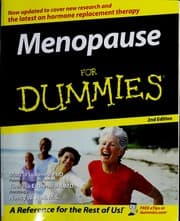
Cover of Menopause for dummies

Menopause for dummies

Tara Ellsworth, Nursity Press

2002

A comprehensive and practical guide for women of all ages to gain a clear view of the physical, mental, and emotional changes related to menopause Although menopause is a natural and inevitable stage in every woman's life, its physical, mental, and emotional manifestations can vary greatly from one person to the next. Add the conflicting "expert" information about the benefits, risks, and side effects to which women are exposed on a daily basis, and it's easy to see many women find it difficult to make informed choices about how to deal with their menopausal symptoms. Authored by a team of acknowledged experts in treating menopausal symptoms, Menopause For Dummies provides you with all the information you need to stay in control every step of the way. In plain English, it explains the role menopause plays in a variety of common health problems, such as osteoporosis, stroke, and heart disease. It walks you through proven measures for minimizing your risk of developing complications, including diet and exercise, stress management, hormone replacement, and other techniques. And this no-nonsense guide gives you authoritative, up-to-the-minute coverage of: How to identify pre-menopause (perimenopause) and what it means The stages of menopause How menopause can affect your body, emotions, and libido The latest facts about hormone replacement therapy The pros and cons of various alternative treatments The best ways of handling hot flashes Easing symptoms with diet and exercise Preventing bone loss Helpful lifestyle changes This book has four top ten lists to provide even more ways of navigating the changes you'll experience throughout menopause—exposing common myths about menopause, giving you the scoop on medical tests you might need, kicking around ideas to kick-start or rejuvenate your exercise routine, and tempting you with fabulous healthy foods (because eating healthy doesn't have to be boring). Additionally, the book has a glossary and a list of resources to find mo

Why it's similar: Similar focus on Health and hygiene

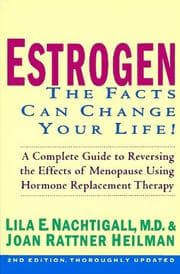
Cover of Estrogen

Estrogen

Spanish Edition by Lila E. Nachtigall, Joan Rattner Heilman

1986

En la actualidad, la terapia de sustitución hormonal suscita un notable desconcierto y confusión en multitud de mujeres e incluso entre los médicos. Si se sigue correctamente, el tratamiento con estrógenos constituye uno de los medios más eficaces para afrontar los cambios físicos que sobrevienen en la mujer a lo largo de la menopausia, desde los sofocos y el insomnio hasta el entumecimiento de manos y pies. Esta guía, que incluye las investigaciones científicas más recientes, así como las terapias alternativas de que se dispone, ofrece información sobre la eficacia del tratamiento hormonal --junto con sus efectos secundarios y posibles problemas-- para aliviar los síntomas de la menopausia, prevenir la osteoporosis, mejorar la memoria, mantener una vida sexual activa y reducir la probabilidad de desarrollar la enfermedad de Alzheimer o un infarto de miocardio.

Why it's similar: Similar focus on Menopause

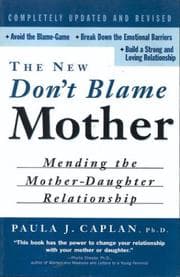
Cover of The New Don't Blame Mother

The New Don't Blame Mother

Paula Caplan

2000

In 1990, Paula Caplan, a nationally recognized expert on the psychology of women, wrote the groundbreaking Don'tBlame Mother. Now, almost ten years later, she finds that we are still blaming mothers. Fully revised, updated with a new introduction, this second edition proposes new ways of mending the mother-daughter relationship. The NewDon't Blame Mother: Mending the Mother-DaughterRelationship shows us that dangerous myths about mothers pervade our culture and have created or aggravated many of the problems between mothers and daughters. Myths of the Perfect Mother give rise to impossible expectations and set mothers up for failure--good mothers don't get angry, good mothers are endlessly giving--and myths of the Bad Mother exaggerate mothers' failings and create a monster figure in her image--mothers are too needy, mothers can't let go. Caplan shows that if women can identify these myths then they can take concrete steps to build a strong and loving relationship with their mothers. The New Don't Blame Mother shows how the anger and agony of the mother-daughter relationship can be replaced with a new bond based on understanding and respect. The New Don't Blame Mother is a must-read for all mothers and daughters. Caplan, drawing on over twenty-five years of research, clinical practice, and the experience of workshop participants, will show you how to stop blaming mother and, instead, start loving her.

Why it's similar: Similar focus on Psychology

Readers also enjoyed

Popular and highly rated books from our library you might like next.

Cover of Marabout

Marabout

Editors of Larousse/Marabout, Marie Borrel

2006

These smaller-format books give sixty tips on how to reach personal goals such as loosing weight, reducing stress, or dealing with headaches. Each two-page spread gives an overview, specific examples, sources of additional information, and a summary. La coleccion SALUD nos orienta a traves de diferentes test hacia las respuestas que mejor se adaptan a nuestros problemas en particular, utilizando una serie de recursos de facil aplicacion como: medicina herbolaria, masajes, relajacion, nutricion, etc. Los temas de la coleccion son los que presentan mayor preocupacion para la mujer contemporanea. Es una coleccion de 11 titulos Unica coleccion disenada para la mujer actual. Practico formato y facil de transportar. Guias, consejos y casos sencillos de aplicar. Imagenes e ilustraciones de alta calidad y contemporaneas. Temas de alta preocupacion, manejados por reconocidos especialistas.

Why it's similar: Similar focus on Menopause

Cover of Managing Hot Flushes and Night Sweats

Managing Hot Flushes and Night Sweats

Myra Hunter, Melanie Smith

2013

The menopause is still a taboo topic and a source of uncertainty and embarrassment for many women. In Managing Hot Flushes and Night Sweats Myra Hunter and Melanie Smith aim to provide women with up to date and balanced information about menopause and a self-help guide to reduce the impact of hot flushes and night sweats in just four weeks. This book sets out an interactive four-week programme using cognitive behavioural therapy, with exercises and worksheets designed to enable women to develop strategies for managing menopausal symptoms. This approach is based on the authors’ research and has been shown to be effective in recent clinical research trials. This guide can help you to: Understand the biological as well as the psychological and cultural influences on menopause Understand and manage hot flushes in social situations Learn to modify triggers and use paced breathing to reduce the impact of hot flushes Reduce stress and improve well-being Develop strategies to help if night sweats disturb your sleep With a companion audio exercise and downloadable resources available online, Managing Hot Flushes and Night Sweats offers a complete and effective framework to approach menopause with confidence and to manage symptoms without the use of medication. The book is ideal for women approaching or going through the menopause, for women having menopausal symptoms following treatment for breast cancer, for their friends and relatives, and healthcare professionals working with women.

Why it's similar: Similar focus on Menopause

Cover of Menopause without medicine

Menopause without medicine

Linda Ojeda

1989

This book is needed more than ever. The National Institute of Health interrupted their huge HRT (hormone replacement therapy) study in July 2002 after they found that Prempro, a combination of estrogen and progestin, had detrimental health effects which include an increased risk for breast cancer, heart disease, and stroke. This new edition examines the latest information about HRT and the safer alternatives. It completely validates the author's long-held bias against HRT and shows women, whether perimenopausal, menopausal, or postmenopausal, how they can maintain and improve their health and well-being without the use of synthetic hormones. The book offers complete information on menopausal symptoms and effects and ways to alleviate them. Updated sections cover heart disease (including hormonal effects, the role of cholesterol, diet, and supplements), osteoporosis, and breast cancer. The section on exercise and nutrition for health and weight is completely rewritten. The latest information on non-hormonal remedies to balance hormones is what is needed by every woman wanting to avoid HRT.

Why it's similar: Similar focus on Menopause

Cover of The menopause makeover

The menopause makeover

Staness Jonekos

2009

Hot flashes and sleepless nights? Feeling anxious and irritable? Feel like you're losing your mind? Frustrated with weight gain? It's time for a makeover—a menopause makeover! Staness Jonekos knows all too well how you feel. Leading up to her wedding day at the age of forty-seven, she was sporting a not-so-sexy belly bulge, suffering from hot flashes and feeling in no mood for a honeymoon. Jonekos took drastic action and created the first-ever menopause makeover to get back into that little white dress and feel sexy again in just twelve weeks. Now she joins forces with leading menopause expert Dr. Wendy Klein to give you the relief you need, fast! Based on the latest scientific research, and designed for both pre- and post-menopausal women, The Menopause Makeover is a proven, eight-step program to help you reclaim your health—and your life. • Evaluate if hormone therapy is right for you • Beat belly bulge with The Menopause Makeover food pyramid and recipes • Tone up and trim down with The Menopause Makeover fitness formula • Boost your libido and learn to love intimacy again • Regain your vibrant, youthful glow with essential beauty tips • Manage stress and get off the mood-swing roller coaster • Stay motivated with self-assessments and tools to track your progress

Why it's similar: Similar focus on Menopause

Cover of The menopause thyroid solution

The menopause thyroid solution

Mary J. Shomon

2009

From New York Times bestselling author and nationally recognized patient advocate Mary J. Shomon comes a groundbreaking guide to safely managing menopause through a better understanding of and better care for your thyroid. If you're one of the forty million American women struggling through menopause, you probably know all about the symptoms of fatigue, weight gain, and depression. But what you may not know is that the drop in reproductive hormones frequently triggers a thyroid slowdown—a "thyropause"—that can be the main cause for those troublesome symptoms. In fact, you may not even need hormone therapy, wild yam and progesterone creams, or herbs like black cohosh for a symptom-free menopause. What you really need is to begin to pay attention to your thyroid. In The Menopause Thyroid Solution, Mary J. Shomon will help you: Recognize the symptoms of a thyroid problem versus those of menopause Learn how to get your problems diagnosed and treated Find out what and how to eat, what medications to consider, what supplements to take, and what lifestyle changes to make Improve your metabolism and increase your energy

Why it's similar: Similar focus on Menopause

Cover of Sex and Repression in Savage Society

Sex and Repression in Savage Society

Bronislaw Malinowski

2003

Bronisław Malinowski's seminal work, *Sex and Repression in Savage Society*, challenges Freudian theories by examining the Oedipus complex within the matrilineal Trobriand Islander society. Through extensive ethnographic research, Malinowski argues that the absence of the patriarchal nuclear family unit, and the resulting different kinship structures and authority dynamics, leads to a distinct pattern of sexual expression and emotional repression. He demonstrates how the uncle-nephew relationship, rather than the father-son dynamic, shapes adolescent anxieties and the expression of aggression, suggesting that cultural context is paramount in understanding psychosexual development.

Why it's similar: Similar focus on Psychology

Cover of Enduring change in eating disorders

Enduring change in eating disorders

Robert Boland, Marcia Verduin, Dr. Pedro Ruiz MD (Author) & 0 more

2004

Enduring Change in Eating Disorders provides a unique perspective on the successful treatment of eating disorders, which are among the most debilitating and recalcitrant psychiatric diseases. Unique in the field, this book details effective Structural Family Therapy with qualitative follow-ups of up to 20 years. A practical approach providing concrete tools to the clinician to creating change that holds over time with bulimia, anorexia, and compulsive overeating. The text draws on cases from the author's practice of over twenty-five years and follows his approach in the theoretical tradition of Intensive Structural Family Therapy (IST). Chapters discuss the nature and significance of eating disorders, a review of current treatment approaches, and the importance of the family in the therapeutic process. Cases of eating disorders in youths and adults are provided as well as instances of bulimia, anorexia, and compulsive overeating. Three appendices provide the reader with information regarding the scientific basis of the IST model, the effectiveness of the approach in treating conditions other than eating disorders and preventing eating disorders.

Why it's similar: Similar focus on Psychology

Cover of The capacity to care

The capacity to care

Wendy Hollway

2006

Wendy Hollway explores a subject that is largely absent from the topical literature on care. Humans are not born with a capacity to care, and this volume explores how this capacity is achieved through the experiences of primary care, gender development and later, parenting. In this book, the author addresses the assumption that the capacity to care is innate. She argues that key processes in the early development of babies and young children create the capability for individuals to care, with a focus on the role of intersubjective experience and parent-child relations. The Capacity to Care also explores the controversial belief that women are better at caring than men and questions whether this is likely to change with contemporary shifts in parenting and gender relations. Similarly, the sensitive domain of the quality of care and how to consider whether care has broken down are also debated, alongside a consideration of what constitutes a ‘good enough’ family. The Capacity to Care provides a unique theorization of the nature of selfhood, drawing on developmental and object relations psychoanalysis, as well as philosophical and feminist literatures. It will be of relevance to social scientists studying gender development, gender relations and the family as well as those interested in the ethics of care debate.

Why it's similar: Similar focus on Psychology

Frequently Asked Questions

What should I read after Reinterpreting menopause?
Browse the similar books below — they're matched by subject overlap, author style, and reader preferences.
What books are most similar to Reinterpreting menopause?
Our recommendations prioritize shared themes like Health and hygiene, Femmes d'âge moyen, Psychology and books enjoyed by similar readers.
Which similar book is best for beginners?
Check page counts and summaries on each recommendation. Shorter titles with broader appeal are usually the best starting point.

Promote Your Book on BestsellerFinder

Reach thousands of readers with featured placements, homepage spots, and newsletter features.

Get bestseller picks in your inbox

Weekly curated book recommendations. Unsubscribe anytime.

Explore More

Affiliate Disclosure: As an Amazon Associate, we may earn from qualifying purchases. Book links on this page may be affiliate links. This does not affect our recommendations or the price you pay.