
Books Like “Our bodies, ourselves

If you enjoyed Our bodies, ourselves by Boston Women's Health Book Collective, Angela Phillips, Jill Rakusen, Alice Mayhew, Simon and Schster, you might also like these similar reads.

Cover of The Yellow Wallpaper

The Yellow Wallpaper

Charlotte Perkins Gilman, Aric Cushing, Logan Thomas, SparkNotes, Bryan Hunt, A. J. Alexander, Steven Stern, Aileen Oracion, Twisted Classics, Anne Geer, Sara Barkat, Period Time Publishing, Félix Gerónimo, Agustín López Tobajas, Nicolae Sfetcu, Erminia Passannanti

1892

En 1885, un año después de haberse casado con Charles Walter Stetson, Charlotte Perkins Gilman dio a luz a su hija, Katharine, y al poco tiempo entró en una profunda depresión. El doctor Silas Weir Mitchell, un reputado neurólogo a quien había acudido en busca de ayuda, le diagnosticó agotamiento de los nervios y le prescribió una cura de descanso, un controvertido tratamiento en el que era pionero. «Vive una vida tan hogareña como te sea posible, realiza no más de dos horas de actividad intelectual al día y no toques nunca más una pluma, un pincel o un lapicero»: estas fueron las instrucciones que le dio el médico a la autora. Durante unos meses siguió estos consejos, pero su depresión se agravó, y, según sus propias palabras, se acercó tanto a la frontera de la profunda ruina mental que llegó a vislumbrar el otro lado. Solo haciendo caso omiso de los consejos del médico y volviendo al trabajo logró recuperarse de su depresión. Esta experiencia la marcó hasta tal punto que en 1890 escribió "El papel pintado amarillo", un estremecedor relato que constituye una demoledora crítica al tratamiento prescrito por el doctor Mitchell.

Cover of Estrogen

Estrogen

Lila Nachtigall, Lila, MD Nachtigall, Joan Rattner Heilman, Lila E. Nachtigall

1986

En la actualidad, la terapia de sustitución hormonal suscita un notable desconcierto y confusión en multitud de mujeres e incluso entre los médicos. Si se sigue correctamente, el tratamiento con estrógenos constituye uno de los medios más eficaces para afrontar los cambios físicos que sobrevienen en la mujer a lo largo de la menopausia, desde los sofocos y el insomnio hasta el entumecimiento de manos y pies. Esta guía, que incluye las investigaciones científicas más recientes, así como las terapias alternativas de que se dispone, ofrece información sobre la eficacia del tratamiento hormonal --junto con sus efectos secundarios y posibles problemas-- para aliviar los síntomas de la menopausia, prevenir la osteoporosis, mejorar la memoria, mantener una vida sexual activa y reducir la probabilidad de desarrollar la enfermedad de Alzheimer o un infarto de miocardio.

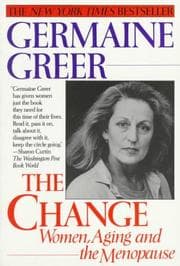
Cover of The Change

The Change

Germaine Greer

1991

In this study of the real and fundamental change which women experience during the menopause and which, like other fundamental changes, needs mental preparation and acceptance if it is not to be found unbearable, Dr Greer examines medical theories and treatment over the ages, and finds them often contradictory, excessive and, at times, dangerous. She responds to the traditional attitude of men and society which has been responsible for the creation of an image of the older woman as fake damsel or old crone. Dr Greer has weighed up the facts, the theories and the outright fabrications.

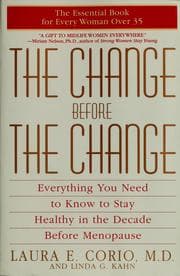
Cover of The change before the change

The change before the change

Laura E. Corio, Laura E. Corio MD, Linda G. Kahn

2000

Dr. Laura Corio's thriving New York City practice attracts women from around the world because of her unique blend of no-nonsense medical advice, extensive knowledge of alternative approaches, & close collaboration with patients. She believes that women today are just approaching their prime in their late 30s & 40s, & that they can't afford to lose time & energy to the common--but often misdiagnosed--symptoms that precede menopause by as much as a decade. Through vivid case studies & extensive treatment options, she provides in this handbook exactly what women today want & need to know: * How to cope with menstrual irregularities, hot flashes, sexual changes, weight gain, mood swings, & changes in appearance * Up-to-date choices for hormone replacement, both synthetic & natural, as well as many other options for women who want to avoid hormones * How perimenopause affects fertility * A reassuring guide to dealing with cancer fears, & what tests you absolutely must have * Lifestyle changes you need to make now to protect your breasts, uterus, bones, & heart in the years to come Filled with fascinating insights & information never before available to non-professionals, THE CHANGE BEFORE THE CHANGE is the one resource women need to navigate these years with confidence & vibrant good health.

Cover of Emotionally intelligent parenting

Emotionally intelligent parenting

Maurice J. Elias, Steven E. Tobias, Brian S. Friedlander, Maurice J. Phd Elias, Steven E. Psyd Tobias, Brian S. Phd Friedlander, Maueice J. Elias, Brian S., Ph.D. Friedlander, Various

1998

Daniel Goleman's bestseller Emotional Intelligence opened a new way of thinking about the skills necessary for meeting life's challenges. Expanding on the insights brought to light by the same research project, this book presents parents with many practical, realistic ways to help children develop the qualities of emotional intelligence: self-awareness, control of impulsive behaviour, co-operative work habits, care for themselves, and sympathy for others.

Cover of Seeing young children

Seeing young children

Warren R. Bentzen

1985

Seeing Young Children is an extensive guide to observing and recording behavior in children from birth through age eight. It begins by addressing the basic meaning of observation and why it is so important. This includes a discussion of the theoretical and practical aspects of observing and recording behavior. Detailed information on development, behavior and functioning in children in this age group enables parents and professionals to make meaningful observation, recordings, and evaluations. A large portion of the book concentrates on in-depth reviews of recording techniques and instruments, as well as the advantages and disadvantages of each. Finally, the last five chapters offer a wealth of observation exercises readers can immediately put to use. Specific by age group, each of these chapters contains observation objectives, instructions as to procedure, and background information on many functional areas, all aimed at collecting and using quality data to the benefit of children.

Cover of Growing up fast

Growing up fast

Bonnie J. Ross Leadbeater, Niobe Way

2001

The first edition of Growing Up Fast attempted to counter the stereotype of poor, minority adolescent mothers and describe the diversity of their educational, work, parenting, and relationship experiences. The volume followed a strengths-based approach to understanding why some mothers appeared resilient to the stresses of early parenting, compared to their peers, and what obstacles undermine resiliency for some of these young women. We hear their stories in their own words. We also see how many disadvantaged mothers go on to succeed in school, work, and parenting while avoiding many of the risk associated with teen parenting . The research is based on a six-year study of 120 young disadvantaged mothers and their children from New York City. It uniquely combines the analysis of longitudinal questionnaire data with qualitative analysis of extensive interviews conducted with these women focusing on the first six years after their child was born. A past winner of the Society for Research on Adolescence best book award, Growing Up Fast is a fascinating study of human resilience that will continue to be recognized for its contribution to individuals involved in program development and policymaking with teenage parenting. A new introductory chapter to the book suggests that we can look at the previous findings through a new lens that emphasizes not only the diversity of outcomes for young mothers and the sources of their strengths, but also asks what we can learn from these women about supporting their educational and work goals, as they transition to adulthood. New attention to emerging adulthood shows that this is a critical stage of life when the foundations for health and healthy life styles are laid down. Developmental tasks of this phase include building the capacity for financial and residential independence through post-secondary education and job training, and establishing stable sources of support from parents, romantic partners, and peers for all youth. Leadbea

Cover of Handbook of Parenting

Handbook of Parenting

Marc H. Bornstein

1995

This highly anticipated third edition of the Handbook of Parentingbrings together an array of field-leading experts who have worked in different ways toward understanding the many diverse aspects of parenting. Contributors to the Handbooklook to the most recent research and thinking to shed light on topics every parent, professional, and policymaker wonders about. Parenting is a perennially "hot" topic. After all, everyone who has ever lived has been parented, and the vast majority of people become parents themselves. No wonder bookstores house shelves of "how-to" parenting books and magazine racks in pharmacies and airports overflow with periodicals that feature parenting advice. However, almost none of these is evidence-based. The Handbook of Parentingis. Period. Each chapter has been written to be read and absorbed in a single sitting, and includes historical considerations of the topic, a discussion of central issues and theory, a review of classical and modern research, and forecasts of future directions of theory and research. Together, the five volumes in the Handbookcover Children and Parenting, the Biology and Ecology of Parenting, Being and Becoming a Parent, Social Conditions and Applied Parenting, and the Practice of Parenting. Volume 1, Children and Parenting,considers parenthood as a functional status in the life cycle: Parents protect, nurture, and teach their progeny, even if human development is more dynamic than can be determined by parental caregiving alone. Volume 1 of the Handbook of Parentingbegins with chapters concerned with how children influence parenting. Notable are their more obvious characteristics, like child age or developmental stage; but subtler ones, like child gender, physical state, temperament, mental ability, and other individual-differences factors, are also instrumental. The chapters in Part I, on Parenting across the Lifespan, discuss the unique rewards and special demands of parenting children of different ages and stages -

Affiliate Disclosure: As an Amazon Associate, we may earn from qualifying purchases. Book links on this page may be affiliate links. This does not affect our recommendations or the price you pay.