Books Like “Look Me in the Eye

If you enjoyed Look Me in the Eye by John Elder Robison, you likely appreciate Asperger's syndrome, Biography, Biography & Autobiography. These similar reads match the tone, themes, and audience of the original.

Not sure what to read next? Ask BestsellerFinder AI →

Asperger's syndromeBiographyBiography & AutobiographyMental healthNonfictionPatientsPsychologyLarge type books

Closest matches

Titles with overlapping themes, tone, and audience with your pick.

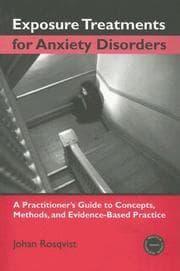
Cover of Exposure Treatments for Anxiety Disorders

Exposure Treatments for Anxiety Disorders

Johan Rosqvist

2005

Exposure Treatments for Anxiety Disorders is a unique volume, as it draws together the latest research on the rapidly-expanding field of anxiety disorders and illuminates how to correctly apply the proven methodology of behavioral therapy techniques to the variety of situations that face today's mental health professional. That said, cognitive therapy has in the last 10 years gotten increased attention as an alternative to behavior therapy in the treatment of anxiety disorders. But while it is gaining acceptance among practitioners, cognitive therapy has yet to illustrate substantial benefits above those that behavior therapy can already provide. In light of the aforementioned, coupled with the pressure many practitioners feel from managed care paradigms and shrinking healthcare coverage, this book will be a welcome resource allowing for increased clarity of action, accountability, and ultimately, positive client outcome. Each chapter is designed to address pivotal aspects in the assessment, formulation and diagnosis, and treatment of anxiety disorders, to a sufficient depth that the generalist practitioner will be comfortable using this book as a guide when working with the anxiety disordered client.

Why it's similar: Similar focus on PSYCHOLOGY

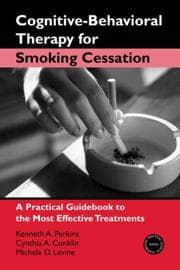
Cover of Cognitive-behavioral therapy for smoking cessation

Cognitive-behavioral therapy for smoking cessation

Kenneth A. Perkins, Kenneth A. Perkins, Cynthia A. Conklin, Michele D. Levine

2007

Cognitive-Behavioral Therapy (CBT) for Smoking Cessation is an essential resource for healthcare providers assisting patients in quitting tobacco smoking, presenting a structured approach that utilizes key components of CBT. This second edition provides empirically supported strategies for smoking cessation, adhering to well-established best practices and representing a "gold standard" in treatment. It presents step-by-step techniques to enhance patients’ motivation and confidence, prepare them to quit, navigate postquit challenges, and achieve long-term abstinence. This updated edition takes a patient-centered approach, addressing significant challenges faced during cessation and offering providers a systematic framework for delivering care. Notably, this volume introduces an adjunct CBT module specifically designed for patients very concerned about gaining weight after quitting—a unique and validated approach that aids cessation efforts and is not available in other resources. The book also includes new case vignettes, provider scripts, sidebars addressing common patient concerns, and key takeaways. Additionally, an extensive e-resource provides links to supplementary materials and further readings, equipping providers from diverse disciplines and backgrounds with the tools needed to effectively support patients. A must-have resource on the bookshelf of any health professional treating clients with tobacco dependence.

Why it's similar: Similar focus on Psychology

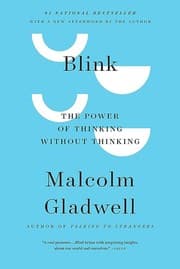
Cover of Blink

Blink

Malcolm Gladwell

2004

Drawing on cutting-edge neuroscience and psychology and displaying all of the brilliance that made The Tipping Point a classic, Blink changes the way you'll understand every decision you make. Never again will you think about thinking the same way. Malcolm Gladwell redefined how we understand the world around us. Now, in Blink, he revolutionizes the way we understand the world within. Blink is a book about how we think without thinking, about choices that seem to be made in an instant - in the blink of an eye - that actually aren't as simple as they seem. Why are some people brilliant decision makers, while others are consistently inept? Why do some people follow their instincts and win, while others end up stumbling into error? How do our brains really work - in the office, in the classroom, in the kitchen, and in the bedroom? And why are the best decisions often those that are impossible to explain to others? In Blink we meet the psychologist who has learned to predict whether a marriage will last, based on a few minutes of observing a couple; the tennis coach who knows when a player will double-fault before the racket even makes contact with the ball; the antiquities experts who recognize a fake at a glance. Here, too, are great failures of "blink": the election of Warren Harding; "New Coke"; and the shooting of Amadou Diallo by police. Blink reveals that great decision makers aren't those who process the most information or spend the most time deliberating, but those who have perfected the art of "thin-slicing" - filtering the very few factors that matter from an overwhelming number of variables. Drawing on cutting-edge neuroscience and psychology and displaying all of the brilliance that made The Tipping Point a classic, Blink changes the way you understand every decision you make. Never again will you think about thinking the same way.

Why it's similar: Similar focus on New York Times bestseller

Cover of The courage to be

The courage to be

Paul Tillich

1952

In "The Courage to Be," Paul Tillich explores the existential struggle of human beings faced with anxiety and despair in a contemporary world. Written in a compelling prose that intertwines philosophy and theology, Tillich employs a rich tapestry of literary allusions and personal insights to articulate his exploration of courage as a means of affirming one's existence. The book is rooted in the context of post-World War II existential thought, addressing the profound disillusionment of an era while arguing that true courage arises from the confrontation with one's own limitations and the acceptance of the inherent uncertainties of life. Paul Tillich, a noted philosopher and theologian, significantly influenced 20th-century thought with his synthesis of existentialism and Christian philosophy. His own experiences as a refugee and his deep engagement with the crises of modern life led him to emphasize the importance of courage in the face of ultimate concerns. Tillich's rich academic background, including his involvement with various religious and philosophical communities, enriches the text with depth and relevance. I highly recommend "The Courage to Be" to readers seeking an insightful examination of courage in the context of anxiety and faith. Its profound insights and philosophical rigor not only resonate with personal struggles but also encourage a thoughtful engagement with life's existential questions. In this enriched edition, we have carefully created added value for your reading experience: - A succinct Introduction situates the work's timeless appeal and themes. - The Synopsis outlines the central plot, highlighting key developments without spoiling critical twists. - A detailed Historical Context immerses you in the era's events and influences that shaped the writing. - A thorough Analysis dissects symbols, motifs, and character arcs to unearth underlying meanings. - Reflection questions prompt you to engage personally with the work's messages, connecting

Why it's similar: Also popular in Mental Health Books

Readers also enjoyed

Popular and highly rated books from our library you might like next.

Cover of Das Drama des begabten Kindes und die Suche nach dem wahren Selbst

Das Drama des begabten Kindes und die Suche nach dem wahren Selbst

Alice Miller

1979

The “drama” of the gifted—i.e., sensitive, alert—child consists of his recognition at a very early age of his parents' needs and of his adaptation to those needs. In the process, he learns to repress rather than to acknowledge his own intense feelings because they are unacceptable to his parents. Although it will not always be possible to avoid these “ugly” feelings (anger, indignation, despair, jealousy, fear) in the future, they will split off, and the most vital part of the “true self” (a key phrase in Alice Miller's works) will not be integrated into the personality. This leads to emotional insecurity and loss of self, which are revealed in depression or concealed behind a facade of grandiosity.Alice Miller defines the ideal state of genuine vitality, of free access to the true self and to authentic individual feelings that have their roots in childhood, as “healthy narcissism.” Narcissistic disturbances, on the other hand, represent for her solitary confinement of the true self within the prison of the false self. This is regarded less as an illness than as a tragedy.The examples Alice Miller presents make us aware of the child's unarticulated suffering and of the tragedy of parents who are unavailable to their children—the same parents who, when they were children, were available to fill their parents' needs. In her psychoanalytical work, Dr. Miller found that her patients' ability to experience authentic feelings, especially feelings of sadness, had been for the most part destroyed; it was her task to help her patients try to regain that long-lost capacity for genuine feelings that is the source of natural vitality. Many people who have read her books have discovered within themselves for the first time in their lives the little child they once were. This may explain the unusually strong and deep reactions Alice Miller's books have evoked in so many readers from different countries. The Drama of the Gifted Child and the Search for the True Self is the origina

Why it's similar: Similar focus on Mental health

Cover of Eating disorders

Eating disorders

American Psychological Association

2001

The widely updated second edition of Eating Disorders: Journey to Recovery Workbook helps those struggling with eating disorders in their recovery, guiding the reader through a greater consideration of body image, compulsive exercising, and personal and societal relationships based on Prochaska’s Stages of Change Theory. The workbook explores complicated issues having a direct effect on the eating disorder, including trauma, depression, gender identity, abuse, and the media. Updated to include the acknowledgement of binge-eating disorder, selective eating, and avoidant restrictive food intake disorder (ARFID), this second edition encourages self-paced learning and practice adjunct to one-on-one and group therapy from two seasoned clinicians in the treatment of eating disorders.

Why it's similar: Similar focus on Patients

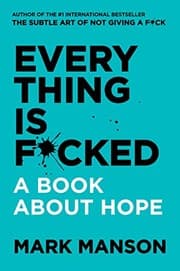
Cover of Everything is F*cked

Everything is F*cked

Mark Manson, Carlos Ramos Malavé

2019

New York Times Bestseller “Just because everything appears to be a mess doesn’t mean you have to be one. Mark Manson’s book is a call to arms for a better life and better world and could not be more needed right now.” — Ryan Holiday, bestselling author of The Obstacle is the Way and Ego is the Enemy From the author of the international mega-bestseller The Subtle Art of Not Giving A F*ck comes a counterintuitive guide to the problems of hope. We live in an interesting time. Materially, everything is the best it’s ever been—we are freer, healthier and wealthier than any people in human history. Yet, somehow everything seems to be irreparably and horribly f*cked—the planet is warming, governments are failing, economies are collapsing, and everyone is perpetually offended on Twitter. At this moment in history, when we have access to technology, education and communication our ancestors couldn’t even dream of, so many of us come back to an overriding feeling of hopelessness. What’s going on? If anyone can put a name to our current malaise and help fix it, it’s Mark Manson. In 2016, Manson published The Subtle Art of Not Giving A F*ck, a book that brilliantly gave shape to the ever-present, low-level hum of anxiety that permeates modern living. He showed us that technology had made it too easy to care about the wrong things, that our culture had convinced us that the world owed us something when it didn’t—and worst of all, that our modern and maddening urge to always find happiness only served to make us unhappier. Instead, the “subtle art” of that title turned out to be a bold challenge: to choose your struggle; to narrow and focus and find the pain you want to sustain. The result was a book that became an international phenomenon, selling millions of copies worldwide while becoming the #1 bestseller in 13 different countries. In Everthing Is F*cked, Manson turns his gaze from the inevitable flaws within each individual self to the endless calamities taking place in the

Why it's similar: Similar focus on New York Times bestseller

Frequently Asked Questions

What should I read after Look Me in the Eye?
Browse the similar books below — they're matched by subject overlap, author style, and reader preferences.
What books are most similar to Look Me in the Eye?
Our recommendations prioritize shared themes like Asperger's syndrome, Biography, Biography & Autobiography and books enjoyed by similar readers.
Which similar book is best for beginners?
Check page counts and summaries on each recommendation. Shorter titles with broader appeal are usually the best starting point.

Promote Your Book on BestsellerFinder

Reach thousands of readers with featured placements, homepage spots, and newsletter features.

Get bestseller picks in your inbox

Weekly curated book recommendations. Unsubscribe anytime.

Explore More

Affiliate Disclosure: As an Amazon Associate, we may earn from qualifying purchases. Book links on this page may be affiliate links. This does not affect our recommendations or the price you pay.