Books Like “Hold on to your kids

If you enjoyed Hold on to your kids by Gordon Neufeld, Gabor Maté, you likely appreciate Parent and child, Parental influences, Parenting. These similar reads match the tone, themes, and audience of the original.

Parent and childParental influencesParentingPeer pressure in childrenPression des pairs chez l'enfantRôle parentalChild DevelopmentParent-Child Relations
Cover of Handbook of Parenting

Handbook of Parenting

Marc H. Bornstein

1995

This highly anticipated third edition of the Handbook of Parentingbrings together an array of field-leading experts who have worked in different ways toward understanding the many diverse aspects of parenting. Contributors to the Handbooklook to the most recent research and thinking to shed light on topics every parent, professional, and policymaker wonders about. Parenting is a perennially "hot" topic. After all, everyone who has ever lived has been parented, and the vast majority of people become parents themselves. No wonder bookstores house shelves of "how-to" parenting books and magazine racks in pharmacies and airports overflow with periodicals that feature parenting advice. However, almost none of these is evidence-based. The Handbook of Parentingis. Period. Each chapter has been written to be read and absorbed in a single sitting, and includes historical considerations of the topic, a discussion of central issues and theory, a review of classical and modern research, and forecasts of future directions of theory and research. Together, the five volumes in the Handbookcover Children and Parenting, the Biology and Ecology of Parenting, Being and Becoming a Parent, Social Conditions and Applied Parenting, and the Practice of Parenting. Volume 1, Children and Parenting,considers parenthood as a functional status in the life cycle: Parents protect, nurture, and teach their progeny, even if human development is more dynamic than can be determined by parental caregiving alone. Volume 1 of the Handbook of Parentingbegins with chapters concerned with how children influence parenting. Notable are their more obvious characteristics, like child age or developmental stage; but subtler ones, like child gender, physical state, temperament, mental ability, and other individual-differences factors, are also instrumental. The chapters in Part I, on Parenting across the Lifespan, discuss the unique rewards and special demands of parenting children of different ages and stages -

Cover of Building resilience in children and teens

Building resilience in children and teens

Kenneth R. Ginsburg, Martha M. Jablow

2005

Confronting the overwhelming amount of stress kids face today, this invaluable guide offers coping strategies for facing the combined elements of academic performance, high achievement standards, media messages, peer pressure, and family tension. The handbook acknowledges that adolescents commonly survive stress by either indulging in unhealthy behaviors or giving up completely, and its suggested solutions are aimed at strengthening resilience. The proposed plan enables kids from the age of 18 months to 18 years to build the seven crucial "C's"--Competence, confidence, connection, character, co.

Cover of Cultures of Infancy

Cultures of Infancy

Heidi Keller

2006

The Classic Edition of Heidi Keller's Cultures of Infancy, first published in 2007, includes a new introduction by the author, describing for readers the original context for her work, how she has further developed her research and thinking, and the ongoing relevance of this volume in the context of future challenges for the field. In its original volume, Cultures of Infancy presented the first systematic analysis of culturally informed developmental pathways, synthesizing evolutionary and cultural psychological perspectives for a broader understanding of human development. In this compelling book, Heidi Keller utilizes ethnographic reports, as well as quantitative and qualitative analyses, to illustrate how humans resolve universal developmental tasks in particular sociodemographic contexts. These contexts are represented in cultural models, and three distinct models are addressed throughout the text: the model of independence with autonomy as developmental organizer; the model of interdependence with relatedness as the developmental organizer; and the model of autonomous relatedness representing particular mixtures of autonomy and relatedness. The book offers an empirical examination of the first integrative developmental task-relationship formation during the early months of life. Keller shows that early parenting experiences shape the basic foundation of the self within particular models of parenting that are influenced by culturally informed socialization goals. With distinct patterns of results the studies have revealed, Cultures of Infancy helps redefine developmental psychology as part of a culturally informed science based on evolutionary groundwork. Scholars interested in a broad perspective on human development and culture will benefit from this pioneering volume.

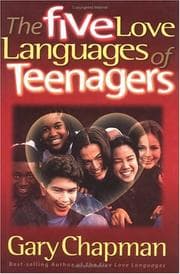
Cover of The five love languages of teenagers

The five love languages of teenagers

Gary D. Chapman

2000

Socially, mentally, and spiritually teenagers face a variety of pressures and stresses each day. Despite these peer pressures; it is still parents who can influence teens the most. Are you equipped to love your teenager effectively? Get equipped to be a better parent as The Five Love Languages of Teenagers explores the world in which teenagers live; explains the developmental changes; and give tools to help you identify and appropriately communicate in your teens love language. Get practical tips on loving your teen effectively and explore key issues in your teen’s life including anger and independence. Finally learn how to set boundaries that are enforced with discipline and consequences, and discover useful ways for the difficult task of loving when your teen fails. Get ready to discover how the principles of the five love languages can really work in the lives of your teens and family. Over 400,000 copies sold!

Cover of Parent-child relations

Parent-child relations

Jerry J. Bigner, Clara J. Gerhardt

1979

Now in the Ninth Edition, Jerry Bigner's "Parent-Child Relations," the classic resource for child development professionals and parents themselves, has undergone a thorough revision anchored by the vision of the late Dr. Bigner and executed by new co-author, Clara Gerhardt.Maintaining its fundamental structure and unique approach, the text uses family systems and systemic family development theory as a framework to explore how parent-child relations change in tandem with developmental changes occurring with children, adults, and the wider family system. Thoughtful updates and revisions were done to increase the effectiveness and currency of the text. The text continues to provide strong emphasis on various theoretical and practical models pertaining to parenting. For decades now, this classic text has prepared countless teachers and practitioners by its proven and practical approach, utilizing family systems and systemic family development theory to explore how parent-child relations change in tandem with developmental changes occurring with children, adults, and the wider family system. The most comprehensive and current resource available to students as they prepare for working with parents and families, and for their roles as parents themselves, this best-selling resource carries on the essential message of its originator, Dr. Jerry Bigner, and will continue to nurture future family scholars and practitioners for years to come.

Cover of Raising great kids

Raising great kids

Henry Cloud, John Sims Townsend, Elisa Morgan

1999

What does it take to raise great kids? If you've read any books on parenting, conflicting opinions have probably left you feeling confused. Get tough! Show acceptance. Lay down the rules. Lighten up, already! - There's got to be a balance -- and there is. Joining their expertise with the wisdom of MOPS International (Mothers of Preschoolers), Drs. Henry Cloud and John Townsend help you provide both the care and acceptance that make grace real to your child, and the firmness and discipline that give direction. Avoiding the twin extremes of permissiveness and over-control, Drs. Cloud and Townsend show how you can help your child cultivate six necessary character traits: attachment, responsibility, reality, competence, morality, and worship/spiritual life. - At last, here is an effective middle ground for raising up children who will handle life with maturity and wisdom. Raising Great Kids will help you equip your son or daughter to accept life's responsibilities, grow from its challenges, and freely and fully explore all that it has to offer.

Frequently Asked Questions

What should I read after Hold on to your kids?
Browse the similar books below — they're matched by subject overlap, author style, and reader preferences.
What books are most similar to Hold on to your kids?
Our recommendations prioritize shared themes like Parent and child, Parental influences, Parenting and books enjoyed by similar readers.
Which similar book is best for beginners?
Check page counts and summaries on each recommendation. Shorter titles with broader appeal are usually the best starting point.

Promote Your Book on BestsellerFinder

Reach thousands of readers with featured placements, homepage spots, and newsletter features.

Get bestseller picks in your inbox

Weekly curated book recommendations. Unsubscribe anytime.

Explore More

Affiliate Disclosure: As an Amazon Associate, we may earn from qualifying purchases. Book links on this page may be affiliate links. This does not affect our recommendations or the price you pay.