Books Like “Developing Healthy Stepfamilies

If you enjoyed Developing Healthy Stepfamilies by Patricia Kelley, you likely appreciate Case studies, Stepfamilies, Parenting. These similar reads match the tone, themes, and audience of the original.

Case studiesStepfamiliesParenting
Cover of Raising great kids

Raising great kids

Henry Cloud, John Sims Townsend, Elisa Morgan

1999

What does it take to raise great kids? If you've read any books on parenting, conflicting opinions have probably left you feeling confused. Get tough! Show acceptance. Lay down the rules. Lighten up, already! - There's got to be a balance -- and there is. Joining their expertise with the wisdom of MOPS International (Mothers of Preschoolers), Drs. Henry Cloud and John Townsend help you provide both the care and acceptance that make grace real to your child, and the firmness and discipline that give direction. Avoiding the twin extremes of permissiveness and over-control, Drs. Cloud and Townsend show how you can help your child cultivate six necessary character traits: attachment, responsibility, reality, competence, morality, and worship/spiritual life. - At last, here is an effective middle ground for raising up children who will handle life with maturity and wisdom. Raising Great Kids will help you equip your son or daughter to accept life's responsibilities, grow from its challenges, and freely and fully explore all that it has to offer.

Cover of 1-2-3 magic

1-2-3 magic

Thomas W. Phelan

1995

America's #1 child discipline book for over 20 years 1-2-3 Magic has helped millions of parents, teachers, and caregivers all over the world establish an effective, appropriate discipline system that helps children listen better and motivate themselves to behave well. Dr. Thomas Phelan is an internationally renowned expert in his field and has broken down the elements of effective parenting into an easy-to-understand program that can work for any family or in a classroom or caregiving scenario. Recommended by parenting experts for over twenty years, 1-2-3 Magic is a cornerstone book in the parenting category that combines timeless advice with fresh, up-to-date anecdotes and content, and is a must-have book for any caregiver hoping to raise happy, healthy, responsible kids.

Cover of Handbook of Parenting

Handbook of Parenting

Marc H. Bornstein

1995

This highly anticipated third edition of the Handbook of Parentingbrings together an array of field-leading experts who have worked in different ways toward understanding the many diverse aspects of parenting. Contributors to the Handbooklook to the most recent research and thinking to shed light on topics every parent, professional, and policymaker wonders about. Parenting is a perennially "hot" topic. After all, everyone who has ever lived has been parented, and the vast majority of people become parents themselves. No wonder bookstores house shelves of "how-to" parenting books and magazine racks in pharmacies and airports overflow with periodicals that feature parenting advice. However, almost none of these is evidence-based. The Handbook of Parentingis. Period. Each chapter has been written to be read and absorbed in a single sitting, and includes historical considerations of the topic, a discussion of central issues and theory, a review of classical and modern research, and forecasts of future directions of theory and research. Together, the five volumes in the Handbookcover Children and Parenting, the Biology and Ecology of Parenting, Being and Becoming a Parent, Social Conditions and Applied Parenting, and the Practice of Parenting. Volume 1, Children and Parenting,considers parenthood as a functional status in the life cycle: Parents protect, nurture, and teach their progeny, even if human development is more dynamic than can be determined by parental caregiving alone. Volume 1 of the Handbook of Parentingbegins with chapters concerned with how children influence parenting. Notable are their more obvious characteristics, like child age or developmental stage; but subtler ones, like child gender, physical state, temperament, mental ability, and other individual-differences factors, are also instrumental. The chapters in Part I, on Parenting across the Lifespan, discuss the unique rewards and special demands of parenting children of different ages and stages -

Cover of Emotionally intelligent parenting

Emotionally intelligent parenting

Maurice J. Elias, Steven E. Tobias, Brian S. Friedlander, Maurice J. Phd Elias, Steven E. Psyd Tobias, Brian S. Phd Friedlander, Maueice J. Elias, Brian S., Ph.D. Friedlander, Various

1998

Daniel Goleman's bestseller Emotional Intelligence opened a new way of thinking about the skills necessary for meeting life's challenges. Expanding on the insights brought to light by the same research project, this book presents parents with many practical, realistic ways to help children develop the qualities of emotional intelligence: self-awareness, control of impulsive behaviour, co-operative work habits, care for themselves, and sympathy for others.

Cover of Resilience across contexts

Resilience across contexts

Margaret C. Wang, Ronald D. Taylor

2000

A number of societal risks pose serious challenges to families' well-being, many of which cut across divisions of class and race. These challenges include: changes in the labor market and economy; the increasing participation of mothers in the labor force; the changing nature of family structure and the composition of households; and the increase in the number of immigrant families. Key institutions in the lives of families, including places of employment and schools, can play a significant role in fostering families' capacity to adapt to the potential challenges they face. Resilience Across Contexts: Family, Work, Culture, and Communitypresents papers--written by leading scholars in varied disciplines including economics, developmental and educational psychology, education, and sociology--discussing factors that influence resilience development. The authors' research focuses on emerging issues that have significant implications for policy and practice in such areas as employment and new technologies; maternal employment and family development; family structure and family life; immigration, migration, acculturation, and education of children and youth; and social and human services delivery. The book's overall goal is to take stock of what is known from research and practice on some of the challenges facing children and families for policy development and improvement of practices.

Cover of Positive child guidance

Positive child guidance

Darla Ferris Miller

1990

POSITIVE CHILD GUIDANCE, Eighth Edition, is ideal for guidance, behavior management and discipline, and classroom management courses in an early childhood education curriculum. This practical book outlines workable steps for creating a cooperative, respectful community of children and adults with special emphasis on sensitivity to cultural needs, cultural differences, and developmentally appropriate practice. Students will learn a range of practical, effective, and flexible guidance strategies based on principles of straightforward communication and assertiveness. This new edition includes critical advances in research and addresses the cultural trends that are changing the way babies and children are cared for today. Important Notice: Media content referenced within the product description or the product text may not be available in the ebook version.

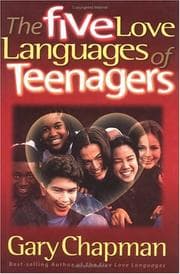
Cover of The five love languages of teenagers

The five love languages of teenagers

Gary D. Chapman

2000

Socially, mentally, and spiritually teenagers face a variety of pressures and stresses each day. Despite these peer pressures; it is still parents who can influence teens the most. Are you equipped to love your teenager effectively? Get equipped to be a better parent as The Five Love Languages of Teenagers explores the world in which teenagers live; explains the developmental changes; and give tools to help you identify and appropriately communicate in your teens love language. Get practical tips on loving your teen effectively and explore key issues in your teen’s life including anger and independence. Finally learn how to set boundaries that are enforced with discipline and consequences, and discover useful ways for the difficult task of loving when your teen fails. Get ready to discover how the principles of the five love languages can really work in the lives of your teens and family. Over 400,000 copies sold!

Cover of Growing up fast

Growing up fast

Bonnie J. Ross Leadbeater, Niobe Way

2001

The first edition of Growing Up Fast attempted to counter the stereotype of poor, minority adolescent mothers and describe the diversity of their educational, work, parenting, and relationship experiences. The volume followed a strengths-based approach to understanding why some mothers appeared resilient to the stresses of early parenting, compared to their peers, and what obstacles undermine resiliency for some of these young women. We hear their stories in their own words. We also see how many disadvantaged mothers go on to succeed in school, work, and parenting while avoiding many of the risk associated with teen parenting . The research is based on a six-year study of 120 young disadvantaged mothers and their children from New York City. It uniquely combines the analysis of longitudinal questionnaire data with qualitative analysis of extensive interviews conducted with these women focusing on the first six years after their child was born. A past winner of the Society for Research on Adolescence best book award, Growing Up Fast is a fascinating study of human resilience that will continue to be recognized for its contribution to individuals involved in program development and policymaking with teenage parenting. A new introductory chapter to the book suggests that we can look at the previous findings through a new lens that emphasizes not only the diversity of outcomes for young mothers and the sources of their strengths, but also asks what we can learn from these women about supporting their educational and work goals, as they transition to adulthood. New attention to emerging adulthood shows that this is a critical stage of life when the foundations for health and healthy life styles are laid down. Developmental tasks of this phase include building the capacity for financial and residential independence through post-secondary education and job training, and establishing stable sources of support from parents, romantic partners, and peers for all youth. Leadbea

Cover of What to expect the first year

What to expect the first year

Heidi Murkoff, Arlene Eisenberg, Sandee E. Hathaway

1989

Now fully revised and updated, this comprehensive and practical month-by-month guide clearly explains everything parents need to know - or might be worrying about - in the first year with a new baby. Featuring special sections on older siblings, travelling with a baby, adopted babies, and specific problems, as well as a first aid guide and charts on monthly growth and development, feeding and sleeping habits, this is the only book on infant care to address both the physical and the emotional needs of the whole family. Covering the most up-to-date knowledge, both medical and developmental, WHAT TO EXPECT THE 1st YEAR is, above all, down-to-earth and reassuring - and an invaluable aid for all parents of new babies.

Frequently Asked Questions

What should I read after Developing Healthy Stepfamilies?
Browse the similar books below — they're matched by subject overlap, author style, and reader preferences.
What books are most similar to Developing Healthy Stepfamilies?
Our recommendations prioritize shared themes like Case studies, Stepfamilies, Parenting and books enjoyed by similar readers.
Which similar book is best for beginners?
Check page counts and summaries on each recommendation. Shorter titles with broader appeal are usually the best starting point.

Promote Your Book on BestsellerFinder

Reach thousands of readers with featured placements, homepage spots, and newsletter features.

Get bestseller picks in your inbox

Weekly curated book recommendations. Unsubscribe anytime.

Explore More

Affiliate Disclosure: As an Amazon Associate, we may earn from qualifying purchases. Book links on this page may be affiliate links. This does not affect our recommendations or the price you pay.