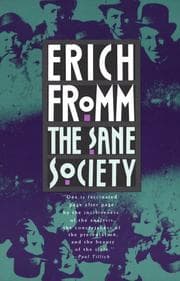
Cover of The Sane Society

The Sane Society

by Erich Fromm

Published 1955

Erich Fromm's *The Sane Society* examines the psychological consequences of modern Western civilization, arguing that its emphasis on consumerism, bureaucracy, and alienation fosters a "sane" but ultimately unhealthy society where individuals conform to societal norms rather than achieving genuine freedom and self-realization. He posits that capitalism and authoritarian tendencies contribute to this societal malaise, leading to a loss of individuality and a pervasive sense of powerlessness. Fromm advocates for a society that prioritizes humanistic values, productive love, and active participation to combat these destructive forces and foster a truly sane existence.

AuthoritarianismCapitalismCivilisation occidentaleCivilizationHuman behaviorLibertyLibertéManModern CivilizationPsychoanalysisPsychologie socialeSocial aspects

Similar Books

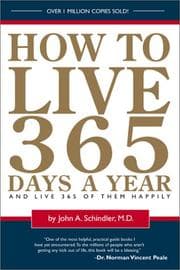
Cover of How to live 365 days a year

How to live 365 days a year

John A. Schindler

John A. Schindler's "How to Live 365 Days a Year" presents a framework for achieving sustained well-being by emphasizing the profound impact of mental outlook on physical health. The book explores how cultivating a positive psychological state, managing stress effectively, and fostering healthy interpersonal relationships can directly influence longevity and vitality. Schindler offers practical self-help techniques rooted in psychosomatic medicine, advocating for a holistic approach that integrates nutrition and mindful living to promote rejuvenation and a more fulfilling life.


Cover of The courage to be

The courage to be

Paul Tillich

In "The Courage to Be," Paul Tillich explores the existential struggle of human beings faced with anxiety and despair in a contemporary world. Written in a compelling prose that intertwines philosophy and theology, Tillich employs a rich tapestry of literary allusions and personal insights to articulate his exploration of courage as a means of affirming one's existence. The book is rooted in the context of post-World War II existential thought, addressing the profound disillusionment of an era while arguing that true courage arises from the confrontation with one's own limitations and the acceptance of the inherent uncertainties of life. Paul Tillich, a noted philosopher and theologian, significantly influenced 20th-century thought with his synthesis of existentialism and Christian philosophy. His own experiences as a refugee and his deep engagement with the crises of modern life led him to emphasize the importance of courage in the face of ultimate concerns. Tillich's rich academic background, including his involvement with various religious and philosophical communities, enriches the text with depth and relevance. I highly recommend "The Courage to Be" to readers seeking an insightful examination of courage in the context of anxiety and faith. Its profound insights and philosophical rigor not only resonate with personal struggles but also encourage a thoughtful engagement with life's existential questions. In this enriched edition, we have carefully created added value for your reading experience: - A succinct Introduction situates the work's timeless appeal and themes. - The Synopsis outlines the central plot, highlighting key developments without spoiling critical twists. - A detailed Historical Context immerses you in the era's events and influences that shaped the writing. - A thorough Analysis dissects symbols, motifs, and character arcs to unearth underlying meanings. - Reflection questions prompt you to engage personally with the work's messages, connecting

Cover of The Wisdom of Insecurity

The Wisdom of Insecurity

Alan Watts

Alan Watts argues that our constant pursuit of security, particularly in the face of existential fear, is the root of much human suffering. He suggests that true wisdom lies not in controlling the future or clinging to the past, but in embracing the present moment and accepting the inherent uncertainty of life. By relinquishing the illusion of absolute control and recognizing our interconnectedness with the universe, we can find genuine peace and mental well-being. This philosophical exploration encourages a re-evaluation of our relationship with fear and a deeper understanding of self through acceptance.

Cover of Rupture of Serenity

Rupture of Serenity

Aisha Abbasi

What happens when the outside world enters the psychoanalytic space? In The Rupture of Serenity: External Intrusions and Psychoanalytic Technique, the author draws on clinical material to describe some of the dilemmas she has encountered in her work with patients when external factors have entered the treatment frame. She considers analytic dilemmas that range from how to deal with patients' unusual requests regarding the conduct of an analytic treatment to the question of how to handle events in the analyst's personal life that, by necessity, must be addressed in the analysis. As a Muslim of Pakistani origin, the author is also able to discuss, frankly and with compassion, the role that ethnic and religious differences between patient and analyst can play in treatment-differences that, in the aftermath of 9/11 and the search for and killing of Osama bin Laden, became a palpable presence in her consulting room.

Cover of Dianetics - The Original Thesis

Dianetics - The Original Thesis

L. Ron Hubbard

This foundational text by L. Ron Hubbard introduces Dianetics, presenting it as a system for mental liberation and well-being. Hubbard outlines the theory of the reactive mind and its role in storing painful experiences, or "engrams," which he posits are the source of unwanted emotions, irrational behavior, and psychosomatic ailments. The book details the auditing process, a one-on-one counseling technique designed to address and neutralize these engrams, thereby improving mental clarity and overall health.

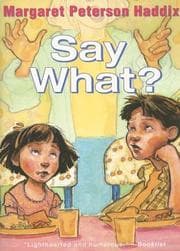
Cover of Say What?

Say What?

Margaret Peterson Haddix

Sukie is worried -- her parents are acting strange. When she runs in the house, her dad asks, "If all your friends jumped off a bridge, would you jump off a bridge too?" When she eats peas with her fingers, Mom yells, "You'll put an eye out with that thing!" What is going on? Have her parents been replaced by aliens? Are they robots with broken circuits? She and her older brothers decide to investigate. And what they discover leads to a kids-against-parents WAR! This very funny book casts a new light on family rules.

Explore More

Affiliate Disclosure: As an Amazon Associate, we may earn from qualifying purchases. Book links on this page may be affiliate links. This does not affect our recommendations or the price you pay.