
Books Like “Bad Boy

If you enjoyed Bad Boy by Diana Wieler, Diana J. Wieler, you likely appreciate Hockey stories, Friendship, Homosexuality. These similar reads match the tone, themes, and audience of the original.

Not sure what to read next? Ask BestsellerFinder AI →

Hockey storiesFriendshipHomosexualityFictionHockeyJuvenile fictionSexual behaviorYoung adults

Closest matches

Titles with overlapping themes, tone, and audience with your pick.

Cover of Say What?

Say What?

Margaret Peterson Haddix

2004

Sukie is worried -- her parents are acting strange. When she runs in the house, her dad asks, "If all your friends jumped off a bridge, would you jump off a bridge too?" When she eats peas with her fingers, Mom yells, "You'll put an eye out with that thing!" What is going on? Have her parents been replaced by aliens? Are they robots with broken circuits? She and her older brothers decide to investigate. And what they discover leads to a kids-against-parents WAR! This very funny book casts a new light on family rules.

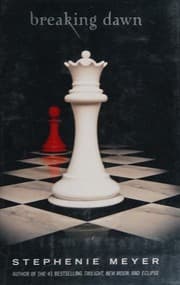
Cover of Breaking Dawn

Breaking Dawn

Stephenie Meyer

2000

In the explosive fourth book in the epic romantic saga, Bella has one final choice to make. Should she stay mortal and strengthen her connection to the werewolves—or leave it all behind to become a vampire? When you loved the one who was killing you, it left you no options. How could you run, how could you fight, when doing so would hurt that beloved one? If your life was all you had to give, how could you not give it? If it was someone you truly loved? To be irrevocably in love with a vampire is both fantasy and nightmare woven into a dangerously heightened reality for Bella Swan. Pulled in one direction by her intense passion for Edward Cullen, and in another by her profound connection to werewolf Jacob Black, a tumultuous year of temptation, loss, and strife have led her to the ultimate turning point. Her imminent choice to either join the dark but seductive world of immortals or to pursue a fully human life has become the thread from which the fates of two tribes hangs. This astonishing, breathlessly anticipated fourth book of The Twilight Saga illuminates the secrets and mysteries of this heart electrifying romantic epic. “You too might fall in love with its suspense and moving sensitivity" (The Daily News Tribune) Praise for The Twilight Saga “This tale of tortured demon lovers entices”—Kirkus Reviews "In the tradition of Anne Rice. . . this dark romance is gripping." —Booklist (starred review) "The novel's danger-factor skyrockets as the excitement of secret love and hushed affection morphs into a terrifying race to stay alive." —School Library Journal (starred review) “Relish this new adventure and hunger for more”—Booklist A New York Times bestseller A New York Times "Editor's Choice" A Publishers Weekly Best Book of the Year An Amazon best of #Booktok Book

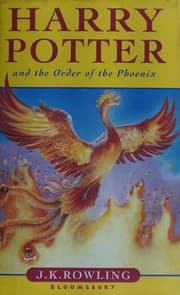
Cover of Harry Potter and the Order of the Phoenix

Harry Potter and the Order of the Phoenix

J. K. Rowling

2003

Harry is furious that he has been abandoned at the Dursleys' house for the summer, for he suspects that Voldemort is gathering an army, that he himself could be attacked, and that his so-called friends are keeping him in the dark. Finally being rescued by wizard bodyguards, he discovers that Dumbledore is regrouping the Order of the Phoenix - a secret society first formed years ago to fight Voldemort. But the Ministry of Magic is against the Order, lies are being spread by the wizards' tabloid, the Daily Prophet, and Harry fears that he may have to take on this epic battle against evil alone.

Readers also enjoyed

Popular and highly rated books from our library you might like next.

Cover of Romance and sex in adolescence and emerging adulthood

Romance and sex in adolescence and emerging adulthood

Ann C. Crouter, Alan Booth

2005

Abstract: "Adolescence" is designed to function as an undergraduate text that facilitates the teaching and learning of adolescent psychology. The text is organized into two sections. Part I is devoted to a survey of the study of adolescence and introduces the student to the basic fundamentals of the subject matter. Topics covered in Part I include perspectives on adolescence and youth, physical development and sexual development, intellectual and cognitive development, socalization, and personality development. Part II introduces the student to nine key aspects of adolescent development in a chapter-by-chapter approach.

Cover of Cyanide & Happiness

Cyanide & Happiness

Kris Wilson

2005

A fresh collection of fan-favorite webcomics have made their way to print for the very first time, along with brand-new, never-before-seen strips. But this is no mere collection of comic strips! Cyanide & Happiness: Twenty Years Wasted (A Questionable Recollection Of The First Two Decades) also features the mostly-true history of Cyanide & Happiness as told by its creators – Kris Wilson, Rob DenBleyker, and Dave McElfatrick. Reverently assembled with firsthand commentary, never-before-seen internal documents, insights into their creative process, and, yes, even incriminating photographs. Kris, Rob, and Dave will walk down memory lane, stopping at twenty different Cyanide & Happiness strips that tell the story of their history thus far.

Cover of Sex, drugs and young people

Sex, drugs and young people

Peter Aggleton, Andrew Ball, Purnima N. Mane

2005

Sexual practices and drug use among the young are examined in this book, calling into question mainstream assumptions about 'adolescence'. Bringing together a range of cross-cultural and cross-national contributions, the book reveals both similarities and important differences that mark sexuality and drug use among young in different social and cultural settings. In doing so, it allows the reader to build up a clearer understanding of the challenges that must be faced in public health and education if we are to develop programs and interventions that really serve the needs of young peop.

Cover of Confessions of a Bad Mother

Confessions of a Bad Mother

Stephanie Calman

2005

Are you a super-duper, totally fulfilled mother 24 hours a day? Do you give your children home-made risotto, help them with their homework, read them a fairy tale and sing them to sleep? Or do you give them chicken nuggets in front of the telly, herd them into bed and slump down exhausted with a drink? Do you let them watch ‘too much’ telly? Have you ever eaten their Easter eggs while they were asleep? Do you feel that other mothers are ‘doing it properly’ while you’re getting it All Wrong? Do you wish there could just, please, be a little less pressure? If you try your best but frequently feel a failure, if you – or your children – are in any way imperfect, then join the club: the Bad Mothers Club. Stephanie Calman has broken every rule and done it all ‘wrong.’ From giving birth with her pants on to making her kids watch more telly, she has persistently defied all accepted wisdom and professional advice. Outrageous, funny, & hideously true, Confessions of a Bad Mother is her story. Read it, and know – at last - that you are Normal.

Cover of The education-drug use connection

The education-drug use connection

Jerald G Bachman, Jerald G. Bachman, Patrick M. O'Malley, John E. Schulenberg, Lloyd D. Johnson, Lloyd D. Johnston, Peter Freedman-Doan, Emily E. Messersmith

2007

Does success in school protect teenagers from drug use? Does drug use impair scholastic success? This book tackles a key issue in adolescent development and health - the education-drug use connection. The authors examine the links and likely causal connections between educational experiences, delinquent behavior, and adolescent use of tobacco, alcohol, marijuana, and cocaine. The book uses data from the University of Michigan's Monitoring the Future project. It focuses on a large and nationally representative sample of 8th grade students in the United States who were initially surveyed in 1991-1993 and then followed over the vitally important developmental period between ages 14 and 22. The volume uses a variety of statistical analysis techniques, and the findings can be understood by individuals with limited, as well as with extensive, backgrounds in research design. The findings convincingly demonstrate that if young people can be successful in school, it can improve a broad range of outcomes in their lives, not the least of which is their ability to resist pressures to use drugs. The book provides: a summary of the findings and conclusions; a review of relevant literature; a detailed discussion of the survey and analysis methods; the academic attainment of those in the longitudinal panel; the delinquent behaviors of panel members as they relate to measures of educational success; and the patterns of initiation, continuation, and cessation for each substance: cigarettes, marijuana, cocaine, and alcohol. This book is intended for anyone who deals with education and/or substance use, including educational, developmental, and social psychologists; sociologists; epidemiologists; educators; and policy makers. The analysis of panel survey data, using a variety of techniques, will also appeal to survey methodologists and students.

Cover of By the time you read this

By the time you read this

Lola Jaye

2008

When he discovered that he had only six months to live, thirty-year-old Kevin Bates picked up his pen and wrote The Manual—advice for his five-year-old daughter, Lois, to live by, laugh at, and follow from twelve until thirty. Seven years later, when Lois is given The Manual, she can barely bring herself to read her father's words, the pain of his loss is still so raw. Yet soon Kevin's advice is guiding her through every stage of life from teen angst to career arcs, to knowing when she's at long last met "the one." While The Manual can never be a substitute for having Kevin back, the words left behind become Lois's steady support through all of life's ups and downs, and prove invaluable to unlocking the key to happiness.

Cover of Handbook of research with lesbian, gay, bisexual, and transgender populations

Handbook of research with lesbian, gay, bisexual, and transgender populations

William Meezan, James I. Martin

2008

Handbook of Research with Lesbian, Gay, Bisexual, and Transgender Populations provides a detailed examination of the current methods and theoretical frameworks for conducting research with LGBT populations. Introducing greater nuance in designing and implementing research models for working with these populations, Handbook of Research with Lesbian, Gay, Bisexual, and Transgender Populations provides guidelines for defining these groups, strategies to obtain more inclusive and representative samples, and methods for engaging these populations to produce consistent and relevant data. Collecting essays by notable researchers and scholars in the field, Handbook of Research with Lesbian, Gay, Bisexual, and Transgender Populations provides meaningful analyses of the ethics and practical constraints that researchers confront in dealing with LGBT populations--including protection of privacy--which is a special concern for many. For students, teachers, social workers, mental health professionals, and researchers of all backgrounds, this is an invaluable resource and guidebook for anyone seeking a better quality of understanding and engagement with LGBT individuals and communities.

Cover of Overcoming objectification

Overcoming objectification

Ann J. Cahill

2011

The second edition of Overcoming Objectification: A Carnal Ethics provides a critical analysis of the widely used (particularly in feminist philosophy) concept of objectification, and offers a new concept (derivatization) in its stead. Cahill suggests an abandonment of objectification due to the concept’s dependence on a Kantian ideal of personhood, an ideal that fails to recognize sufficiently the role the body plays in personhood and results in an implicit vilification of the body and sexuality. Phenomena associated with objectification are ethically problematic not because they render women objects, and therefore not-persons, but rather because they construct feminine subjectivity and sexuality as wholly derivative of masculine subjectivity and sexuality. Women are not objectified as much as they are derivatized: turned into a mere reflection or projection of the other. Cahill argues for a sexual ethics grounded in difference, carnality, and intersubjectivity. The preface to the second edition traces new scholarly contributions to conversations regarding sexual ethics, feminist engagements with Kant, intersectionality, and trans philosophy. With original and far-reaching insights regarding the structure of gender inequality, this work will be of interest to students and scholars in the humanities and social sciences alike and will be of particular use to those interested in sexual ethics, sexual assault, and dominant media representations of gendered bodies.

Cover of Gone Girl

Gone Girl

Gillian Flynn

2011

THE ADDICTIVE No.1 BESTSELLER THAT EVERYONE IS TALKING ABOUT Who are you? What have we done to each other? These are the questions Nick Dunne finds himself asking on the morning of his fifth wedding anniversary, when his wife Amy suddenly disappears. The police suspect Nick. Amy's friends reveal that she was afraid of him, that she kept secrets from him. He swears it isn't true. A police examination of his computer shows strange searches. He says they weren't made by him. And then there are the persistent calls on his mobile phone. So what really did happen to Nick's beautiful wife?

Cover of Dona Flor e seus dais maridos

Dona Flor e seus dais maridos

Jorge Leal Amado de Faria

1966

Um dos romances mais populares de Jorge Amado, levado com êxito ao cinema, ao teatro e à televisão, Dona Flor e seus dois maridos conta a história de Florípedes Paiva, que conhece em seus dois casamentos a dupla face do amor: com o boêmio Vadinho, Flor vive a paixão avassaladora, o erotismo febril, o ciúme que corrói. Com o farmacêutico Teodoro, com quem se casa depois da morte do primeiro marido, encontra a paz doméstica, a segurança material, o amor metódico. Um dia, porém, Vadinho retorna sob a forma de um fantasma capaz de proporcionar de novo à protagonista o êxtase dos embates eróticos. Por obra da fantasia literária de Jorge Amado e da intervenção das entidades do candomblé, Flor consegue conciliar no amor o fogo e a calmaria, a aventura e a segurança, a paixão e a gentileza. Lançada em 1966, esta narrativa ousada e exuberante, plena de humor e ironia, é uma saborosa crônica de costumes da Bahia da primeira metade do século XX e um retrato inventivo das ambigüidades que marcam o Brasil. Este e-book não contém as imagens presentes na edição impressa.

Frequently Asked Questions

What should I read after Bad Boy?
Browse the similar books below — they're matched by subject overlap, author style, and reader preferences.
What books are most similar to Bad Boy?
Our recommendations prioritize shared themes like Hockey stories, Friendship, Homosexuality and books enjoyed by similar readers.
Which similar book is best for beginners?
Check page counts and summaries on each recommendation. Shorter titles with broader appeal are usually the best starting point.

Promote Your Book on BestsellerFinder

Reach thousands of readers with featured placements, homepage spots, and newsletter features.

Get bestseller picks in your inbox

Weekly curated book recommendations. Unsubscribe anytime.

Explore More

Affiliate Disclosure: As an Amazon Associate, we may earn from qualifying purchases. Book links on this page may be affiliate links. This does not affect our recommendations or the price you pay.