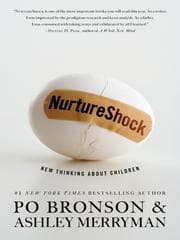
Cover of Nurtureshock

Nurtureshock

by Po Bronson, Ashley Merryman

Published 2009

View on Amazon

Check availability on Amazon

Are you the author or publisher of this book?

Claim this book — Free

Update metadata for “Nurtureshock” after verification.

BestsellerFinder Score unavailable — not enough catalog data yet.

One of the most influential books about children ever published, NurtureShock offers a revolutionary new perspective on children that upends a library's worth of conventional wisdom. With impeccable storytelling and razor-sharp analysis, the authors demonstrate that many of modern society's strategies for nurturing children are in fact backfiring--because key twists in the science have been overlooked. Nothing like a parenting manual, NurtureShock gets to the core of how we grow, learn and live. Released in hardcover in September 2009, NurtureShock remained on the New York Times best seller list for three months, and was one of Amazon's best selling books for 2009. The book has become a worldwide phenomenon with editions published around the world - in fifteen languages, to date. In addition to Bronson and Merryman's writings on praise -- first made famous in New York magazine -- there are nine more equally groundbreaking chapters. Among the topics covered: Why the most brutal person in a child's life is often a sibling, and how a single aspect of their preschool-aged play can determine their relationship as adults. When is it too soon - or too late - to teach a child about race? Children in diverse schools are less likely to have a cross-racial friendship, not more - so is school diversity backfiring? Millions of families are fighting to get their kids into private schools and advanced programs as early as possible. But schools are missing the best kids, 73% of the time - the new neuroscience explains why. Why are kids - even those from the best of homes - still aggressive and cruel? The answer is found in a rethinking of parental conflict, discipline, television's unexpected influence, and social dominance. Parents are desperate to jump-start infants' language skills. Recently, scientists have discovered a series of natural techniques that are astonishing in their efficacy - it's not baby videos, sign language, or even the richness of language exposure. It's nothi

Child developmentChild psychologyChild rearingParentingOpvoedingsmethodenOuderschapnyt:hardcover-nonfiction=2009-09-20New York Times bestsellernyt:paperback-nonfiction=2011-02-13

Similar Books

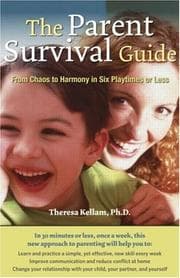
Cover of The parent survival guide

The parent survival guide

Theresa Kellam

When parents turn to the parenting/self-help section of their local bookstore, they are looking for both practical guidance and a childrearing philosophy that resonates with them - an approach they can relate to and be comfortable implementing in their own household. In The Parent Survival Guide: From Chaos to Harmony in Ten Weeks or Less, Theresa Kellam presents a way to strengthen the relationship with the child that simultaneously promotes the parent's own emotional healing and wellness. Grounded in a research-supported therapeutic technique that uses structured play time as the catalyst for interpersonal connection and growth, Kellam's model is subtle in its simplicity. Through a series of guided exercises, Kellam gives parents the skills they need to begin to set aside special playtimes with their children, during which the most important part of the process is simply "being there" in a way that promotes healing, growth, and communication. The beauty of this approach is that in only 30 minutes, once a week, the results can be seen in only a few weeks. Features of the book include: "Parent Survival Tip" at the start of each chapter Original cartoon illustrations bring text to life Short but insightful workseet questions bring focus to the program The Parent Survival Guide is structured over a series of 10 chapters, which can be read in conjunction with the 10-sessions of the CPRT workshops for those parents enrolled in a formal filial training program. But the material in the book is designed to be read and implemented by anyone. The author is not only a licensed psychologist and filial therapist, but she has also gone through the program with her own son and continues to rely on its principles within her family.
Cover of Parenting for a peaceful world

Parenting for a peaceful world

Robin Grille

Imagine a world where war, tyranny, human rights abuses and ecological destruction are relics of the past. What if the means to create such a reality were in the hands of mothers and fathers, and all those involved in the care and education of children? Parenting for a Peaceful World is a fascinating look at how parenting customs have shaped societies and major world events. It reveals how children adapt to different parenting styles and how these early experiences underpin the adults they become. In this expansive book, Robin Grille draws on revolutionary new research to argue that the safeguarding of children's emotional development is the key to creating a more peaceful and harmonious world. Parenting for a Peaceful World is a book for parents, child health professionals, and adults learning to be whole again. It is a manifesto for policy-makers and a resource for teachers. If the findings outlined in these pages are put into practice, the result may be a revolution of peace, humanity, and a world beyond our imagining.

Cover of The practice of psychoanalytic parent infant psychotherapy

The practice of psychoanalytic parent infant psychotherapy

Timothy N. Liesching

The Practice of Psychoanalytic Parent-Infant Psychotherapy is a comprehensive handbook, addressing the provision of therapeutic help for babies and their parents when their attachment relationship is troubled and a risk is posed to the baby's development. Drawing on clinical and research data from neuroscience, attachment and psychoanalysis, the book presents a clinical treatment approach that is up-to-date, flexible and sophisticated, whilst also being clear and easy to understand. The first section: The theory of psychoanalytic parent infant psychotherapy – offers the reader a theoretical framework for understanding the emotional-interactional environment within which infant development takes place. The second section, The therapeutic process, invites the reader into the consulting room to participate in a detailed examination of the relational process in the clinical encounter. The third section, Clinical papers, provides case material to illustrate the unfolding of the therapeutic process. This new edition draws on evidence from contemporary research, with new material on: Embodied communication between parent and infant and clinician-patient/s Fathers and fathering Engagement of at-risk populations Written by a team of experienced clinicians, writers, teachers and researchers in the field of infant development and psychopathology, The Practice of Psychoanalytic Parent-Infant Psychotherapy will be an essential resource for all professionals working with children and their families, including child psychiatrists, psychoanalysts, psychotherapists, and clinical and developmental psychologists.

Cover of Early Parenting and Prevention of Disorder

Early Parenting and Prevention of Disorder

Marianne Leuzinger-Bohleber, Robert N. Emde

This volume explores how early parental interactions profoundly shape a child's psychological development and trajectory towards mental well-being. It synthesizes psychoanalytic and developmental perspectives to illuminate critical periods and parental influences that can prevent later disorders. The book offers insights into fostering secure attachments and resilient emotional regulation from infancy onward.

Cover of The five love languages of children

The five love languages of children

Gary Chapman, 王雲良

Does your child speak a different language? Sometimes they wager for your attention, and other times they ignore you completely. Sometimes they are filled with gratitude and affection, and other times they seem totally indifferent. Attitude. Behavior. Development. Everything depends on the love relationship between you and your child. When children feel loved, they do their best. But how can you make sure your child feels loved? Since 1992, Dr. Gary Chapman's best-selling book The Five Love Languages has helped more than 300,000 couples develop stronger, more fulfilling relationships by teaching them to speak each others love language. Each child, too, expresses and receives love through one of five different communication styles. And your love language may be totally different from that of your child. While you are doing all you can to show your child love, he may be hearing it as something completely opposite.Discover your child's primary language and learn what you can do to effectively convey unconditional feelings of respect, affection, and commitment that will resonate in your child's emotions and behavior.

Explore More

Affiliate Disclosure: As an Amazon Associate, we may earn from qualifying purchases. Book links on this page may be affiliate links. This does not affect our recommendations or the price you pay.