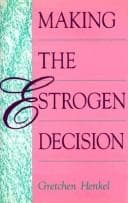

Cover of Making the estrogen decision

Making the estrogen decision

by Gretchen Henkel

Published 1992

Explains the role of estrogen in women's health, describes the benefits and problems associated with hormone replacement therapy, and identifies alternatives for alleviating menopause complaints.

MenopauseEstrogenHormone therapyTherapeutic useComplicationsPopular works

Similar Books

Cover of Hormone replacement therapy

Hormone replacement therapy

Linda Laucella

Written in an easy-to-follow, question-and-answer format, Hormone Replacement Therapy offers practical advice that helps women determine if and how HRT will benefit them, and encourages them to consult a doctor when considering nontraditional treatments. -- Explains the positive benefits of hormones as well as its side effects -- Explores alternative treatments -- Expanded information on how to incorporate non-drug therapies and lifestyle changes into a healthcare program

Cover of Estrogen

Estrogen

Lila Nachtigall, Lila, MD Nachtigall, Joan Rattner Heilman, Lila E. Nachtigall

En la actualidad, la terapia de sustitución hormonal suscita un notable desconcierto y confusión en multitud de mujeres e incluso entre los médicos. Si se sigue correctamente, el tratamiento con estrógenos constituye uno de los medios más eficaces para afrontar los cambios físicos que sobrevienen en la mujer a lo largo de la menopausia, desde los sofocos y el insomnio hasta el entumecimiento de manos y pies. Esta guía, que incluye las investigaciones científicas más recientes, así como las terapias alternativas de que se dispone, ofrece información sobre la eficacia del tratamiento hormonal --junto con sus efectos secundarios y posibles problemas-- para aliviar los síntomas de la menopausia, prevenir la osteoporosis, mejorar la memoria, mantener una vida sexual activa y reducir la probabilidad de desarrollar la enfermedad de Alzheimer o un infarto de miocardio.

Cover of Integrated treatment for co-occurring disorders

Integrated treatment for co-occurring disorders

Sharon C. Ekleberry

Integrated Treatment for Co-Occurring Disorders addresses a complex client population, which presents service providers with significant professional challenges. Underlying personality disorders compromise treatment effectiveness for medical, other psychiatric, or trauma services, as well as the ability these individuals have in adhering to probation, parole, or court-ordered treatment requirements. A co-occuring substance use disorder amplifies the difficulties experienced by personality-disordered individuals, exacerbates the precarious nature of their relationships, and raises the skill level needed by service providers attempting to help them. There can be significant professional satisfaction in working effectively with the interplay of addiction and disorders of personality. The book brings focus to the specifics of assessment and treatment for this type of co-occurring disorder and suggests that greater adaptability, fewer self-sabotaging behaviors, and an abstinent lifestyle are all possible. Recovery from both disorders is the journey these individuals take toward greater maturation, reliable impulse control, and coping skills that are not dependent upon the evasion of the demands of living or use of substances to manage stress or uncomfortable affect. Recovery is possible, and service providers can assist these clients on their path to wellness.

Cover of Dad's guide to pregnancy for dummies

Dad's guide to pregnancy for dummies

Matthew M. F. Miller

This is the hardcover format ofDad's Guide to Pregnancy For Dummies, 2nd Edition. Every father-to-be's handbook for knowing what to expect when expecting! In today's world, men are more involved in their wives' pregnancies than ever before. This 2nd Edition of Dad's Guide to Pregnancy For Dummies gives new fathers a hands-on guide that covers all of the logistical, physical, and emotional aspects of pregnancy. It is a wealth of information on topics, such as setting up the nursery, childbirth 101, and how to take care of your newborn. The book includes ideas for knowing the right time to break the news and the pregnancy timeline. Once the baby arrives, this handbook gives you the low-down on what you can expect during the first six months, such as how to change diapers and feed the little one. You'll also explore much more in-depth topics such as the new technology behind ultrasounds, and the information that is gleaned from them, the lowdown on vaccination updates, information to take the fear out of cesarean sections, tips on prenatal depression, new developments on infertility treatments, and so much more! Helps to take the fear out of fatherhood with down-to-earth advice and information Reveals how smoking leads to development problems and the possible dangers of e-cigarettes Shows new dads a playbook for how they can help throughout the pregnancy and during the delivery Offers practical tips for chronicling baby's life from ultrasound to year one If you're going to be a new dad, this is a survival guide of what to expect as your bundle of joy is on the way is the complete, easy-to-read resource for preparing with your partner."

Cover of Anxiety and Mood Disorders Following Traumatic Brain Injury

Anxiety and Mood Disorders Following Traumatic Brain Injury

Rudi Coetzer

While there are many excellent texts addressing cognitive impairment and behavioural difficulties and on rehabilitation associated with traumatic brain injury, few textbooks specifically address the most common emotional problems that can have such an adverse effect on rehabilitation and outcome. Uniquely this book deals exclusively with the identification and psychotherapeutic management of mood and anxiety disorders after traumatic brain injury. Furthermore, a systematic approach to identifying and diagnosing anxiety and mood disorders is followed throughout the text. As well as providing an introduction to anxiety and mood disorders after traumatic brain injury, it provides a psychological perspective on their evolution and management. It is aimed at a range of professionals in training (or those responsible for providing training in psychopathology, neuropsychology and psychotherapy), as well as those who may have an interest in working with the type of patients with anxiety or depression, commonly seen in post-acute brain injury rehabilitation settings. Case studies, summaries and suggested references for further reading are used throughout to facilitate understanding and teaching where relevant.

Explore More

Affiliate Disclosure: As an Amazon Associate, we may earn from qualifying purchases. Book links on this page may be affiliate links. This does not affect our recommendations or the price you pay.