
The Power of Positive Thinking vs Letters on the improvement of the mind

Both "Letters on the improvement of the mind" by Hester Chapone, Chapone, Thomas Enquiry into the Duties of the Female Sex Gisborne and "The Power of Positive Thinking" by Norman Vincent Peale are popular choices for readers interested in Conduct of life and Early works to 1800. This comparison helps you decide which to read first — or whether both belong on your list.

Shared Themes

Conduct of life
Cover of The Power of Positive Thinking

The Power of Positive Thinking

Norman Vincent Peale

1952

The book describes the power positive thinking has and how a firm belief in something, does actually help in achieving it. In order to live a successful and constructive life, one needs to know about the secrets of positive thinking says the author for it is the most important ingredient for a better and blissful life. The Power of Positive Thinking' will help you overcome negative attitudes, such as fear and lack of confidence and replace them with the traits of a positive thinker optimism, determination, patience and focus.Simple techniques of elevating low moods and energy levels by positive thinking also improve ones overall mental and physical health.This book will show you how you can deal more effectively with tough situations and difficult people and dramatically improve your performance and confidence. You must learn that the easiest way to an easy mind is to create an easy mind. This is done by practice and by the application such as "Believe in yourself and in everything you do", "Build new power and determination", "Improve your personal and professional relationships" and "Be kind to yourself" etc.
Published 1952
Books like The Power of Positive Thinking
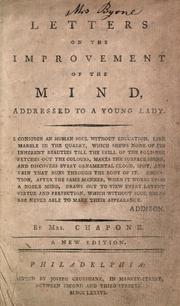
Cover of Letters on the improvement of the mind

Letters on the improvement of the mind

Hester Chapone, Chapone, Thomas Enquiry into the Duties of the Female Sex Gisborne

1773

This collection of works by John Gregory, Lady Sarah Pennington, and Mrs. Chapone offers a fascinating glimpse into the self-improvement literature of the late 18th century. With a focus on education, family life, and personal growth, these texts provide valuable historical context for modern readers. This work has been selected by scholars as being culturally important, and is part of the knowledge base of civilization as we know it. This work is in the "public domain in the United States of America, and possibly other nations. Within the United States, you may freely copy and distribute this work, as no entity (individual or corporate) has a copyright on the body of the work. Scholars believe, and we concur, that this work is important enough to be preserved, reproduced, and made generally available to the public. We appreciate your support of the preservation process, and thank you for being an important part of keeping this knowledge alive and relevant.

Published 1773
Books like Letters on the improvement of the mind

Frequently Asked Questions

Which is easier to read: Letters on the improvement of the mind or The Power of Positive Thinking?
Reading difficulty depends on your familiarity with the genre. Check each book's page count and subject matter above, and start with whichever aligns better with books you've enjoyed before.
Can I read Letters on the improvement of the mind and The Power of Positive Thinking in any order?
Yes — these are standalone works. You don't need to read one before the other unless they're part of the same series.
Which book is better for beginners?
If you're new to this genre, look at the shorter book with broader appeal and start there. You can always come back for the other.

Are you an author? Promote your book or submit a free listing.

Affiliate Disclosure: As an Amazon Associate, we may earn from qualifying purchases. Book links on this page may be affiliate links. This does not affect our recommendations or the price you pay.