
Handbook of Parenting vs The Psychology of Parental Control

Both "Handbook of Parenting" by Marc H. Bornstein and "The Psychology of Parental Control" by Wendy S. Grolnick are popular choices for readers interested in Child care & upbringing and Family & relationships. This comparison helps you decide which to read first — or whether both belong on your list.

Shared Themes

Family & relationshipsPsychologyParent And ChildParentingParents
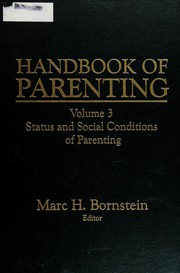
Cover of Handbook of Parenting

Handbook of Parenting

Marc H. Bornstein

1995

This highly anticipated third edition of the Handbook of Parentingbrings together an array of field-leading experts who have worked in different ways toward understanding the many diverse aspects of parenting. Contributors to the Handbooklook to the most recent research and thinking to shed light on topics every parent, professional, and policymaker wonders about. Parenting is a perennially "hot" topic. After all, everyone who has ever lived has been parented, and the vast majority of people become parents themselves. No wonder bookstores house shelves of "how-to" parenting books and magazine racks in pharmacies and airports overflow with periodicals that feature parenting advice. However, almost none of these is evidence-based. The Handbook of Parentingis. Period. Each chapter has been written to be read and absorbed in a single sitting, and includes historical considerations of the topic, a discussion of central issues and theory, a review of classical and modern research, and forecasts of future directions of theory and research. Together, the five volumes in the Handbookcover Children and Parenting, the Biology and Ecology of Parenting, Being and Becoming a Parent, Social Conditions and Applied Parenting, and the Practice of Parenting. Volume 1, Children and Parenting,considers parenthood as a functional status in the life cycle: Parents protect, nurture, and teach their progeny, even if human development is more dynamic than can be determined by parental caregiving alone. Volume 1 of the Handbook of Parentingbegins with chapters concerned with how children influence parenting. Notable are their more obvious characteristics, like child age or developmental stage; but subtler ones, like child gender, physical state, temperament, mental ability, and other individual-differences factors, are also instrumental. The chapters in Part I, on Parenting across the Lifespan, discuss the unique rewards and special demands of parenting children of different ages and stages -
Published 1995
Books like Handbook of Parenting
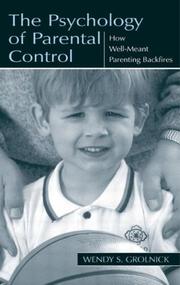
Cover of The Psychology of Parental Control

The Psychology of Parental Control

Wendy S. Grolnick

2002

What is parental control? Is it positive or negative for children? What makes parents controlling with their children, even when they value supporting children's autonomy? Are there alternatives to control and how might we apply them in important domains of children's lives, such as school and sports? This book addresses these and other questions about the meaning and predictors of parental control, as well as its consequences for children's adjustment and well-being. While the topic of parental control is not new, there has been controversy about the concept, with some researchers and clinicians weighing in on the side of control and others against it. This book argues that part of the controversy stems from different uses of the term, with some investigators focusing more on parents being in control and others on controlling children. Using a definition of control as "pressure for children to think, feel, or behave in specific ways," the author explores research on parental control, arguing that there is more consensus than previously thought. Using this research base, the author provides evidence that parental control can be subtle and can lurk within many "positive" parenting approaches; parental control undermines the very behaviors we wish to inculcate in our children; providing autonomy support--the opposite of control--is a challenge, even when parents are committed to doing so. With controversy in the literature about parental control and attention in the media on the ways in which parents step over the control line (e.g., screaming on the soccer sidelines, pressuring children in academics), this book is especially timely. It provides an empathic view of how easily parents can become trapped in controlling styles by emphasizing performance and hooking their own self-esteem on children's performance. Examples of how this can happen in academic, sporting, and peer situations with their emphasis on competition and hierarchy are provided, as well as strategies

Published 2002
Books like The Psychology of Parental Control

Frequently Asked Questions

Which is easier to read: Handbook of Parenting or The Psychology of Parental Control?
Reading difficulty depends on your familiarity with the genre. Check each book's page count and subject matter above, and start with whichever aligns better with books you've enjoyed before.
Can I read Handbook of Parenting and The Psychology of Parental Control in any order?
Yes — these are standalone works. You don't need to read one before the other unless they're part of the same series.
Which book is better for beginners?
If you're new to this genre, look at the shorter book with broader appeal and start there. You can always come back for the other.

Are you an author? Promote your book or submit a free listing.

Affiliate Disclosure: As an Amazon Associate, we may earn from qualifying purchases. Book links on this page may be affiliate links. This does not affect our recommendations or the price you pay.