
The World We Have Won
Jeffrey Weeks
2007
If you enjoyed Coming Out and Disclosures by Ski Hunter, you likely appreciate Coming out (Sexual orientation), Social work with sexual minorities, Social work with gays. These similar reads match the tone, themes, and audience of the original.

Jeffrey Weeks
2007

Tom Dalzell, Terry Victor
2007

Ann C. Crouter, Alan Booth
2005

Peter Aggleton, Andrew Ball, Purnima N. Mane
2005

Patricia Hill Collins
2004

Sandra L. Samons
2008

Salla Sariola
2009

Evelyne Micollier
2003

Christopher Pullen, Margaret Cooper
2010

Anna G. Jónasdóttir, Valerie Bryson, Kathleen B. Jones
2010

Booth, Alan, Ann C. Crouter
2002

Michael E. Metz
2010

Ann J. Cahill
2011
The second edition of Overcoming Objectification: A Carnal Ethics provides a critical analysis of the widely used (particularly in feminist philosophy) concept of objectification, and offers a new concept (derivatization) in its stead. Cahill suggests an abandonment of objectification due to the concept’s dependence on a Kantian ideal of personhood, an ideal that fails to recognize sufficiently the role the body plays in personhood and results in an implicit vilification of the body and sexuality. Phenomena associated with objectification are ethically problematic not because they render women objects, and therefore not-persons, but rather because they construct feminine subjectivity and sexuality as wholly derivative of masculine subjectivity and sexuality. Women are not objectified as much as they are derivatized: turned into a mere reflection or projection of the other. Cahill argues for a sexual ethics grounded in difference, carnality, and intersubjectivity. The preface to the second edition traces new scholarly contributions to conversations regarding sexual ethics, feminist engagements with Kant, intersectionality, and trans philosophy. With original and far-reaching insights regarding the structure of gender inequality, this work will be of interest to students and scholars in the humanities and social sciences alike and will be of particular use to those interested in sexual ethics, sexual assault, and dominant media representations of gendered bodies.

Joanna Brewis
2000

F. Scott Christopher
2000

Paula Bartley
1999

Carren Strock
1995

Jeffrey Weeks
2008

H. Charles Fishman
2004

Ron A. Thompson
2010

Victor Seidler, Victor J. Seidler
1992

Trudi Petersen, Andrew McBride
2002
Working with Substance Misusers is a practical handbook for students and those who work with people who misuse drugs or alcohol. Written by experienced teachers and clinicians, the book introduces: * the substances themselves * theories relevant to substance use and misuse * the skills necessary to work with this client group * the broad range of approaches to treatment * particular problems of specific groups. The reader is encouraged to read and reflect on the material in relation to their own practice. To help this process, each topic has an identified set of learning objectives. Activities designed to reinforce learning include discussion points, case studies, role plays and group exercises. Working with Substance Misusers makes clear the connection of theory to practice and encourages a skills-based, but reflective, approach to work in this complex field. Cutting across professional boundaries, it provides both new and more experienced practitioners with a key text.

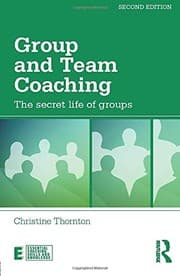
Christine Thornton
2010
Group and Team Coaching is a best-seller offering a new perspective on the ‘secret life of groups’, the subconscious and non-verbal processes through which people learn and communicate in groups and teams. Originally published in 2010 and designed for easy navigation, it is a highly regarded team coaching handbook, and required reading on many courses. This new edition is fully updated, with a completely new chapter on working with groups and teams on virtual platforms, including hybrid and blended working. Christine Thornton uses key concepts from psychology, group analysis and systems theory as well as her own extensive experience to give practical advice. Topics include: the invisible processes of group dynamics; common dilemmas; pitfalls of team coaching and how to avoid them; pros and cons and best practice online; how to design coaching interventions; supervising coaching; ethics. Based on research and including many vignettes and case studies, this new edition is essential reading for coaches working with groups and teams, and leaders working with their own teams or commissioning coaching.

Laura J. Goodman
2001

Stephen Palmer, Alison Whybrow
2014
Reach thousands of readers with featured placements, homepage spots, and newsletter features.
Weekly curated book recommendations. Unsubscribe anytime.
Affiliate Disclosure: As an Amazon Associate, we may earn from qualifying purchases. Book links on this page may be affiliate links. This does not affect our recommendations or the price you pay.