
Pick
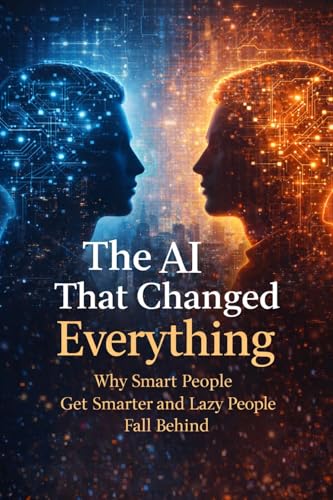
The AI That Changed Everything
Cole Peterson
Short, plain language, for anyone who is tired of being the last one in the room getting the point about AI.
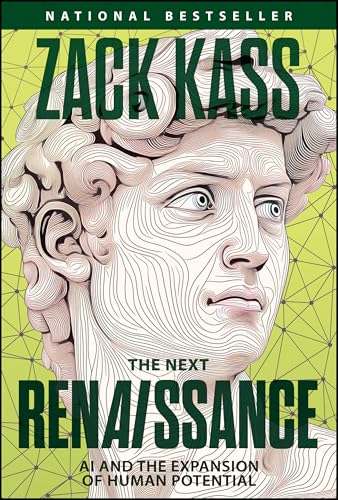
by Zack Kass
Check availability on Amazon
Are you the author or publisher of this book?
Claim this book — FreeUpdate metadata for “The Next Renaissance: AI and the Expansion of Human Potential” after verification.
BestsellerFinder Score unavailable — not enough catalog data yet.
“A refreshing, well-crafted treatise on the many possible good things that thinking machines can bring.” – Kirkus Reviews #6 Publishers Weekly, #6 LA Times and #10 USA Today Bestseller An eye-opening discussion on the transformative impact of AI and how to prepare for a new future. In The Next Renaissance: AI and the Expansion of Human Potential, acclaimed AI advisor Zack Kass presents an optimistic and compelling vision of how artificial intelligence will shape our lives. Drawing on historical context, cutting-edge advancements, and firsthand experience, Kass lays out how AI will become a collaborative partner in building a better, more creative, and more compassionate world. Just as the original Renaissance revolutionized art, science, and society, today’s AI-driven Renaissance will redefine how we create, innovate, and flourish. Kass leverages his deep industry expertise to explain how this transformative technology will solve previously unimaginable challenges, presenting entirely new possibilities. Inside the book, you'll discover: Practical strategies to navigate AI’s integration into everyday life. Clear guidance on future-proofing your career by emphasizing uniquely-human skill. Insights into how AI opens up entirely new domains of knowledge by solving ambiguous problems. How to overcome the psychological and societal barriers to AI adoption. Concrete examples of AI amplifying human potential by saving time and resources, and sparking creativity. A must-read for anyone interested in the most powerful technological advancement since the steam engine. The Next Renaissance is here.
Cole Peterson
Short, plain language, for anyone who is tired of being the last one in the room getting the point about AI.
Spanish Edition by Margaret Boden
How is it possible to think new thoughts? What is creativity and can science explain it? And just how did Coleridge dream up the creatures of The Ancient Mariner? When The Creative Mind: Myths and Mechanisms was first published, Margaret A. Boden's bold and provocative exploration of creativity broke new ground. Boden uses examples such as jazz improvisation, chess, story writing, physics, and the music of Mozart, together with computing models from the field of artificial intelligence to uncover the nature of human creativity in the arts. The second edition of The Creative Mind has been updated to include recent developments in artificial intelligence, with a new preface, introduction and conclusion by the author. It is an essential work for anyone interested in the creativity of the human mind.
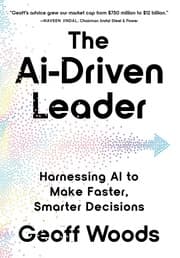
Geoff Woods
"The AI-Driven Leader" by Geoff Woods equips leaders with practical strategies to integrate artificial intelligence into their decision-making processes. The book explores how AI can augment human judgment by analyzing vast datasets, identifying patterns, and predicting future outcomes, enabling more informed and agile choices. Woods emphasizes the importance of understanding AI's capabilities and limitations to effectively leverage its power for improved organizational performance and competitive advantage.
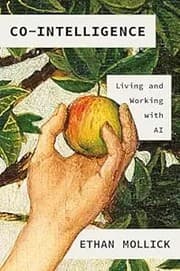
Josh Tyrangiel
This book explores the evolving relationship between humans and artificial intelligence, moving beyond simple utility to consider how we can foster genuine collaboration. Tyrangiel argues for a "co-intelligent" future where AI acts as a partner, augmenting human capabilities and fostering creativity rather than replacing them. The work delves into practical strategies for navigating this new landscape in both personal and professional spheres, emphasizing the importance of adapting our skills and perspectives to harness AI's full potential.
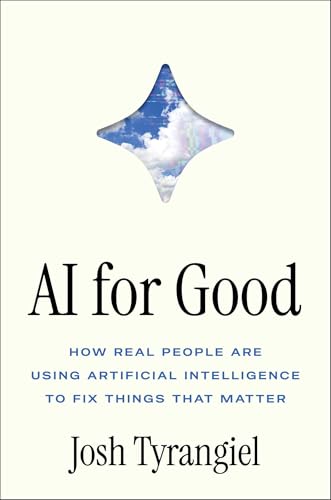
Josh Tyrangiel
"AI for Good" by Josh Tyrangiel showcases how individuals and organizations are leveraging artificial intelligence to address critical global challenges. The book highlights practical applications in fields like healthcare, environmental protection, and social justice, demonstrating AI's potential to drive positive change. Tyrangiel presents compelling case studies of AI's impact, offering a hopeful perspective on its role in solving complex societal issues.
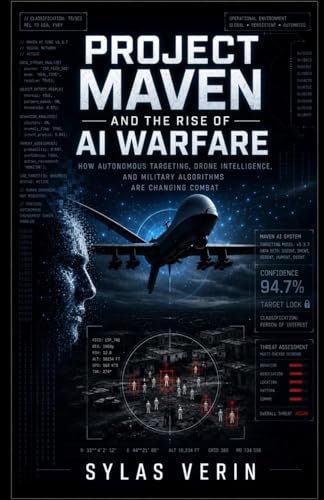
Sebastian Mallaby
This book chronicles the improbable journey of Marine Colonel Gregory Boyington's team as they spearheaded Project Maven, a groundbreaking initiative to integrate artificial intelligence into drone warfare. Mallaby details the complex challenges of overcoming bureaucratic inertia and technical hurdles to equip military drones with AI for target identification. The narrative highlights the ethical and strategic implications of this nascent era of AI-driven conflict, showcasing the human ingenuity behind a significant technological leap.
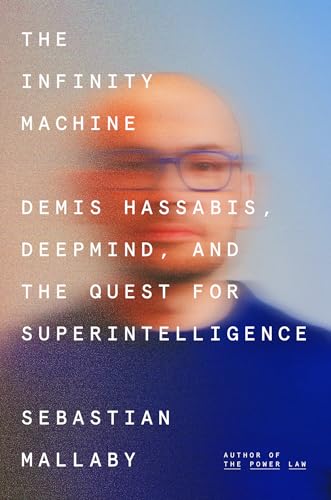
Sebastian Mallaby
Sebastian Mallaby's *The Infinity Machine* chronicles the ambitious journey of Demis Hassabis and his company DeepMind as they strive to create artificial general intelligence (AGI). The book details the scientific breakthroughs, intense competition, and ethical considerations surrounding DeepMind's pursuit of an AI capable of human-level reasoning and problem-solving across diverse domains. It explores the potential societal implications of achieving superintelligence and the complex challenges of guiding such a powerful technology responsibly.
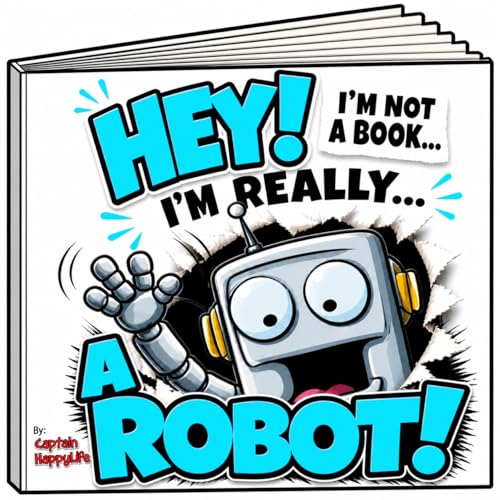
Donella H. Meadows
This insightful memoir chronicles a year-long experiment where the author, Donella H. Meadows, attempted to delegate a significant portion of her daily tasks and responsibilities to artificial intelligence. Meadows meticulously documents her experiences, exploring the practical applications, surprising limitations, and evolving relationship between human agency and AI-driven assistance across various facets of her life. The narrative offers a compelling examination of the potential and pitfalls of integrating AI into everyday routines, prompting reflection on work, creativity, and the very definition of human productivity.
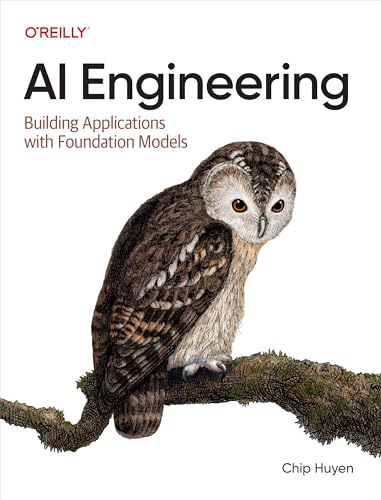
Chip Huyen
Recent breakthroughs in AI have not only increased demand for AI products, they've also lowered the barriers to entry for those who want to build AI products. The model-as-a-service approach has transformed AI from an esoteric discipline into a powerful development tool that anyone can use. Everyone, including those with minimal or no prior AI experience, can now leverage AI models to build applications. In this book, author Chip Huyen discusses AI engineering: the process of building applications with readily available foundation models. The book starts with an overview of AI engineering, explaining how it differs from traditional ML engineering and discussing the new AI stack. The more AI is used, the more opportunities there are for catastrophic failures, and therefore, the more important evaluation becomes. This book discusses different approaches to evaluating open-ended models, including the rapidly growing AI-as-a-judge approach. AI application developers will discover how to navigate the AI landscape, including models, datasets, evaluation benchmarks, and the seemingly infinite number of use cases and application patterns. You'll learn a framework for developing an AI application, starting with simple techniques and progressing toward more sophisticated methods, and discover how to efficiently deploy these applications. Understand what AI engineering is and how it differs from traditional machine learning engineering Learn the process for developing an AI application, the challenges at each step, and approaches to address them Explore various model adaptation techniques, including prompt engineering, RAG, fine-tuning, agents, and dataset engineering, and understand how and why they work Examine the bottlenecks for latency and cost when serving foundation models and learn how to overcome them Choose the right model, dataset, evaluation benchmarks, and metrics for your needs Chip Huyen works to accelerate data analytics on GPUs at Voltron Data. Previously, she
Affiliate Disclosure: As an Amazon Associate, we may earn from qualifying purchases. Book links on this page may be affiliate links. This does not affect our recommendations or the price you pay.