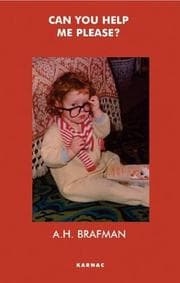
Cover of Can you help me?

Can you help me?

by A. H. Brafman

Published 2004

This book is based on common questions that parents have about their children and their relationships with the world at large. Drawing from his extensive experience as a child psychoanalyst (and as a father), Dr Brafman offers his thoughts on widespread problems faced by parents in an innovative way: he focuses on how the child perceives the situation and not on their resultant behaviour. He also steers away from providing clear-cut answers; there are no set rules for raising children. Instead Dr Brafman discusses each question, using real-life examples and providing insights that will help the parent decide what is best for their individual child.

Child mental healthChild psychologyChildrenHealth and hygieneParent and childParentingFamily psychotherapyFAMILY and RELATIONSHIPSChild RearingGeneralParent-Child RelationsRôle parental

Similar Books

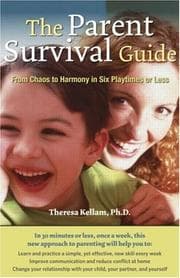
Cover of The parent survival guide

The parent survival guide

Theresa Kellam

When parents turn to the parenting/self-help section of their local bookstore, they are looking for both practical guidance and a childrearing philosophy that resonates with them - an approach they can relate to and be comfortable implementing in their own household. In The Parent Survival Guide: From Chaos to Harmony in Ten Weeks or Less, Theresa Kellam presents a way to strengthen the relationship with the child that simultaneously promotes the parent's own emotional healing and wellness. Grounded in a research-supported therapeutic technique that uses structured play time as the catalyst for interpersonal connection and growth, Kellam's model is subtle in its simplicity. Through a series of guided exercises, Kellam gives parents the skills they need to begin to set aside special playtimes with their children, during which the most important part of the process is simply "being there" in a way that promotes healing, growth, and communication. The beauty of this approach is that in only 30 minutes, once a week, the results can be seen in only a few weeks. Features of the book include: "Parent Survival Tip" at the start of each chapter Original cartoon illustrations bring text to life Short but insightful workseet questions bring focus to the program The Parent Survival Guide is structured over a series of 10 chapters, which can be read in conjunction with the 10-sessions of the CPRT workshops for those parents enrolled in a formal filial training program. But the material in the book is designed to be read and implemented by anyone. The author is not only a licensed psychologist and filial therapist, but she has also gone through the program with her own son and continues to rely on its principles within her family.

Cover of A good enough parent

A good enough parent

Bruno Bettelheim, Bruno Bettleheim

In this book, the preeminent child psychologist of our time gives us the results of his lifelong effort to determine what is most crucial in successful child-rearing. His purpose is not to give parents preset rules for raising their children, but rather to show them how to develop their own insights so that they will understand their own and their children's behavior in different situations and how to cope with it. Above all, he warns, parents must not indulge their impulse to try to create the child they would like to have, but should instead help each child fully develop into the person he or she would like to be.

Cover of The practice of psychoanalytic parent infant psychotherapy

The practice of psychoanalytic parent infant psychotherapy

Tessa Baradon

The Practice of Psychoanalytic Parent-Infant Psychotherapy is a comprehensive handbook, addressing the provision of therapeutic help for babies and their parents when their attachment relationship is troubled and a risk is posed to the baby's development. Drawing on clinical and research data from neuroscience, attachment and psychoanalysis, the book presents a clinical treatment approach that is up-to-date, flexible and sophisticated, whilst also being clear and easy to understand. The first section: The theory of psychoanalytic parent infant psychotherapy – offers the reader a theoretical framework for understanding the emotional-interactional environment within which infant development takes place. The second section, The therapeutic process, invites the reader into the consulting room to participate in a detailed examination of the relational process in the clinical encounter. The third section, Clinical papers, provides case material to illustrate the unfolding of the therapeutic process. This new edition draws on evidence from contemporary research, with new material on: Embodied communication between parent and infant and clinician-patient/s Fathers and fathering Engagement of at-risk populations Written by a team of experienced clinicians, writers, teachers and researchers in the field of infant development and psychopathology, The Practice of Psychoanalytic Parent-Infant Psychotherapy will be an essential resource for all professionals working with children and their families, including child psychiatrists, psychoanalysts, psychotherapists, and clinical and developmental psychologists.

Cover of 1-2-3 magic

1-2-3 magic

Thomas W. Phelan

America's #1 child discipline book for over 20 years 1-2-3 Magic has helped millions of parents, teachers, and caregivers all over the world establish an effective, appropriate discipline system that helps children listen better and motivate themselves to behave well. Dr. Thomas Phelan is an internationally renowned expert in his field and has broken down the elements of effective parenting into an easy-to-understand program that can work for any family or in a classroom or caregiving scenario. Recommended by parenting experts for over twenty years, 1-2-3 Magic is a cornerstone book in the parenting category that combines timeless advice with fresh, up-to-date anecdotes and content, and is a must-have book for any caregiver hoping to raise happy, healthy, responsible kids.

Cover of Overcoming overeating

Overcoming overeating

Jane R. Hirschmann, Carol H. Munter

The reissue of a classic in healthy living, with more than 300,000 copies sold!Diet/binge. good food/bad food. punishment/reward. These are the compulsive eater's nightmares, a long-time pattern of recrimination and guilt that ultimately leads to more overeating and more weight gain. In an updated edition, here is the ground-breaking, step-by-step plan that doesn't control eating habits but cures them instead, once and for all. Overcoming Overeating will show you how to:* Give up dieting forever* Eat from true stomach hunger instead of "mouth hunger"* Stop overeating and lose weight naturally* Move beyond a preoccupation with eating and weight in order to live a more satisfying life

Cover of Ikigai: The Japanese Secret to a Long and Happy Life

Ikigai: The Japanese Secret to a Long and Happy Life

Héctor García (Author), Francesc Miralles (Author) Format: Hardcover

INTERNATIONAL BESTSELLER • 2 MILLION+ COPIES SOLD WORLDWIDE “Workers looking for more fulfilling positions should start by identifying their ikigai.” ―Business Insider “One of the unintended—yet positive—consequences of the [pandemic] is that it is forcing people to reevaluate their jobs, careers, and lives. Use this time wisely, find your personal ikigai, and live your best life.” ―Forbes Find your ikigai (pronounced ee-key-guy) to live longer and bring more meaning and joy to all your days. “Only staying active will make you want to live a hundred years.” —Japanese proverb According to the Japanese, everyone has an ikigai—a reason for living. And according to the residents of the Japanese village with the world’s longest-living people, finding it is the key to a happier and longer life. Having a strong sense of ikigai—where what you love, what you’re good at, what you can get paid for, and what the world needs all overlap—means that each day is infused with meaning. It’s the reason we get up in the morning. It’s also the reason many Japanese never really retire (in fact there’s no word in Japanese that means retire in the sense it does in English): They remain active and work at what they enjoy, because they’ve found a real purpose in life—the happiness of always being busy. In researching this book, the authors interviewed the residents of the Japanese village with the highest percentage of 100-year-olds—one of the world’s Blue Zones. Ikigai reveals the secrets to their longevity and happiness: how they eat, how they move, how they work, how they foster collaboration and community, and—their best-kept secret—how they find the ikigai that brings satisfaction to their lives. And it provides practical tools to help you discover your own ikigai. Because who doesn’t want to find happiness in every day? What’s your ikigai?

Explore More

Affiliate Disclosure: As an Amazon Associate, we may earn from qualifying purchases. Book links on this page may be affiliate links. This does not affect our recommendations or the price you pay.