
The Seven Spiritual Laws For Parents vs The price of privilege

Both "The price of privilege" by Madeline Levine and "The Seven Spiritual Laws For Parents" by Deepak Chopra are popular choices for readers interested in Adolescent psychology and Child rearing. This comparison helps you decide which to read first — or whether both belong on your list.

Shared Themes

Child rearingConduct of lifeNonfictionParenting
Cover of The Seven Spiritual Laws For Parents

The Seven Spiritual Laws For Parents

Deepak Chopra

1997

The Seven Spiritual Laws of Success was a phenomenally successful book--more than 1,600,000 copies were sold--and as copies were passed between friends and loved ones, it touched millions more lives. Its author, Deepak Chopra, received thousands of letters from readers, many of whom expressed the desire to convey those same principles to their children, along with questions about how to do so. This book, The Seven Spiritual Laws for Parents, is Dr. Chopra's answer to those letters and to parents around the world who wish to raise children with values that satisfy spiritual needs as well as create the experience of abundance. After a general discussion of parenting and the gift of spirit, this book explores specific ways to practice the Seven Spiritual Laws as a family, how to convey these laws to children depending on their ages, and how to embody them in age-specific activities each day, beginning on Sundays with the Law of Pure Potentiality. The Seven Spiritual Laws for Parents moves us beyond private triumphs and failures to experience the spiritual nature of communion with family, to share with those closest to us the infinite riches of innocence and love.
Published 1997
Books like The Seven Spiritual Laws For Parents
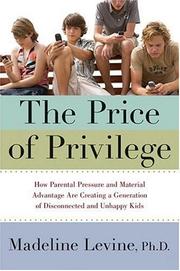
Cover of The price of privilege

The price of privilege

Madeline Levine

2005

In this ground-breaking book on the children of affluence, a well-known clinical psychologist exposes the epidemic of emotional problems that are disabling America’s privileged youth, thanks, in large part, to normalized, intrusive parenting that stunts the crucial development of the self. In recent years, numerous studies have shown that bright, charming, seemingly confident and socially skilled teenagers from affluent, loving families are experiencing epidemic rates of depression, substance abuse, and anxiety disorders&—rates higher than in any other socioeconomic group of American adolescents. Materialism, pressure to achieve, perfectionism, and disconnection are combining to create a perfect storm that is devastating children of privilege and their parents alike. In this eye-opening, provocative, and essential book, clinical psychologist Madeline Levine explodes one child-rearing myth after another. With empathy and candor, she identifies toxic cultural influences and well-intentioned, but misguided, parenting practices that are detrimental to a child's healthy self-development. Her thoughtful, practical advice provides solutions that will enable parents to help their emotionally troubled "star" child cultivate an authentic sense of self.

Published 2005
Books like The price of privilege

Frequently Asked Questions

Which is easier to read: The price of privilege or The Seven Spiritual Laws For Parents?
Reading difficulty depends on your familiarity with the genre. Check each book's page count and subject matter above, and start with whichever aligns better with books you've enjoyed before.
Can I read The price of privilege and The Seven Spiritual Laws For Parents in any order?
Yes — these are standalone works. You don't need to read one before the other unless they're part of the same series.
Which book is better for beginners?
If you're new to this genre, look at the shorter book with broader appeal and start there. You can always come back for the other.

Are you an author? Promote your book or submit a free listing.

Affiliate Disclosure: As an Amazon Associate, we may earn from qualifying purchases. Book links on this page may be affiliate links. This does not affect our recommendations or the price you pay.