
The worst-case scenario survival handbook vs Resilience across contexts

Both "The worst-case scenario survival handbook" by Joshua Piven and "Resilience across contexts" by Margaret C. Wang, Ronald D. Taylor are popular choices for readers interested in Humor and Safety Measures. This comparison helps you decide which to read first — or whether both belong on your list.

Shared Themes

ParentingReference
Cover of The worst-case scenario survival handbook

The worst-case scenario survival handbook

Joshua Piven

2002

The authors of The Worst-Case Scenario Survival Handbook take to the links! Dave and Josh join golf fanatic James Grace, drawing on their own tragic exploits and the experience of experts to help golfers survive dozens of dire situations. Learn how to finish a round with a broken arm, deal with a cigar brush fire, cure golf addiction, or remove a tick. Discover the best way to play out of a water hazard, make it through a lightning storm, or survive being hit in the privates. Hands-on, illustrated, step-by-step instructions guide you through these and other perils lurking on the fairway. With an appendix of rules for bizarre mis-haps, strategies for surmounting dress-code and equipment crises, and other essential survival tips, this handy guide won't help you save par-but it could save your bacon! Don't tee off without it.
Published 2002
Books like The worst-case scenario survival handbook
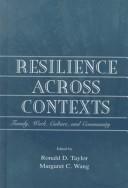
Cover of Resilience across contexts

Resilience across contexts

Margaret C. Wang, Ronald D. Taylor

2000

A number of societal risks pose serious challenges to families' well-being, many of which cut across divisions of class and race. These challenges include: changes in the labor market and economy; the increasing participation of mothers in the labor force; the changing nature of family structure and the composition of households; and the increase in the number of immigrant families. Key institutions in the lives of families, including places of employment and schools, can play a significant role in fostering families' capacity to adapt to the potential challenges they face. Resilience Across Contexts: Family, Work, Culture, and Communitypresents papers--written by leading scholars in varied disciplines including economics, developmental and educational psychology, education, and sociology--discussing factors that influence resilience development. The authors' research focuses on emerging issues that have significant implications for policy and practice in such areas as employment and new technologies; maternal employment and family development; family structure and family life; immigration, migration, acculturation, and education of children and youth; and social and human services delivery. The book's overall goal is to take stock of what is known from research and practice on some of the challenges facing children and families for policy development and improvement of practices.

Published 2000
Books like Resilience across contexts

Frequently Asked Questions

Which is easier to read: The worst-case scenario survival handbook or Resilience across contexts?
Reading difficulty depends on your familiarity with the genre. Check each book's page count and subject matter above, and start with whichever aligns better with books you've enjoyed before.
Can I read The worst-case scenario survival handbook and Resilience across contexts in any order?
Yes — these are standalone works. You don't need to read one before the other unless they're part of the same series.
Which book is better for beginners?
If you're new to this genre, look at the shorter book with broader appeal and start there. You can always come back for the other.

Are you an author? Promote your book or submit a free listing.

Affiliate Disclosure: As an Amazon Associate, we may earn from qualifying purchases. Book links on this page may be affiliate links. This does not affect our recommendations or the price you pay.